







Read the full message: Windows cannot complete the extraction is a family of failures, not one diagnosis. The rest of the message may mention an invalid destination, a file that cannot be created, an unexpected error, or an empty compressed folder. Record the complete wording and keep the original archive unchanged. The complete error wording tells you whether to test the path, destination, security state, or archive.
Use the wording of the extraction error
Copy the archive to a short local path such as a folder under Documents, then extract into a new empty folder with a short name. This single test removes many network, removable-drive, nested-path, and synchronization variables. Do not move a file off unstable storage if reading it causes disconnects; preserve that device first.
Check available space on the destination and the system drive, because extraction may use temporary storage. Confirm that the destination is writable with a harmless test file. Avoid protected system folders and do not take ownership of broad directories just to extract one archive. Microsoft’s compressed-folder instructions establish the normal Extract All workflow. See the official documentation before relying on menus or behavior that may vary by Windows or Office release in the Extract All diagnosis.
Try a short local source and destination
| What you observe | What it changes | Safest response |
|---|---|---|
| A stable, readable source | Open file Properties and review whether Windows marks a trusted download as blocked. | Open file Properties and review whether Windows marks a trusted download as blocked. Unblock only when the source is verified; this is a security decision, not a universal extraction fix. |
| A limited or file-specific failure | Re-download the archive to a new filename when the source is trustworthy. | Re-download the archive to a new filename when the source is trustworthy. Compare its size with the sender’s copy. For multipart archives, collect every numbered part before testing. |
| Instability or a destructive next step | Use a reputable extractor’s Test function. | Use a reputable extractor’s Test function. If another tool reads the archive, the Windows shell path may be the limitation. If every tool reports CRC, data, or unexpected-end errors, suspect an incomplete or corrupt archive. |
Retest from one short local folder so the changed variable is obvious. Record the starting condition and the outcome in the Extract All diagnosis. If a test reduces access or introduces instability, return to protection instead of stacking another change on top in the Extract All diagnosis.
Check free space, permissions, and security blocking
Open file Properties and review whether Windows marks a trusted download as blocked. Unblock only when the source is verified; this is a security decision, not a universal extraction fix.
Re-download the archive to a new filename when the source is trustworthy. Compare its size with the sender’s copy. For multipart archives, collect every numbered part before testing.
Use a reputable extractor’s Test function. If another tool reads the archive, the Windows shell path may be the limitation. If every tool reports CRC, data, or unexpected-end errors, suspect an incomplete or corrupt archive.
Extraction troubleshooting is complemented by this related Drecov article, a second task-specific resource, and this recovery-safety reference.
⚠ Warning: Install it on a drive different from the one where your data was lost to prevent overwriting.
Recover a Missing Archive With Drecov
An extraction error does not by itself call for recovery software. For instance, if windows cannot complete extraction due to system permissions, path limits, malware detections, or CRC damage, Drecov will not repair those issues. Instead, Drecov becomes useful when the original archive or the only extracted folder has been deleted or made inaccessible on stable storage. On stable drives, Quick Scan and Deep Scan can locate candidates, while filters and previews help evaluate them before restoring files to a healthy destination. Begin at the Drecov Windows recovery page when that precise loss branch applies to the Extract All diagnosis.
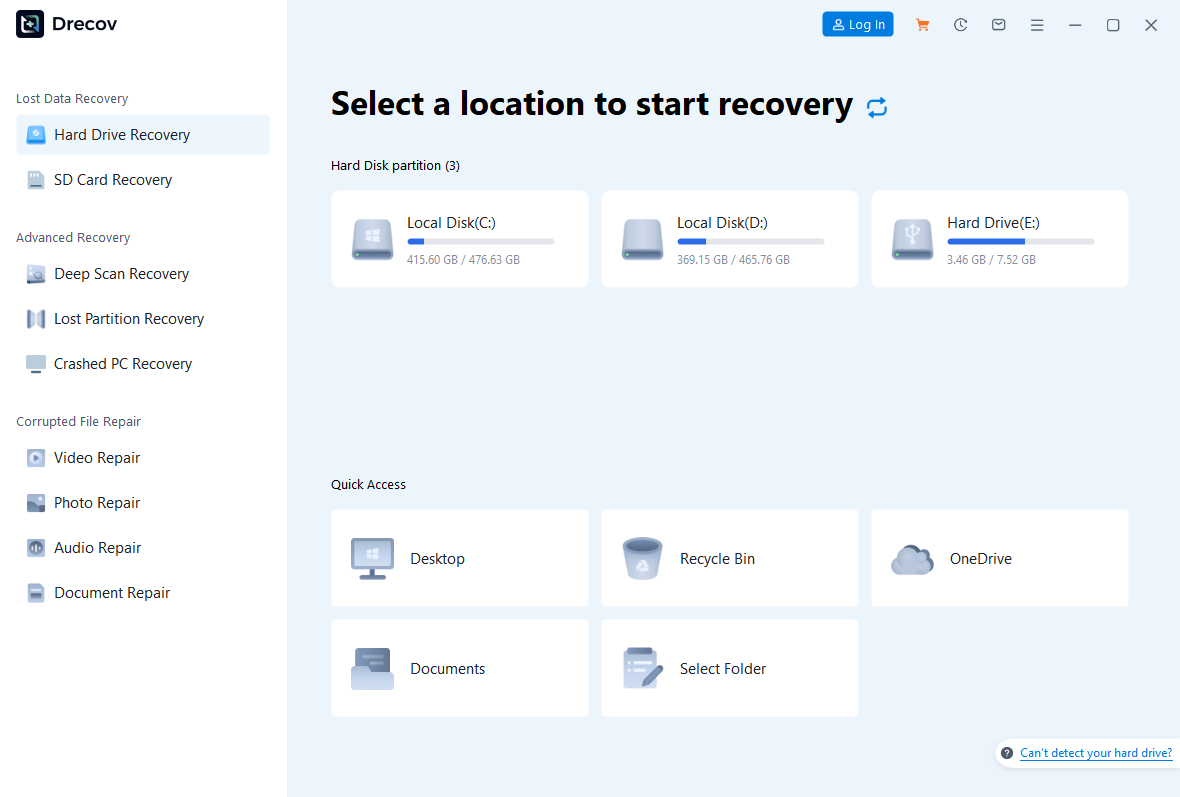
Step 1: Target the location where the archive vanished
After confirming that the problem is deletion rather than an extraction setting, open Drecov and select the original local volume. Install and run it away from that volume.
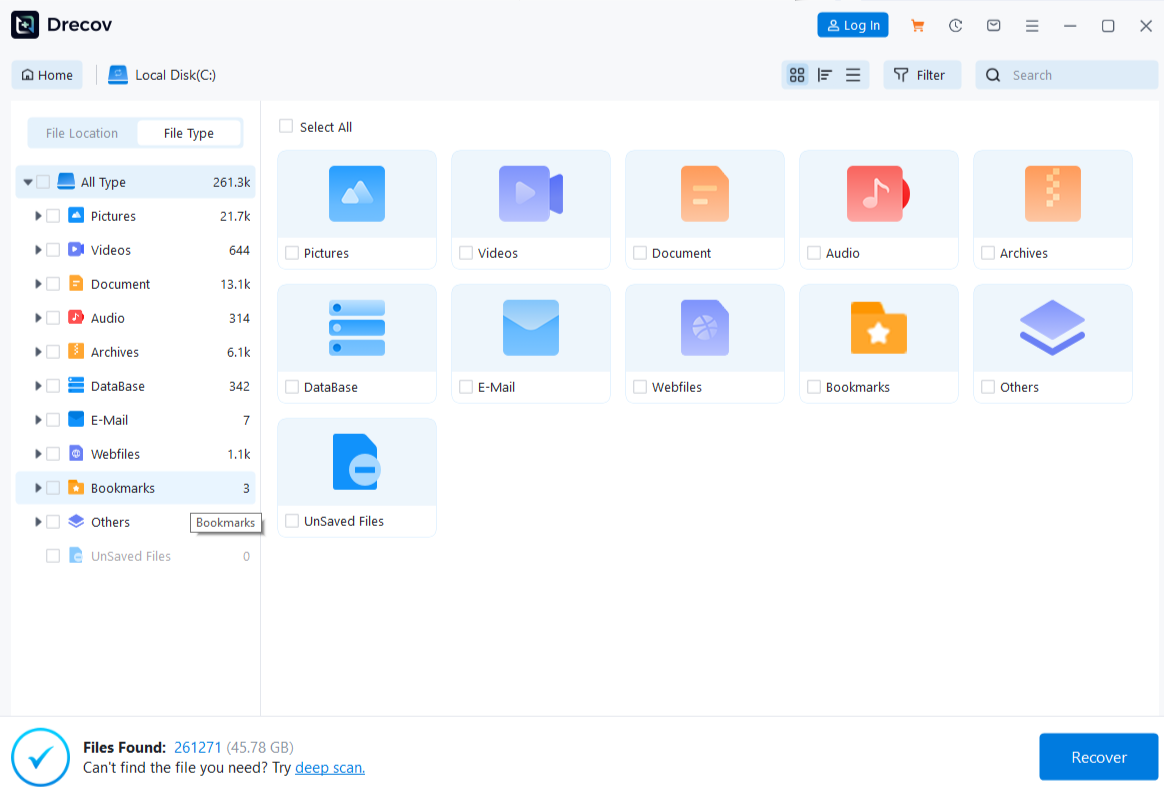
Step 2: Use Quick Scan to find the source container
Filter for ZIP, 7z, RAR, or the actual extension and inspect the former download or project path. Avoid another download to the source during this search.
Step 3: Expand to Deep Scan only for stable storage
A broader pass is reasonable when the archive remains absent and the device reads normally. Physical symptoms or repeated disconnects end DIY scanning and shift the task to imaging.

Step 4: Inspect candidates using archive-specific clues
Compare exact size, download time, filename, and surrounding files. Preview what Drecov supports, while recognizing that extraction testing on the healthy destination is the decisive container check.
Step 5: Recover the archive, then diagnose extraction
Send candidates to a different healthy device and check Drecov Folder or Recovery Folder if needed. Test copies there; do not repair, rename, or overwrite the only recovered container.
Test the Archive With Another Trusted Extractor
Retain the archive after extraction
Do not delete the archive after one successful-looking extraction. Some files may be skipped or truncated while others open.
Respect security quarantine
When security software quarantines an extracted item, review the detection and source. Do not create exclusions for an unknown archive.
Pause writes after real deletion
If the only archive or extracted folder was accidentally deleted, stop writing to that local drive. Check Recycle Bin, cloud trash, version history, backups, and the sender before scanning.
Expect damage from failing media
For an archive stored on failing media, recovery of the container may still produce a damaged file. Recover several copies or an image, then test away from the source.
A second extractor may bypass a shell limitation, yet it cannot make an incomplete archive complete.
Confirm the extracted files are usable
Compare item counts and total sizes, open representative documents and media, and test nested archives. A completed progress bar does not validate every member.
Keep the original container while testing the new destination folder.
Separate shell limitations from container damage
File Explorer’s compressed-folder handler is convenient, but it is only one reader. A short local path and a new empty destination test shell path handling, synchronization, and permissions. Another trusted extractor can test whether the container itself is readable. If the second tool succeeds, keep investigating the Windows shell context. If every tool reports integrity trouble at the same point, the evidence shifts toward a damaged or incomplete archive rather than a destination setting.
Free space must cover the extracted result, not merely the compressed size. Highly compressible archives can expand many times beyond their container. Temporary storage may also be used. Check both the destination and system drive. Review file names that conflict with Windows rules, overly deep folders, and security detections. Do not disable protection globally. If the archive came from an untrusted source, a blocked executable is a reason to verify the sender, not a reason to force extraction.
Place the preserved archive and test output on another healthy device once integrity has been established. Keep an untouched source copy. Retry Extract All only from a short local path. If it still fails, note the exact member and message. Test the same duplicate with one reputable extractor. Do not cycle through many tools. Scan extracted content before opening it. Count nested folders and files. Compare total sizes. Reopen the archive after a restart. When every member passes, back up both the container and the validated output before clearing temporary folders.
Retest under the same conditions that exposed the problem
Extraction diagnosis improves when the container remains immutable. Record the full shell message, archive checksum or expected size, destination path, available space, and security detection. Put that record on separate storage in the Extract All diagnosis. It gives each later action a defined target and prevents a successful-looking workaround from hiding an unresolved dependency in the Extract All diagnosis.
Preserve the earliest available copy before testing in the Extract All diagnosis. Create a working duplicate for commands, extraction, conversion, or application checks in the Extract All diagnosis. When a test changes the duplicate, keep the changed version under a new name in the Extract All diagnosis. This makes comparison possible and leaves the starting evidence available in the Extract All diagnosis.
Use compare item counts and total sizes, open representative documents and media, and test nested archives as the acceptance test. Repeat it after a restart or reconnect in the Extract All diagnosis. Also inspect a second representative item that exercises a different part of the workflow in the Extract All diagnosis. A single successful launch cannot establish that every dependency or file is sound in the Extract All diagnosis.
End the current path when new downloads would overwrite the missing source or the storage device starts disconnecting. Preserve logs and recovered copies at that point in the Extract All diagnosis. A specialist can work more effectively from a clear device history and untouched evidence than from a source changed by several undocumented repairs in the Extract All diagnosis.
Before retrying Extract All
Save the full Windows message and archive path. Check destination space and create a harmless file there. Move a copy to a short local path only when the source reads normally.
Change one variable: path, permission, download, or extractor. Retest after each change. If the container was deleted, stop writes and recover it before another download consumes the same storage.
Read the Container Evidence Before Retrying
Keep the sender’s checksum or expected size and avoid using temporary folders as the only archive store. A backup earns trust only after representative files open from the restored copy in the Extract All diagnosis. Store the recovery instructions somewhere that does not depend on the affected computer in the Extract All diagnosis.
Conclusion
When Windows cannot complete extraction, isolate path, space, permission, security, and container integrity in that order. Preserve the archive throughout the diagnosis. Drecov is reserved for a truly deleted local source and restores it elsewhere; it cannot correct CRC damage or a missing multipart segment.






