







If you are asking, “Why can’t I save my Excel file?”, do not close Excel or restart Windows yet. The open workbook may contain the only current copy of your changes. Try Save As with a short new name in a verified local folder on another healthy drive. If that works, the workbook data is probably usable and the original path, permissions, synchronization, filename, or format needs attention. If every save path fails, preserve the session by copying sheets into a new workbook before broader repair.
Keep the Current Workbook Alive
Try Save As to a simple local destination
Use a short filename without unusual characters. A successful local copy points toward network, cloud, permission, or path-length trouble.
Use a duplicate or harmless example for the test. The only valuable source should remain unchanged while the diagnosis develops.
For why can’t i save my excel file, treat try save as to a simple local destination as a checkpoint. Write down the path, account, application, device state, and time that apply here. That record can expose a mistaken assumption. It also keeps a later change separate from the original symptom.
Check free space on both locations
Excel can need temporary working space as well as final destination space. Confirm that the system volume and chosen target are not full.
A failed check is still useful because it removes one explanation. Avoid stacking unrelated fixes after it.
For this specific case, treat check free space on both locations as a checkpoint. Write down the path, account, application, device state, and time that apply here. That record can expose a mistaken assumption. It also keeps a later change separate from the original symptom.
Preserve macros and workbook features
Do not save an XLSM workbook as XLSX unless you accept losing VBA. Keep the original format for the safety copy.
Compare the finding with the last known good state. Time, account, path, and device details often reveal more than the generic error text.
For this specific case, treat preserve macros and workbook features as a checkpoint. Write down the path, account, application, device state, and time that apply here. That record can expose a mistaken assumption. It also keeps a later change separate from the original symptom.
Inspect cloud and network status
Pause conflicting sync only after saving an independent copy. A disconnected share or stale credential can block the original path without damaging the workbook.
Stop if access worsens or the device becomes unstable. Another retry is not evidence when the source can no longer be read consistently.
For this specific case, treat inspect cloud and network status as a checkpoint. Write down the path, account, application, device state, and time that apply here. That record can expose a mistaken assumption. It also keeps a later change separate from the original symptom.
Test add-ins in a controlled restart
After securing the current content, start Excel in Safe Mode and retry with a duplicate. Do not close the only live session before that copy exists.
Verify the observation on a second application or location when practical. Independent confirmation separates content trouble from a local display problem.
For this specific case, treat test add-ins in a controlled restart as a checkpoint. Write down the path, account, application, device state, and time that apply here. That record can expose a mistaken assumption. It also keeps a later change separate from the original symptom.
Move sheets when the workbook structure is damaged
Copy one sheet at a time into a clean workbook. Validate formulas, names, links, charts, and macros rather than assuming visible cells are enough.
Record that result before changing another variable. It provides a clean comparison if the next attempt behaves differently.
For this specific case, treat move sheets when the workbook structure is damaged as a checkpoint. Write down the path, account, application, device state, and time that apply here. That record can expose a mistaken assumption. It also keeps a later change separate from the original symptom.
Separate a Bad Path From a Bad Workbook
| Finding | Safest next action |
|---|---|
| Save As works elsewhere | Keep that copy and repair the original path later. |
| Only one format fails | Save a feature-compatible format and identify unsupported content on a duplicate. |
| A cloud or network path alone fails | Work locally, verify the copy, then reconnect and upload deliberately. |
| Excel is unstable but still open | Copy critical ranges and sheets into a new workbook before restarting. |
| The workbook vanished after the failure | Stop writes and search backups, AutoRecover, versions, then stable-storage recovery. |
Resolve the Cause With the Smallest Change
Use a new local name and path
This tests the destination with minimal change and preserves a clean comparison copy.
Stop if access worsens or the device becomes unstable. Another retry is not evidence when the source can no longer be read consistently.
Judge use a new local name and path by the result it should produce in this task. Check the content after the action, not just the absence of an error. Keep the previous candidate during testing. The new result should survive a normal close, reopen, and comparison test.
Check Document Recovery and AutoRecover
Review timestamps and contents. Save a promising version under a different name before opening another candidate.
Verify the observation on a second application or location when practical. Independent confirmation separates content trouble from a local display problem.
Judge check document recovery and autorecover by the result it should produce in this task. Check the content after the action, not just the absence of an error. Keep the previous candidate during testing. The new result should survive a normal close, reopen, and comparison test.
Repair Office only after the data is safe
Application repair may fix the save mechanism, but it does not preserve unsaved content by itself.
Record that result before changing another variable. It provides a clean comparison if the next attempt behaves differently.
Judge repair office only after the data is safe by the result it should produce in this task. Check the content after the action, not just the absence of an error. Keep the previous candidate during testing. The new result should survive a normal close, reopen, and comparison test.
Rebuild from clean sheets when necessary
Move verified sheets gradually and test after each addition to isolate a damaged object or name.
Use a duplicate or harmless example for the test. The only valuable source should remain unchanged while the diagnosis develops.
Judge rebuild from clean sheets when necessary by the result it should produce in this task. Check the content after the action, not just the absence of an error. Keep the previous candidate during testing. The new result should survive a normal close, reopen, and comparison test.
Related reading: PandaOffice Drecov, Recover Overwritten Files: Check Version Sources Before Scanning, Excel Not Responding? Decide Whether to Wait, Save, or Recover, Why Did My Minecraft World Disappear? Find the Save Before It Changes. The supporting primary reference is the official documentation for this task.
⚠ Warning: Install it on a drive different from the one where your data was lost to prevent overwriting.
When Drecov Helps After the Workbook Disappears
PandaOffice Drecov is Windows data recovery software for PCs, HDDs, SSDs, external drives, USB media, SD cards, and memory cards. Its read-only recovery mode, Quick Scan, Deep Scan, filters, path browsing, preview, and recovery to another healthy location support logical-loss work. Lost Partition Recovery addresses a missing-partition branch. Recoverable categories include documents, photos, video, audio, email data, and archives.
For this specific case, Drecov is appropriate only when needed local data was deleted or became inaccessible at the original Excel folder or stable Windows volume where the XLSX, XLSM, XLSB, or XLS file last existed. It cannot repair physical damage, fix the application or Windows component, recreate fully overwritten data, or retrieve a cloud-only item that never existed locally. SSD TRIM can sharply reduce recovery prospects.
If storage clicks, repeatedly disconnects, freezes the PC, reports severe read errors, or shows the wrong capacity, stop direct scanning. Controlled imaging or professional recovery is safer.
Recover a Deleted or Inaccessible Excel File
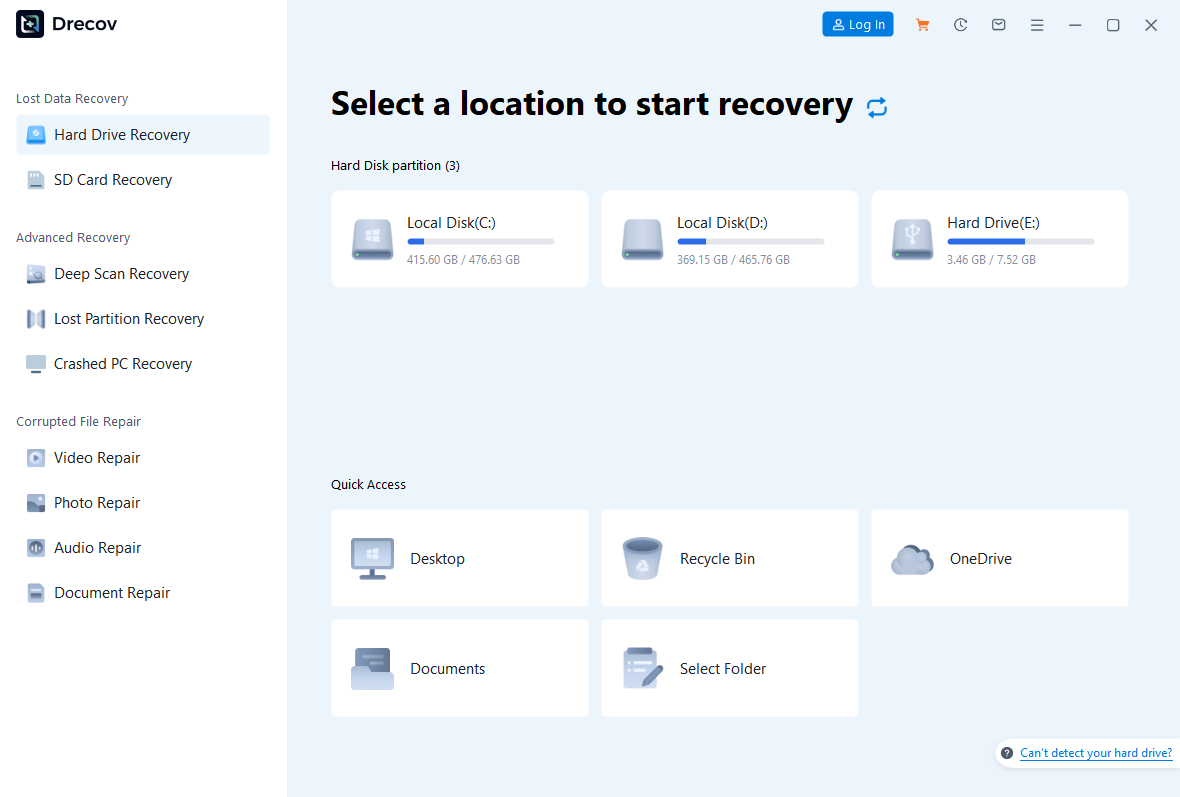
Step 1: Open Drecov and select the original location
Prepare another healthy drive first and do not install Drecov on the source partition. Open Drecov, then select the original Excel folder or stable Windows volume where the XLSX, XLSM, XLSB, or XLS file last existed. If the entire partition is missing, choose Lost Partition Recovery before any initialization, formatting, or partition creation.
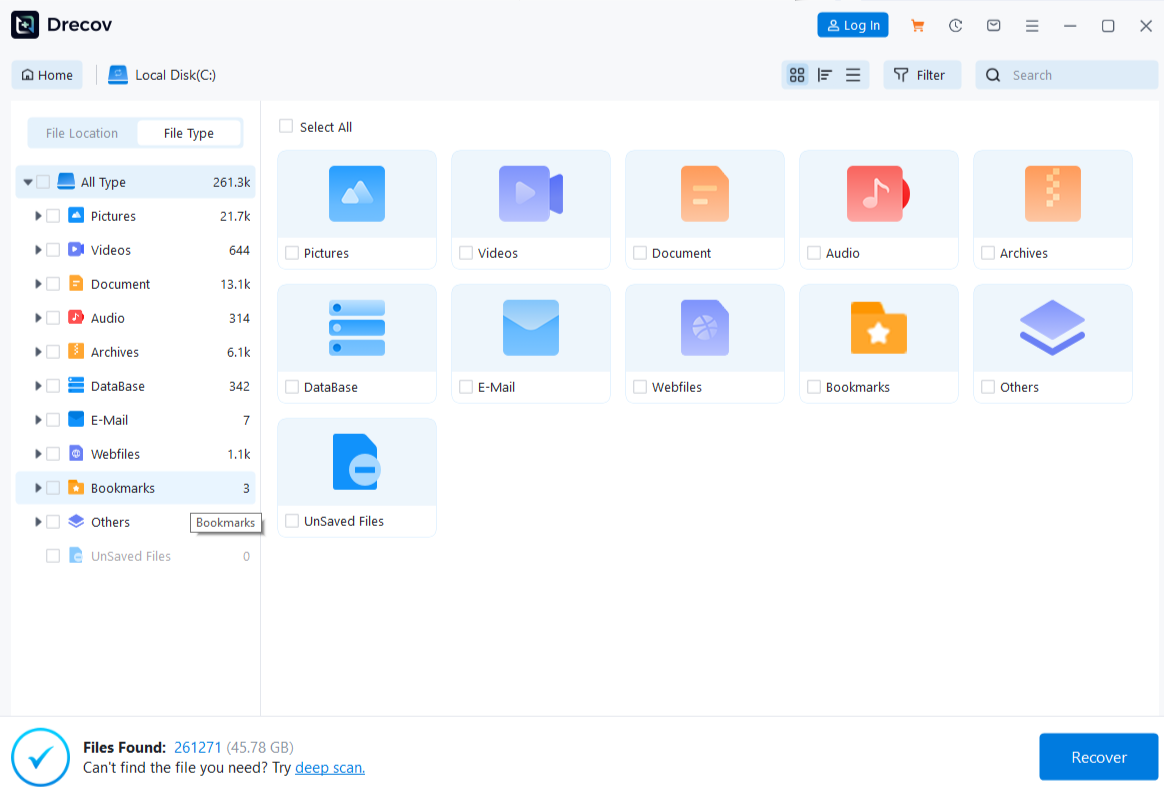
Step 2: Run Quick Scan before a deeper search
Start Quick Scan and narrow the first results by workbook name, Excel file type, former folder, modification time, approximate size, and related temporary or backup names. Keep the source idle and do not create replacement files in the former location.
Step 3: Use Deep Scan only on stable storage
If Quick Scan does not locate the wanted data and the device remains correctly detected and responsive, use Deep Scan. Stop immediately if detection changes, reads stall, or hardware symptoms appear.
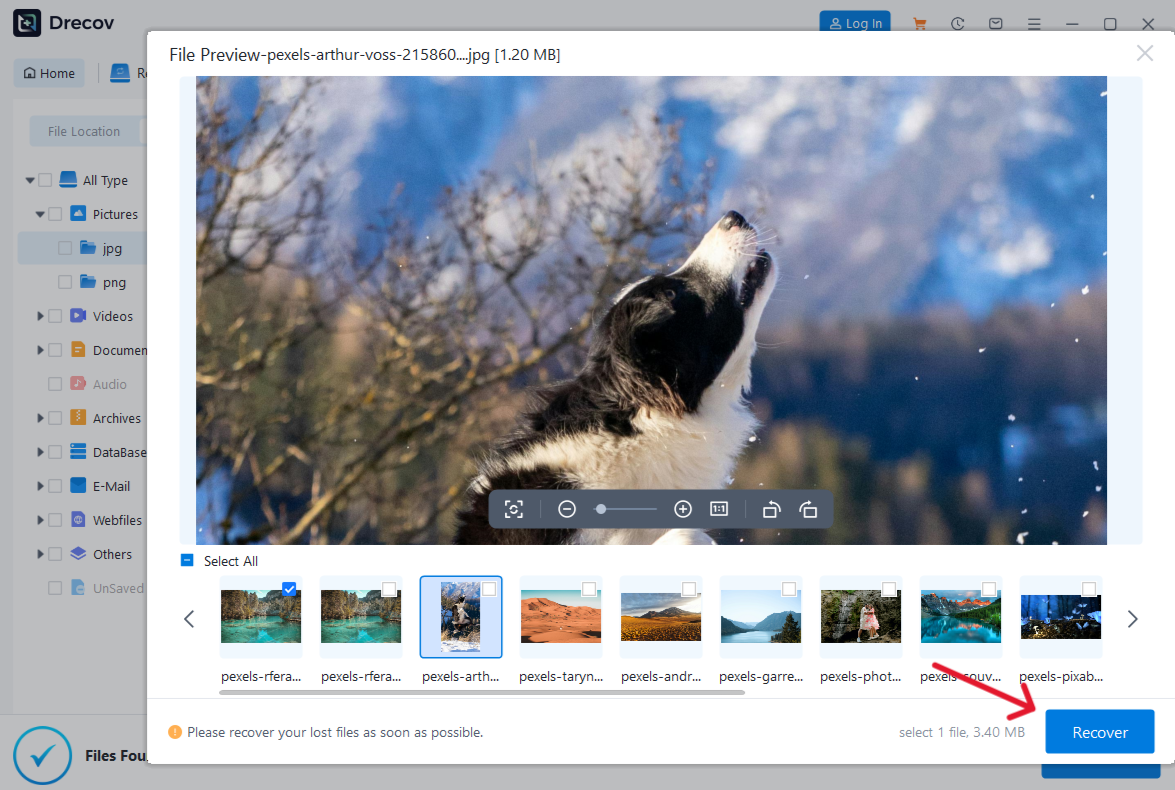
Step 4: Filter, preview, and recover elsewhere
Filter by the most reliable path, name, date, size, or file type. Preview representative supported files, while remembering that preview cannot prove every page, embedded object, or later frame. Recover selected candidates to the prepared healthy drive, never back to the source.
Step 5: Locate and verify every important result
If output is not in the expected destination, check Drecov Folder or Recovery Folder. Then open the recovered workbook in Excel, inspect formulas and named ranges, recalculate, test charts and macros, then save and reopen a duplicate. Keep untouched recovered copies and perform repair, reset, cleanup, formatting, or reinstallation only after validation.
Prove the Workbook Before Resuming Work
Verification must answer the original search task, not merely prove that a filename exists. Compare content, dates, related files, and normal application behavior. Preserve at least one untouched copy while testing a duplicate.
Prevention should follow the diagnosed cause. Use versioned backups on another device or account, record important paths and application settings, and run a small restore test. A backup has value only when the intended data can be opened from it.
Conclusion
If you are asking, “Why can’t I save my Excel file?”, do not close Excel or restart Windows yet. Follow the evidence from the application, account, path, or device before changing the source. Drecov provides a focused recovery path when local data is truly deleted or inaccessible on stable Windows storage. Recover to another healthy drive and validate the results before repair or replacement.
⚠ Warning: Install it on a drive different from the one where your data was lost to prevent overwriting.






