







If you are asking why did my Minecraft world disappear, do not create a new world with the same name yet. First identify the edition, Windows account, launcher profile, game version, and storage location. The world may still exist but be hidden from the menu because you opened another edition, profile, instance, or account. It may also have an incomplete level file, been moved by synchronization, or been deleted. Close the game and copy the entire saves location before editing individual files.
Why Did My Minecraft World Disappear From the Menu?
Java Edition and Bedrock Edition do not use the same storage structure. A launcher change, modded instance, Preview build, or different Windows account can point the game at another directory. Record the edition and exact profile before copying files between locations.
In Java Edition, each world is represented by a folder that normally includes level.dat, region data, player data, and supporting subfolders. The menu depends on usable metadata. A folder can remain on disk while a damaged or missing level file prevents normal listing.
Compare the world folder’s modified time, total size, and contents with other working worlds. A nearly empty folder suggests an interrupted copy or incorrect location. A large region folder with metadata trouble deserves preservation before any manual replacement attempt.
Inspect the save folder without changing the original
Do not rename random folders or replace level.dat in the only copy. Duplicate the complete world folder first. Work on the duplicate and keep related files together; mixing region data from different points can produce inconsistent terrain, inventories, or player positions.
Check Recycle Bin, launcher instance folders, Windows Previous Versions, File History, OneDrive if the save path was synchronized, exported world files, server downloads, external backups, and an older PC. Verify edition compatibility before importing an apparent backup.
If the disk reports read errors, the world vanishes repeatedly, or other files become corrupted, treat storage as part of the incident. Stop launching Minecraft from that device and protect broader user data before game-level experiments.
Use folder contents to explain why the world is absent
Exit Minecraft and its launcher. In Task Manager, confirm no game process is writing to the save. Copy the parent saves directory to another healthy device so the relationships among world files remain intact.
Search by folder timestamps near the last successful play session. Launcher profiles and mod managers can maintain independent game directories. Inspect profile settings instead of moving every candidate into the default folder.
For a Java duplicate with damaged level.dat, an available level.dat_old may provide a test path. Preserve both files and change only the duplicate. This can roll metadata backward and does not guarantee that every region matches.
Check exports, backups, cloud copies, and old devices
For Bedrock, use supported export and import functions when a world still appears on another device. Do not assume a folder copied from one edition can be opened by the other without conversion.
After locating a candidate, start the game with a copy and avoid opening it in a newer or modded version until compatibility is known. Version upgrades can modify save data.
If no folder exists, stop writing to the original drive. New worlds, screenshots, updates, mods, browser downloads, and recovery-software installation can reuse space that held deleted save files, especially on the system SSD.
Recover a deleted world folder with Drecov
Drecov is appropriate when the Minecraft world folder was truly deleted or lost from stable Windows storage. It can scan PCs, HDDs, SSDs, external drives, USB drives, SD cards, and memory cards in read-only recovery mode. Quick Scan provides the first pass; Deep Scan can search more broadly when the medium is stable. Filters and location clues help find level files and region data, while recovery must go to another healthy device. Drecov cannot rebuild missing chunks, convert editions, repair physical failure, or guarantee overwritten SSD data.
⚠ Warning: Install it on a drive different from the one where your data was lost to prevent overwriting.
Step 1: Open Drecov and target the vanished world’s original save drive
Exit Minecraft, its launcher, and any mod manager so they cannot update the saves directory. Connect another healthy device for recovery output. Open Drecov outside the loss partition and select the drive that held the Java instance, Bedrock data, or exported world. If the containing partition is missing, choose Lost Partition Recovery without creating a new volume.
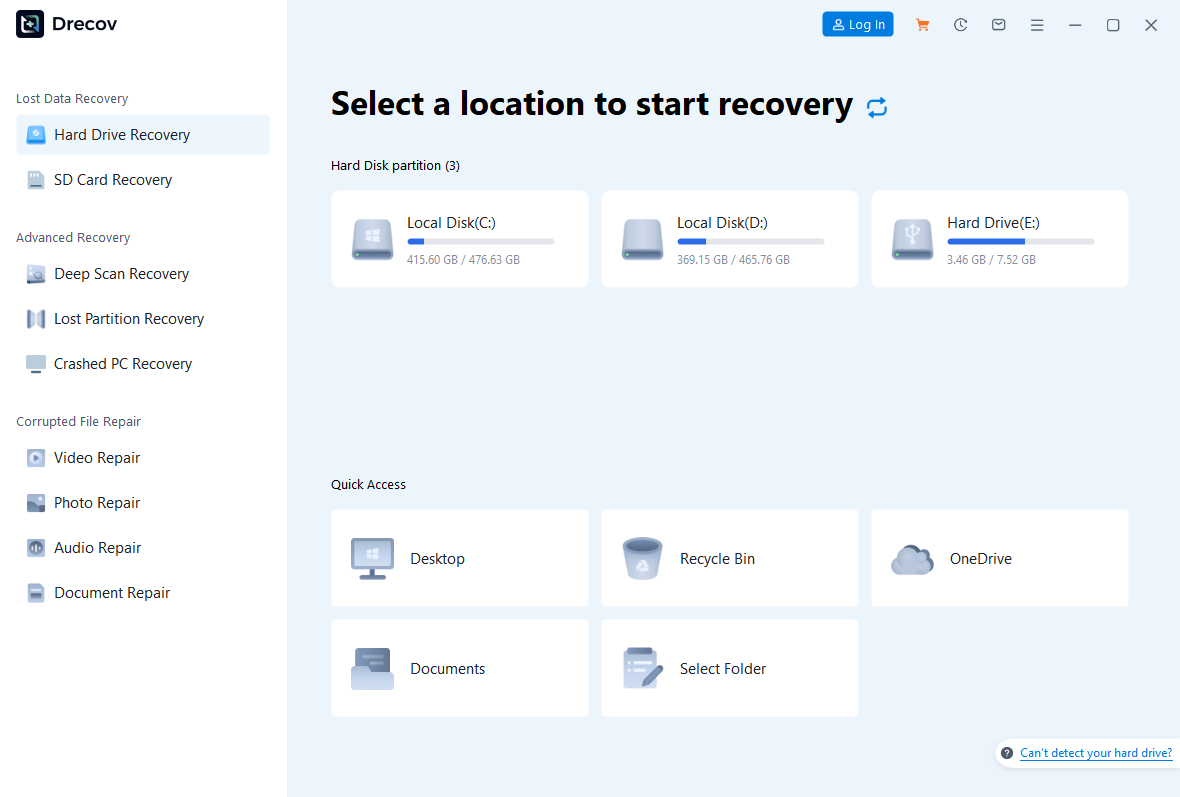
Step 2: Quick Scan the former Minecraft save location
Start Quick Scan and browse the exact instance or world path first. Look for the world folder as a set: level.dat, region files, player data, and dimension folders may all be needed. Search by the last-played date and familiar folder name, but do not create a replacement world on the source while scanning.
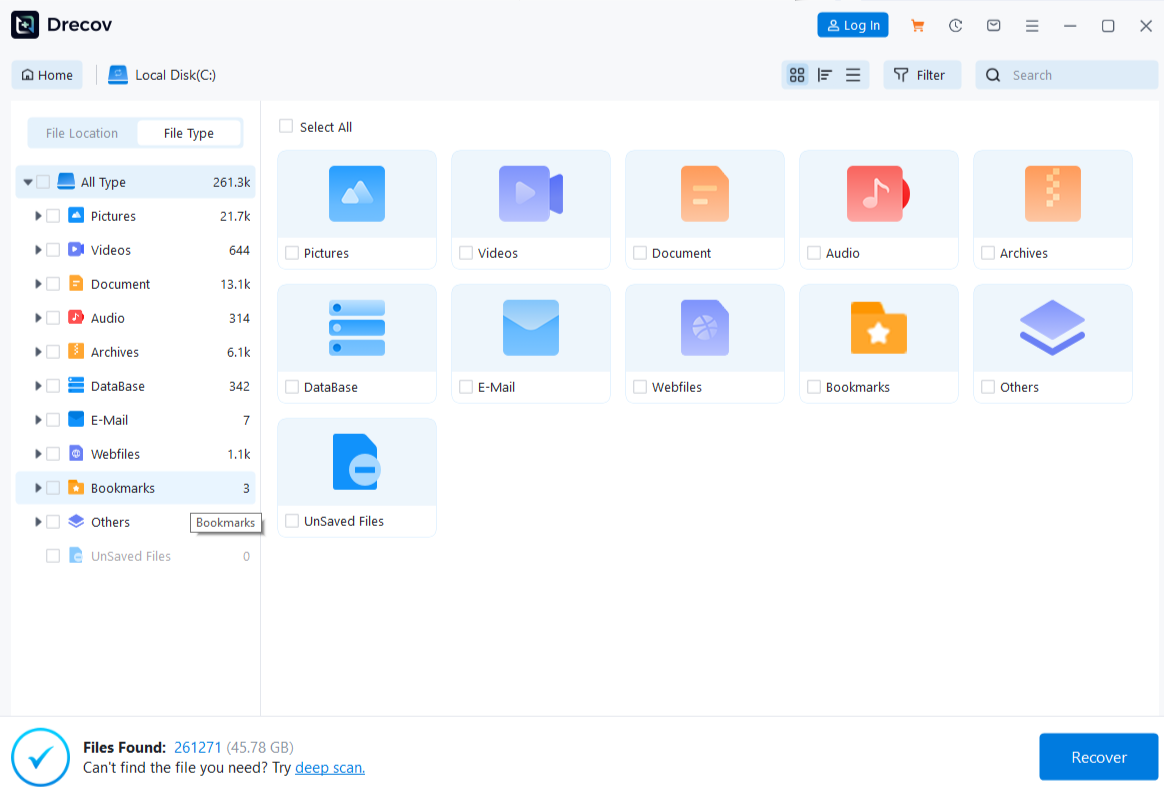
Step 3: Use Deep Scan only if the game-storage device is reliable
If Quick Scan finds no usable folder and the device remains stable, run Deep Scan. Stop when the disk disconnects, clicks, freezes the PC, or reports changing capacity. Long scanning is inappropriate for failing hardware, and Drecov cannot rebuild physically unreadable cells or sectors.
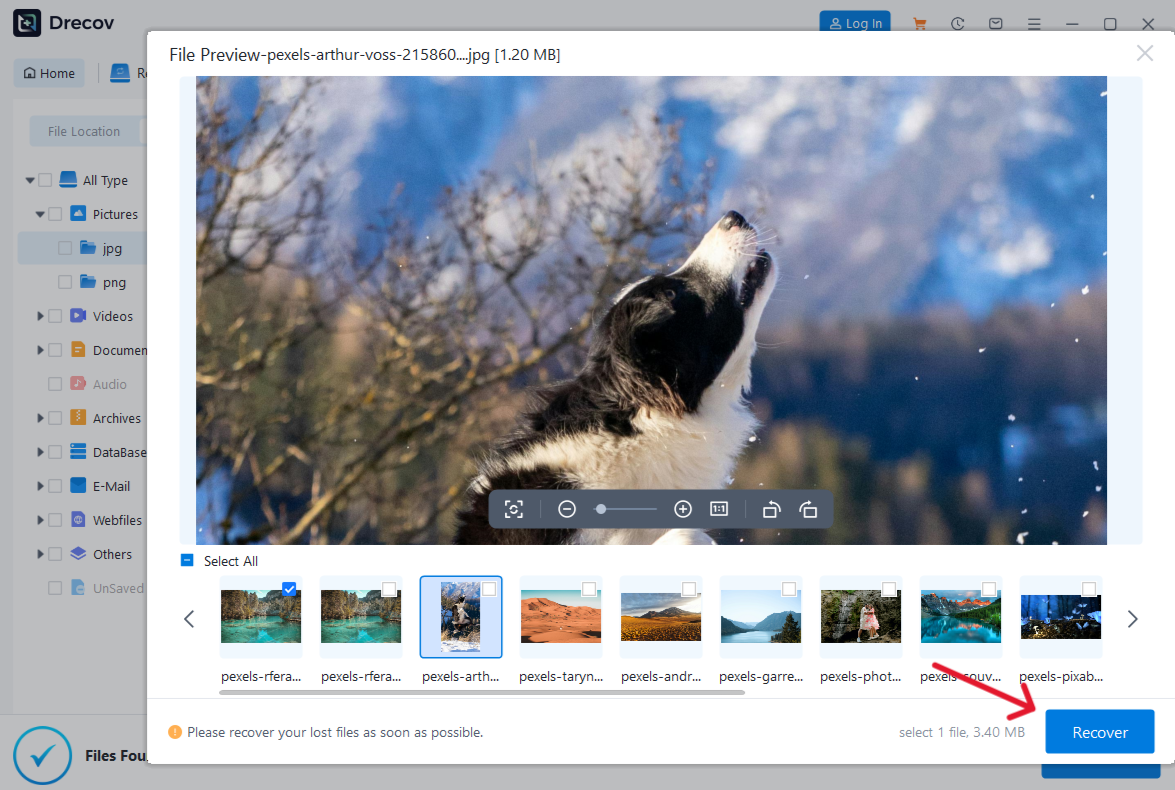
Step 4: Filter and recover complete world candidates elsewhere
Filter by former path, filename, date, and relevant file types. Preview supported items where useful, while recognizing that an individual file says little about the consistency of the whole world. Recover every related candidate to the external healthy device. Never restore directly into the live Minecraft saves folder.
Step 5: Build a test copy and verify known locations
If expected output is absent, check Drecov Folder or Recovery Folder. Keep the raw recovered folder untouched. Duplicate it, place only the duplicate in the correct edition and profile, then visit known builds, dimensions, inventories, and coordinates. Close and reopen the game before declaring the world stable.
Test the recovered world as a complete directory
Load a duplicate and visit several previously developed areas. Check player inventory, Ender Chest, spawn point, dimensions, entities, maps, and redstone builds rather than judging only the title screen.
Compare in-game coordinates and screenshots with the expected world. Chunk boundaries or abrupt terrain changes can reveal missing or mismatched region files.
Close the game normally, copy the tested world again, then reopen it. A one-time load does not prove that saving succeeds without further damage.
Keep the untouched recovered folder and one verified playable copy on separate devices until several sessions have saved correctly.
Prevent one missing file from becoming a lost world
Can a Minecraft update delete my world?
An update can change compatibility or which profile you open, while storage cleanup, account changes, failed sync, and deletion can also be involved. Inspect the path before assigning one cause.
Why is the folder present but the world not listed?
Key metadata may be missing or damaged, or the folder may belong to another edition or version. Preserve it before testing a duplicate.
Can I recover only level.dat?
The world depends on a set of files. Recovering one metadata file may help listing but cannot replace missing region, player, or dimension data.
Should I install recovery software on C: if the world was there?
No. Use a healthy Windows location and restore to another device to avoid overwriting deleted save data.
Related reading: Drecov Windows data recovery, protect game saves during repeated crashes, undelete files safely in Windows, and recover deleted Windows files. Minecraft’s official data and game-storage guidance provides the edition-specific baseline for managing world data.
Check custom launchers and modpack instance directories
Third-party launchers often isolate each modpack in its own game directory. Updating, reinstalling, or selecting another instance can make a world appear to vanish even though its folder remains under an older profile. Open the launcher’s instance settings and record each game directory. Search those paths without moving folders yet. A world may depend on the mod loader and content versions used when it was last saved.
Use timestamps as clues, not as proof
Folder and file dates can change during copying, synchronization, backup restoration, or a launcher migration. Compare several signals: region-file activity, screenshots, exported archives, launcher history, and the dates of known play sessions. A recent timestamp on a nearly empty folder is less useful than a coherent older directory containing the expected regions and player data. Test candidates only as duplicates.
Handle SSD deletion limits honestly
Many Minecraft worlds live on the Windows system SSD. After deletion, continuing to play, updating mods, browsing, or installing recovery software creates writes; TRIM may also reduce what remains recoverable. Shut down promptly when the world is genuinely deleted. No recovery application can promise files that have been overwritten or made unavailable by the storage device’s internal cleanup.
Conclusion
The safest answer to why did my Minecraft world disappear is to trace edition, profile, account, and save path before changing files. Preserve the whole saves directory, compare folder structure, and exhaust exports and backups. If deletion is confirmed on stable storage, Drecov can recover candidate folders elsewhere. Test the world across regions and dimensions before accepting the recovery.






