SanDisk card repair should not begin with formatting. First determine whether the memory card is detected consistently, reports the correct capacity, and can be read without disconnecting or freezing the computer. A stable card with logical file-system damage may be recoverable and reusable after testing. A card that vanishes, overheats, reports changing capacity, or fails in several known-good readers needs a different response: stop repeated access and protect the data before the device deteriorates further.
What exactly fails when you use the card?
Keep the card out of the camera, phone, or drone until you have recorded the symptom. “Not working” can describe several different states. The host may say no card is inserted. Windows may assign a drive letter but ask to format it. Files may open while new photos cannot be saved. Copying may fail at the same file every time. Each observation points to a different layer.
| Observed state | What it suggests | First non-writing check |
|---|---|---|
| Card works in the original device but not the computer | Reader, adapter, port, driver, or file-system support issue | Use one known-good direct card reader |
| Windows shows the correct size but asks to format | File-system metadata is unreadable or unsupported | Cancel formatting and recover files first |
| Files are readable but nothing can be added | Lock switch, adapter, host setting, or card failure | Check the physical lock and test a different reader |
| Card appears as RAW | Windows cannot mount the existing file system | Avoid CHKDSK until needed files are recovered |
| Capacity changes, reads stall, or the card disconnects | Controller, flash, contact, adapter, or reader instability | Stop repeated scans and consider imaging or a specialist |
| Card is stable and empty after accidental formatting | Logical loss with overwrite risk | Stop using it and scan from a computer |
Inspect the full-size SD card or microSD adapter for a lock switch. The unlocked position permits writes, but a loose adapter switch can slide while being inserted. Replacing the adapter is safer than forcing it. The card itself may be healthy even when a passive microSD adapter is faulty. SanDisk’s official card-detection guidance likewise recommends checking the lock, compatibility, slot, reader, and computer access before formatting.
Can a reader or host-device mismatch imitate card damage?
Yes. Power the camera or phone off before removing the card. On Windows, connect it through one known-good reader directly to the computer rather than through a hub. If a microSD card has been failing through an SD adapter, test a native microSD reader. Do not rub contacts with abrasive materials or bend the card to “improve” contact.
Open Disk Management with Windows + X > Disk Management. Match the removable disk by capacity. Do not initialize it. If it appears with the correct capacity but as RAW, cancel any format prompt. If the reader itself never appears with any card, troubleshoot the reader or USB connection rather than altering the SanDisk card.
Compatibility matters inside cameras and embedded devices. Older hosts may reject capacities or file systems they do not support. A card formatted as exFAT may work in a modern computer but fail in equipment limited to FAT32. Confirm the host’s capacity and card-class requirements in its manual. The distinction is explained further in the exFAT compatibility overview. Do not reformat merely to test compatibility while irreplaceable files remain on the card.
Which signs mean you should stop repair attempts?
Stop if the card repeatedly disconnects, changes reported capacity, makes the reader reset, becomes unusually hot, or causes long system freezes. Also stop if every reader reports I/O errors at different points. Repeating scans against unstable flash can consume the limited time during which the controller still exposes data. An I/O device error is evidence to assess, not permission to run increasingly aggressive commands.
A professional recovery service may be appropriate when the images are unique, the card is physically cracked, the controller is no longer detected, or reading creates escalating errors. A software tool cannot repair broken traces, failed NAND, or a dead controller. If the card can still be read consistently, an image made by a competent technician can reduce later stress by moving logical recovery work to a copy.
How do you recover files from a stable SanDisk card?
Drecov is Windows data recovery software for stable, detectable storage with logical loss. Here it can search a card that was accidentally formatted, has deleted files, or presents a readable physical device whose file system no longer mounts normally. Quick Scan looks for readily available records; Deep Scan performs a broader search when needed. Drecov does not repair the card’s controller, fix a reader, remove write protection, or guarantee recovery after new photos have overwritten old data.
⚠ Warning: Install it on a drive different from the one where your data was lost to prevent overwriting.
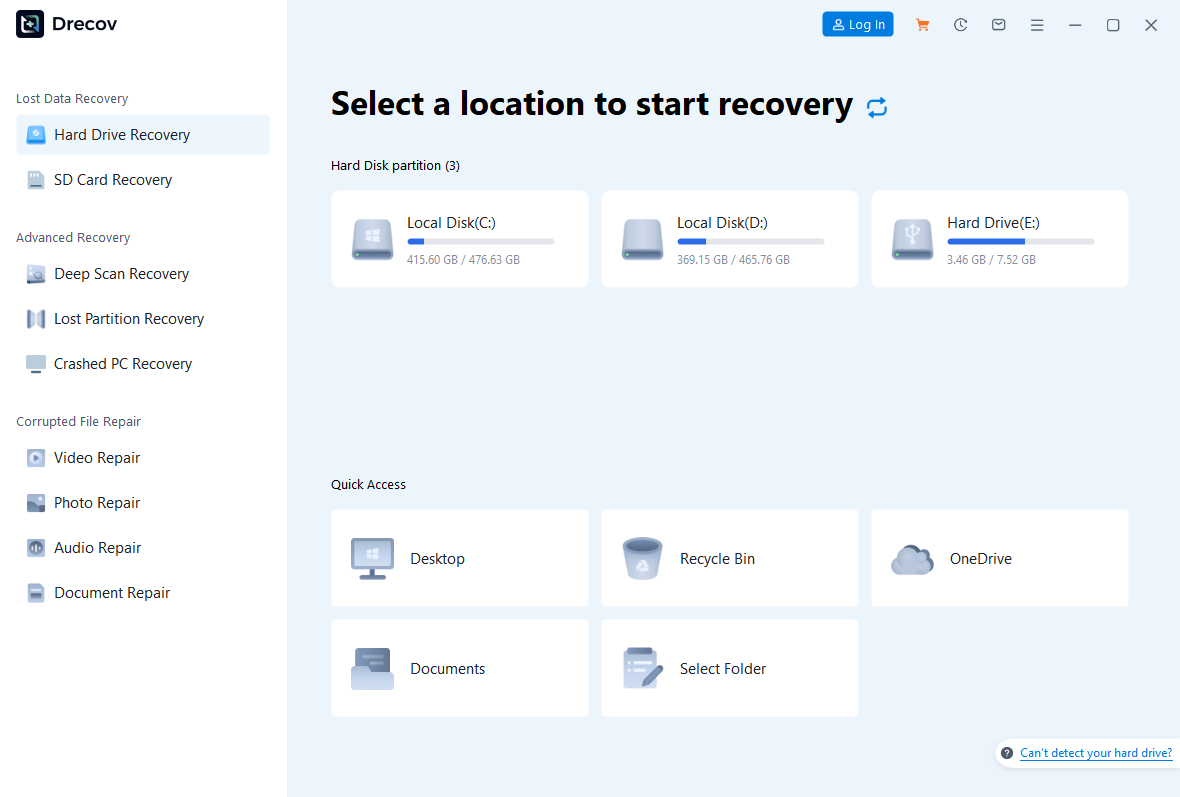
Step 1: Open Drecov and select the memory card
Prepare a different healthy drive with enough space for the recovered files. Install and run Drecov from the Windows system drive or another healthy disk, never from the affected card. Identify the card by capacity and removable-device position, not only by its letter. If Windows cannot keep the card connected long enough to identify it, stop the scan and consider imaging or professional help.
Step 2: Start Quick Scan, then deepen the search only if stable
Run Quick Scan on the card. Check its former DCIM, PRIVATE, Movies, Documents, or device-specific folders. If recent photos, video clips, or documents are missing and the card continues to respond normally, run Deep Scan. Stop if the card starts dropping offline, the scan repeatedly stalls, or Windows begins logging new read errors.
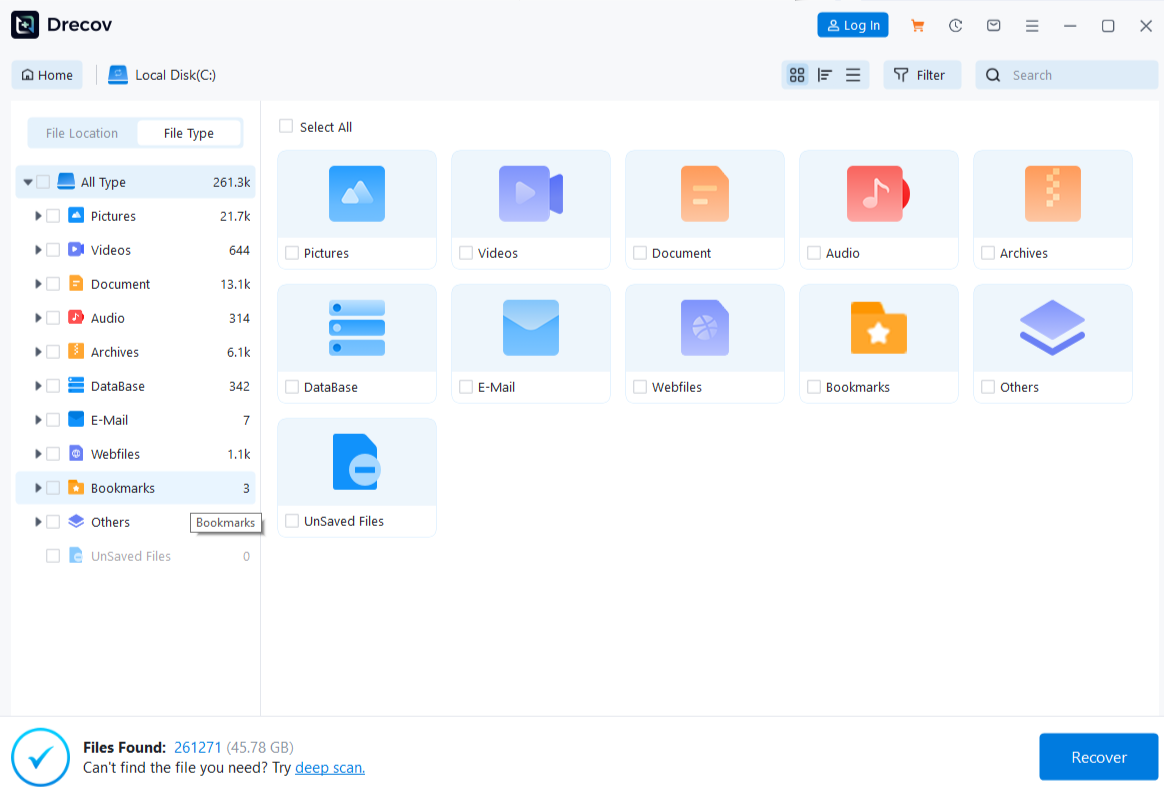
Step 3: Find and preview representative card files
Filter results by former path, date, filename, or file type. For a camera card, preview photographs from different shooting sessions and play portions of several videos. A thumbnail alone does not prove that the full-resolution image or complete video stream is intact. If you need editing sidecars, project databases, or paired RAW and JPEG files, locate those related items as well.
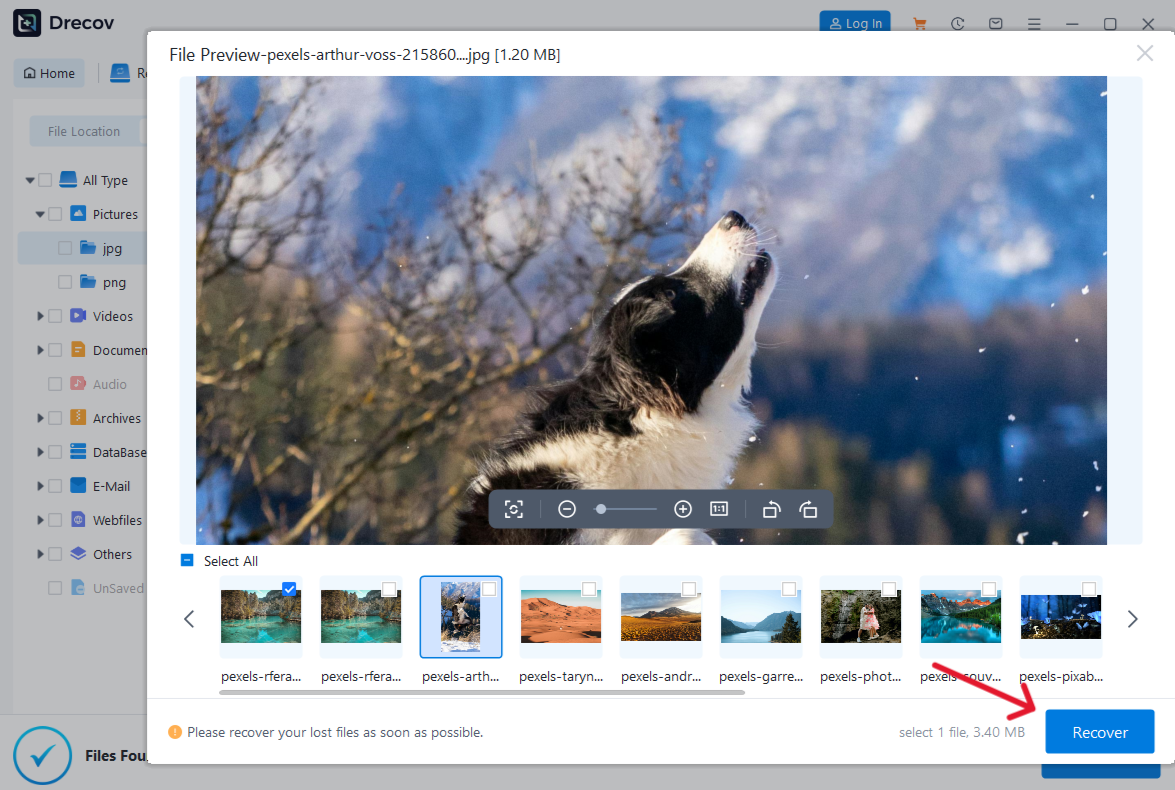
Step 4: Save elsewhere and test complete files
Recover selected items to the separate healthy drive, never back to the card. If they are not in the destination you expected, inspect the Drecov Folder or Recovery Folder. Open full-size photos, scrub through videos, extract archives, and compare important folder counts. Keep the verified copy in at least two locations before performing a repair that writes to the card.
⚠ Warning: Install it on a drive different from the one where your data was lost to prevent overwriting.
When is CHKDSK appropriate, and what can it change?
CHKDSK checks the logical consistency of a Windows-recognizable file system. It is not an undelete tool and is not the first step for a RAW card containing needed files. Its repairs can alter directory entries, detach damaged records, or place recovered fragments in folders that no longer preserve original names. That tradeoff may be acceptable after a verified backup, but not before recovery.
If the card is stable, the files are safe, and Windows assigns a letter to an NTFS, FAT32, or exFAT volume, open Terminal as administrator and run chkdsk X: /f, replacing X with the card’s confirmed letter. Recheck the letter before pressing Enter; targeting the wrong volume can modify the wrong file system. The expected result is a completed consistency check followed by normal mounting. If CHKDSK reports RAW, stops on I/O errors, or the card disconnects, do not repeat it.
Inspect both the repaired card and the backup afterward. Missing image content is not restored merely because the file system mounts again. For pictures that open with visual damage, retain the original and use a copy with the corrupted-image repair workflow.
When should you format the card instead?
Formatting is reasonable only after required data is recovered and the card remains stable. Use the camera or device that will own the card when its manufacturer recommends in-device formatting. That creates the file system and folders the host expects. If you format in Windows, choose the file system supported by the target device and leave allocation settings at documented defaults.
A quick format writes new file-system metadata but does not test every flash cell. A full format performs more writes and is not a recovery technique. Either option is destructive to the existing logical structure. Remove the recovery destination before formatting so there is no chance of selecting the wrong disk.
After formatting, copy several nonessential files to the card, safely eject it, reconnect it, and verify every file. In a camera, record photos and a video long enough to cross more than one allocation area, then play them back and copy them to a computer. Replace the card if errors return, capacity changes, the device reports slow-write warnings, or the card becomes read-only again.
What if the SanDisk card is read-only?
For a full-size SD card, move the physical switch to the unlocked position. If a microSD card is inside an adapter, replace the adapter when its switch feels loose. Test the microSD card in a native reader. If several readers report read-only status even without an adapter, copy or recover accessible files immediately. Flash controllers can force read-only operation when they detect failure; no registry tweak can repair worn cells.
Do not use DiskPart attributes as the first response to a physical switch or failing card. A command that clears a software attribute cannot override damaged hardware. Once data is secure, a stable card may be reformatted and retested. Recurring read-only behavior is a replacement signal.
How do you know the repair is finished?
A successful repair has three parts. The computer and intended host detect the correct capacity every time. The card accepts new files, retains them through safe removal and reconnection, and reads them without errors. Finally, recovered originals remain verified on separate storage. Do not rely only on File Explorer showing a letter.
If a camera or drone was involved, test the card there after computer checks. Confirm that it records, plays back, and increments filenames normally. If the host prompts to format again or a new clip is corrupt, retire the card. Memory cards are replaceable; unique files are not.
Sandisk card repair FAQs
Can formatting repair a corrupted card?
It can create a fresh file system on stable hardware, resolving some logical corruption. It erases the existing structure and cannot repair failed flash or a controller. Recover and verify needed files first.
Does CHKDSK recover deleted photos?
No. CHKDSK repairs file-system consistency. It may preserve or discard records, but it is not designed to recover a deleted photo set. Use backups or read-only recovery before modification.
Why does the card work in a camera but not Windows?
The reader, adapter, file-system support, or connection may differ. Try one known-good direct reader and check Disk Management. If the camera is the only device that reads the files, copy through the camera before considering format.
Can Drecov fix a physically broken card?
No. It can scan a stable card exposed to Windows for logical-loss recovery. A cracked card, dead controller, intermittent connection, or device that never remains detected requires hardware-level assessment.
Should a repaired card be trusted for important recording?
Only after repeated full-cycle testing. Even then, a card that showed instability or recurring errors should be replaced. Keep multiple copies of important recordings instead of making a repaired card the sole copy.
Good SanDisk card repair preserves evidence before changing it. Rule out the reader and lock, stop when the medium is unstable, recover valuable files from a stable source, and format only after the copies pass real checks. If the fault returns, replacement is safer than another repair cycle.
⚠ Warning: Install it on a drive different from the one where your data was lost to prevent overwriting.