







The invalid value for registry message often appears when Windows Photos cannot use its registered file association or app components. It does not automatically mean your JPG or PNG is corrupt. Before resetting Photos or editing the registry, duplicate the affected image and open it with another trusted viewer. That single comparison protects the file and shows whether the problem follows the picture or the application.
Run the Two-File, Two-Viewer Test
A useful diagnosis needs one affected image, one known-good image, Windows Photos, and a second local viewer such as Paint or a web browser. Work with duplicates. Do not rename the only original or convert it before you know whether its content is readable.
Open the affected image outside Photos
Right-click the duplicate, choose Open with, and select Paint or a browser. If it displays correctly, the pixels and basic file structure are readable. The Photos app, its package state, or the file association becomes the likely layer. If every viewer rejects the image, focus on the file, its download, or its storage source.
Open a known-good image in Photos
Create a small screenshot or choose a picture that opens elsewhere. Try it in Photos. When the known-good file produces the same error, the viewer is implicated. If Photos opens that image but rejects only one file, inspect the rejected file’s size, extension, format, and origin.
Repeat with a second file type
Test a JPG and a PNG. A failure limited to one extension can involve the association or codec path for that format. A failure across every common image type points more strongly to the Photos package or Windows profile. Keep the result table; it prevents broad fixes from replacing useful evidence.
| Result | Likely boundary | Next action |
|---|---|---|
| Affected image opens in Paint | Photos or its association | Repair Photos and reassociate the extension |
| Known-good images also fail in Photos | Photos package, profile, or Windows component | Update, repair, then reset only if needed |
| Only one image fails everywhere | Incomplete, mislabeled, or damaged file | Find another version or assess file recovery |
| Files on one drive fail intermittently | Storage access or device instability | Copy safely if stable; stop for physical warning signs |
| Image is zero bytes | No picture content exists in that copy | Use backup, version history, or recover a prior copy |
Check the Image Before Touching Windows
File facts can rule out several wrong repairs. Open Properties and record the byte size, extension, location, and modified date. A zero-byte image cannot be restored by resetting Photos. A very small “photo” downloaded from a website may actually be an error page or thumbnail.
Confirm the extension matches the content
Do not assume a renamed extension converts the image. If a file arrived without an extension, compare it with a copy from the original source. Use a reputable viewer that identifies formats. Renaming may help only when the content is healthy and the label was wrong.
Move a duplicate to a short local path
Copy the image to a folder such as Pictures on a healthy local disk. This test removes unavailable network paths, cloud placeholders, blocked removable media, and long names from the equation. If the local copy opens, troubleshoot the original location rather than the Photos app.
Check cloud and backup versions
For OneDrive or another synchronized service, confirm the image is downloaded for offline use. Compare version history and file size. Download a candidate to a new filename. Do not overwrite the local problem copy until the replacement opens and has the expected resolution.
If the image fails in every viewer, use the site’s Windows photo registry diagnosis to keep viewer registration and actual file damage separate.
Repair the Photos Layer From Least to Most Disruptive
Once the test proves that readable images fail only in Photos, work on the app. Avoid registry-cleaning utilities. They change many entries without proving which registration is wrong and may create new association problems.
Update Photos and Windows
Open Microsoft Store, check Library updates, and update Microsoft Photos. Install pending Windows updates through Settings, then restart normally. Retest the same known-good image and the affected duplicate. A successful result after a documented update is clearer than several simultaneous changes.
Repair before you reset
Open Settings, Apps, Installed apps, Microsoft Photos, and Advanced options. Choose Repair first. Microsoft’s official Windows app repair instructions distinguish repair from reset. Repair aims to correct the app without deleting its app data. Test again before escalating.
Reset Photos only after files are protected
If Repair fails, confirm that image files exist independently in ordinary folders or backups. Then use Reset. Reset can remove app settings and local app state; it should not be treated as photo recovery. Reopen Photos, reassociate one extension, and test. Do not delete source images from Pictures merely because thumbnails need rebuilding.
Reassign the default viewer
Open Settings, Apps, Default apps, and choose the intended viewer for JPG, JPEG, PNG, and other needed formats. Alternatively, use Open with and select Always for one trusted application. Association changes tell Windows which program should open a file. They do not repair the file itself.
Handle the Registry Only With a Reversible Reason
The error text mentions the registry, but that does not authorize random edits. App registration contains package identifiers and file associations. Copying commands from an unrelated Windows build can break more mappings than it fixes.
Create a restore point for system changes
Before a targeted registry or package-registration change, protect documents and create a Windows restore point when System Protection is available. Export only the key you intend to change. A restore point protects system configuration; it is not a backup of personal photos.
Prefer official package reinstallation
If repair and reset fail, uninstall and reinstall Microsoft Photos through supported Windows or Microsoft Store controls where available. Confirm that another viewer opens your pictures first. Reinstallation changes the application layer, so it should not be used to diagnose a file that fails everywhere.
Test another Windows account
Create or use a separate local account and open a copied known-good image. If Photos works there, the original user profile or per-user association is involved. If it fails for every account, investigate the app package and Windows component state. Keep the personal image library outside this experiment.
Use Drecov Only When the Picture Is Missing or Inaccessible
An invalid registry value does not by itself require recovery software. Drecov becomes relevant if a reset, cleanup, failed transfer, or storage problem leaves the original photo deleted or logically inaccessible. First inspect the Recycle Bin, cloud trash, version history, camera card, phone export, and external backups. The site’s deleted photo recovery paths explain those sources.
⚠ Warning: Install it on a drive different from the one where your data was lost to prevent overwriting.
PandaOffice Drecov is Windows recovery software for PCs, HDDs, SSDs, external disks, USB devices, SD cards, and memory cards. Its read-only recovery mode is designed to search without intentionally repairing the source. Quick Scan starts the search. Deep Scan can inspect more thoroughly when the device stays stable. Type, path, filename, date, dimensions where available, and preview can help identify photos before recovery to another healthy location.
Drecov also supports documents, video, audio, email data, and archives, while Lost Partition Recovery can search when a partition disappears. It cannot repair the Photos app, rewrite registry associations, fix a physically failing device, or guarantee overwritten or TRIM-cleared data. Stop scanning a drive or card that disconnects, reports serious read errors, or causes system freezes.
Recover Missing Images With Drecov
Step 1: Open Drecov and select the original image location
Prepare another healthy drive for output and do not install Drecov on the source partition. Open Drecov, then select the stable folder, disk, USB device, or memory card where the missing images last existed. Use Lost Partition Recovery if the whole partition vanished before any initialization or formatting.

Step 2: Run Quick Scan and narrow the photo set
Start Quick Scan. Filter for relevant photo types, former folders, camera naming patterns, dates, and expected sizes. Search for edited exports as well as originals when both matter. Keep multiple candidates if sync conflicts or repeated downloads created similar names.
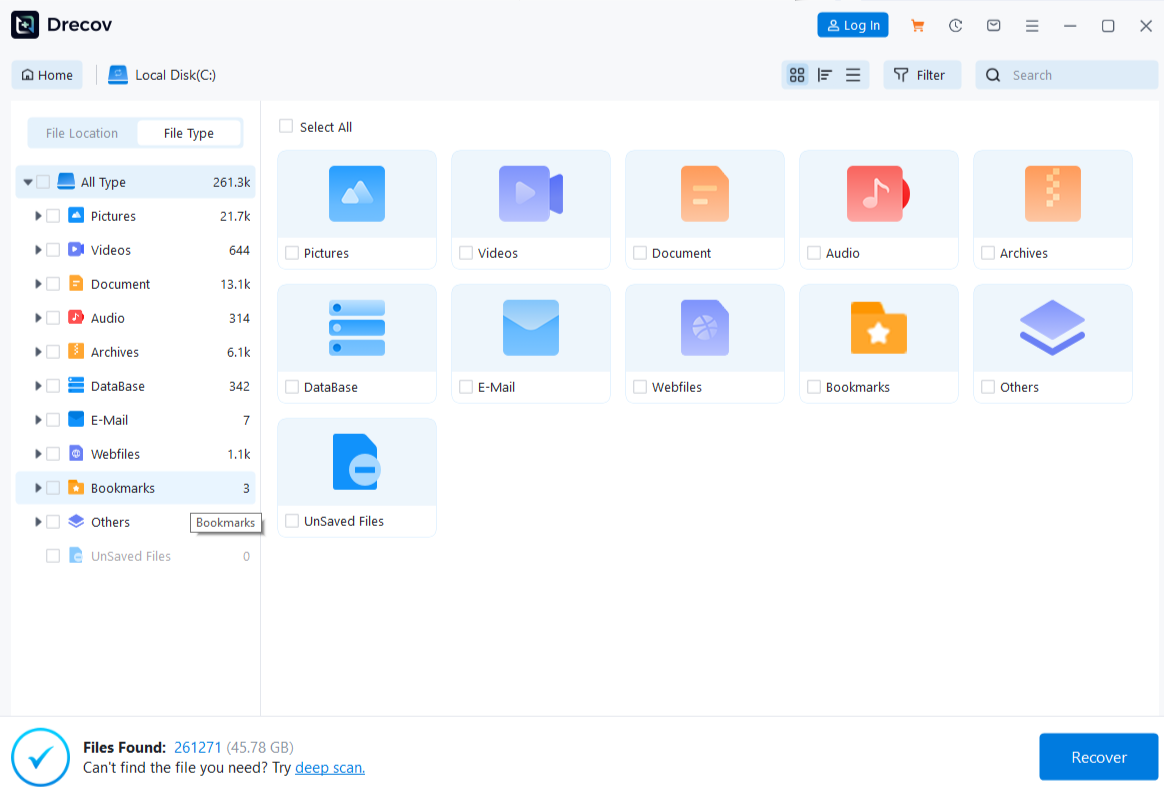
Step 3: Run Deep Scan only if the source remains stable
Use Deep Scan when Quick Scan misses the required images and the device remains consistently detected. Stop for disconnections, severe delays, or new I/O errors. A deeper logical search cannot make unstable hardware safe.
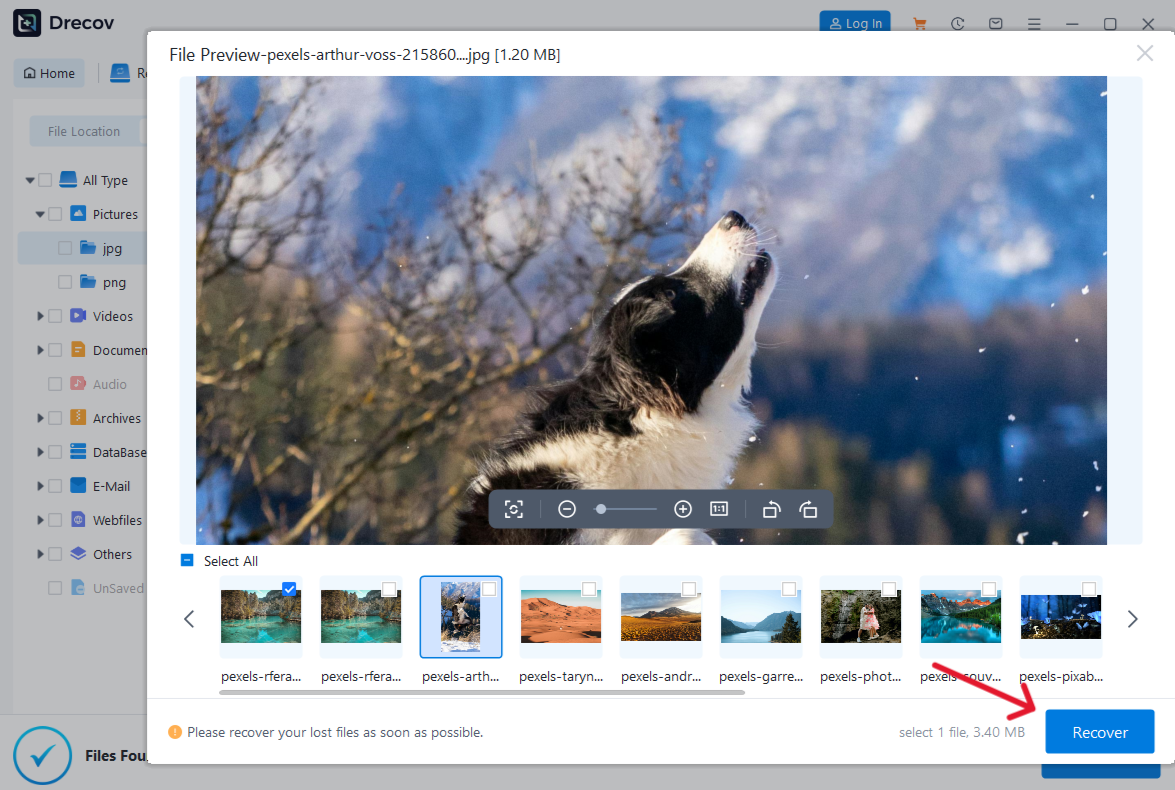
Step 4: Preview representative photos and recover elsewhere
Preview images from different dates, folders, and formats. Zoom into detail and check orientation and dimensions. Preview proves only that the displayed candidate can be decoded; it does not guarantee every image in a selected group. Recover chosen files to the separate healthy disk, never to the source.
Step 5: Locate, sample, and verify recovered images
If output is not visible in the chosen destination, inspect Drecov Folder or Recovery Folder. Open recovered files with two viewers. Check full resolution, color, metadata that matters, and several images from each group. Only after verification should you reset applications, repair the file system, format the card, or reuse the original storage.
For a truly deleted image rather than a viewer error, the site’s image deletion recovery checklist helps prioritize backups and source protection.
Conclusion
An invalid value for registry message is best solved by proving which layer fails. Test the affected image and a known-good image in Photos and another viewer. If readable files fail only in Photos, update, repair, and then reset the app before considering targeted registration work. If an image is missing rather than merely unopened, Drecov can search its original stable storage and recover candidates to another healthy disk. Verify the files independently before changing the source or deleting any preserved copy.
⚠ Warning: Install it on a drive different from the one where your data was lost to prevent overwriting.






