







This article addresses Excel cannot open because the file format is not valid with evidence-based checks. If Excel says the file format is not valid, repeated renaming can hide useful evidence. Preserve the source, confirm its size and origin, and test a duplicate to distinguish extension mismatch, incomplete transfer, and workbook corruption. For this workbook-format preservation, preserve the current state, gather one decisive observation, and verify the result under the conditions that exposed the problem.
Preserve the Original Before Testing
Duplicate the file before opening, renaming, extracting, or repairing it. Treat a zero-byte file as an empty container that needs another source. Together, those observations supply the evidence needed for preserve the original before testing while leaving unrelated settings untouched. Write down the workbook-format preservation result before moving to the next branch. The practical question at this stage is whether the evidence supports preserve the original before testing, not whether a broad reset happens to hide the symptom once.
Compare size and timestamp with the sender’s or an earlier copy. Show extensions so report.xlsx.zip is not mistaken for a workbook. Use the difference between the expected and observed result to choose the smallest defensible action under preserve the original before testing. If the workbook-format preservation test changes access or stability, return to the protected baseline. Recreate the original trigger while evaluating preserve the original before testing; an outcome that cannot be repeated should not justify a destructive repair.
Check Size, Extension, and Source
Remember that changing xls to xlsx does not convert the internal format. Ask which application and export option created the file. Together, those observations supply the evidence needed for check size, extension, and source while leaving unrelated settings untouched. Write down the workbook-format preservation result before moving to the next branch. The practical question at this stage is whether the evidence supports check size, extension, and source, not whether a broad reset happens to hide the symptom once.
Redownload or request a resend when transfer may be incomplete. Do not bypass an extension warning from an untrusted source. Use the difference between the expected and observed result to choose the smallest defensible action under check size, extension, and source. If the workbook-format preservation test changes access or stability, return to the protected baseline. Recreate the original trigger while evaluating check size, extension, and source; an outcome that cannot be repeated should not justify a destructive repair.
| Observed evidence | Decision it supports |
|---|---|
| Duplicate the file before opening, renaming, extracting, or repairing it | Verify directly |
| Treat a zero-byte file as an empty container that needs another source | Compare with a control |
| Compare size and timestamp with the sender’s or an earlier copy | Protect the current state |
Separate a Renamed File From Damage
Run excel open and repair on a duplicate rather than the only original. Use another trusted spreadsheet application only as an evidence-gathering test. Together, those observations supply the evidence needed for separate a renamed file from damage while leaving unrelated settings untouched. Write down the workbook-format preservation result before moving to the next branch. The practical question at this stage is whether the evidence supports separate a renamed file from damage, not whether a broad reset happens to hide the symptom once.
Check cloud version history, file history, attachments, and temporary copies. Compare recovered sheets, formulas, charts, links, and macros. Use the difference between the expected and observed result to choose the smallest defensible action under separate a renamed file from damage. If the workbook-format preservation test changes access or stability, return to the protected baseline. Recreate the original trigger while evaluating separate a renamed file from damage; an outcome that cannot be repeated should not justify a destructive repair.
For a neighboring but different symptom, see excel found a problem with content only when its diagnostic boundary matches what you observed.
Use Safe Opening Methods on a Copy
Recognize that recovery can retrieve bytes without repairing workbook structure. Retain every candidate until one survives open, edit, save, and reopen. Together, those observations supply the evidence needed for use safe opening methods on a copy while leaving unrelated settings untouched. Write down the workbook-format preservation result before moving to the next branch. The practical question at this stage is whether the evidence supports use safe opening methods on a copy, not whether a broad reset happens to hide the symptom once.
Duplicate the file before opening, renaming, extracting, or repairing it. Treat a zero-byte file as an empty container that needs another source. Use the difference between the expected and observed result to choose the smallest defensible action under use safe opening methods on a copy. If the workbook-format preservation test changes access or stability, return to the protected baseline. Recreate the original trigger while evaluating use safe opening methods on a copy; an outcome that cannot be repeated should not justify a destructive repair.
Find an Earlier Intact Version
Compare size and timestamp with the sender’s or an earlier copy. Show extensions so report.xlsx.zip is not mistaken for a workbook. Together, those observations supply the evidence needed for find an earlier intact version while leaving unrelated settings untouched. Write down the workbook-format preservation result before moving to the next branch. The practical question at this stage is whether the evidence supports find an earlier intact version, not whether a broad reset happens to hide the symptom once.
Remember that changing xls to xlsx does not convert the internal format. Ask which application and export option created the file. Use the difference between the expected and observed result to choose the smallest defensible action under find an earlier intact version. If the workbook-format preservation test changes access or stability, return to the protected baseline. Recreate the original trigger while evaluating find an earlier intact version; an outcome that cannot be repeated should not justify a destructive repair.
For a neighboring but different symptom, see how do i recover corrupted files only when its diagnostic boundary matches what you observed.
Recover a Deleted or Replaced Workbook
Redownload or request a resend when transfer may be incomplete. Do not bypass an extension warning from an untrusted source. Together, those observations supply the evidence needed for recover a deleted or replaced workbook while leaving unrelated settings untouched. Write down the workbook-format preservation result before moving to the next branch. The practical question at this stage is whether the evidence supports recover a deleted or replaced workbook, not whether a broad reset happens to hide the symptom once.
Run excel open and repair on a duplicate rather than the only original. Use another trusted spreadsheet application only as an evidence-gathering test. Use the difference between the expected and observed result to choose the smallest defensible action under recover a deleted or replaced workbook. If the workbook-format preservation test changes access or stability, return to the protected baseline. Recreate the original trigger while evaluating recover a deleted or replaced workbook; an outcome that cannot be repeated should not justify a destructive repair.
Recover Missing Local Files Before Risky Changes
If Excel cannot open because the file format is not valid has already left local files missing or inaccessible, protect them before changing the system. PandaOffice Drecov supports the workbook-format preservation by recovering data in Windows from PCs, HDDs, SSDs, external drives, USB drives, SD cards, and memory cards. For this workbook-format preservation, its read-only recovery mode can locate documents, photos, videos, email data, audio, and archives. On stable recognized storage, the workbook-format preservation workflow includes Quick Scan, Deep Scan, filters, preview, and Lost Partition Recovery. For the workbook-format preservation, Drecov cannot repair the underlying application, driver, firmware, physical damage, or overwritten sectors.
⚠ Warning: Install it on a drive different from the one where your data was lost to prevent overwriting.
Step 1: Select the original location
Stop writes connected with Excel cannot open because the file format is not valid and prepare a healthy destination on another device. Install Drecov away from the lost data, open it, and select the original partition or device. During this workbook-format preservation, stop scanning if the source clicks, disconnects, changes capacity, or reports severe read errors; imaging or professional service is then safer.

Step 2: Check Quick Scan results
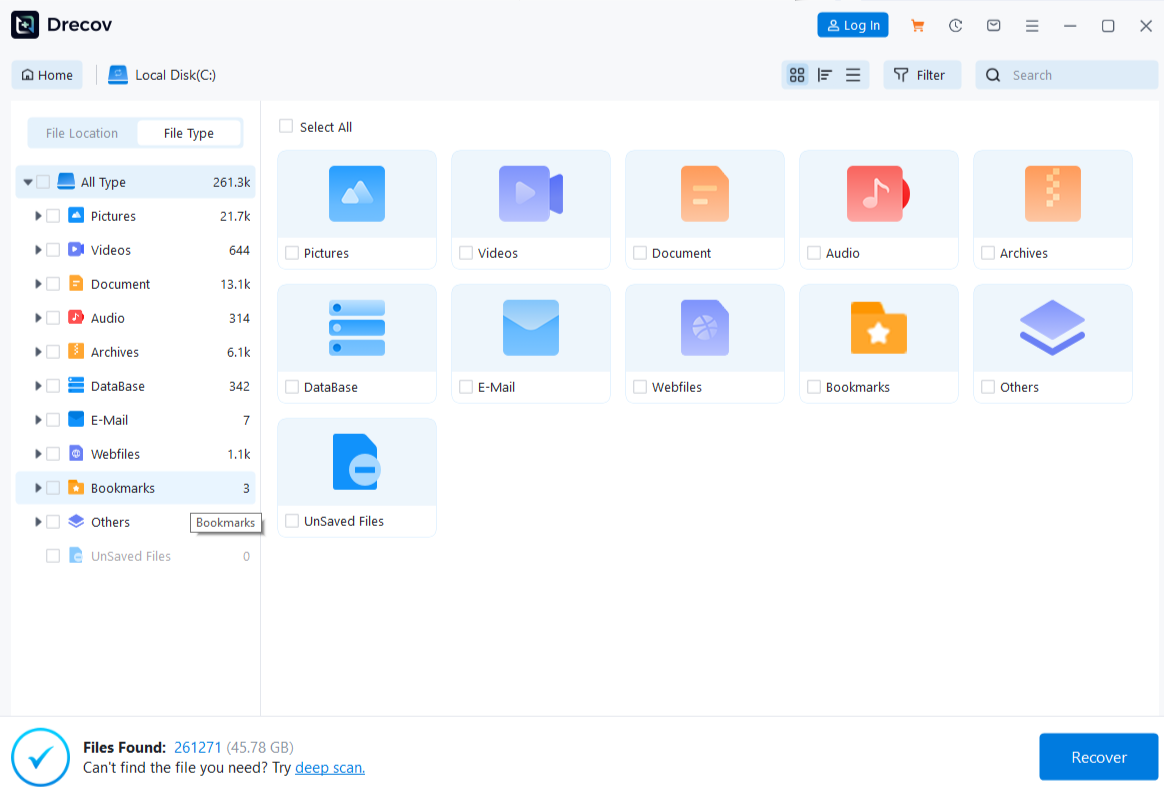
Run Quick Scan first for the workbook-format preservation, then inspect the former folder and likely paths. Filter by filename, location, type, date, or size when those details are known. Do not format, repartition, reinstall, or run a writing repair while the important result remains unprotected.
Step 3: Escalate to Deep Scan carefully
Use Deep Scan only if Quick Scan misses the target and the source remains stable throughout this workbook-format preservation. A deeper search can find additional file records, but it cannot recreate overwritten content. Stop immediately if device behavior deteriorates.
Step 4: Preview meaningful samples
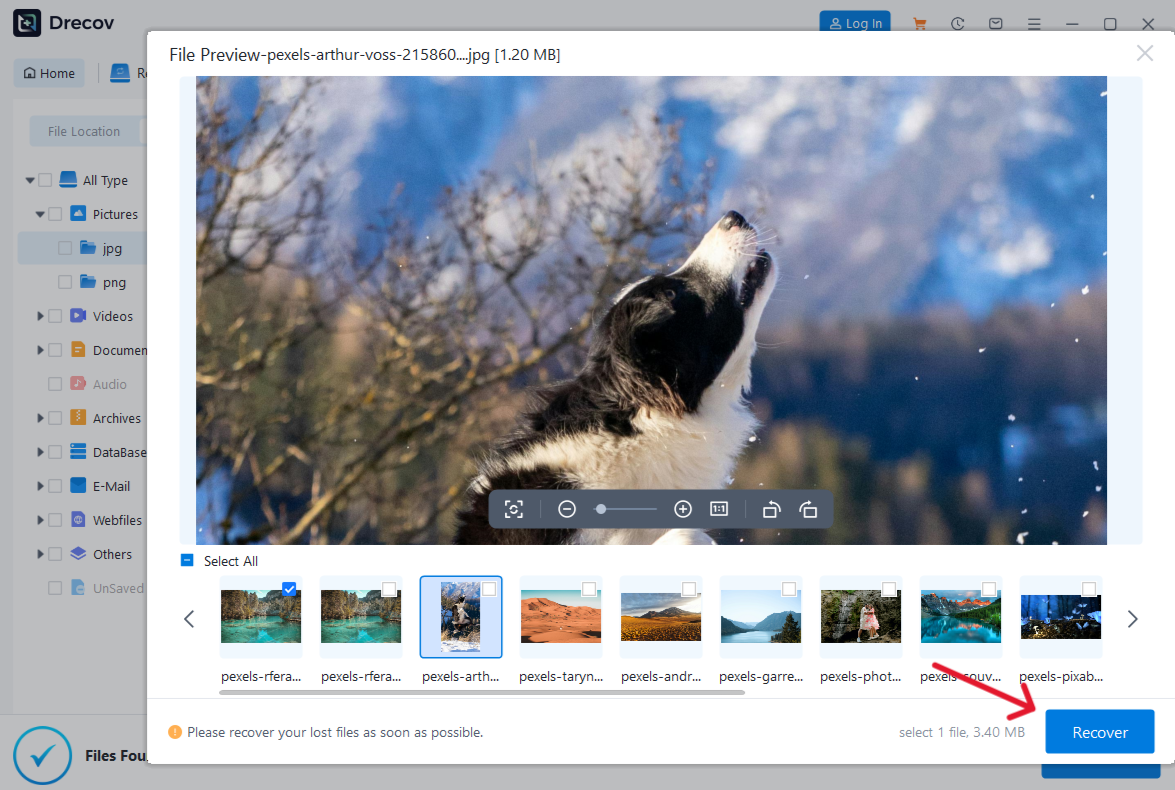
Narrow the candidates related to Excel cannot open because the file format is not valid and preview several supported files, not just one convenient example. A readable preview supports the workbook-format preservation decision, yet it cannot certify every page, formula, frame, archive member, linked asset, or game state.
Step 5: Restore away from the source
Save selected files to the prepared healthy destination so the workbook-format preservation does not overwrite recoverable space. Never restore onto the workbook-format preservation source device. If the output is not in the expected directory, inspect the Drecov Folder or Recovery Folder.
Step 6: Validate before continuing repairs
Open representative restored files and compare their names, sizes, contents, and application behavior. Finish this workbook-format preservation by confirming that the recovered copy is usable. Only then resume repair commands, partition work, reset, formatting, or reinstallation.
⚠ Warning: Install it on a drive different from the one where your data was lost to prevent overwriting.
For current platform behavior, consult Microsoft file-format and extension guidance. A complementary prevention path is available in text recovery converter.
Excel cannot open because the file format is not valid FAQs
Can I rename XLS to XLSX?
No. Renaming does not convert the internal format. Apply that workbook-format preservation answer to the recorded evidence, and retain the protected source until the outcome has been verified.
What does zero bytes mean?
The file contains no workbook payload. Apply that workbook-format preservation answer to the recorded evidence, and retain the protected source until the outcome has been verified.
Is Open and Repair safe?
Use it on a duplicate because repair can remove damaged records. Apply that workbook-format preservation answer to the recorded evidence, and retain the protected source until the outcome has been verified.
Could the warning indicate malware?
Yes. Do not trust a disguised extension from an unknown source. Apply that workbook-format preservation answer to the recorded evidence, and retain the protected source until the outcome has been verified.
Can Drecov repair the workbook?
It can recover lost files but cannot guarantee structural repair. Apply that workbook-format preservation answer to the recorded evidence, and retain the protected source until the outcome has been verified.
Conclusion
For this workbook-format preservation, keep diagnosis, data protection, and verification separate. Follow the workbook-format preservation evidence and make one narrow change instead of stacking generic fixes. If the workbook-format preservation leaves local files missing on stable Windows storage, Drecov can scan the original location, preview candidates, and recover selected data to another healthy device. Drecov cannot replace the application, driver, firmware, file-system, or hardware repair required by the workbook-format preservation.
⚠ Warning: Install it on a drive different from the one where your data was lost to prevent overwriting.





