







“Class not registered” is a Windows component error, not one universal file problem. The useful clue is what you were doing when it appeared: opening a photo, starting File Explorer, launching an app, clicking a link, or running a specific tool. First confirm that the underlying file still exists and opens in another trusted application. Then repair the affected app or association before using broad registration commands. If files are genuinely missing or inaccessible, protect them before system resets or reinstallation.
Use the Failing Action as the Diagnostic Key
Record the exact action and application
A photo-opening failure differs from Explorer, Start menu, browser, or installer trouble.
Record that result before changing another variable. It provides a clean comparison if the next attempt behaves differently.
For class not registered, treat record the exact action and application as a checkpoint. Write down the path, account, application, device state, and time that apply here. That record can expose a mistaken assumption. It also keeps a later change separate from the original symptom.
Open the file with another trusted app
If the content opens, preserve it and focus on association or the original application.
Use a duplicate or harmless example for the test. The only valuable source should remain unchanged while the diagnosis develops.
For this specific case, treat open the file with another trusted app as a checkpoint. Write down the path, account, application, device state, and time that apply here. That record can expose a mistaken assumption. It also keeps a later change separate from the original symptom.
Reset the default app deliberately
Choose a known application for the file type rather than editing the registry blindly.
A failed check is still useful because it removes one explanation. Avoid stacking unrelated fixes after it.
For this specific case, treat reset the default app deliberately as a checkpoint. Write down the path, account, application, device state, and time that apply here. That record can expose a mistaken assumption. It also keeps a later change separate from the original symptom.
Repair or reset the affected app
Use Windows Settings for Store apps or the vendor’s documented repair for desktop software.
Compare the finding with the last known good state. Time, account, path, and device details often reveal more than the generic error text.
For this specific case, treat repair or reset the affected app as a checkpoint. Write down the path, account, application, device state, and time that apply here. That record can expose a mistaken assumption. It also keeps a later change separate from the original symptom.
Run system-file checks after data protection
DISM and SFC can address Windows component corruption but are not file-recovery tools.
Stop if access worsens or the device becomes unstable. Another retry is not evidence when the source can no longer be read consistently.
For this specific case, treat run system-file checks after data protection as a checkpoint. Write down the path, account, application, device state, and time that apply here. That record can expose a mistaken assumption. It also keeps a later change separate from the original symptom.
Treat copied DLL registration commands cautiously
Registering unrelated DLLs can fail, alter behavior, or hide the original context.
Verify the observation on a second application or location when practical. Independent confirmation separates content trouble from a local display problem.
For this specific case, treat treat copied dll registration commands cautiously as a checkpoint. Write down the path, account, application, device state, and time that apply here. That record can expose a mistaken assumption. It also keeps a later change separate from the original symptom.
Repair the Narrowest Responsible Layer
| Finding | Safest next action |
|---|---|
| One file type is affected | Fix its default association and test several known-good files. |
| Only one application fails | Repair or reinstall that application after preserving its local data. |
| Explorer or multiple Windows surfaces fail | Check updates and system files, then consider a repair install with backups verified. |
| Files exist but permissions block access | Correct ownership or permissions on a copy and avoid destructive resets. |
| Files are missing | Stop writes and use backups or recovery before reinstalling Windows. |
Avoid Broad Registration Commands Without Evidence
Choose Open with and a verified default
This is reversible and appropriate when the file itself remains healthy.
Compare the finding with the last known good state. Time, account, path, and device details often reveal more than the generic error text.
Judge choose open with and a verified default by the result it should produce in this task. Check the content after the action, not just the absence of an error. Keep the previous candidate during testing. The new result should survive a normal close, reopen, and comparison test.
Use app Repair before Reset
Reset can delete local app data. Export or copy that data first.
Stop if access worsens or the device becomes unstable. Another retry is not evidence when the source can no longer be read consistently.
Judge use app repair before reset by the result it should produce in this task. Check the content after the action, not just the absence of an error. Keep the previous candidate during testing. The new result should survive a normal close, reopen, and comparison test.
Run DISM followed by SFC
Use an elevated terminal and record results; do not present these tools as personal-file recovery.
Verify the observation on a second application or location when practical. Independent confirmation separates content trouble from a local display problem.
Judge run dism followed by sfc by the result it should produce in this task. Check the content after the action, not just the absence of an error. Keep the previous candidate during testing. The new result should survive a normal close, reopen, and comparison test.
Use a repair install as a late option
Verify backup and keep selections before changing Windows system components.
Record that result before changing another variable. It provides a clean comparison if the next attempt behaves differently.
Judge use a repair install as a late option by the result it should produce in this task. Check the content after the action, not just the absence of an error. Keep the previous candidate during testing. The new result should survive a normal close, reopen, and comparison test.
Related reading: PandaOffice Drecov, IRQL Not More or Less: Trace the Driver or Memory Trigger Safely, HP 3F0 Boot Device Not Found: Check Detection Before Reset, VCRUNTIME140.dll Was Not Found: Fix the Runtime. The supporting primary reference is the official documentation for this task.
⚠ Warning: Install it on a drive different from the one where your data was lost to prevent overwriting.
Drecov Only When Local Files Are Actually Lost
PandaOffice Drecov is Windows data recovery software for PCs, HDDs, SSDs, external drives, USB media, SD cards, and memory cards. Its read-only recovery mode, Quick Scan, Deep Scan, filters, path browsing, preview, and recovery to another healthy location support logical-loss work. Lost Partition Recovery addresses a missing-partition branch. Recoverable categories include documents, photos, video, audio, email data, and archives.
For this specific case, Drecov is appropriate only when needed local data was deleted or became inaccessible at the stable Windows user-data volume or application folder where personal files became missing or inaccessible during the error. It cannot repair physical damage, fix the application or Windows component, recreate fully overwritten data, or retrieve a cloud-only item that never existed locally. SSD TRIM can sharply reduce recovery prospects.
If storage clicks, repeatedly disconnects, freezes the PC, reports severe read errors, or shows the wrong capacity, stop direct scanning. Controlled imaging or professional recovery is safer.
Recover Inaccessible Personal Files Before Reset
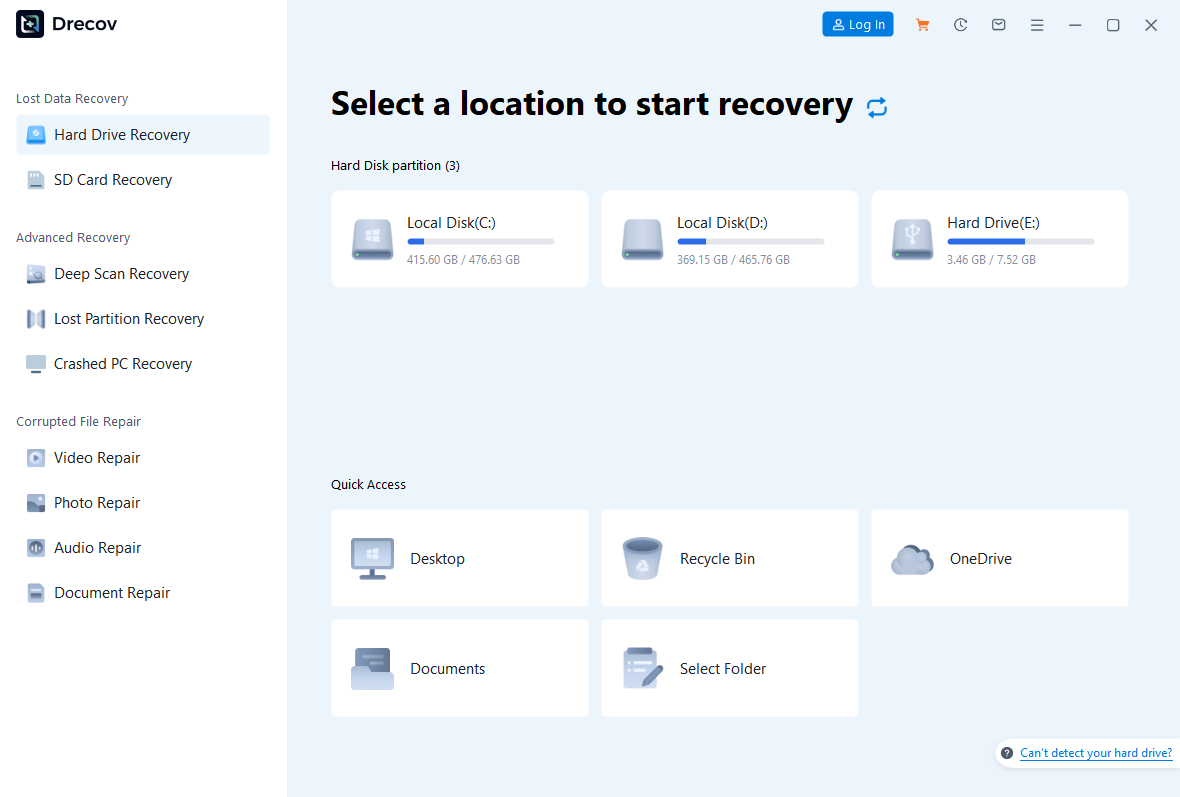
Step 1: Open Drecov and select the original location
Prepare another healthy drive first and do not install Drecov on the source partition. Open Drecov, then select the stable Windows user-data volume or application folder where personal files became missing or inaccessible during the error. If the entire partition is missing, choose Lost Partition Recovery before any initialization, formatting, or partition creation.
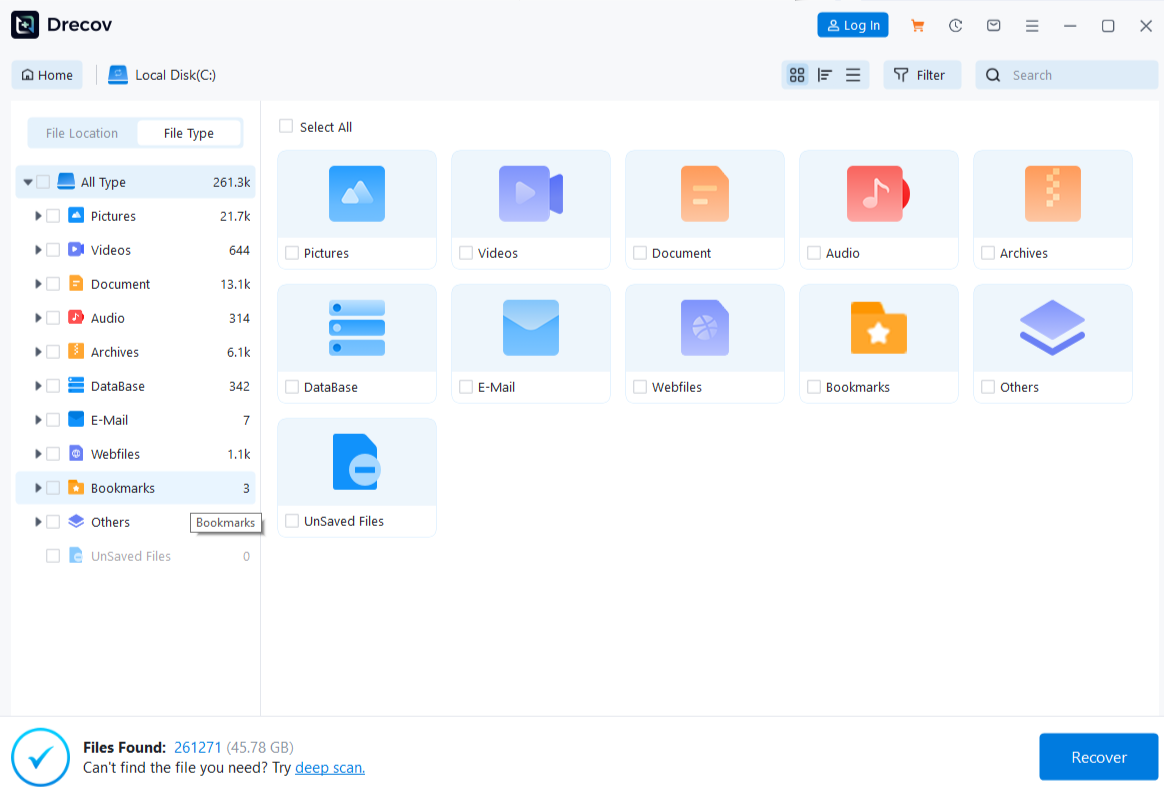
Step 2: Run Quick Scan before a deeper search
Start Quick Scan and narrow the first results by document or media type, filename, former folder, modification date, size, and affected application path. Keep the source idle and do not create replacement files in the former location.
Step 3: Use Deep Scan only on stable storage
If Quick Scan does not locate the wanted data and the device remains correctly detected and responsive, use Deep Scan. Stop immediately if detection changes, reads stall, or hardware symptoms appear.
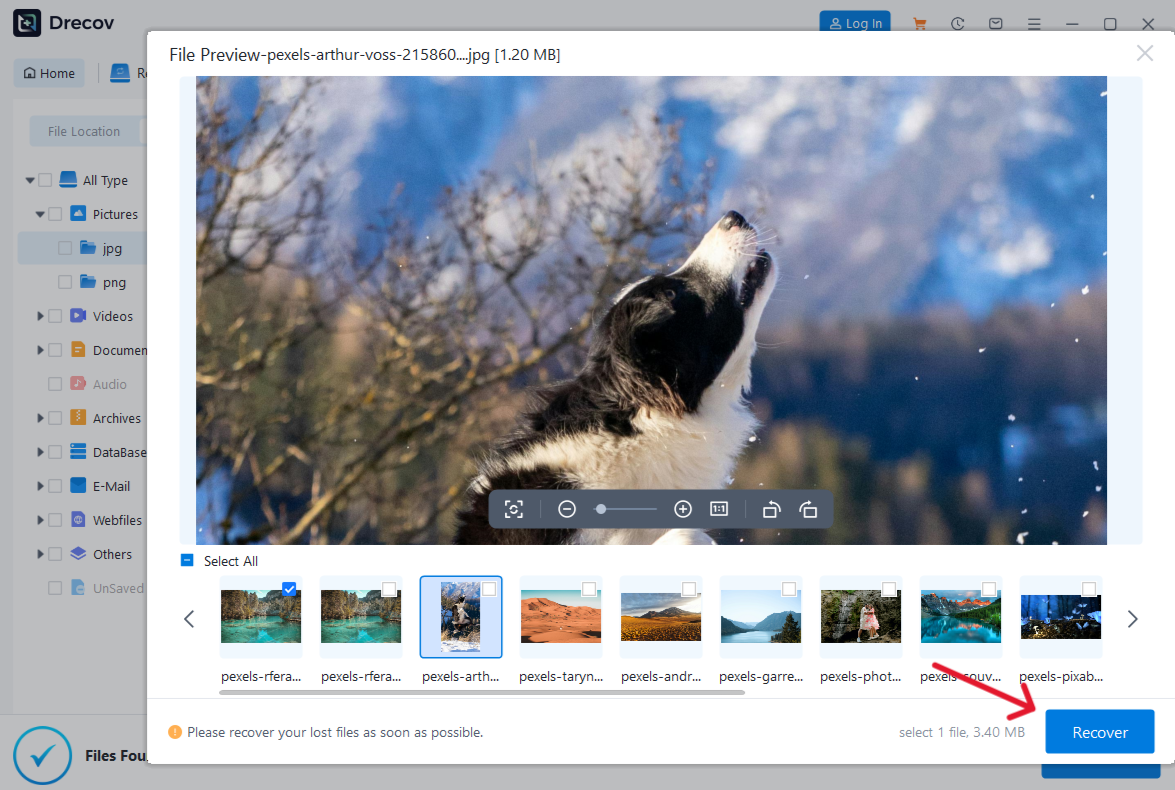
Step 4: Filter, preview, and recover elsewhere
Filter by the most reliable path, name, date, size, or file type. Preview representative supported files, while remembering that preview cannot prove every page, embedded object, or later frame. Recover selected candidates to the prepared healthy drive, never back to the source.
Step 5: Locate and verify every important result
If output is not in the expected destination, check Drecov Folder or Recovery Folder. Then open recovered files in an alternate trusted app, scan them, compare expected contents, then test the repaired default application separately. Keep untouched recovered copies and perform repair, reset, cleanup, formatting, or reinstallation only after validation.
Confirm the App and Files Separately
Verification must answer the original search task, not merely prove that a filename exists. Compare content, dates, related files, and normal application behavior. Preserve at least one untouched copy while testing a duplicate.
Prevention should follow the diagnosed cause. Use versioned backups on another device or account, record important paths and application settings, and run a small restore test. A backup has value only when the intended data can be opened from it.
Conclusion
“Class not registered” is a Windows component error, not one universal file problem. Follow the evidence from the application, account, path, or device before changing the source. Drecov provides a focused recovery path when local data is truly deleted or inaccessible on stable Windows storage. Recover to another healthy drive and validate the results before repair or replacement.
⚠ Warning: Install it on a drive different from the one where your data was lost to prevent overwriting.






