







Direct answer: When VCRUNTIME140.dll was not found appears, repair the Microsoft Visual C++ runtime or the affected application rather than downloading a loose DLL. First determine whether one program or several fail, then match x86 and x64 packages from Microsoft. Protect local projects, presets, and saves before uninstalling software, and treat quarantine or disk errors as separate evidence.
Why copying one DLL is the wrong first move
VCRUNTIME140.dll belongs to the Microsoft Visual C++ runtime used by many applications. The message can appear when the redistributable is missing, damaged, blocked, or mismatched with the application architecture. Downloading a standalone DLL from an unknown site creates provenance, version, and malware risks.
Check whether one program or Windows is affected
Open another program that uses the runtime and note whether the error is global or limited to one application. Check the full executable path and Windows Event Viewer. A portable copy, plug-in, or launcher may load a different dependency set from the main installed program.
A quick decision check for vcruntime140.dll was not found — For the Visual C++ runtime error
- When the source is stable and accessible, make a verified copy before repair for VCRUNTIME140.
- For the Visual C++ runtime error, if only one application or file fails, test a duplicate and isolate that scope.
- In this case, if the disk disappears, clicks, or disconnects, stop DIY scans and seek imaging or professional help for VCRUNTIME140.
- Here, if the issue follows a driver, update, peripheral, or configuration change, reverse only that change and record the result for VCRUNTIME140.
Install the matching Microsoft runtime safely
Use Microsoft’s current supported Visual C++ Redistributable packages. Many 64-bit Windows systems need both x64 and x86 packages because 32-bit applications use the x86 runtime. Repair an existing package first, restart, then test the original executable.
Repair or reinstall the application with its data protected
Before reinstalling creative, engineering, or game software, copy projects, profiles, presets, saves, and export folders. Uninstallers may remove application-managed data even when ordinary documents remain. Do not delete System32 or SysWOW64 files manually.
Rule out quarantine and damaged storage
Review Windows Security history and verify digital signatures. Do not restore a quarantined file only because its name resembles the missing DLL. If unrelated files also fail checks or the disk reports read errors, protect data before SFC, DISM, or broad application repair.
Repair or reinstall the application with its data protected: deeper evidence — For the Visual C++ runtime error
The most useful baseline for vcruntime140.dll was not found is a before-and-after comparison. Before continuing, write down what worked previously, which update, file, peripheral, setting, or interruption came next for VCRUNTIME140. Then check whether the symptom survives a clean restart for VCRUNTIME140. For the Visual C++ runtime error, preserve screenshots and logs outside the affected drive. For the next decision, if a rollback changes the message but does not restore reliable access, return to the original evidence instead of assuming the new message is progress for VCRUNTIME140.
Define the scope before choosing a tool
Scope is equally important in a fault isolation investigation. On this branch, test a second file, program, account, port, or boot target only when it is safe to do so for VCRUNTIME140. In this case, one failing item usually points toward local content or configuration for VCRUNTIME140. Several unrelated failures raise the probability of Windows, memory, storage, or security interference for VCRUNTIME140. For the Visual C++ runtime error, avoid downloading replacement system components from third-party libraries. This is because a matching filename does not prove matching architecture, version, or trust for VCRUNTIME140.
Backups need a restore test
A backup is useful only after it has been opened and compared for VCRUNTIME140. For vcruntime140.dll was not found, note the backup date, included folders, cloud account, version history, and encryption requirements. A synchronized folder can propagate deletion or corruption for VCRUNTIME140. A system image can replace newer work with an older captured state for VCRUNTIME140. At this stage, keep at least one untouched copy until the repaired system and recovered data have survived a real workload test for VCRUNTIME140.
Write-risk checkpoint for vcruntime140.dll was not found
Risk rises when the proposed action writes broadly for VCRUNTIME140. Reset, reinstall, formatting, initialization, partition resizing, boot reconstruction, antivirus cleanup, and application removal may be reasonable later, but each can remove a recovery path for VCRUNTIME140. Before using one for vcruntime140.dll was not found, list exactly what it changes, how to reverse it, where the current files are stored. Also identify which healthy device will hold the verified result for VCRUNTIME140.
For the Visual C++ runtime error, stop the home workflow when evidence suggests hardware instability. In this case, changing detection, clicking, electrical smell, repeated disconnects, severe read errors, or a drive that reports the wrong capacity are not ordinary software symptoms for VCRUNTIME140. Here, power down, document the condition, and consider professional recovery or controlled imaging for VCRUNTIME140. Software cannot repair damaged heads, controllers, connectors, memory cells, or a board that cannot initialize reliably for VCRUNTIME140.
Vcruntime140.Dll Was Not Found: one focused diagnostic sequence
Begin by recording the full message, time, recent change, device identity, file size, and last successful action for VCRUNTIME140. Check backups without synchronizing over the source. For the Visual C++ runtime error, use a known-good cable, account, file copy, or Safe Mode only when that comparison answers a specific question. For the next decision, one controlled change creates useful evidence; five simultaneous changes merely replace the original symptom for VCRUNTIME140.
Keep repair and recovery separate. Recovery extracts data to another location. On this branch, repair changes the application, file system, boot structure, runtime, or Windows installation for VCRUNTIME140. In this case, CHKDSK writes to file-system metadata, while formatting and partition tools replace storage structures for VCRUNTIME140. None belongs before needed data is safe. For the Visual C++ runtime error, on SSDs, ongoing use and TRIM can reduce recovery prospects, so prompt write avoidance matters.
A practical stopping rule
Set a stopping rule before the next attempt at vcruntime140.dll was not found. Before continuing, stop when the source becomes less stable, two controlled tests produce the same failure, or the next proposed action would overwrite data without a verified backup for VCRUNTIME140. Escalation is not failure; it preserves options. At this stage, give a technician the recorded timeline, screenshots, hardware identifiers, encryption details for VCRUNTIME140. Provide the list of changes instead of asking them to repeat every repair from the beginning for VCRUNTIME140.
For the next decision, after apparent success, do not immediately delete diagnostic copies or reconnect every peripheral for VCRUNTIME140. For the Visual C++ runtime error, reintroduce one dependency at a time and repeat the original task. In this case, check that files open, saves persist after restart, and the device remains detected at the correct capacity for VCRUNTIME140. Here, this measured return to service catches intermittent faults that a single successful launch or boot can hide for VCRUNTIME140.
Where Drecov belongs in this fault isolation workflow
PandaOffice Drecov is Windows data recovery software for PCs, HDDs, SSDs, external drives, USB drives, SD cards, and memory cards for VCRUNTIME140. Before continuing, it works in read-only recovery mode and can locate photos, videos, documents, emails, audio, and archives for VCRUNTIME140. For the Visual C++ runtime error, Quick Scan handles the first search. Meanwhile, Deep Scan is available when a stable device needs a broader pass for VCRUNTIME140. Drecov offers filtering, location clues, preview, recovery to a healthy destination, and Lost Partition Recovery for different logical-loss situations for VCRUNTIME140. Here, its precise role is to recover local files before an invasive repair for VCRUNTIME140. In this case, it cannot repair physical hardware, drivers, Windows runtime components, or fully overwritten data for VCRUNTIME140.
⚠ Warning: Install it on a drive different from the one where your data was lost to prevent overwriting.
Step 1 — Open Drecov and select the original loss location
Stop writing to the source. For the Visual C++ runtime error, prepare a separate healthy destination and make sure Drecov is not installed on the partition that held the missing files. Before continuing, open Drecov, select that original partition, folder, removable device, or lost-partition location, and confirm the device stays detected for VCRUNTIME140. At this stage, stop direct scanning if it clicks, disconnects, or develops severe read delays for VCRUNTIME140.

Step 2 — Run Quick Scan before the deeper pass
Start Quick Scan and let it finish without saving new material to the source for VCRUNTIME140. For the next decision, review the expected folder and recently deleted results for VCRUNTIME140. For the Visual C++ runtime error, if the target is absent and the medium remains stable, run Deep Scan. In this case, a deeper scan increases read activity, so it is inappropriate for a physically unstable device for VCRUNTIME140.
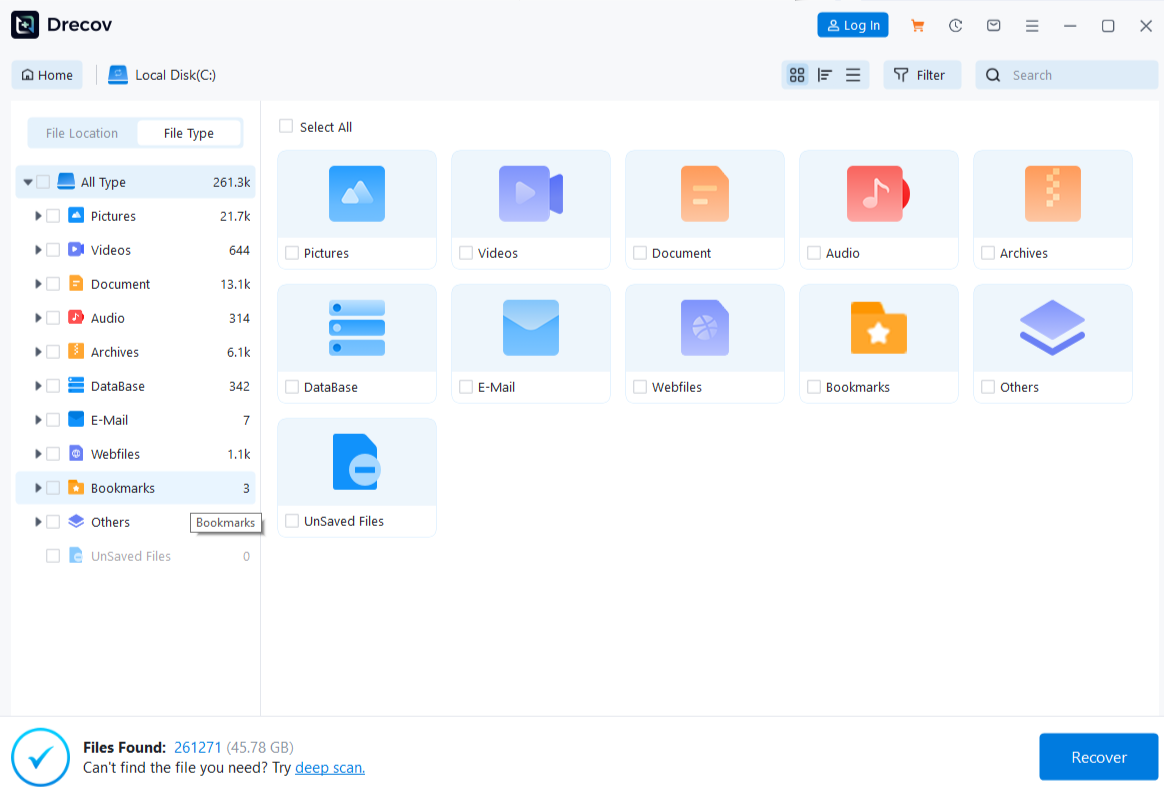
Step 3 — Filter and preview the evidence
Filter by file type, former path, filename, and relevant date for VCRUNTIME140. Preview several representative supported files. Here, a preview confirms only that the displayed sample can be decoded for VCRUNTIME140. It cannot guarantee every page, sheet, frame, archive member, or game state is intact for VCRUNTIME140.
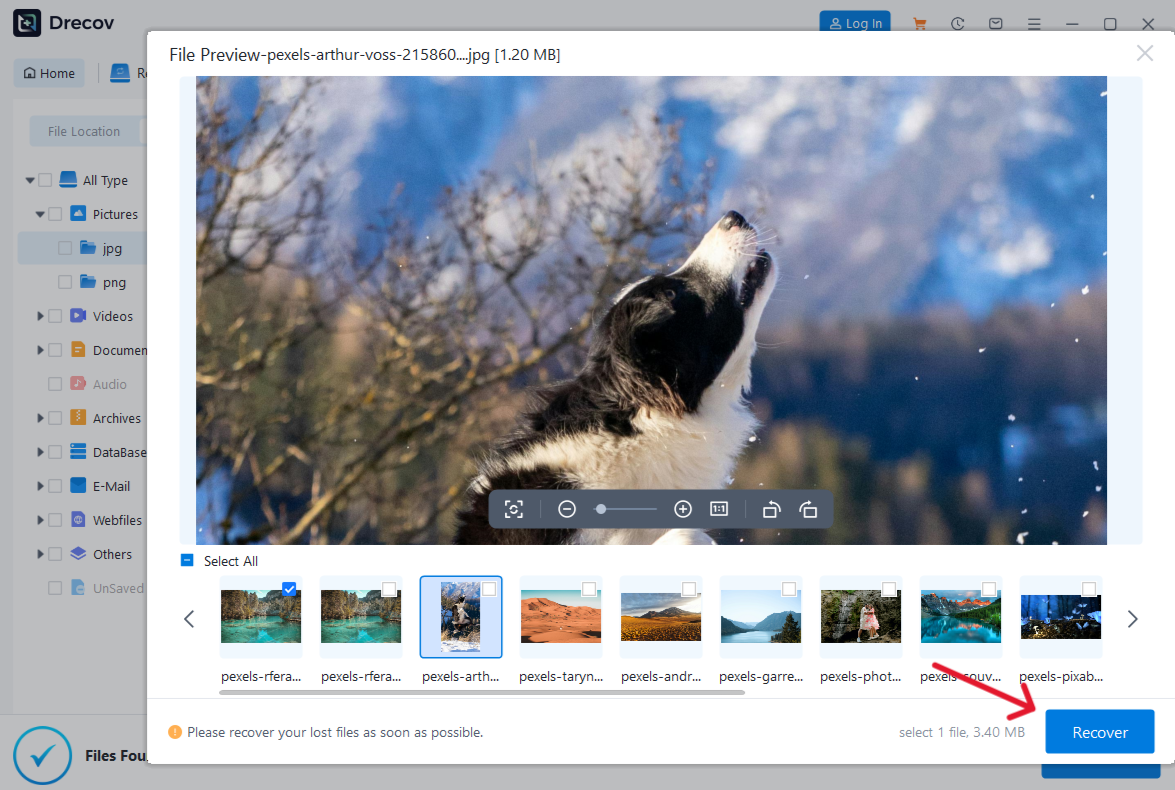
Step 4 — Recover elsewhere and verify before repair
Recover selected files to the prepared healthy drive, never to the source for VCRUNTIME140. Before continuing, if output is not in the expected destination, check Drecov Folder or Recovery Folder for VCRUNTIME140. For the Visual C++ runtime error, open samples, compare sizes and folder counts, and create a second backup. For the next decision, only then continue with reset, formatting, partition work, reinstallation, runtime repair, Office repair, or boot repair for VCRUNTIME140.
Verification tailored to vcruntime140.dll was not found
Repeat the action that originally failed, then restart once and repeat it again for VCRUNTIME140. On this branch, open representative recovered files from the destination, not the source for VCRUNTIME140. In this case, check logs, timestamps, device detection, and application behavior rather than accepting a changed error message as success for VCRUNTIME140. For the Visual C++ runtime error, if the fault returns, preserve the new evidence and undo the last reversible change.
Useful background for the Visual C++ runtime error includes Drecov for Windows recovery, review why recovery needs another drive, learn how to verify recovered files. Also follow boot-device recovery precautions. Relevant to the Visual C++ runtime error, the official vendor guidance supports the platform-specific part of this diagnosis.
Conclusion
Vcruntime140.Dll Was Not Found becomes manageable when you identify the failing layer, protect files before high-write actions, and verify one change at a time. Before continuing, built-in repair, vendor tools, backups, and application features remain useful when matched to evidence for VCRUNTIME140. At this stage, if local files are missing on stable readable storage, Drecov can scan, filter, preview, and recover them to another healthy location before repair continues for VCRUNTIME140.






