







When “an unexpected error is keeping you from copying” appears, record the full error code before closing the dialog. The wording is generic; the code and copy direction reveal whether the problem is the source file, destination, permissions, path, cloud placeholder, archive, network share, or storage read failure. Test one small known-good file, then protect important data if the source drive is unstable or only partly readable.
Use One Copy Test to Locate the Failing Side
Copy a small known-good file from the same source to a different healthy local folder, then copy a different file to the original destination. These two tests distinguish source-read failure from destination-write failure without changing permissions blindly. Microsoft documents the same wording for specific errors such as copy error 0x800704C9, showing why the number matters.
| What you observe | What it suggests | Safest next move |
|---|---|---|
| Only one file fails | File damage, lock, name, or metadata | Duplicate the source and test locally |
| Every file from one drive fails | Source access or hardware | Stop writes and assess stability |
| Every file to one destination fails | Space, permissions, format, or hardware | Test another healthy destination |
| Cloud file shows placeholder | Content is not downloaded locally | Make it available offline first |
| Long nested path fails | Path or name limit | Copy to a short local staging folder |
| Network copy fails but local works | Share, credentials, protocol, or connection | Keep a local safety copy and troubleshoot network |
Let the First Failed Item Narrow the Copy Error
For an unexpected error is keeping you from copying, use the matching observation, make one reversible change, and then retest the original symptom.
If You See: Only one file fails
File damage, lock, name, or metadata becomes the leading explanation, but the observation does not justify a destructive change by itself. Duplicate the source and test locally.
When the Result Is: Every file from one drive fails
This result shifts attention toward source access or hardware. Use the narrow response: stop writes and assess stability.
What Every file to one destination fails Changes
The practical implication is space, permissions, format, or hardware. The next action should therefore be limited to this branch: test another healthy destination.
Do Not Misread: Cloud file shows placeholder
It can indicate content is not downloaded locally, yet it does not prove every other component is healthy. Start with make it available offline first.
The Safe Branch for Long nested path fails
Here, path or name limit deserves priority over broad system repair. Copy to a short local staging folder.
Escalation Point: Network copy fails but local works
Treat this as a sign of share, credentials, protocol, or connection. Beg
Protect the Source When Reads Are Failing
If copy speed collapses, Windows freezes, or the source disconnects, stop repeated drag-and-drop attempts. Copy the most valuable readable folders first or create a controlled image. Do not run CHKDSK before recovery from a damaged source because it modifies file-system structures. The drive recovery safety article explains the physical and logical boundary.
Match the Repair to the Copy Context
Shorten the Path Without Renaming the Original
Create a short local folder such as C:\Transfer and copy a duplicate there. Remove trailing spaces or unsupported characters only on the copy. Deep nesting and application-generated names can fail before file content is read.
Confirm Permissions on Both Ends
Check that the current account can read the source and create a new test file at the destination. For work or network locations, use the owner’s supported permission process rather than taking ownership of an entire drive.
Download Cloud Placeholders
OneDrive and other sync clients may display a filename whose content is not local. Make the file available offline, wait for synchronization to complete, and retry from a local staging folder.
Check Destination Capacity and File-System Limits
Confirm free space and the destination format. FAT32 cannot store a single file larger than 4 GiB. Encryption, quotas, read-only media, or a full destination can also stop the copy.
Recover Around Read Errors
When the source remains stable but a file or folder is inaccessible, recover data to another device rather than repairing the source first. Unstable hardware requires imaging or professional recovery.
Recover Files That Windows Can No Longer Copy
When an unexpected error is keeping you from copying because the source volume is RAW, logically damaged, or no longer exposes the required files, PandaOffice Drecov can recover data from stable recognized storage. It is not needed for a simple destination permission, path, or free-space problem, and it cannot repair physical disk failure.
⚠ Warning: Install it on a drive different from the one where your data was lost to prevent overwriting.
Step 1: Select the Source Side of the Failed Copy
Open Drecov and choose the original volume that should contain the files, not the destination that rejected the copy. Keep the destination available as separate healthy recovery storage. Stop if the source clicks, disconnects, stalls the computer, or changes capacity between connections.
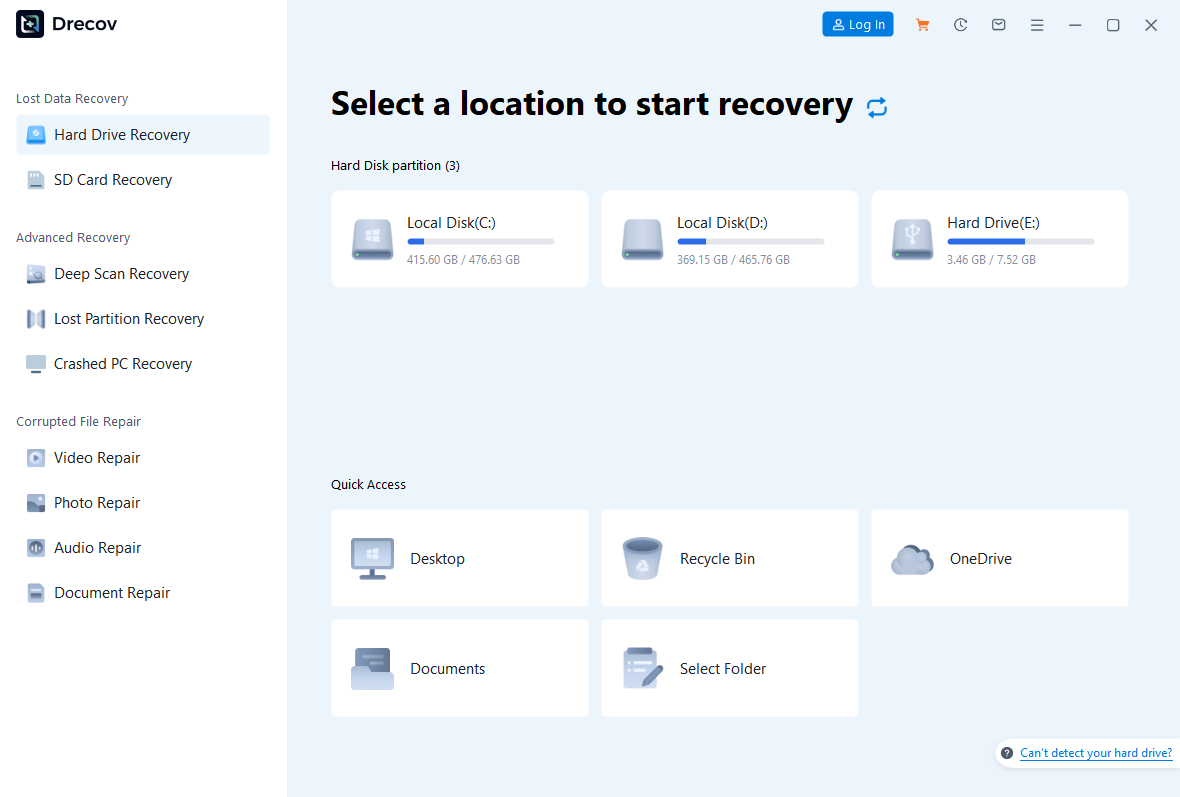
Step 2: Search Without Writing to the Source
Start with Quick Scan when files were recently deleted or disappeared from an otherwise readable volume. Use Deep Scan when Quick Scan cannot locate the folder, the source is RAW, or partition information is missing. Filter by the known filename, path, date, or file type.
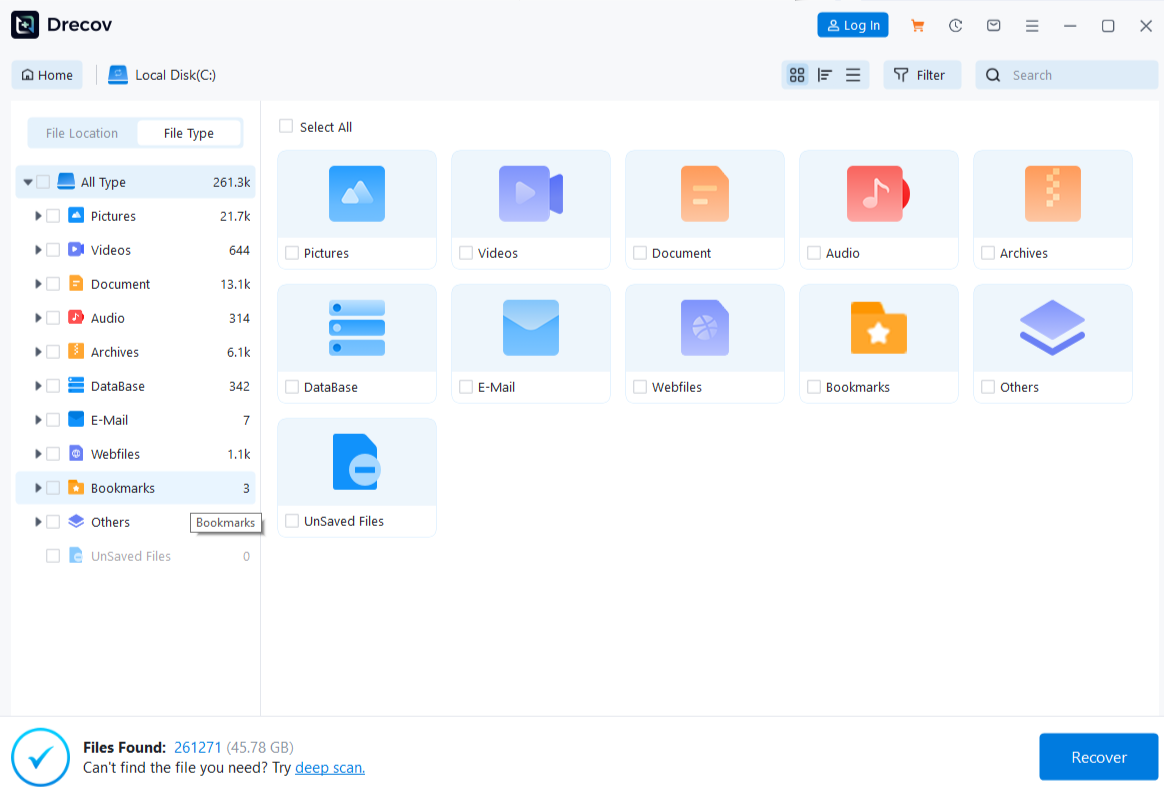
Step 3: Preview, Recover, and Retest the Copy
Preview several files to confirm that their content is readable. Recover them to another healthy device with sufficient capacity. Look in the Drecov folder or Recovery folder if the old path is unavailable. Open the recovered files and perform a small copy test from the new destination before treating the original error as resolved.
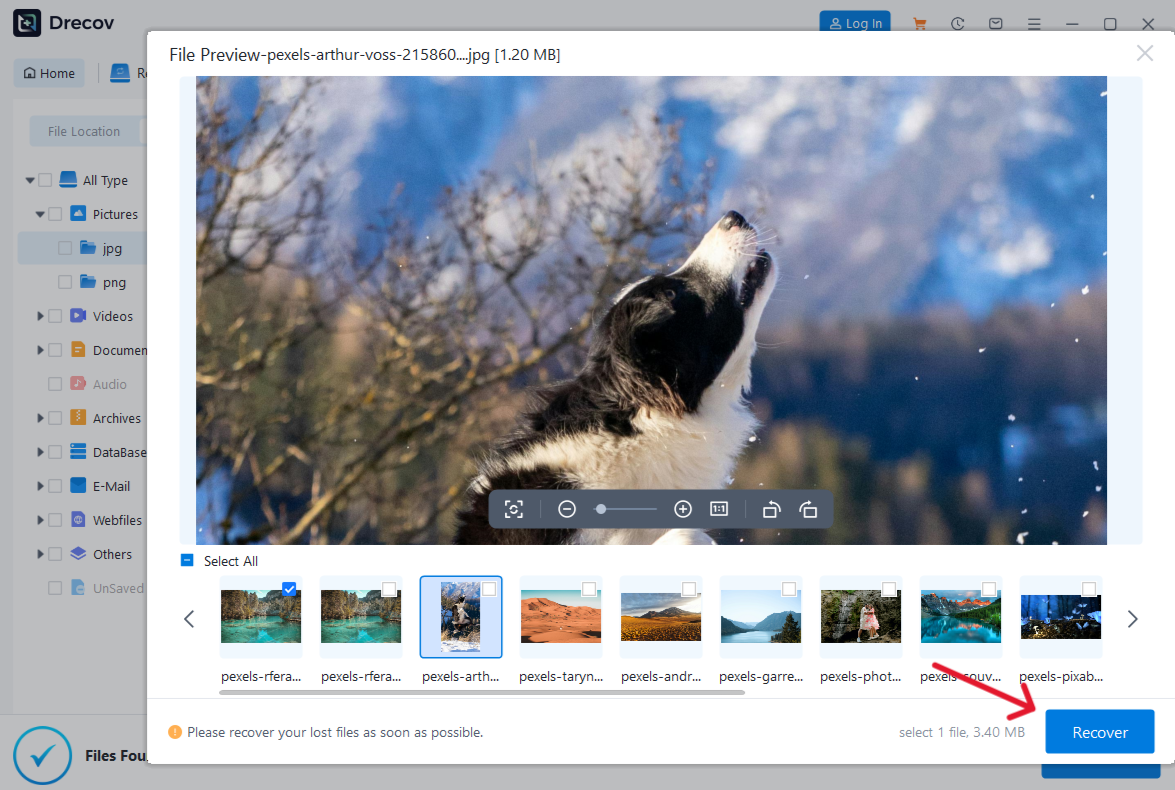
Verify the Copy Instead of Trusting the Progress Bar
Open documents, play media, extract archives, and compare file sizes after the transfer. For important archives or disk images, calculate hashes on both copies. The SHA-256 verification article explains content comparison, while the corrupted-file article covers files that copy successfully but still will not open.
- Changing permissions across an entire disk before identifying the failing side
- Retrying large copies from a disconnecting drive
- Running repair commands before extracting readable data
- Assuming a cloud placeholder is fully stored on the PC
- Saving recovered files back onto the source
Run a small, controlled copy rather than restarting the whole job. First copy a tiny known-good file from the same source to the same destination. Then try the troublesome file to a different healthy destination. If every file fails only at one target, investigate its free space, file system, permissions, connection, and path limits. If one file fails everywhere, its source data, name, encryption, or access state deserves attention. A failure that always appears after roughly the same amount of data may indicate a destination limit or a weak area on the source.
Capture the full hexadecimal error code because the generic sentence hides important distinctions. Also note direction, protocol, file size, file name, and whether the source is local, USB, network, or cloud-synced. Do not use “move” while diagnosing; a verified copy preserves the source. For an unstable disk, repeated retries can turn a recoverable read problem into a larger one, so switch to critical-file rescue or imaging rather than forcing Explorer through the same failing range.
An unexpected error is keeping you from copying FAQs
Why is the exact error code important?
The sentence is used for many failures. The hexadecimal or numeric code can identify permissions, networking, file-system, or device conditions.
Why can I open a file but not copy it?
The application may read only part of the file, while copying must read every byte and write metadata at the destination.
Can path length cause this message?
Yes. Long nesting, names, reserved characters, or application paths can fail. Test a duplicate in a short local folder.
Does CHKDSK fix copy errors?
It may repair logical file-system structures but also modifies them. Recover important data first and do not use it on unstable hardware.
When does Drecov help?
When needed files are deleted or inaccessible on stable supported storage. It does not fix network permissions, cloud accounts, or defective hardware.
Preserve the Error Evidence Before Retrying
Capture the complete message and hexadecimal code, then record the source, destination, file size, path, and first item that failed. These details prevent a generic copy error from becoming a generic repair exercise. Retry with one harmless file and change only one side of the transfer. For example, keep the source while choosing a different healthy destination, then keep the destination while testing a known-good source. A result that follows one file suggests different action from a failure that follows one port or volume. Avoid a move operation during diagnosis because deleting the source after a partial transfer makes verification harder.
Conclusion
When an unexpected error is keeping you from copying, the error code, copy direction, first failed item, and device stability reveal whether the source or destination needs attention. Preserve the source and avoid destructive repairs. If stable source storage contains inaccessible or lost files, Drecov can scan, preview, and recover them to a separate healthy device. Permission, path, network, and hardware faults still require their own targeted fix.






