







Can you recover svaed game files from Citron? Usually, recovery depends on whether the save is merely in a different Citron user folder, available in a backup, or genuinely deleted from Windows storage. The query contains a common misspelling, but the loss is real: close Citron, stop game activity, and copy the entire Citron data folder before changing versions, reinstalling, importing another profile, or scanning. A save from the wrong game identity or emulator build may look missing even though its files still exist.
Can You Recover Svaed Game Files From Citron? Confirm the Installation
Record the Citron build, Windows account, game title, game ID, and last successful play date. Portable and installed builds can use different user directories. A copied program folder may not include the active data folder, while an update can point to a new profile.
Open Citron only if doing so will not autosave over the wanted state. Capture the configured user or data path, then close the emulator completely. Do not launch the game repeatedly to see whether progress returns; a new save can replace evidence.
The currently available Citron documentation identifies `%APPDATA%\citron` as a usual Windows save and configuration location. Treat that as a starting point, not proof for every build or fork. Use the emulator’s own folder command when available and preserve any alternate directories you find.
Build a Save-Folder Evidence Map
Press Windows+R, enter `%APPDATA%`, and inspect the Citron folder without moving its contents. Record subfolder names, timestamps, file sizes, and game identifiers. Also inspect a portable installation’s adjacent user folder and other Windows profiles that may have run Citron.
Search by the game ID and modification window rather than a character name alone. Emulator saves may use identifiers that are not human-friendly. Screenshots, configuration, shader caches, and save data serve different purposes; deleting caches does not recreate progress.
Copy the whole relevant directory to a healthy external destination while Citron is closed. Preserve folder structure and companion files. A single file may rely on metadata or a directory hierarchy that the emulator expects.
For related recovery decisions, see Drecov for Windows, the game-save account folder example, finding deleted Windows files, and safe recovery destinations. Check Citron’s current installation and save-location documentation for the build you use.
Decide Whether the Save Is Hidden, Replaced, or Deleted
| Evidence | Likely condition | Next move |
|---|---|---|
| Older folder exists under another profile | Wrong Windows or Citron profile | Copy both folders and compare offline |
| Save timestamp changes after launch | The emulator is writing a new state | Close it and preserve the current generation |
| Folder is present but expected game ID is absent | Different game identity or path | Confirm title ID and build configuration |
| Files are zero bytes | Incomplete write or damaged copy | Check backups and earlier versions |
| Citron folder disappeared after cleanup | Local deletion is plausible | Stop writes and begin recovery |
Check Recycle Bin, File History, Previous Versions, cloud-synced folders, manual archives, and older PC copies. Restore to a new comparison folder. Do not paste an older folder directly over the current Citron directory until both generations are backed up.
A synchronization client may preserve a deleted item or earlier version, but it may also have propagated deletion. Confirm the account, retention state, and local-versus-cloud copy before choosing Restore.
Recover a Deleted Citron Save With Drecov
PandaOffice Drecov recovers Windows data from PCs, HDDs, SSDs, external drives, USB drives, SD cards, and memory cards. It supports read-only recovery mode, Quick Scan, Deep Scan, filtering, preview, recovery to another healthy device, and Lost Partition Recovery for missing partitions. Supported categories include documents, photos, video, audio, email data, and archives.
In this scenario, Drecov is appropriate only for deleted or inaccessible local Citron files on stable, correctly detected storage. It cannot download cloud-only progress, translate a save between incompatible builds, repair emulator logic, or reconstruct fully overwritten game state. SSD TRIM may sharply reduce the prospects for deleted local data. If the disk clicks, disconnects, freezes Windows, changes capacity, or reports severe read errors, stop scanning. Use controlled imaging or professional recovery rather than repeatedly reading unstable media.
⚠ Warning: Install it on a drive different from the one where your data was lost to prevent overwriting.
Drecov Steps for the Former Citron Folder
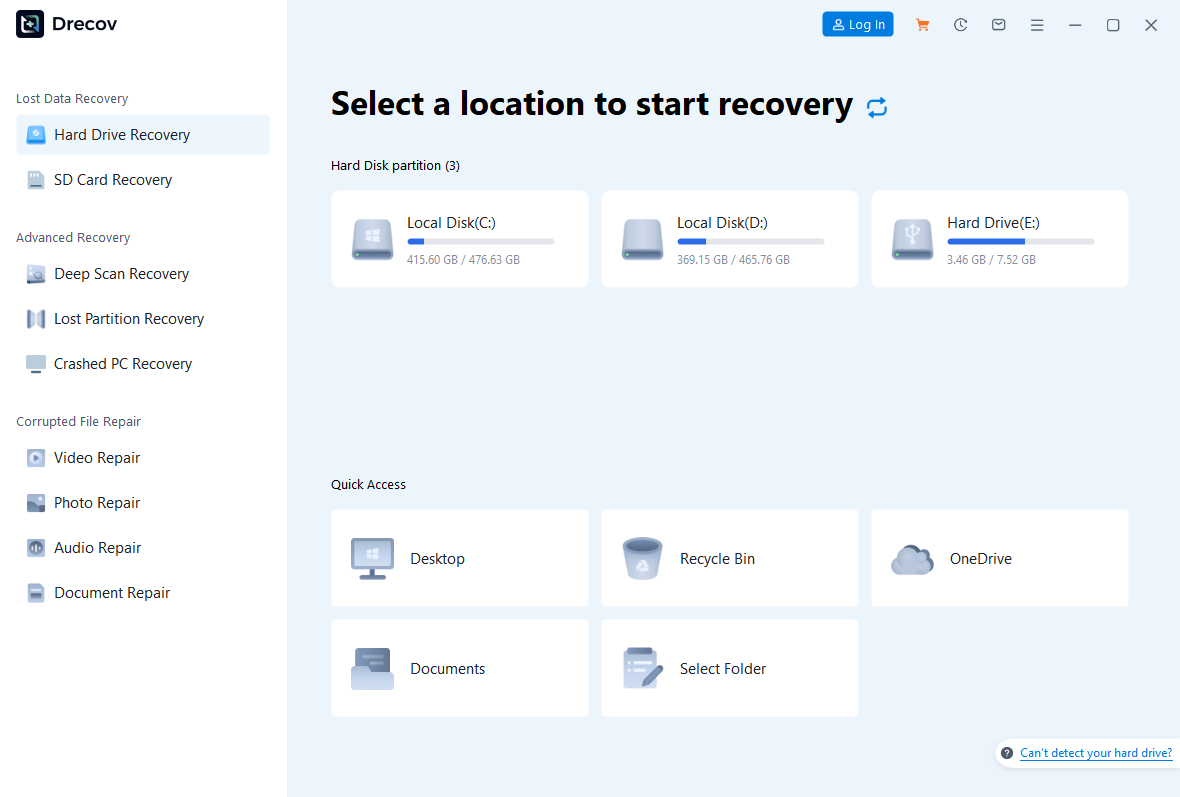
Step 1: Open Drecov and select the original Citron location
Prepare a separate healthy destination and do not install Drecov on the affected partition. Open Drecov and choose the drive or user-profile location that held `%APPDATA%\citron`. If the whole partition is missing, choose Lost Partition Recovery instead of creating a new volume.
Step 2: Run Quick Scan for the recent loss
Start Quick Scan and inspect the former Citron path. Filter by relevant names, extensions, dates, sizes, and game identifiers. Keep Citron, launchers, updates, and synchronization closed to limit new writes.
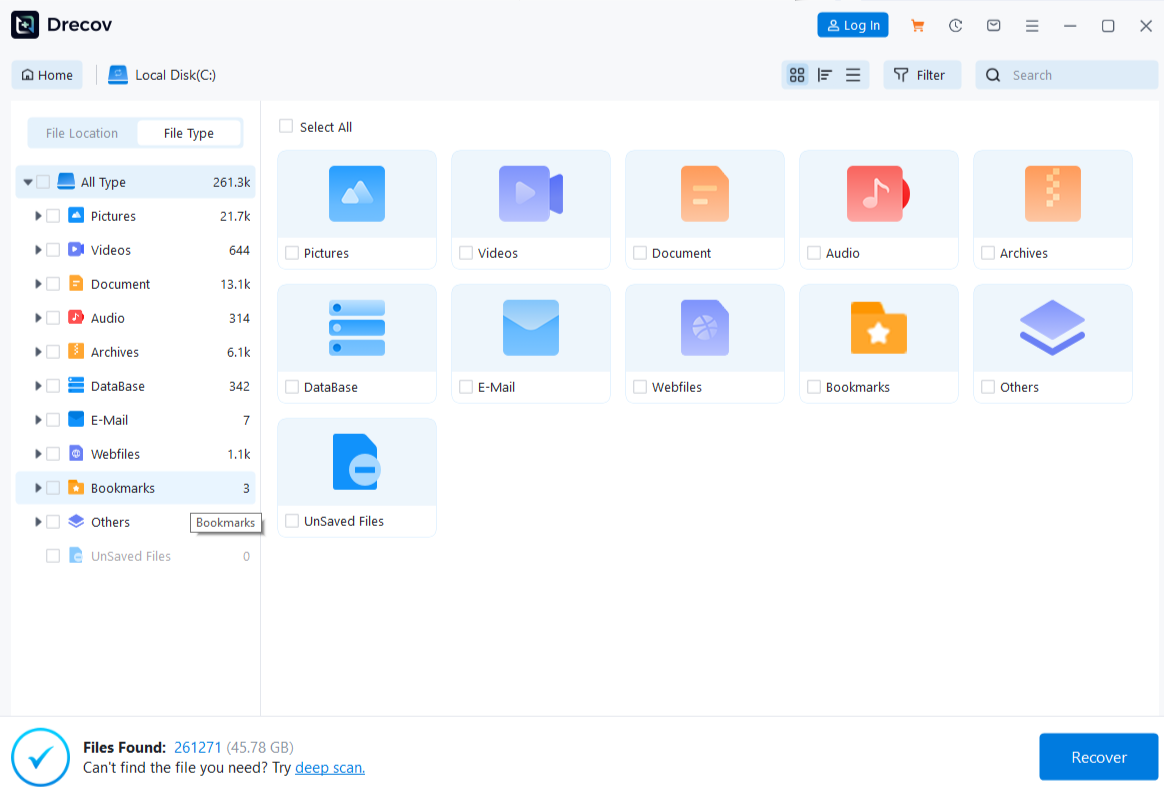
Step 3: Use Deep Scan only while the disk stays stable
If Quick Scan misses the save and the source behaves normally, run Deep Scan. Stop for disconnects, stalls, noises, or changing detection. Recovery software cannot stabilize failing hardware.
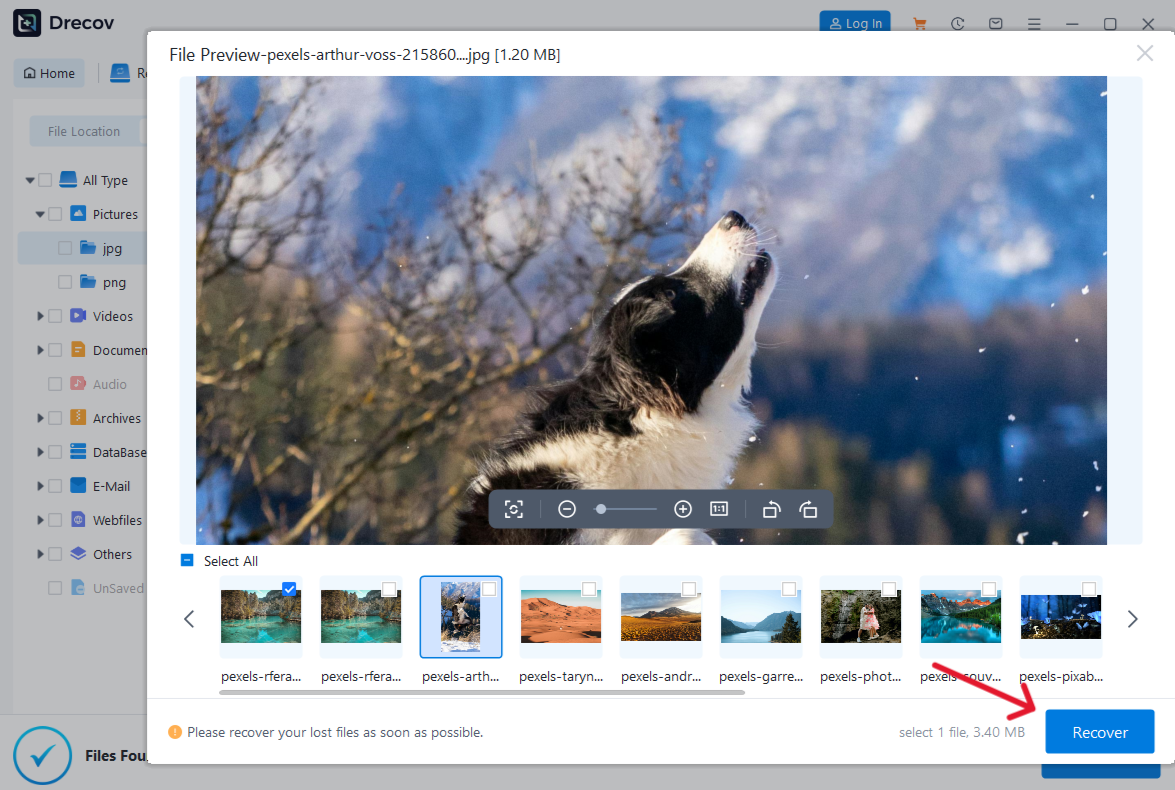
Step 4: Recover several plausible save generations
Preview supported files where available and preserve folder context. Save candidates to the healthy destination, never to the Windows partition being scanned. Keep more than one generation when names are unclear.
Step 5: Check the recovery folders and validate offline
If results are not under the selected path, inspect Drecov Folder or Recovery Folder. Duplicate the recovered folder, test only the copy with networking or synchronization disabled where appropriate, and confirm the correct game, slots, progress, and new-save behavior.
Return the Save Without Losing the Better Copy
Create three clearly named folders: preserved-current, recovered-candidates, and test-import. Never use the recovered output as the only working copy. Record the Citron version used for each test.
Import or replace data only through a documented Citron workflow. If a manual path replacement is required, keep the emulator closed and replace a disposable test folder first. A save that appears in the menu still needs a controlled launch and exit test.
Verify several in-game facts: character or profile, location, inventory, playtime, and most recent milestone. Exit normally, reopen once, and confirm that the new timestamp and progress remain. Then create an independent backup before enabling synchronization or updating Citron.
Prevent the Next Emulator Save Loss
Back up the full Citron user directory after important sessions and before updates. Use dated archives on another device. Keep a short note with the emulator build and game identity.
Do not rely on copying only the executable folder. Confirm the actual user-data path. Before uninstalling, verify whether the uninstaller removes AppData and preserve that folder separately.
When experimenting with mods, firmware, keys, profiles, or different builds, use isolated user directories. A rollback is easier when each environment has its own intact save generation.
Separate Emulator State From Actual Game Saves
- Document Test Results: Keep a written record of file paths, sizes, Citron build versions, title IDs, and hashes for every candidate file. Retain unused candidate files until verification is complete, as an apparently invalid save might simply belong to a different update or directory layout.
- Inventory Candidate Folders: If you are asking “can you recover svaed game files from citron”, first separate save data from configs, caches, and logs. Create a log with folder paths, title IDs, file dates, and recent changes before moving directories so you do not rely on memory.
- Isolate the Test Environment: A save file failing to load may stem from missing updates, DLCs, or specific user profiles rather than corruption. Recreate the original software environment on a test copy and test one save generation at a time.
- Avoid Direct Overwriting: Never paste recovered saves directly over existing ones. Duplicate the current user folder and compare directory structures offline—replacing a single file might break index structures or trigger the emulator to wipe data.
- Verify Save Integrity & Backup: Play just long enough to confirm your location, inventory, and a new save cycle. Exit, reload to confirm persistence, and then export the working Citron save to an external drive.
Conclusion
Can you recover svaed game files from Citron? Yes, when the correct folder still exists in another profile or backup, or when deleted local data remains readable on stable storage. Preserve every current generation before importing or scanning. Drecov can recover local candidates to another device, but the recovered save must be tested with the correct Citron build and game identity.
⚠ Warning: Install it on a drive different from the one where your data was lost to prevent overwriting.






