







What are M4A files? They are MPEG-4 audio containers commonly used for AAC or Apple Lossless audio, along with tags and artwork. The extension alone does not tell you whether the audio is lossy AAC or lossless ALAC. That distinction affects compatibility, quality, and conversion choices. If an M4A will not play, test a preserved copy and inspect its codec before converting it. If the local file vanished, recovery is a storage problem—not a playback or format problem.
What Are M4A Files Made Of?
M4A is a common extension for audio stored in an MPEG-4-based container. The container can hold encoded sound plus information such as artist, album, track number, cover art, and chapters. Players must understand both the container and the codec inside it.
AAC is lossy: it reduces file size by discarding information according to a perceptual model. ALAC is lossless: decoded audio can reproduce the encoded source without that kind of loss. Converting an AAC M4A to a lossless format does not restore information removed during the first encoding.
M4A and MP4 are related, but naming conventions usually use .m4a for audio-focused files. Renaming an extension does not convert the streams. Use media information or player properties to identify the actual codec, sample rate, channels, duration, and bitrate.
Decide Whether Playback, Metadata, or the File Is Failing
If the player shows correct duration but produces no sound, check the selected output device, volume, codec support, and channel layout. If the duration is zero or wildly wrong, investigate truncation, a damaged container, or an incomplete transfer.
Test a known-good M4A in the same application, then test the affected copy in a second reputable player. One-player failure suggests settings or decoder support. Identical failure everywhere points more strongly to the file or storage copy.
Missing artwork or wrong track names are metadata problems, not necessarily audio corruption. Preserve the original before retagging. A tagging tool can rewrite the container, so use a duplicate when the recording matters.
Play or Convert M4A Without Making Quality Claims
Modern players often support common AAC M4A files, while ALAC or unusual profiles may require compatible software. Use official application sources and avoid downloading single codec DLLs. A filename match does not establish safe or compatible software.
Convert only for a specific destination that cannot play the source. AAC-to-MP3 conversion introduces another lossy encoding stage and can reduce quality. ALAC-to-FLAC can remain lossless when performed correctly, but metadata and artwork still need verification.
Keep the original M4A until the converted file plays on the target device, shows the correct duration, and retains required tags. Batch conversion should begin with one representative copy so an incorrect preset does not affect an entire library.
Recognize Incomplete and Damaged M4A Audio
A cloud placeholder may display a filename without having downloaded the complete audio. Confirm offline availability. Compare byte size with the sender, recorder, or backup. A zero-byte file or obviously short transfer cannot be repaired into the missing recording.
If playback always stops at one timestamp, copy the file to healthy local storage and test again. A clean local copy shifts suspicion toward the file structure. Read errors, freezes, or disconnects during copying shift attention to storage reliability.
Container repair may recover access when audio data exists but structural information is damaged. Work on a duplicate and keep expectations bounded. Repair cannot recreate overwritten sectors or audio that was never written by the recorder.
Recover a Deleted M4A With Drecov
PandaOffice Drecov recovers data on Windows from PCs, HDDs, SSDs, external drives, USB drives, SD cards, and memory cards. It can search for audio and other supported categories through read-only recovery, Quick Scan, Deep Scan, filtering, preview, and recovery to another healthy destination. In this article, use it only when the M4A was deleted, formatted away, lost with a partition, or inaccessible on stable readable media. It does not repair codecs, restore deliberately discarded AAC detail, or fix physical hardware.
Stop recording or saving to the affected source. New audio, downloads, cache files, and software installation may overwrite deleted content. SSD TRIM can also reduce recovery prospects. If a recorder card or drive is unstable, stop repeated reads and choose imaging or professional recovery.
⚠ Warning: Install it on a drive different from the one where your data was lost to prevent overwriting.
Drecov Steps for Missing M4A Recordings
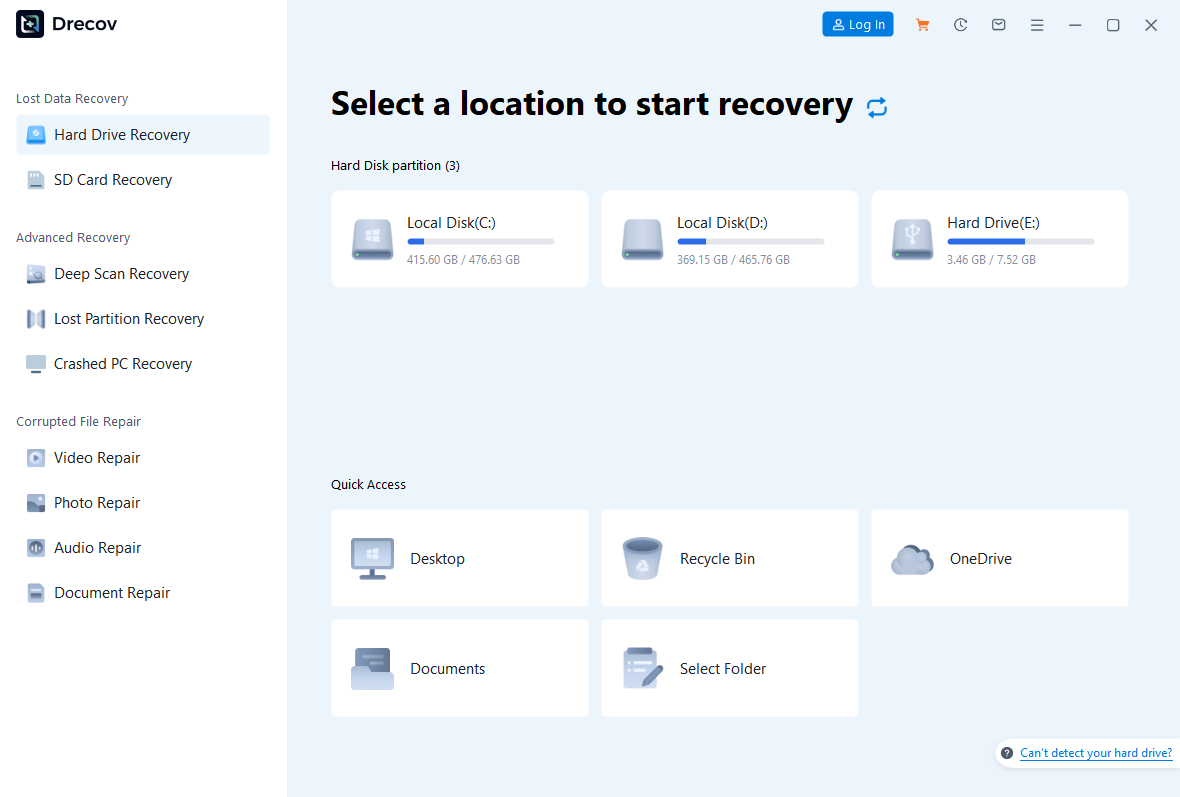
Step 1: Open Drecov and choose the original audio source
Prepare a separate healthy destination. Do not install Drecov on the partition that held the M4A. Open it from a healthy Windows location and select the recorder card, drive, USB device, or original folder. Choose Lost Partition Recovery only when the partition itself is missing.
Step 2: Run Quick Scan around the former recording path
Start Quick Scan. Check the recorder folder, music library, Downloads, voice-note export folder, or former project path. Compare names, dates, and expected duration or size where available.
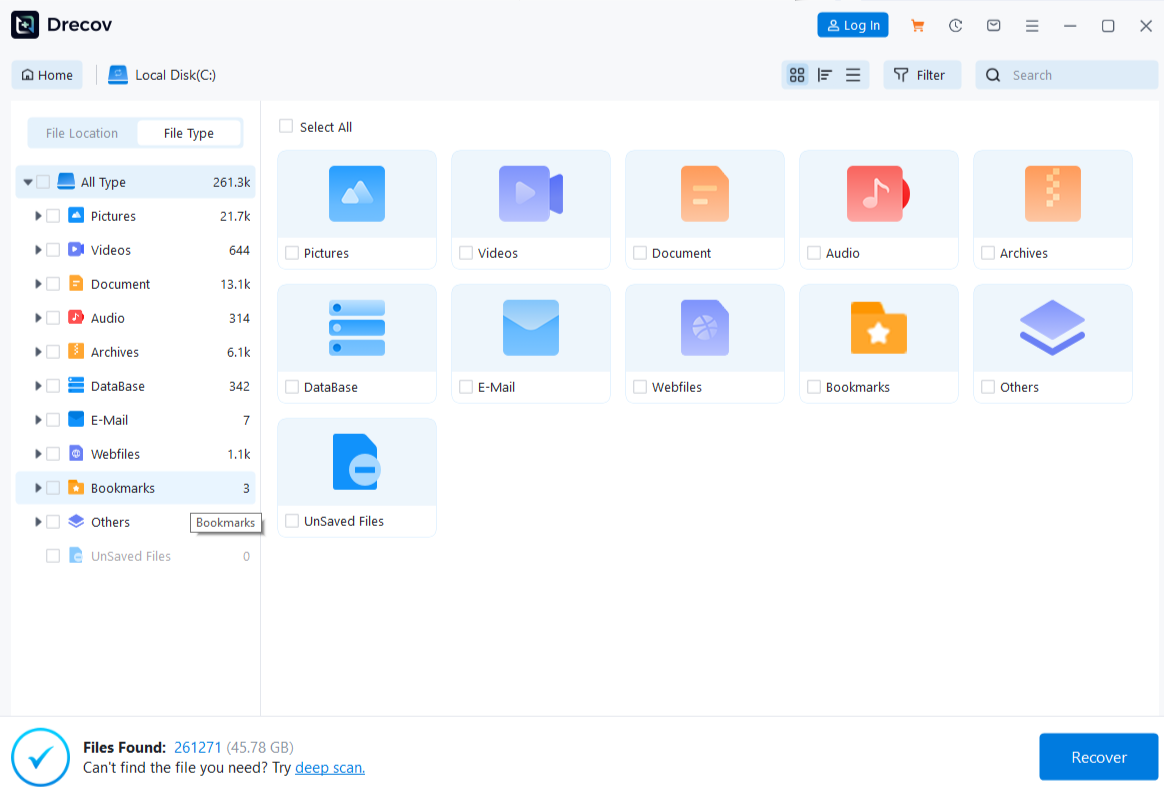
Step 3: Deep Scan only when the medium remains reliable
If Quick Scan misses the recording and the device is consistently readable, run Deep Scan. Stop if a card disconnects, a drive clicks, or reads begin stalling. Software cannot make failing media safe.
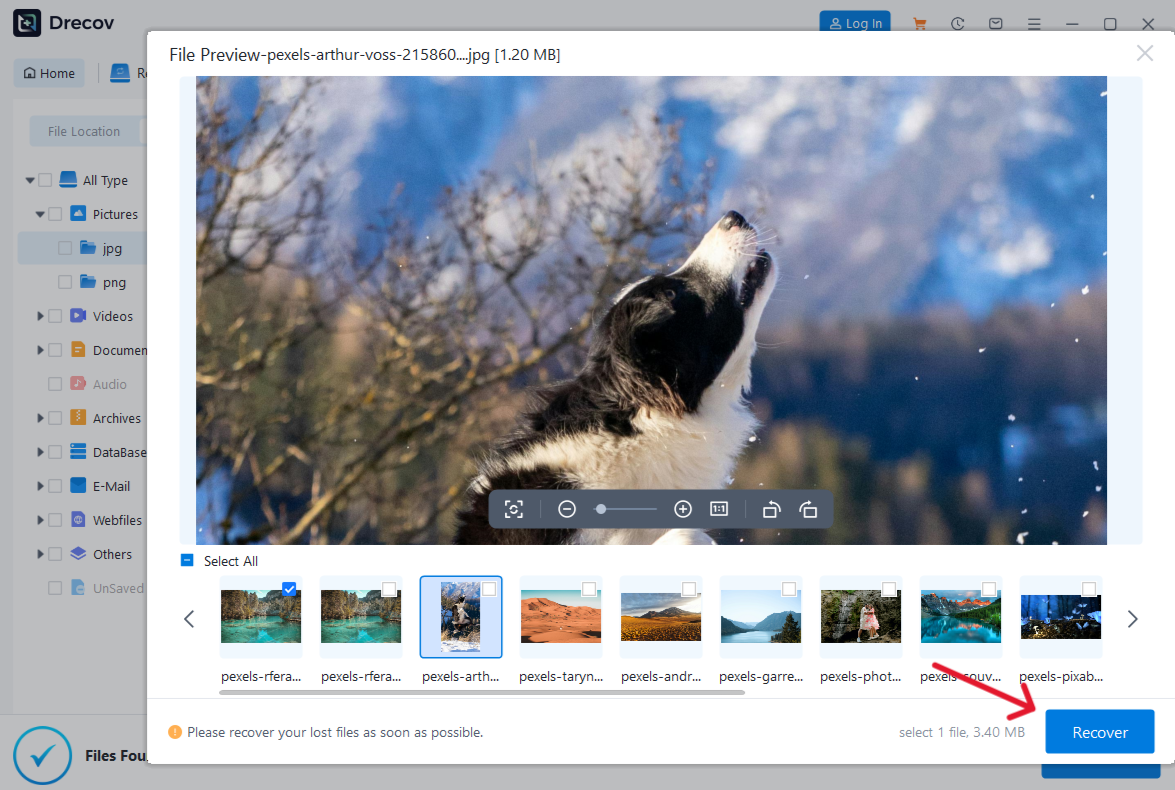
Step 4: Filter audio candidates and preview representative files
Filter by audio type, former path, filename, date, and size. Preview supported candidates when available. Listen beyond the opening seconds when possible, then recover likely versions to the healthy destination rather than the source.
If the output is not where expected, inspect Drecov Folder or Recovery Folder. Play recovered audio from several positions, confirm duration and channels, and inspect required metadata. Make a second backup before tagging, repair, or conversion.
Validate Audio Content and Library Information
Listen to the opening, middle, and ending, plus the timestamp where failure occurred. Check for silence, jumps, channel loss, or premature endings. Correct artwork cannot prove that the audio payload is complete.
Compare track order, artist, album, title, date, cover art, and chapters with the original library or backup. Keep metadata edits on a working copy until the preserved audio has been backed up.
For recordings, compare duration with session notes or neighboring takes. For purchased or synced music, check the original service or backup before relying on a recovered local copy.
Common M4A Questions
Are M4A files always lossless?
No. Many contain lossy AAC, while others contain lossless ALAC. Inspect the codec rather than guessing from the extension.
Will converting M4A to MP3 improve compatibility?
Often, but it may add lossy compression. Keep the source and choose settings for the target device.
Can I rename M4A to MP3?
No. A rename does not change the codec or container. Use a trusted converter on a duplicate.
Can Drecov restore missing audio quality?
Drecov can recover a lost file when data remains readable. It cannot recreate information discarded by encoding or overwritten on storage.
Continue with Drecov for Windows, troubleshoot missing browser sound, compare audio conversion and recovery, or learn to find local media files. Microsoft documents compatible formats on its supported-file-types page.
Choose an M4A Workflow for the Actual Destination
A phone, car stereo, browser, editor, and archival library can have different requirements. Before converting, identify the destination and test one representative M4A. If it plays correctly, conversion adds work and may reduce quality without solving a real problem.
For spoken recordings, intelligibility and complete duration matter more than artwork. Music libraries also depend on album, artist, track order, and embedded cover images. Audiobooks may rely on chapters. Verify the properties that matter to that collection instead of judging an M4A only by whether its first seconds play.
When sharing M4A files, send a duplicate and keep the original. Compare the uploaded size after transfer and download a test copy when the receiving service may transcode media. If the service creates a streaming preview, do not assume that preview is the unchanged source file.
Long-term preservation benefits from documented codecs and redundant storage. Lossless conversion can change the container while preserving decoded audio, yet tags may still be altered. Keep a checksum and a metadata report with valuable masters so future validation covers both the sound and its library information.
Read M4A Properties Without Guessing From the Extension
File Explorer may show an M4A extension and duration, but those fields do not reveal every codec detail. A trusted media-information view can identify AAC or ALAC, channels, sample rate, and bitrate. Compare that report with the needs of the target application. This avoids unnecessary conversion based only on a generic unsupported-file message.
Variable bitrate is normal for many AAC files. A changing instantaneous bitrate is not automatically corruption. More useful warning signs include an impossible duration, an abrupt end at the same timestamp, repeated decoding errors, or a byte size far below comparable recordings. Confirm those signs on a preserved local copy.
Metadata can be stored in different atoms within the container. One player may ignore artwork or chapters that another displays. Test the audio payload separately from the library fields. If the sound is complete, repair or retag a duplicate rather than treating the M4A as deleted.
A voice recorder may still hold the source under a device-specific folder or application database. Before scanning storage, check the recorder, cloud synchronization account, export history, and shared messages. These sources may contain a complete M4A with more reliable naming and timestamps than a recovered fragment.
For a large collection, sample files from different dates and devices. A single successful track does not validate an entire migration. Compare total item count and aggregate size, then open representative AAC and ALAC files. Retain the old library until the new location passes those checks.
Conclusion
What are M4A files? They are audio containers whose codec—commonly AAC or ALAC—determines quality and compatibility. Identify the stream, test a duplicate, and convert only for a defined device or workflow. When an M4A was actually deleted from stable storage, Drecov can scan and recover candidates to another healthy location. Full playback, duration, channels, and metadata must be verified afterward.
⚠ Warning: Install it on a drive different from the one where your data was lost to prevent overwriting.





