







Hello, folks, I am a little upset…I accidentally emptied a folder full of photos taken during travel😭. The computer system is Windows 11, and my wife’s side is Mac. I also tried several recovery tools on the Internet. Either they scanned for a long time without results, or they recovered a bunch of files that could not be opened. I want to ask everyone, is there any free photo recovery software for PC recommended by yourself? It is best to support image preview and simple operation. It is better to be able to recover JPG, PNG, and RAW formats. It is acceptable to charge a fee as long as it is reliable.—from Microsoft Store
Understanding Free Photo Recovery Software for PC
How PC Photo Recovery Works
When photos are deleted on a PC, the system does not immediately erase them. Instead, the storage space is marked as available for new data. This is why pc deleted photo recovery is possible using specialized tools. Photo recovery software for PC scans storage drives for residual data and reconstructs deleted files.
Modern recovery tools detect multiple file types, including JPG, PNG, RAW, and even video files, which makes some programs the best photo and video recovery software for PC. Acting quickly is essential because new data can overwrite deleted files, reducing the chances of recovery.
⚠️Warning: Stop using the affected drive immediately after deletion to avoid overwriting recoverable files.
Why Photos Get Deleted on PC
Common Causes of Photo Loss
Photo loss on a computer can happen for several reasons, making free PC photo recovery software essential:
- Accidental deletion: Using Shift + Delete or emptying the Recycle Bin.
- Drive formatting: Reformatting a partition or storage device unintentionally.
- System errors: OS crashes, software malfunctions, or corrupted file systems.
- External storage issues: USB drives or memory cards removed improperly or corrupted.
- Virus or malware attacks: Files may be deleted or hidden.
⚠️Warning: Avoid reinstalling your operating system before recovery, as this may permanently erase deleted data.
Methods to Recover Deleted Photos on PC
Method 1: Restore Photos from Recycle Bin
Test Environment: Windows 10 PC, NTFS file system, photos deleted without Shift + Delete.
Steps:
- Open the Recycle Bin on your desktop.
- Browse or search for the deleted photos.
- Select the photos you want to recover.
- Right-click and choose Restore.
- The photos will return to their original folder.
⚠️Warning: Photos deleted using Shift + Delete bypass the Recycle Bin and cannot be restored this way.
Method 2: Recover Photos Using File History Backup
Test Environment: Windows 11 PC, File History enabled, backup drive connected.
Steps:
- Open the folder where the lost photos were originally stored.
- Right-click in the folder and select Restore previous versions.
- Browse available backup versions.
- Select the version containing your photos.
- Click Restore to recover the images to the folder.
⚠️Warning: This method only works if File History was enabled before the data loss.
Method 3: Use Pandaoffice Drecov for Deep Recovery
Download DrecovTest Environment: Windows 11 PC, 1TB HDD, Recycle Bin emptied.
Steps:
- Install Pandaoffice Drecov on a different drive than the one containing lost photos.
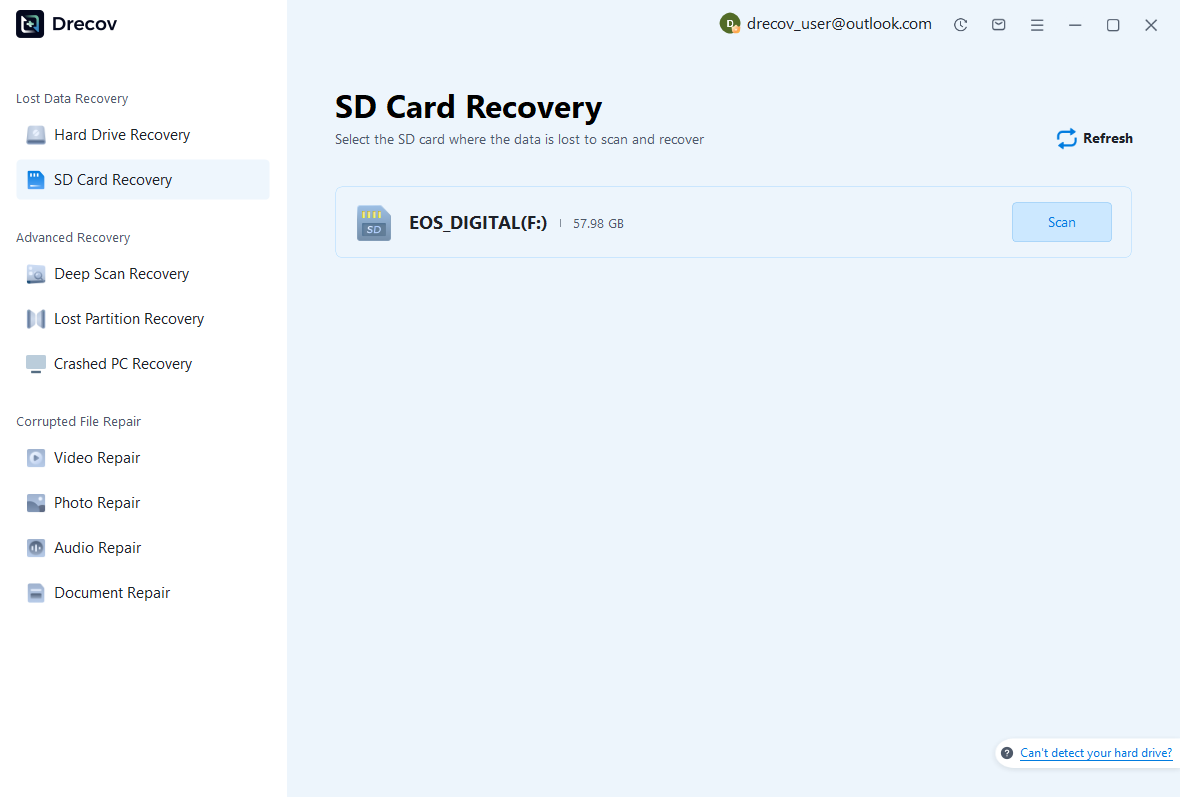
- Launch the software and select the drive where the photos were stored.
- Click Scan to start a deep scan for deleted files.
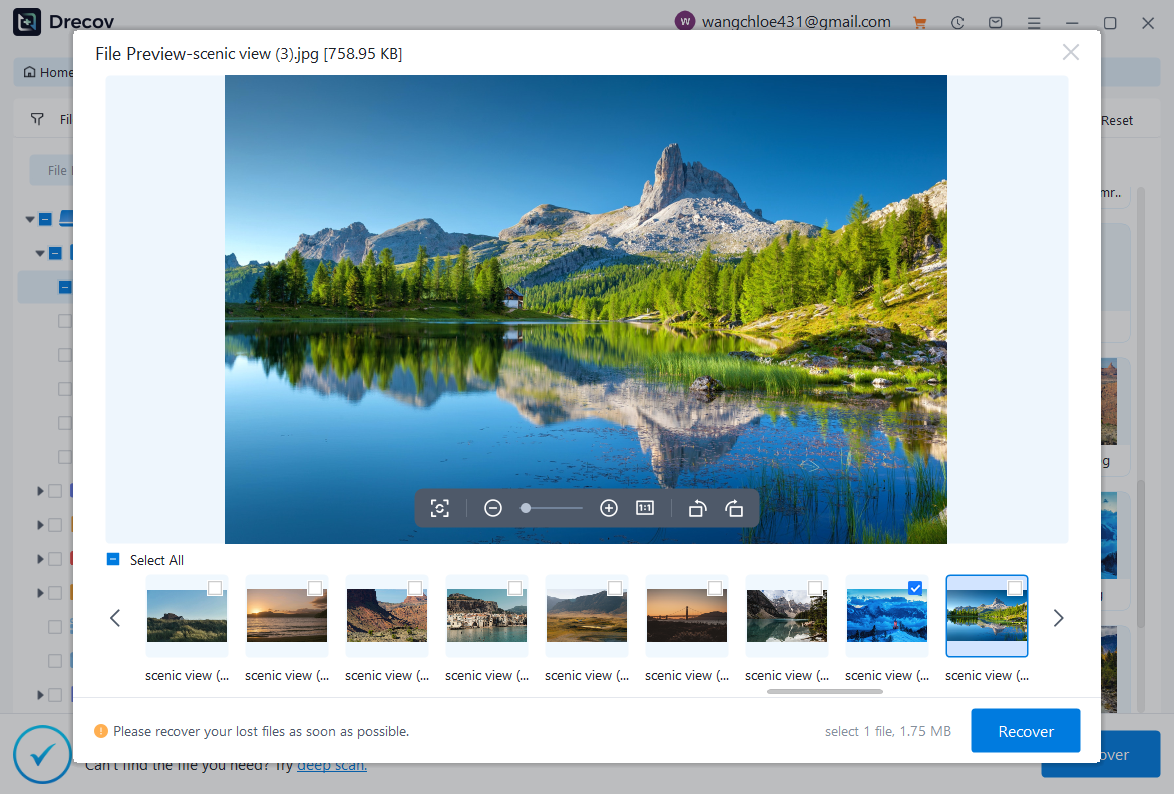
- Preview all recoverable photos.
- Select the photos you want to restore.
- Click Recover and save them to a secure location (different from the original drive).

Why Choose PandaOffice Drecov?
When it comes to reliable file data recovery, PandaOffice Drecov offers a balanced combination of performance, ease of use, and broad compatibility. Whether you’ve lost important business files or personal memories, it provides an efficient way to restore data from various loss scenarios, including system crashes, accidental deletion, and formatted drives.
For users looking for advanced Photo Data Recovery Software, PandaOffice Drecov supports a wide range of image formats and storage devices. It can recover high-quality photos from SD cards, cameras, and internal drives while preserving original resolution and file structure. This makes it especially useful for photographers and everyday users alike.
If you are dealing with storage device issues, its external hard drive recovery capability ensures that data can be retrieved from USB drives, HDDs, and SSDs with minimal effort. The software performs deep scans to locate hidden or lost files, even in complex situations like partition loss.
In addition, PandaOffice Drecov excels in Document Recovery, helping users restore essential files such as Word, Excel, and PDFs. It also supports powerpoint recovery, allowing you to retrieve unsaved or deleted presentation files quickly—ideal for professionals working under tight deadlines.
⚠️Warning: Avoid performing any new operations on the drive with lost photos to prevent data overwriting.
Method 4: Recover Photos from External Drives or SD Cards
Test Environment: Windows 10 PC, external USB drive and SD card, photos deleted but not overwritten.
Many users store photos on external drives, USB sticks, or SD cards, which are prone to accidental deletion or corruption. Even if a file seems lost, free PC photo recovery software can often locate hidden traces of deleted images. Using these tools allows you to recover images without technical expertise.
Steps:
- Connect the external drive or SD card to your PC via a USB port.
- Launch your preferred photo recovery software for PC.
- Select the external drive or SD card as the target for scanning.
- Choose a quick scan or deep scan depending on the severity of the deletion.
- Wait for the scan to finish and preview recoverable files.
- Select the photos you want to restore.
- Save the recovered images to a secure location on your PC, preferably a different drive than the one scanned to avoid overwriting.
External drives often suffer from improper ejection, file system errors, or malware attacks. Recovery software can bypass these issues by scanning at the file system level, locating photos that standard file explorers cannot detect. Additionally, many recovery tools support multiple formats like JPEG, PNG, GIF, BMP, and even RAW for professional cameras, making them highly versatile.
⚠️Warning: Do not save new files on the external drive before recovery, as it may overwrite deleted data and make it unrecoverable.
Method 5: Restore Photos from Cloud Backups
Test Environment: Windows 11 PC, Google Drive or OneDrive synchronized, internet connection active.
Using cloud storage is a convenient way to protect your photos. If your photos were synced before deletion, recovering them is straightforward without specialized software. Photo recovery software for PC is only needed if backups are unavailable.
Steps:
- Log in to your cloud storage account, such as Google Drive or OneDrive.
- Navigate to the Trash or Deleted Files folder.
- Browse or search for the photos you want to recover.
- Select the desired files individually or in bulk.
- Click Restore to return the photos to their original folder.
- Optionally, download a copy to your PC for local access.
Cloud backups are particularly useful because they often keep deleted files for 30–90 days depending on the service. Regularly sync your files so that you can restore deleted photos even if a local drive fails. Also, check shared folders to ensure you did not accidentally move photos, as this can temporarily delete them.
⚠️Warning: Cloud restoration only works if automatic syncing or backup was enabled prior to deletion.
Method 6: Recover Photos Using Bit-by-Bit Raw Sector Scanning
Test Environment: Windows 10 PC, formatted or corrupted drive, standard HDD/SSD, photos deleted and not overwritten.
Bit-by-bit raw sector scanning is an advanced recovery method that bypasses the operating system entirely and reads data directly from the storage hardware at the binary level. Instead of relying on file system indexes, this method reads the raw 0s and 1s of each sector, reconstructing lost files even after formatting, corruption, or severe deletion scenarios. This approach is highly effective for recovering photos when standard software fails to detect them.
Steps:
- Ensure the affected drive is connected but do not write new data to it.
- Open a photo recovery software that supports raw sector scanning or deep low-level scanning.
- Select the affected drive as the target.
- Enable Bit-by-Bit / Raw Sector Scan mode to bypass the file system layer.
- Start the scanning process; this may take several hours depending on drive size and speed.
- Preview the recoverable photos detected by the scan. The software reconstructs files based on recognized headers and signatures.
- Select the photos you wish to restore.
- Save the recovered files to a separate, secure drive to avoid overwriting remaining data.
Bit-by-bit scanning can recover:
- Photos deleted after formatting or system crashes
- Lost images from corrupted partitions or inaccessible drives
- Mixed file formats, including JPG, PNG, BMP, GIF, and some RAW camera formats
⚠️Warning: This method is time-intensive and requires patience, especially for large drives. Avoid any write operations on the affected drive until recovery is complete, as it may permanently overwrite recoverable data.
FAQ About Free Photo Recovery for PC
Q1: Can formatted drives still allow photo recovery?
Yes. Formatting removes directory references but does not erase actual data. Photo recovery software for PC can scan the raw sectors to reconstruct deleted photos. Recovery success depends on how much the drive was used after formatting.
Q2: How long after deletion can photos be recovered?
Deleted photos are most recoverable immediately after deletion. Once new files overwrite storage space, recovery chances drop sharply. Acting quickly is key.
Q3: Are free PC recovery tools effective for large photo collections?
They are effective for recently deleted or moderately sized collections. For very large collections or drives with complex formatting, some advanced paid tools may offer better deep scanning performance, but free tools are often sufficient for personal use.
Conclusion: Key Takeaways for PC Photo Recovery
- Recover deleted photos quickly to prevent overwriting.
- Use Recycle Bin or built-in File History first for simple deletions.
- Restore from cloud backups if syncing was enabled before deletion.
- For formatted drives, deep scanning via free tools can still locate lost photos.
- Regularly back up photos locally and to cloud storage to minimize permanent loss.
- Avoid saving new files or reinstalling software on drives where photos were deleted.
With these methods, users can recover photos in nearly all scenarios without needing to purchase professional software for every case. Using a combination of these approaches maximizes recovery success and ensures that personal or important images are not lost permanently.






