







I had a case of negligent deletion happen earlier today, where I accidentally deleted most of the contents of my Windows 10 desktop’s OneDrive folder, which included my Documents folder, and everything I had saved on my desktop. It was about 100 GB of data, and since it was too big for the recycling bin, it got permanently deleted. I realized my mistake almost immediately, and begun to look for data recovery tools with my girlfriend.—From Reddit
Introduction to SSD Drive Recovery
Overview of SSD Data Loss
Solid-State Drives (SSD) are widely used for their speed, reliability, and energy efficiency. Despite their advantages, SSDs are still vulnerable to data loss caused by accidental deletion, formatting, virus attacks, firmware issues, or hardware failures. Understanding ssd drive recovery is essential for individuals and businesses to protect valuable data.
⚠️Warning: Attempting recovery without proper tools may worsen the damage to the SSD and make ssd drive data recovery impossible.
Key Features Affecting SSD Drive Recovery
SSDs use flash memory and an internal controller to manage data placement, often implementing TRIM and wear-leveling technology. While these features enhance performance, they also complicate data recovery from ssd drive, especially if deleted files have been trimmed. Firmware updates or sudden power loss can further increase recovery difficulty.
Common Causes of SSD Data Loss
Accidental Deletion or Formatting
Users frequently lose files by accidentally deleting them or performing a quick format. File system corruption, virus attacks, or software errors can prevent easy retrieval. Ssd drive recovery software can often restore these files, provided the SSD has not been heavily used afterward.
Physical Damage and Hardware Failure
Controller failure, NAND chip issues, or power surges can make an SSD inaccessible. ⚠️Warning: Attempting to open or repair a physically damaged SSD yourself may permanently destroy data.
Impact of TRIM and Firmware Updates
TRIM commands actively erase blocks marked for deletion, which reduces recovery chances. Firmware updates can overwrite critical data, complicating ssd hard drive recovery. Awareness of these factors is crucial before attempting recovery.
Methods for SSD Drive Recovery
Method 1: Using Data Recovery Software
Test Environment: Windows 11, 500GB SSD with 50 accidentally deleted files including documents, images, and videos.
Step-by-Step Instructions:
- Stop using the SSD immediately to prevent overwriting lost data.
- Connect the SSD to a computer using SATA, NVMe adapter, or USB enclosure.
- Install reliable ssd drive recovery software on a separate drive.
- Launch the software and select the SSD for scanning. Choose “Quick Scan” for recently deleted files.
- If Quick Scan is insufficient, perform a “Deep Scan” to analyze every sector.
- Preview recovered files and select the ones to restore. Save them to a separate drive.
- Verify the recovered files to ensure they are complete and not corrupted.
Tips: Recovering to a separate drive prevents overwriting the original SSD data.
Method 2: Restoring From Backups
Test Environment: SSD previously backed up to NAS device; 200GB of files lost.
Step-by-Step Instructions:
- Confirm the backup source (cloud, external drive, or NAS).
- Connect the backup device to your computer.
- Open backup software or locate the backup folder.
- Select the files or folders to restore.
- Choose a safe location on a separate storage device (avoid writing to the damaged SSD).
- Verify the restored files to ensure integrity and completeness.
⚠️Warning: Restoring directly to the damaged SSD can overwrite recoverable data.
Method 3: Using Pandaoffice Drecov for SSD Drive Recovery
Test Environment: 1TB SSD on Windows 10, accidentally formatted with 200GB of documents, images, and videos.
Download DrecovStep-by-Step Instructions:
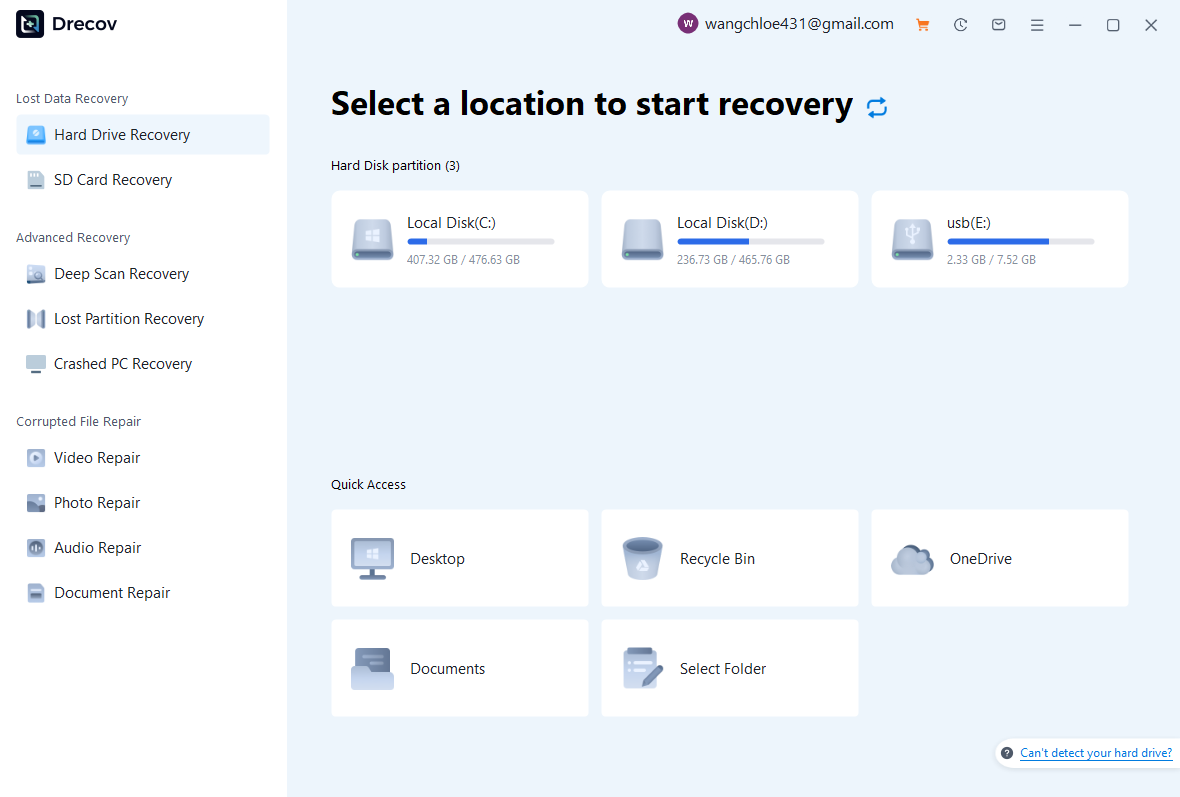
- Install Pandaoffice Drecov on a separate drive.
- Connect the SSD to the computer and launch the software.
- Select the SSD and choose “Deep Scan” for thorough analysis.
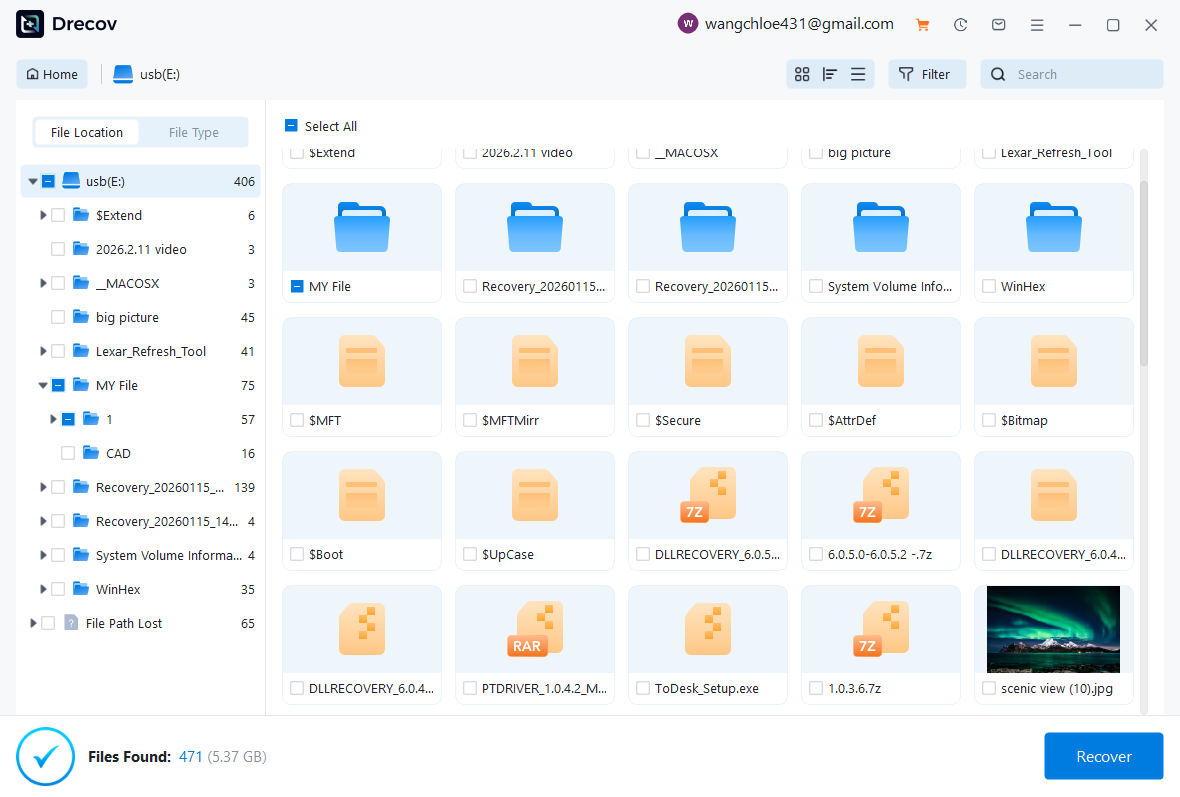
- Preview scan results and select files to recover.
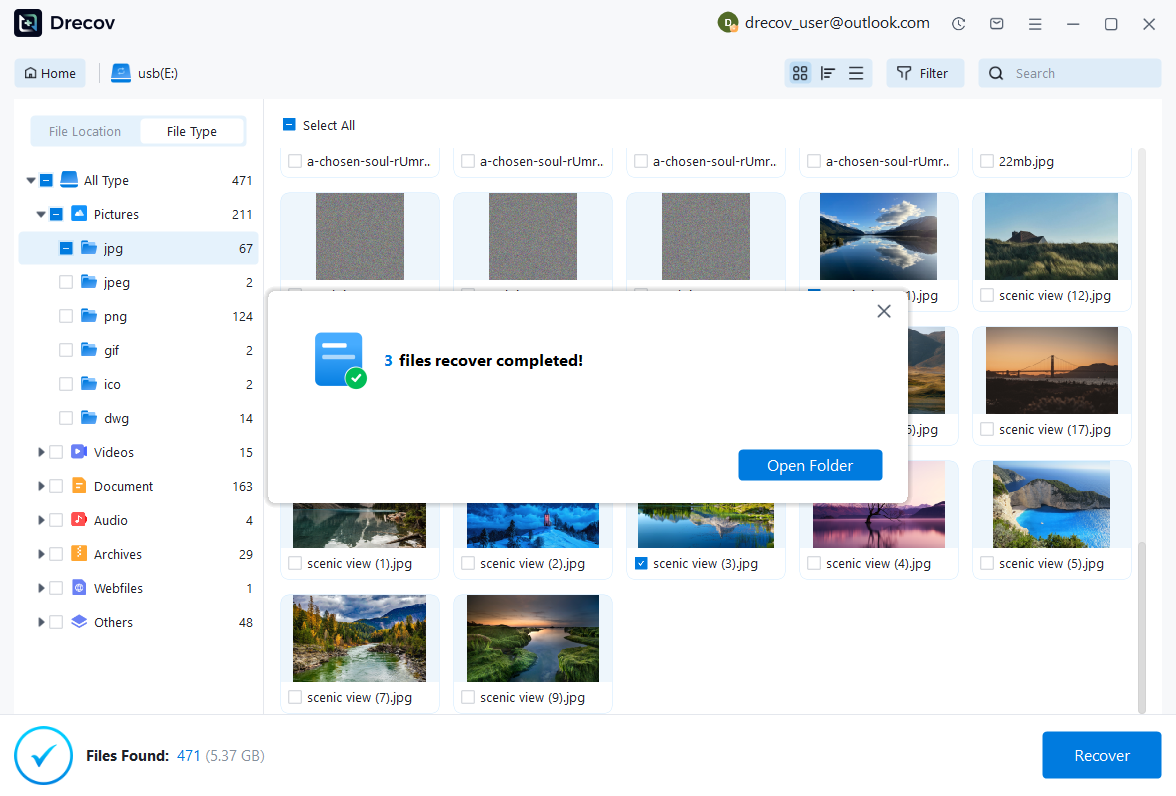
- Click “Recover” and save files to a separate storage device.
- Verify that all files are accessible and intact.
Why Choose Pandaoffice Drecov?
Data loss can occur unexpectedly due to accidental deletion, system crashes, formatting errors, or software failures. Whether you need to restore Windows previous date, perform recover Excel files,or handle deleted PowerPoint recovery, Pandaoffice Drecov provides a reliable and efficient solution designed to restore important documents quickly and safely.
Pandaoffice Drecov is a professional PowerPoint Recovery Software that supports recovery for multiple document types, including Excel spreadsheets, Word documents, and PowerPoint presentations. With advanced scanning technology, the software can detect and recover files even after deletion, formatting, or unexpected system shutdowns. This makes it an ideal tool for users who urgently need Document Recovery from hard drives, SSDs, USB drives, memory cards, and other storage devices.
One of the key advantages of Pandaoffice Drecov is its intelligent deep-scan engine. It carefully analyzes storage sectors to locate lost or hidden files that standard recovery tools often miss. Whether you accidentally deleted a presentation and require deleted PowerPoint recovery, or you lost critical spreadsheets and need to recover Excel files, the software provides fast scanning and high recovery success rates.
The software also features a user-friendly interface that allows beginners and professionals alike to complete recovery tasks in just a few steps. Users can preview recoverable files before restoring them, ensuring that only the needed data is recovered. In situations where files were lost due to system errors, the software can also help recover documents after attempts to restore Windows previous date.
Key Advantage: Pandaoffice Drecov uses advanced algorithms to recover formatted, logically damaged, or partially trimmed SSD data safely.
Method 4: Rebuilding the SSD File System Manually
Test Environment: 256GB SSD with corrupted NTFS due to sudden power loss.
Step-by-Step Instructions:
- Create a complete disk image of the SSD to preserve recoverable data.
- Use disk management tools (Windows DiskPart or Linux GParted) to inspect partitions.
- Identify corrupted or missing partitions.
- Attempt file system repair using
chkdsk /f(Windows) orfsck(Linux/macOS). - If partitions remain inaccessible, consider professional ssd hard drive data recovery services.
- Restore recovered files to a separate storage device and verify integrity.
⚠️Warning: Manual repair is high-risk and should only be attempted by advanced users.
Method 5: Using Command-Line Tools for SSD Recovery
Test Environment: 256GB SSD on Windows 10 with NTFS corruption due to improper ejection during file transfer.
Step-by-Step Instructions:
- Immediately stop using the SSD to prevent overwriting recoverable files.
- Open Command Prompt as Administrator (Windows) or Terminal (Linux/macOS).
- For Windows, type
chkdsk X: /f /r(replace X with your SSD drive letter) to repair file system errors. - For Linux/macOS, type
fsck /dev/sdX(replace sdX with your SSD device) to check and fix file system integrity. - Wait for the process to complete; this may take several hours depending on SSD size and used space.
- After repair, check the SSD for recovered files and copy them to a separate storage device.
⚠️Warning: Incorrect commands can overwrite sectors and make ssd hard drive recovery impossible. Always create a disk image first if possible.
Method 6: Recovering SSD Data via Disk Imaging
Test Environment: 1TB SSD on Windows 11; 500GB of critical business files lost.
Step-by-Step Instructions:
- Connect a large external drive to store the disk image.
- Use disk imaging software to create a sector-by-sector copy of the SSD.
- Verify the disk image matches the original SSD size and structure.
- Load the disk image into recovery software capable of scanning image files.
- Perform Quick Scan or Deep Scan on the disk image to locate lost files.
- Recover the selected files to a separate storage device for verification.
Key Tip: Working on a disk image preserves the original SSD and maximizes the success of ssd drive recovery.
Method 7: Professional SSD Hard Drive Recovery Services
Test Environment: 2TB SSD with controller failure, inaccessible by any software tools; includes business projects and multimedia content.
Step-by-Step Instructions:
- Stop using the damaged SSD immediately.
- Choose a professional ssd hard drive data recovery service.
- Package the SSD following lab instructions to prevent physical damage during shipment.
- Technicians perform diagnostic tests to determine the failure type.
- In a cleanroom, data is extracted directly from NAND chips or reconstructed through firmware recovery.
- Recovered files are copied to a secure storage device and returned to the client.
⚠️Warning: Do not attempt to open the SSD yourself; improper handling can permanently destroy data.
Frequently Asked Questions (FAQ)
How Successful Are SSD Drive Recovery Attempts?
The success rate of ssd drive recovery depends on the type of data loss, SSD model, and whether TRIM has been executed. Software-based recovery works well for accidental deletion or minor formatting. Severe logical errors, physical damage, or TRIM-affected SSDs often require professional services like Pandaoffice Drecov.
Can TRIM Affect SSD Data Recovery?
Yes. TRIM permanently erases deleted blocks, reducing recovery chances. ⚠️Warning: Avoid writing new data to the SSD to maximize recovery success.
Is It Safe to Use an SSD After Data Loss?
No. Using the SSD after data loss can overwrite recoverable files. Creating a disk image or using professional recovery services is strongly recommended.
Can I Recover Data from a Formatted SSD?
Yes, if the SSD has not been heavily used after formatting. Quick Scan can retrieve recently deleted files, while Deep Scan or professional services can recover files affected by formatting or TRIM operations.
Do SSD Brands Affect Recovery Success?
Yes. Different SSD brands use varying controllers, firmware, and NAND types. Tools like Pandaoffice Drecov support multiple brands, improving the chances of successful ssd drive data recovery.
Conclusion and Key Takeaways
The Importance of SSD Drive Recovery
SSDs provide fast, reliable storage but are not immune to data loss. Understanding ssd hard drive recovery principles is crucial for protecting personal and business-critical files. Awareness of TRIM, firmware updates, and physical failures helps users plan effective recovery strategies.
Best Practices to Prevent Data Loss
- Maintain regular backups using cloud storage, NAS, or external drives.
- Stop using the SSD immediately after data loss.
- Consider creating a disk image before attempting recovery.
- Use professional ssd hard drive data recovery services for physical or complex logical damage.
Final Thoughts on Recovery Methods
Combining careful software use, backups, disk imaging, and professional services ensures the highest recovery success. Tools like Pandaoffice Drecov provide advanced algorithms capable of recovering formatted, logically damaged, or partially trimmed SSDs.
⚠️Warning: Never attempt physical repair of an SSD yourself; this can permanently destroy data.
By following these strategies, users can maximize the chances of successful ssd drive recovery software operations while minimizing the risk of permanent data loss.






