







What 0xED establishes: Microsoft defines bug check 0xED, commonly displayed as the unmountable boot volume error, as a failure by the I/O subsystem to mount the boot volume. That narrows the problem to the startup storage path, but it does not identify a single cause. File-system damage, interrupted updates, cabling or controller trouble, and a deteriorating drive can produce similar screens. Let the drive’s present behavior determine whether recovery or repair comes next.
What stop code 0xED actually tells you
Listen to the evidence before choosing a command. A drive that remains listed at the correct capacity and reads consistently is a logical-recovery candidate. Clicking, repeated disappearance, sudden capacity changes, or long read stalls point away from ordinary software repair. Power down when those signs appear; repeated boots and full scans can worsen a failing device.
Startup Repair and CHKDSK are repair tools, not file-recovery tools. CHKDSK changes file-system metadata, so its attempt to make a volume mountable can rename, detach, or discard damaged records. When the files matter, copy or recover them before using CHKDSK /r, bootrec, reset, or reinstall. Microsoft’s debugger reference defines the stop condition and its mount failure. See the official documentation before relying on menus or behavior that may vary by Windows or Office release in the stop-code 0xED case.
Use the drive’s behavior to choose the next move
| What you observe | What it changes | Safest response |
|---|---|---|
| A stable, readable source | If another Windows installation or a trusted recovery environment can read the volume, copy irreplaceable folders to a different physical disk first. | If another Windows installation or a trusted recovery environment can read the volume, copy irreplaceable folders to a different physical disk first. Do not use the affected volume as a workspace. |
| A limited or file-specific failure | If BitLocker protects the volume, locate the recovery key before experimenting. | If BitLocker protects the volume, locate the recovery key before experimenting. An inaccessible encrypted volume cannot be recovered by guessing around the encryption layer. |
| Instability or a destructive next step | If the drive is stable but the file system will not mount, scan it read-only. | If the drive is stable but the file system will not mount, scan it read-only. If it is unstable, image it with appropriate hardware or use a recovery professional instead of scanning it repeatedly. |
Change one boot variable, then compare the next startup. Record the starting condition and the outcome in the stop-code 0xED case. If a test reduces access or introduces instability, return to protection instead of stacking another change on top in the stop-code 0xED case.
Recover important files before CHKDSK or boot repair
If another Windows installation or a trusted recovery environment can read the volume, copy irreplaceable folders to a different physical disk first. Do not use the affected volume as a workspace.
If BitLocker protects the volume, locate the recovery key before experimenting. An inaccessible encrypted volume cannot be recovered by guessing around the encryption layer.
If the drive is stable but the file system will not mount, scan it read-only. If it is unstable, image it with appropriate hardware or use a recovery professional instead of scanning it repeatedly.
Boot recovery is easier to judge alongside this related Drecov article, a second task-specific resource, and this recovery-safety reference.
⚠ Warning: Install it on a drive different from the one where your data was lost to prevent overwriting.
A Drecov workflow for a stable but inaccessible boot drive
What 0xED establishes: For a boot disk with an unmountable boot volume error that remains steadily detected, PandaOffice Drecov provides a read-only Windows recovery path before CHKDSK or boot-sector work. It can scan PCs, HDDs, SSDs, external disks, USB drives, SD cards, and memory cards for documents, media, email, audio, and archives. Quick Scan, Deep Scan, filters, preview, Lost Partition Recovery, and recovery to a chosen healthy destination address logical loss; none repairs a clicking drive or the Windows boot chain.Begin at the Drecov Windows recovery page when that precise loss branch applies to the stop-code 0xED case.
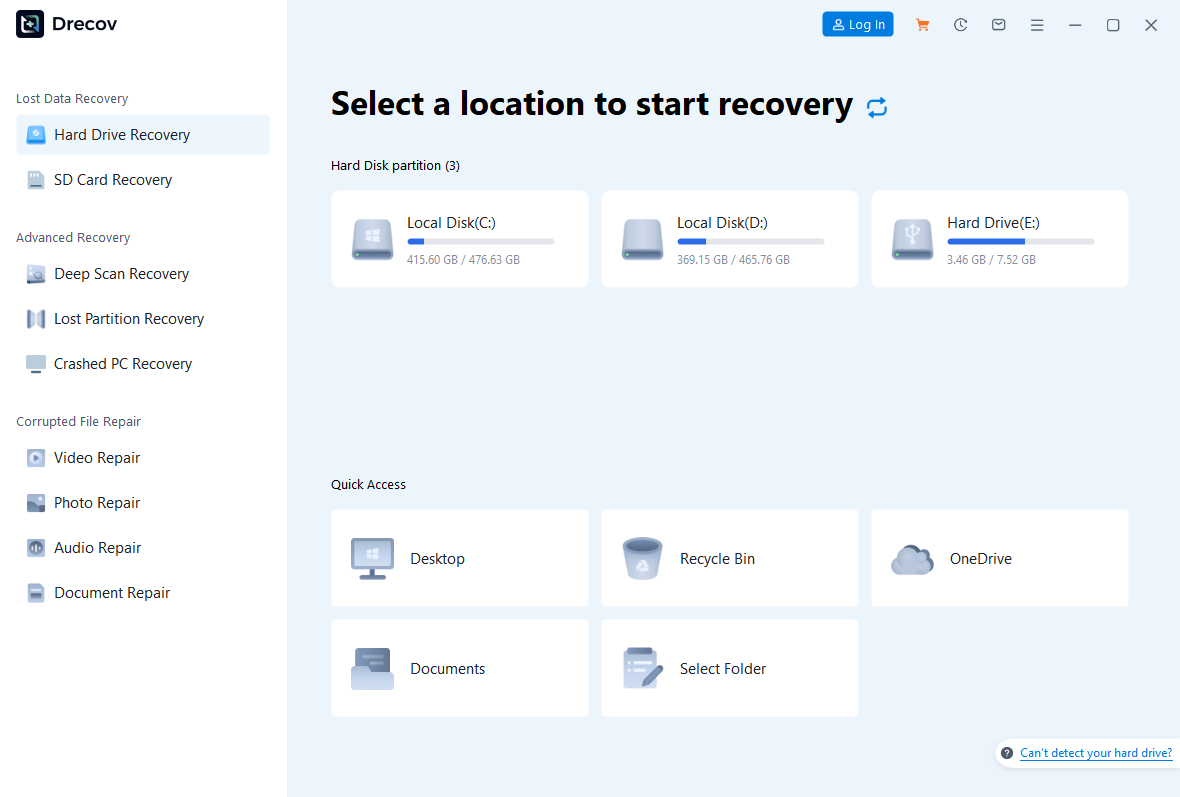
Step 1: Select the inaccessible Windows volume
Open Drecov away from the affected boot partition. Choose the Windows volume or the stable image made from it. If detection changes or reads stall, end the direct scan.
Step 2: Use Quick Scan to look for intact user paths
Start with Quick Scan and inspect Users, Desktop, Documents, and project folders. Keep WinRE logs and every recovered file off the boot disk.
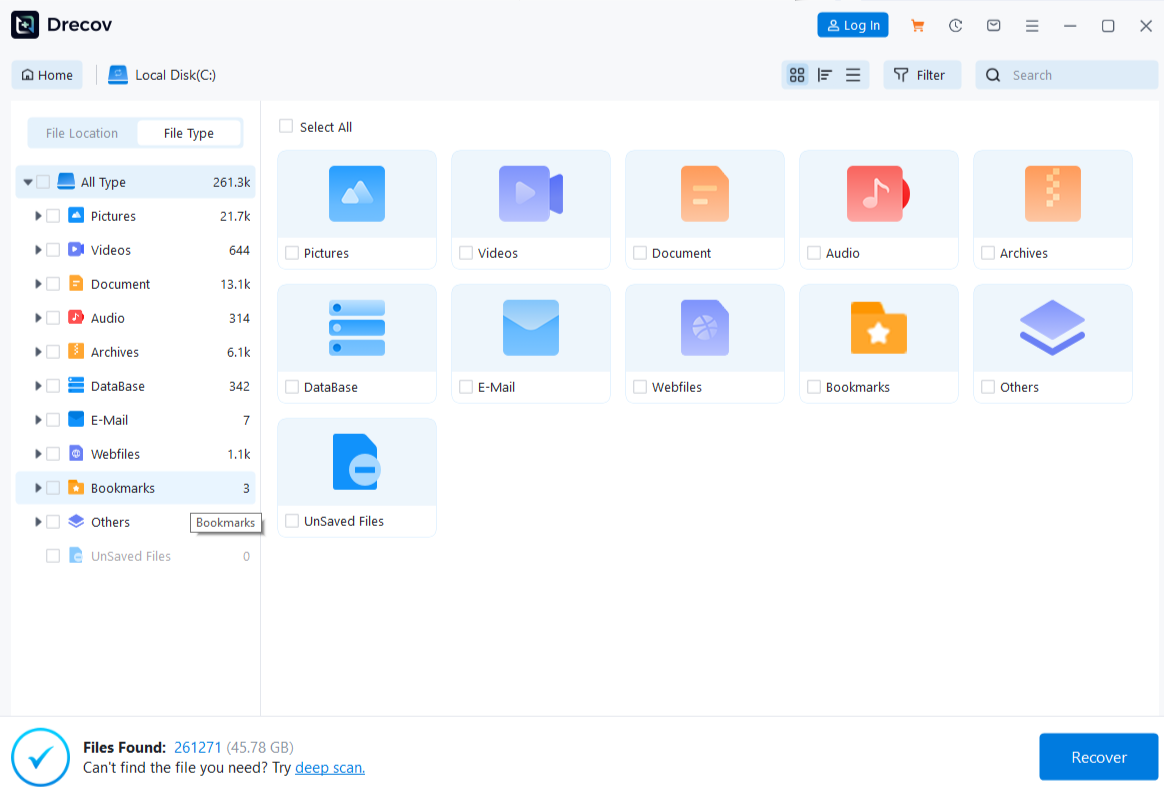
Step 3: Reserve Deep Scan for a consistently readable disk
Continue only when the device holds its capacity and connection. A broader pass adds reads, so an unstable boot drive needs imaging or professional handling instead.
Step 4: Preview files that represent real priorities
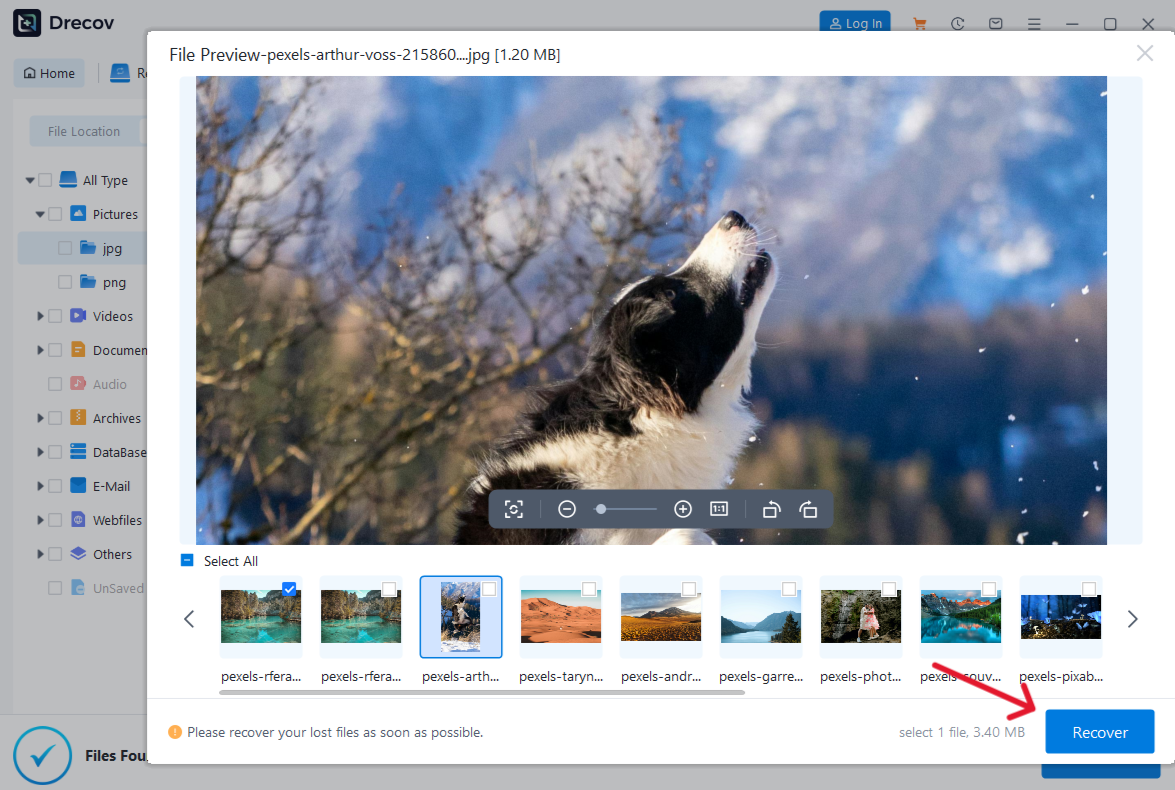
Filter by former path, type, name, and date. Test several documents, photos, archives, or mail files rather than accepting the first successful preview.
Step 5: Restore to an external destination and audit it
Send the selection to a different healthy device. Check Drecov Folder or Recovery Folder if paths are reconstructed differently, then open and inventory the output before boot repair.
Repair Windows only after recovery is verified
Try Startup Repair once
Enter Windows Recovery Environment and try Startup Repair once. Record the result instead of cycling it indefinitely.
Treat CHKDSK as a write operation
Use CHKDSK only after needed data is safe. The command may be appropriate for a stable volume with logical file-system damage, but it writes changes and is not reversible recovery.
Use boot commands for boot evidence
Use boot repair commands only when the volume itself is readable and the remaining evidence points to boot records or BCD. A boot command cannot repair a failing SSD or hard drive.
Watch the disk after Windows starts
After Windows starts, check the drive’s reported health, Event Viewer storage errors, capacity, and a representative set of files. Keep the recovered copy until several normal restarts succeed.
A boot that works once is still provisional; repeat it after shutdown and inspect storage errors.
Prove the volume is healthy before trusting it again
Boot twice, reopen several recovered documents from the healthy destination, and copy a harmless test file to and from the repaired volume. A changed blue-screen message is not proof of health.
Keep the external recovery copy until normal boots remain repeatable.
Read the WinRE evidence without guessing
Windows Recovery Environment may assign different letters from normal Windows. Use a read-only directory check to locate the Windows folder, Users directory, and expected volume label. Compare the disk model and size with firmware detection. If the volume is absent in firmware, software commands inside WinRE are unlikely to solve the underlying device path. If it appears in firmware but not in WinRE, storage-controller support, encryption, or severe file-system trouble deserves investigation before a write operation.
The second parameter of stop code 0xED is a file-system status value used in debugging, but ordinary users rarely need to decode it to make the first safe decision. Device stability and data importance come first. Startup Repair can be tried once after recovery. CHKDSK belongs later because it changes metadata. Bootrec belongs later still when the volume can be read and the remaining fault concerns startup structures. This order avoids treating three different jobs as interchangeable fixes.
Check the recovered user folders before returning to WinRE. Open a document, a photo, and one large archive from another healthy device. Compare their sizes with any available inventory. Keep the boot disk offline during this review. Next, photograph the WinRE volume list. Note the Windows folder and system partition. Run only the command justified by that map. A successful boot should preserve the same files and storage capacity. If Windows starts but the drive logs new errors, copy recent work elsewhere and replace the suspect storage rather than declaring the incident closed.
Build a record that another technician can use
Write down the time of the failure, the last successful action, and every change made afterward. Include the exact device model, capacity, connection, account, and path. A short factual timeline prevents a later repair from being mistaken for the original cause. It also helps a recovery professional avoid repeating stressful reads or destructive commands.
Keep screenshots and logs on a healthy device. When Windows changes an error after a repair, preserve both messages. The newer message may describe a secondary condition created by the attempted fix. Comparing the two is more useful than assuming any different screen means progress.
Inventory the files that matter before scanning. Name the folders, extensions, approximate sizes, date ranges, and applications required to open them. This makes filtering purposeful and gives verification a measurable finish line. It also prevents a few easy previews from hiding the absence of a critical project or archive.
Stop when the source becomes less stable, when two controlled attempts produce no new evidence, or when the next action would write to unprotected storage. Escalation preserves options. Repetition without a defined question usually adds wear, writes, or confusion rather than useful information.
Before touching the boot volume again
Match the model and capacity shown in firmware, WinRE, and Drecov. Store the BitLocker key and screenshots away from that disk. Prepare an external destination before the first read-intensive pass. A changing device identity ends this route.
State what the next boot or repair should prove. Run that one test, then compare the screen and storage behavior. Recoveries stay external. If access declines, stop and preserve the last readable state.
Conclusion
Stop code 0xED is an unmountable boot volume error—a mount failure, not permission to begin with CHKDSK. Stabilize the storage decision first, recover needed files from a readable source, and then apply the narrow boot or file-system repair. Drecov can protect data from a stable inaccessible volume; physical failure needs imaging or professional care.






