







Unexpected store exception is Windows bug check 0x154, meaning the kernel memory store component caught an unexpected exception. It does not prove that the Microsoft Store app failed. Because storage I/O, drivers, memory, and system corruption can all sit near this crash path, protect important files first if Windows still starts. A disappearing SSD, read errors, freezes, or a boot failure calls for data rescue before repair commands.
Use the Crash Pattern to Narrow the Fault
Microsoft documents bug check 0x154 and recommends examining Event Viewer, devices, memory, drivers, and system files. Record whether the crash follows sleep, gaming, large copies, updates, or a specific drive becoming busy. One stop code is a clue, not a diagnosis.
| What you observe | What it suggests | Safest next move |
|---|---|---|
| Crashes during large file reads | Storage path or controller load | Back up and inspect storage events |
| Crashes after sleep or resume | Power management or driver transition | Compare clean boot and driver history |
| SSD vanishes from firmware after crash | Connection or hardware instability | Stop repairs and rescue data when readable |
| Several random stop codes | Memory, power, or broader hardware | Run memory and hardware diagnostics |
| Started after driver update | Driver regression is plausible | Use supported rollback |
| Windows no longer boots | System or storage access is impaired | Recover files before reset or reinstall |
Turn Crash Timing Into a Testable Hypothesis
For unexpected store exception, use the matching observation, make one reversible change, and then retest the original symptom.
If You See: Crashes during large file reads
Storage path or controller load becomes the leading explanation, but the observation does not justify a destructive change by itself. Back up and inspect storage events.
When the Result Is: Crashes after sleep or resume
This result shifts attention toward power management or driver transition. Use the narrow response: compare clean boot and driver history.
What SSD vanishes from firmware after crash Changes
The practical implication is connection or hardware instability. The next action should therefore be limited to this branch: stop repairs and rescue data when readable.
Do Not Misread: Several random stop codes
It can indicate memory, power, or broader hardware, yet it does not prove every other component is healthy. Start with run memory and hardware diagnostics.
The Safe Branch for Started after driver update
Here, driver regression is plausible deserves priority over broad system repair. Use supported rollback.
Escalation Point: Windows no longer boots
Treat this as a sign of system or storage access is impaired. Beg
Secure Files Before Stressing Storage
Copy essential files while the system is stable, starting with irreplaceable folders rather than a full-disk stress test. If Windows cannot stay running, connect a stable readable drive to another Windows PC or create a controlled image. The kernel data inpage error article covers the related boundary between storage reads and stop errors. Avoid CHKDSK until recovery is complete because it changes the file system.
Troubleshoot From Evidence, Not a Generic BSOD Checklist
Review the System Log Around the Crash
Open Event Viewer and match disk, storahci, stornvme, controller, WHEA, or unexpected shutdown events to the crash time. A recurring device event is more useful than an unrelated warning from hours earlier.
Check Storage Without Starting With a Surface Scan
Confirm the system drive appears with the correct model and capacity in firmware and Windows. Review vendor health diagnostics and cable seating where appropriate. Stop if the disk drops offline or produces severe read errors.
Test Memory Separately
Run Windows Memory Diagnostic or a trusted extended memory test when crashes vary or decompression and paging paths appear involved. A clean memory test does not clear storage, but a failure changes the repair branch.
Undo a Recent Driver or Firmware Change Carefully
Use Device Manager rollback or the hardware vendor package when the timing is clear. Do not install random driver utilities. Update firmware only with stable power and a verified backup.
Repair Windows After Data Is Safe
Run DISM before SFC when Windows component corruption is plausible, then review the result instead of repeating commands. Use an in-place repair only after hardware and backups are in order.
Recover Files When the BSOD Blocks Normal Access
Drecov becomes relevant only when unexpected store exception has made local files inaccessible and the underlying disk remains stable. It recovers data; it does not repair bug check 0x154, Windows drivers, memory, or failing storage hardware. Copy readable files normally first whenever Windows remains dependable.
⚠ Warning: Install it on a drive different from the one where your data was lost to prevent overwriting.
Step 1: Access the Original Disk From Working Windows
If the affected PC starts and stays stable, open PandaOffice Drecov without installing it on the volume that lost data. When Windows cannot boot, connect the stable system disk to another working Windows computer, then select the original Windows volume in Drecov. Do not scan a disk that vanishes from firmware, repeatedly disconnects, or produces severe read errors.

Step 2: Choose the Scan From the Loss Event
Run Quick Scan for recently deleted or newly inaccessible files. Continue with Deep Scan only when Quick Scan misses the required folders, file-system damage is suspected, or partition metadata is missing. Use filters for file type, path, date, or name to reduce review time.

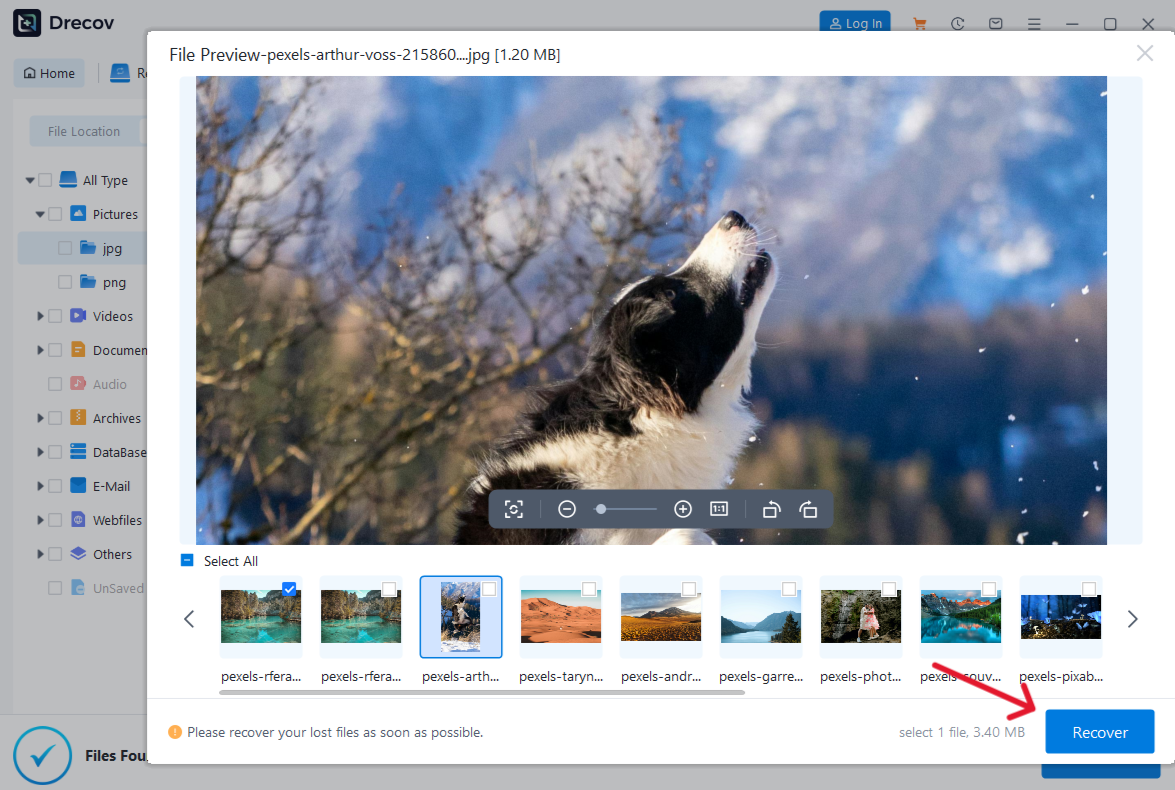
Step 3: Preview and Restore to Separate Storage
Preview several important files before selecting a large result set. Save recovered data to another healthy drive, never back to the crashing system disk. Check the Drecov folder or Recovery folder when the expected path is not preserved, and open restored files before resetting or reinstalling Windows.
Prove Stability After the Blue Screen Stops
Restart several times, repeat the workload that previously triggered the crash, and watch Event Viewer for new storage or controller errors. Open recovered files from the separate destination. The inaccessible boot-device recovery article helps if the failure moved from a BSOD to a boot problem, while the Windows repair command reference explains the limits of DISM and SFC.
- Treating “store” as proof that the Microsoft Store app caused the crash
- Running disk repair before copying data from a suspect SSD or hard drive
- Updating several drivers at once and losing the timing clue
- Ignoring a drive that disappears from firmware
- Assuming one successful restart proves the hardware is healthy
The most useful comparison is not “did the blue screen return once,” but whether it returns under the same workload. A crash during large reads from one secondary drive makes that path more suspicious than a crash that occurs only after sleep. Conversely, several unrelated stop codes, decompression failures, and application crashes can move memory or power higher on the list. Record the exact time, stop code, recent driver changes, and whether firmware still detects every disk after reboot.
Minidumps may identify the component active at the crash, but a named driver is not automatically the root cause; it may only be the code that encountered damaged data. Correlate it with System log disk, controller, WHEA, and power events. After changing one variable, repeat a non-destructive version of the original trigger. A clean idle period proves little if the failure occurred only during resume or sustained I/O. This evidence-led approach prevents a reinstall from temporarily hiding an unstable SSD, cable, controller, or memory module.
Unexpected Store Exception Questions
Is unexpected store exception always an SSD failure?
No. Storage, controllers, drivers, memory, power transitions, and Windows corruption can contribute. Device stability and logs decide the branch.
Can SFC fix this blue screen?
SFC can repair protected Windows files, but it cannot repair failing storage or memory. Use it after protecting data and checking hardware evidence.
What if the PC boots straight to BIOS afterward?
Check whether firmware still detects the system drive. A missing or intermittent drive is a hardware or connection branch, not a Windows command problem.
Does Drecov fix the BSOD?
No. Drecov recovers files from supported stable storage. BSOD diagnosis and Windows repair remain separate tasks.
Should I reset Windows?
Only after backups or recovery, hardware checks, and lower-risk repairs. A reset can remove apps or files depending on the option.
Separate a Quiet Period From a Real Stability Test
A computer that remains idle for an hour has not necessarily passed the workload that triggered the crash. After files are protected, repeat one controlled version of the original condition: resume from sleep, read a large noncritical file, or start the application that previously increased storage activity. Monitor the System log during that test. If disk or controller events return without another blue screen, the underlying problem is still present. If the crash pattern changes to several unrelated stop codes, move memory, power, and broader hardware testing higher instead of assuming the first Windows repair succeeded.
Conclusion
Unexpected store exception is a starting clue, not proof of one failed component. Preserve files, correlate the crash with storage and memory evidence, and change one variable at a time. If the stable system disk becomes inaccessible, Drecov can recover personal data through working Windows before reset or reinstall. It cannot fix the BSOD itself, so confirm the underlying hardware or Windows repair afterward.






