







Command boundary: Bootrec /fixboot writes a new boot sector to the system partition. It does not scan personal files, repair a physically failing drive, rebuild every BCD entry, or make an unreadable Windows volume healthy. Use it only after evidence points to boot-sector damage and the correct Windows installation is identified. Use the command only after firmware mode, system partition, and Windows location are known.
Know what /FixBoot is supposed to change
Modern UEFI systems usually start through an EFI System Partition and Windows Boot Manager. Older BIOS/MBR systems use a different boot chain. In Windows Recovery Environment, drive letters may not match normal Windows. Use DiskPart only for read-only inspection first, and identify volumes by file system, size, labels, and the Windows folder.
Secure important files before any command that writes boot or partition metadata. If Windows cannot start but the storage is stable and readable, copy files from a trusted environment or recover them to another physical device. If the disk disconnects or shows severe errors, stop command-line repair and image or escalate. Microsoft’s UEFI documentation clarifies the boot environment in which Windows Boot Manager operates. See the official documentation before relying on menus or behavior that may vary by Windows or Office release in the guarded /FixBoot session.
Identify UEFI, BIOS, and the Windows volume
| What you observe | What it changes | Safest response |
|---|---|---|
| A stable, readable source | Unlock BitLocker with the recovery key when required. | Unlock BitLocker with the recovery key when required. Do not format an EFI or system partition because a command cannot access it. |
| A limited or file-specific failure | Try Startup Repair once before manual commands. | Try Startup Repair once before manual commands. Its result can distinguish a routine configuration issue from a failure that needs more evidence. |
| Instability or a destructive next step | Use bootrec /scanos to see whether Windows installations are discovered and bootrec /rebuildbcd when the BCD store is the actual problem. | Use bootrec /scanos to see whether Windows installations are discovered and bootrec /rebuildbcd when the BCD store is the actual problem. These commands have different jobs from /fixboot. |
Write down the recovery-environment drive map before entering a command. Record the starting condition and the outcome in the guarded /FixBoot session. If a test reduces access or introduces instability, return to protection instead of stacking another change on top in the guarded /FixBoot session.
Protect files before writing boot structures
Unlock BitLocker with the recovery key when required. Do not format an EFI or system partition because a command cannot access it.
Try Startup Repair once before manual commands. Its result can distinguish a routine configuration issue from a failure that needs more evidence.
Use bootrec /scanos to see whether Windows installations are discovered and bootrec /rebuildbcd when the BCD store is the actual problem. These commands have different jobs from /fixboot.
Boot-structure work should be read with this related Drecov article, a second task-specific resource, and this recovery-safety reference.
⚠ Warning: Install it on a drive different from the one where your data was lost to prevent overwriting.
Recover Important Files With Drecov Before /FixBoot
If a nonbooting Windows installation blocks access to important files, Drecov can recover those files before /FixBoot writes to system structures. Its read-only modes include hard-drive, deep-scan, lost-partition, and crashed-PC recovery, with filtering, preview, and a separate output location. This protects user data; it does not write a boot sector, rebuild BCD, unlock BitLocker, or stabilize failing hardware. Begin at the Drecov Windows recovery page when that precise loss branch applies to the guarded /FixBoot session.
Step 1: Identify the Windows partition before boot work
From a healthy recovery context, open Drecov and choose the original Windows location or the appropriate crashed-PC or lost-partition mode. Drive letters in WinRE are not reliable identifiers.
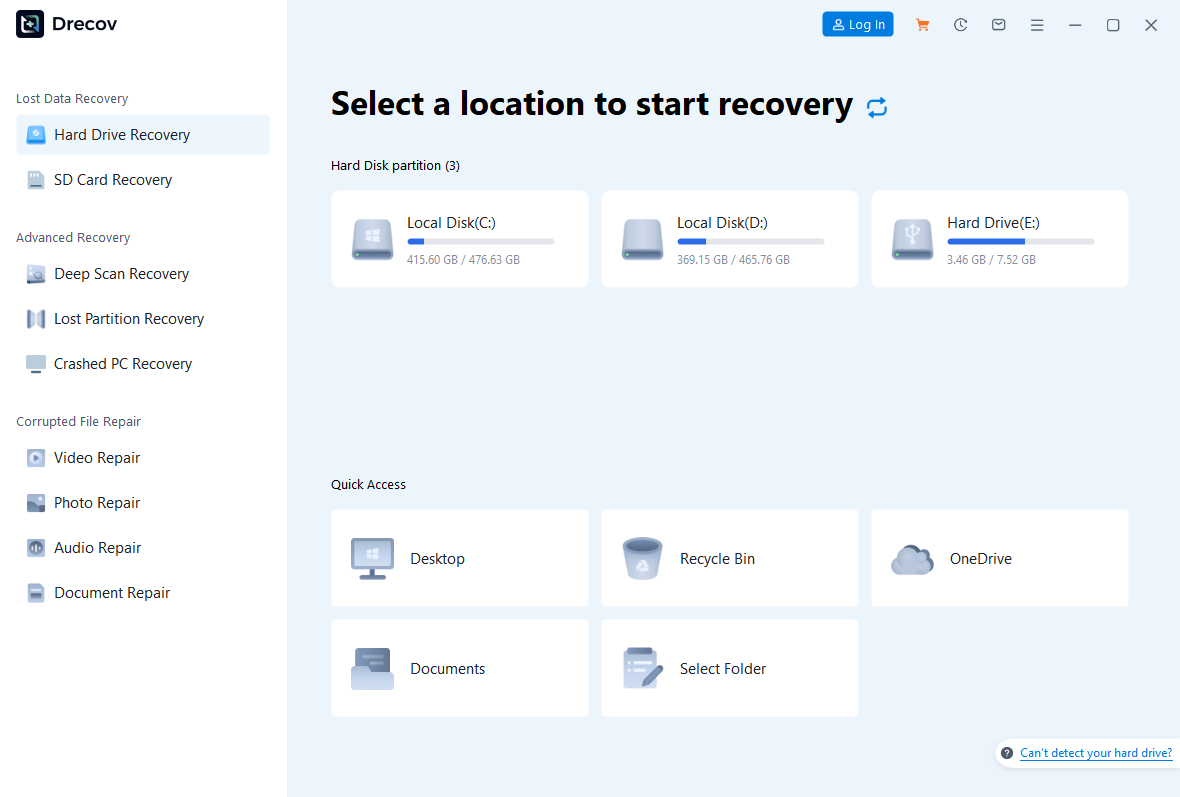
Step 2: Begin with Quick Scan on a stable source
Review user-profile paths and recently unavailable files. Do not place the program, temporary data, or output on the disk whose boot structures may be changed.
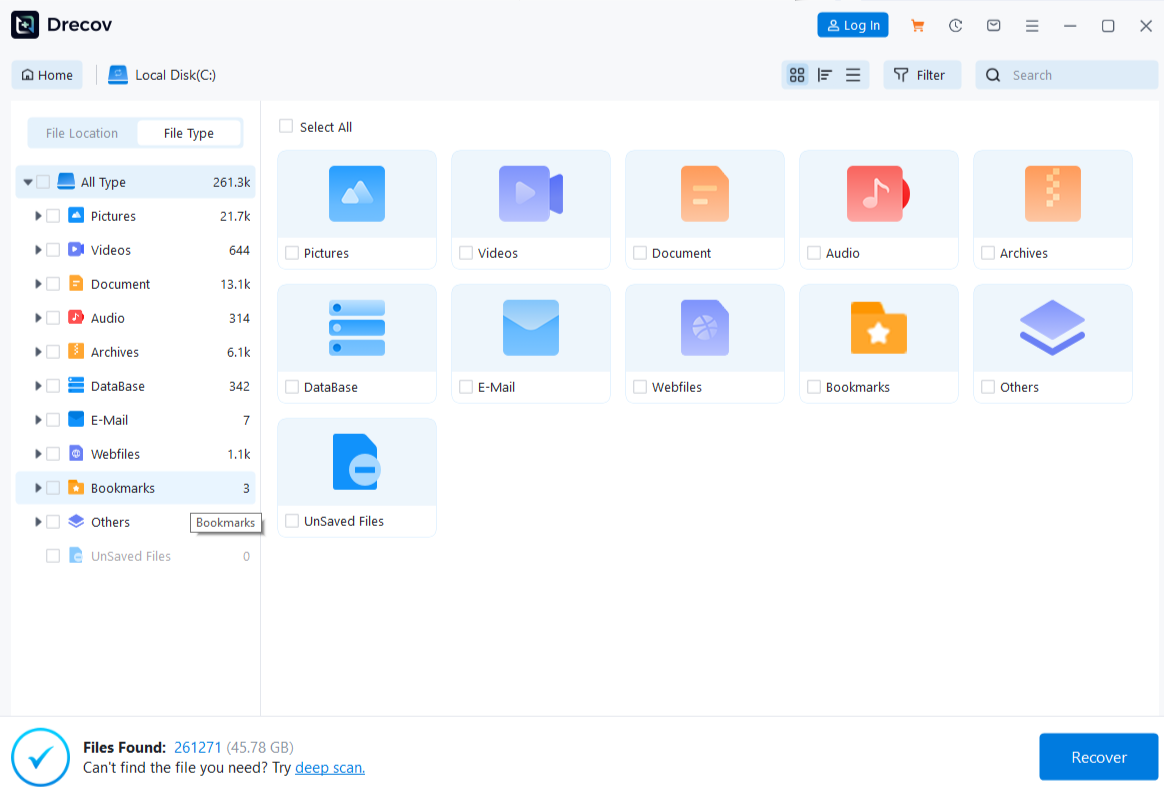
Step 3: Use Deep Scan only after the disk proves stable
Escalate when required files remain missing and the device stays consistently readable. Clicking, disappearance, wrong capacity, or severe errors call for imaging or a specialist before more commands.

Step 4: Locate and preview the files that justify the pause
Filter by user folder, type, filename, and date. Preview representative material and note that bootability is outside the preview’s scope; Drecov is protecting data, not testing /FixBoot.
Step 5: Recover elsewhere, then return to WinRE
Write files to another physical device and inspect Drecov Folder or Recovery Folder when necessary. Open samples and preserve a second copy before any boot-sector, BCD, EFI, or partition action.
Run Bootrec Only Inside the Correct Recovery Context
Map volumes from WinRE
From WinRE, open Command Prompt and confirm the target layout. Never assume C: is Windows in this environment.
Run /FixBoot for a supported reason
Run bootrec /fixboot only when the identified system partition and boot mode make that action appropriate. Record the exact response.
Branch away from Access Is Denied
If Access is denied appears, stop repeating the command. EFI partition access, boot mode, or BCD setup may need a targeted procedure; use the existing access-denied guide rather than formatting or recreating partitions blindly.
Test the firmware boot entry
Remove installation media before the verification boot. If firmware lists multiple Windows Boot Manager entries, select the entry tied to the repaired disk.
A different command response is evidence, not proof that the Windows boot path is correct.
Verify the boot path instead of repeating commands
Confirm Windows starts twice, BitLocker behaves normally, the EFI or system partition remains the expected size and type, and no new storage errors appear.
Preserve the file backup until firmware and Windows start consistently.
Keep /FixBoot separate from EFI and BCD work
On UEFI systems, the EFI System Partition usually contains boot files while BCD identifies Windows boot entries. Bootrec /fixboot, bcdboot, and bootrec /rebuildbcd therefore answer different questions. Do not substitute one command merely because another returned an error. First identify whether firmware sees Windows Boot Manager, whether the EFI partition is present, whether the Windows volume can be read, and whether an installation is discovered. Those observations define the repair layer.
An Access Is Denied result from /fixboot is not an instruction to format the EFI partition. It may reflect the selected environment, partition access, or the modern UEFI repair path. Preserve the exact message and use the dedicated access-denied article for that branch. Likewise, /fixmbr is not the default answer on every UEFI system. Commands that target the wrong architecture or partition can replace useful evidence without addressing the real boot failure.
Before the repair boot, copy the protected files to another healthy device and disconnect that destination. Confirm the PC is using the intended firmware entry. Remove unrelated USB storage so firmware cannot choose it by mistake. Run the selected command once. Photograph the response. Exit WinRE cleanly and remove installation media. If Windows starts, check Disk Management without changing anything. Confirm the expected disk, volume sizes, and encryption state. Restart again. A repair that succeeds only while external media is attached has not restored the normal boot path.
Check the surrounding system, not only the error box
Boot repair needs a known starting map. Record firmware mode, EFI or system partition, Windows folder, BitLocker state, and the exact WinRE drive letters. Put that record on separate storage in the guarded /FixBoot session. It gives each later action a defined target and prevents a successful-looking workaround from hiding an unresolved dependency in the guarded /FixBoot session.
Preserve the earliest available copy before testing in the guarded /FixBoot session. Create a working duplicate for commands, extraction, conversion, or application checks in the guarded /FixBoot session. When a test changes the duplicate, keep the changed version under a new name in the guarded /FixBoot session. This makes comparison possible and leaves the starting evidence available in the guarded /FixBoot session.
Use confirm windows starts twice, bitlocker behaves normally, the efi or system partition remains the expected size and type, and no new storage errors appear as the acceptance test. Repeat it after a restart or reconnect in the guarded /FixBoot session. Also inspect a second representative item that exercises a different part of the workflow in the guarded /FixBoot session. A single successful launch cannot establish that every dependency or file is sound in the guarded /FixBoot session.
End the current path when a boot command targets an unidentified volume or changes access to user files. Preserve logs and recovered copies at that point in the guarded /FixBoot session. A specialist can work more effectively from a clear device history and untouched evidence than from a source changed by several undocumented repairs in the guarded /FixBoot session.
Before another boot command
Map the Windows, EFI, and recovery partitions by more than drive letter. Write down firmware mode and BitLocker status. Copy user data away before assigning letters or writing boot code.
Predict the command’s valid response and record what actually appears. An Access Is Denied message changes the diagnosis. Do not answer it with formatting, partition deletion, or repeated /FixBoot attempts.
Keep the command transcript with the recovered-file inventory. Label the Windows partition. Label the EFI partition. Note the firmware mode. Record BitLocker status. Photograph the command response. Remove unrelated USB disks. Select the intended boot entry. Restart twice. Check storage errors. That evidence shows what was protected before boot structures changed and gives later support work a reliable starting point.
Conclusion
Bootrec /fixboot belongs to a known boot-sector problem on a correctly identified system. Protect user files before the command and separate EFI, BCD, volume, and hardware failures. Drecov recovers data from stable inaccessible storage; it does not replace the firmware-aware boot repair.






