







Efficient file management is the cornerstone of digital productivity. Whether you are organizing your family photos, cleaning up a cluttered work folder, or preparing for a massive data backup, knowing the shortcuts can save you hours of tedious clicking. However, mass file manipulation often leads to accidental deletions. In this comprehensive guide, we will explore how to select multiple files on windows with precision and discuss how to protect your data using professional tools like PandaOffice Drecov.
Before diving into complex recovery scenarios, one must master the basic interface of Windows File Explorer. Microsoft has spent decades refining how users interact with their data. Understanding the nuances of “selection” is the first step toward becoming a power user.
How to Select Multiple Files on Windows Using the Mouse
The most intuitive way to manage your data is through direct visual interaction. Windows provides several “hidden” mouse gestures that many users overlook.
- The Click-and-Drag Method: This is ideal for selecting a cluster of files that are positioned next to each other.
- Step 1: Open the folder containing your files.
- Step 2: Click on a blank space in the folder window.
- Step 3: Hold the left mouse button and drag the cursor over the files you wish to highlight. A blue translucent box will appear, selecting everything it touches.
- Using Checkboxes: If you prefer a tablet-like experience or find clicking difficult, you can enable item checkboxes.
- Step 1: In File Explorer, click the View tab (or View > Show in Windows 11).
- Step 2: Check the box for Item check boxes.
- Step 3: Hover over any file and click the small box that appears in the top-left corner.
Mastering Shortcuts: How to Select Multiple Files in Windows Fast
Efficiency in Windows is often measured by how little you touch the mouse. Keyboard shortcuts are the “secret sauce” for professional data managers. When people ask how to select multiple files in windows, they are usually looking for these specific combinations.
The “Select All” Command
If you need to move or delete an entire folder’s worth of content, don’t waste time dragging your mouse.
- Step 1: Click anywhere inside the folder.
- Step 2: Press Ctrl + A on your keyboard. Every file and subfolder will instantly be highlighted.
Selecting a Range (The Shift Key)
When your files are listed in a row and you need a specific block, the Shift key is your best friend.
- Step 1: Click the first file in the sequence.
- Step 2: Scroll down to the last file you want to include.
- Step 3: Hold the Shift key and click that last file. Windows will automatically select everything in between.
Selecting Individual Files (The Ctrl Key)
What if the files you need are scattered across the folder? This is a common hurdle when learning how to select multiple files windows users encounter.
- Step 1: Hold down the Ctrl key.
- Step 2: While holding the key, click each individual file you want to select.
- Step 3: Release the key only after you have finished clicking all desired items.
Warning: If you accidentally click a blank space while holding Ctrl and then release it, you might lose your entire selection. Always keep a steady hand!
Advanced Selection: Using Search and Filters
Sometimes, you need to select files based on criteria rather than position. For example, you might want to select all .jpg files in a folder containing hundreds of different formats.
- The Search Bar: Type
*.ext(e.g.,*.pdf) into the search bar at the top right of File Explorer. - The Result: Windows will filter the view to show only those files.
- The Selection: Use Ctrl + A to select all the filtered results. This is a highly effective way to manage specific data types before running a backup.
For more official documentation on Windows shortcuts, you can visit the Microsoft Support Page for Keyboard Shortcuts.
The Risks of Mass Selection: When Things Go Wrong
While learning how to select multiple files on windows is empowering, it carries a significant risk. One wrong keystroke (like pressing Shift + Delete instead of just Delete) can bypass the Recycle Bin entirely.
Data loss occurs in various ways:
- Accidental Deletion: Highlighting the wrong group of files.
- Cut-and-Paste Errors: A system crash during a “Cut” operation can leave the source files corrupted or missing.
- Format Errors: Accidentally formatting the wrong partition while trying to manage external drives.
If you find yourself in a situation where your selected files have vanished, you need a reliable recovery strategy. This is where professional-grade software becomes essential.
PandaOffice Drecov Data Recovery Software: Your Safety Net
When standard Windows “Undo” (Ctrl + Z) fails, PandaOffice Drecov data recovery software is the industry-standard solution for retrieving lost information. It is designed to scan the deep sectors of your hard drive to find remnants of files that the operating system no longer sees.
Why Choose PandaOffice Drecov?
Unlike basic freeware, this tool uses advanced algorithmic scanning to reconstruct file headers. Whether the files were lost due to a selection error or a disk failure, the software provides a streamlined path to recovery.
⚠ Warning: Never install recovery software on the same drive or partition where the lost data was located, as this may overwrite the “deleted” files.
Launch the application with administrative privileges to ensure it has full access to the file system.
Step-by-Step Recovery Guide
If you have lost data while practicing how to select multiple files on windows, follow these steps to get it back.
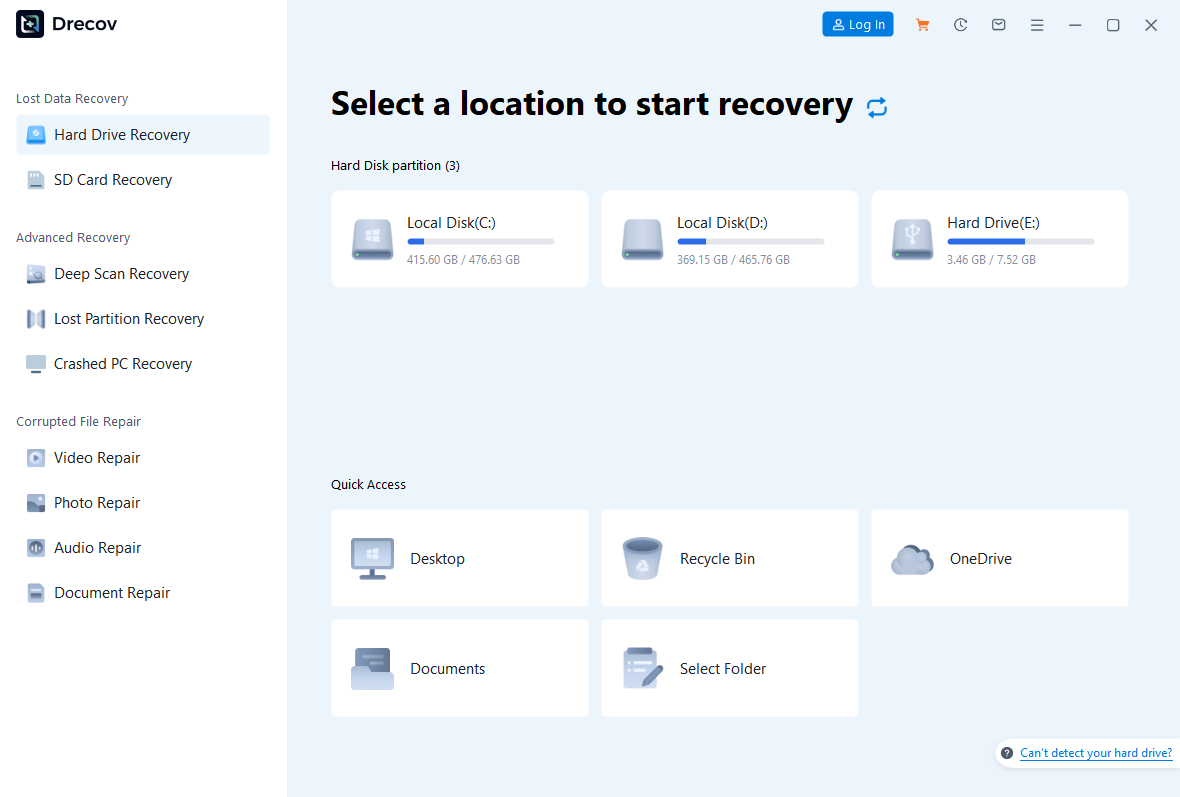
Step 1: Selecting the Target Location
The main interface will display all connected drives, including internal HDDs, SSDs, and external USB sticks.
- Identify the drive where the files were last seen.
- Click the Scan button to begin the analysis.
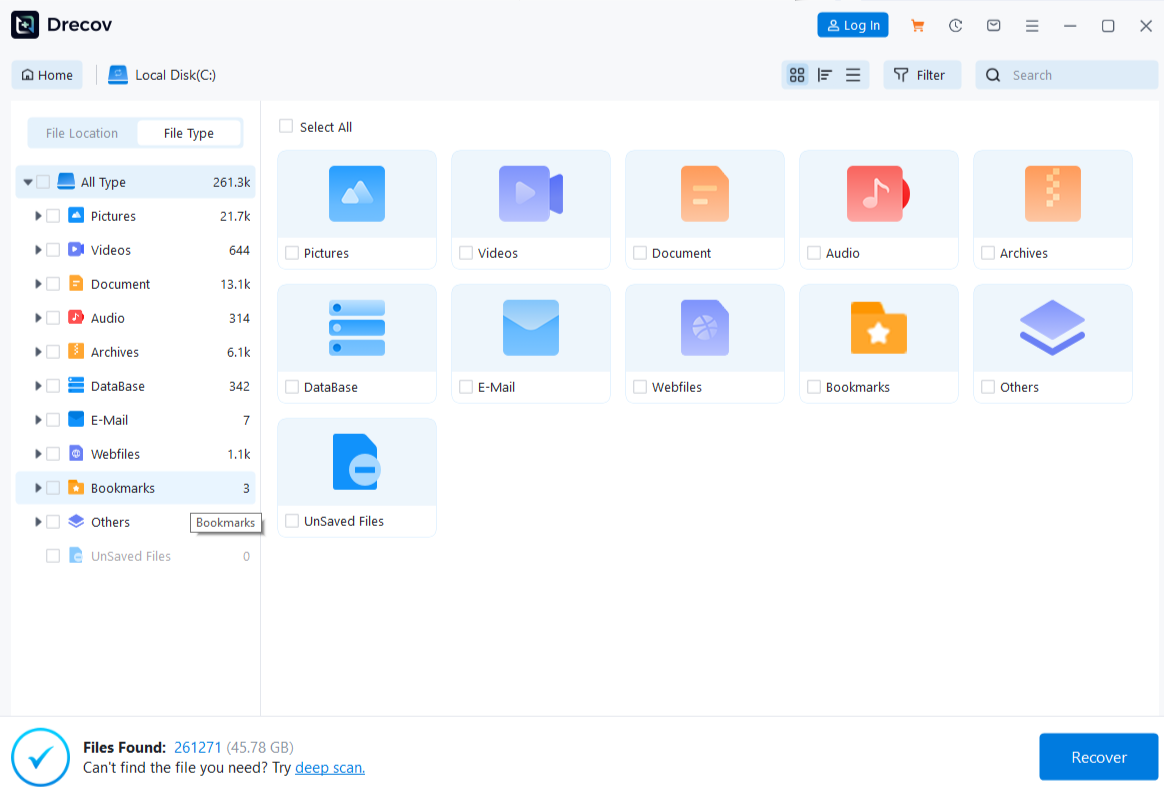
Step 2: Scanning for Lost Selection
PandaOffice Drecov will perform a “Quick Scan” followed by a “Deep Scan.”
- Quick Scan: Best for files recently emptied from the Recycle Bin.
- Deep Scan: Essential if the files were lost due to formatting or partition errors.
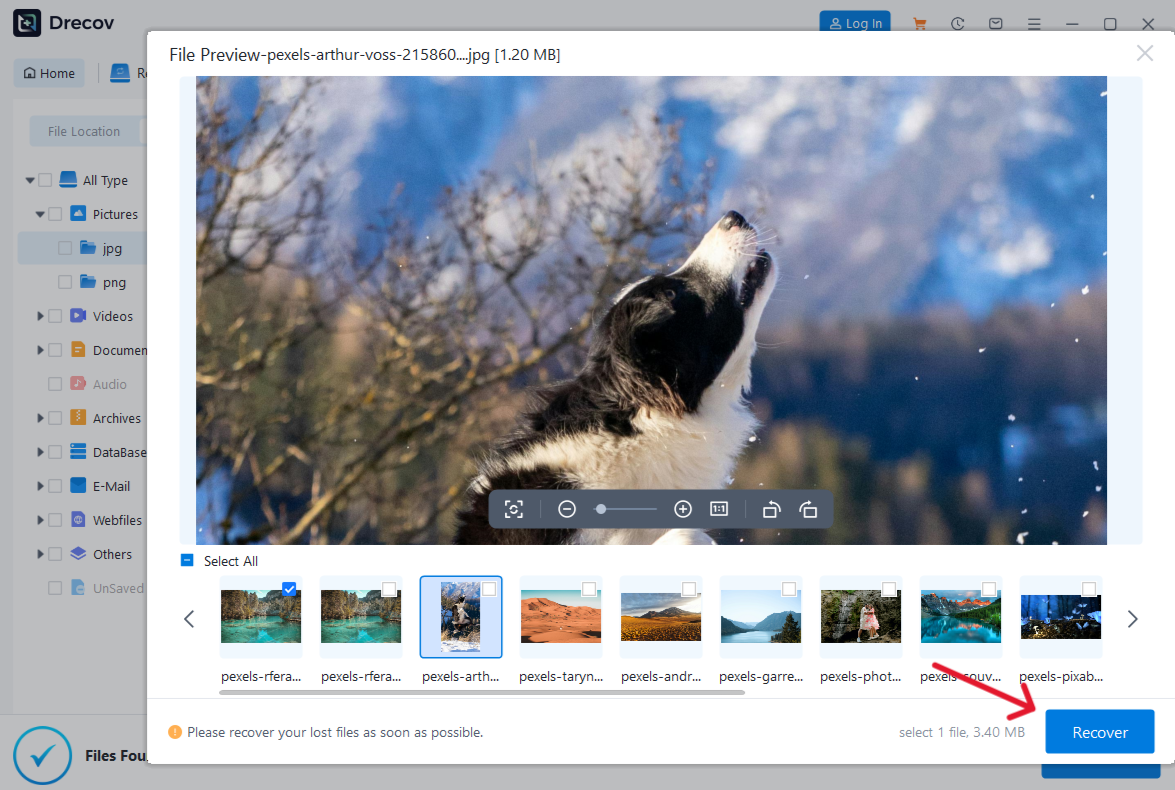
Step 3: Filtering and Previewing
One of the best features of this tool is the preview window.
- Use the file tree on the left to navigate to the original folder.
- Double-click images or documents to see a preview. This ensures you are recovering the correct version of the file.
Step 4: Executing the Recovery
- Once you have selected the checkboxes for the files you need, click Recover.
- Select a destination folder on a different physical drive to save the recovered data safely.
Pro-Active Data Protection Strategies
Once you have mastered how to select multiple files windows and have your data back, it is time to think about prevention. Data recovery is a cure, but a backup is a prevention.
Creating a Safety Net in Windows
Windows offers built-in tools that complement your use of PandaOffice Drecov. We highly recommend setting these up immediately:
- Recovery Disks: Essential for when the entire OS fails to boot. Learn how to create a Windows 10 recovery disk to ensure you can always access your file system.
- Recovery Partitions: A dedicated space on your drive for system emergencies. Discover how to create a recovery partition in Windows 10 to keep your recovery tools local.
- Cloud Management: While cloud storage is great, sometimes it interferes with local file selection and syncing. If you find it intrusive, here is how to disable OneDrive in Windows 11.
Frequently Asked Questions
To further enhance your understanding of file management and data safety, here are five common questions users often ask when trying to master how to select multiple files on windows.
1. What should I do if the “Ctrl + A” shortcut is not working?
If how to select multiple files windows shortcuts like Ctrl + A fail, it is usually because the focus is not on the File Explorer window.
- Step 1: Click once on any empty space inside the folder or on a single file to “activate” the window.
- Step 2: Ensure your keyboard layout hasn’t been switched to a language that reassigns those keys.
- Step 3: Restart the
explorer.exeprocess via Task Manager if the interface remains unresponsive.
2. Can I select multiple files across different folders at once?
Standard File Explorer does not allow you to select files from Folder A and Folder B simultaneously in a single view.
- Step 1: Use the Search feature in the parent directory to find all files you need.
- Step 2: Once they appear in the search results, you can use the Shift or Ctrl methods to highlight them across different sub-locations.
3. How do I deselect just one file after highlighting a large group?
It is common to accidentally include a file you didn’t want.
- Step 1: Keep holding the Ctrl key.
- Step 2: Click on the specific file you wish to remove from the selection.
- Step 3: The highlight will disappear from that item while the others remain selected. This is the most precise way to refine how to select multiple files on windows.
4. Is there a limit to how many files PandaOffice Drecov can recover at once?
No, PandaOffice Drecov data recovery software is built to handle massive data sets.
- Step 1: After the scan, click the checkbox at the very top of the file list to select everything found.
- Step 2: Ensure your destination drive has enough storage capacity to hold the total volume of data being recovered.
5. Why are some of my selected files grayed out or showing a “shortcut” arrow?
When you learn how to select multiple files in windows, you might notice some icons have a small arrow in the corner. These are Shortcuts, not the actual files.
- The Risk: If you select and move these, you are only moving the “link” to the file, not the data itself.
- The Solution: Right-click the shortcut and select Open file location to find the original data before performing your selection and backup.
Conclusion
Understanding how to select multiple files on windows is more than just a shortcut; it is a fundamental digital literacy skill. By combining these manual techniques with the power of PandaOffice Drecov data recovery software, you create a workflow that is both efficient and safe.
Always remember:
- Use Ctrl for individual picks.
- Use Shift for blocks of files.
- Use PandaOffice Drecov when the unexpected happens.
By following these steps, you ensure that your digital life remains organized and your most precious files remain protected against accidental loss. Happy organizing!






