







Plugging in your thumb drive only to realize your critical work documents or irreplaceable photos have vanished is a stressful experience. When files become unreadable, finding a reliable method for usb flash drive corrupted file recovery becomes an urgent priority. Corruption can happen due to abrupt removal, file system crashes, or malware attacks. Fortunately, your data is rarely gone for good. By utilizing professional recovery tools like PandaOffice Drecov data recovery software, you can safely extract and restore your lost files before they are permanently overwritten.
Understanding the Basics of USB Flash Drive Corrupted File Recovery
To successfully rescue your data, it helps to understand what happens behind the scenes. When a file system becomes corrupted, the operating system loses the roadmap required to locate and assemble your files. The data itself usually remains intact on the flash memory chips, but it sits in an unallocated space waiting to be found.
Common Flash Drive Issues and Challenges
- Logical File System Corruption: The drive registers as RAW, or prompts you with a “You need to format the disk” error.
- Improper Ejection: Pulling the drive out during a write cycle disrupts metadata creation.
- Hardware Wear and Tear: NAND flash memory has a limited lifespan of write cycles, eventually leading to bad sectors.
Why Choose PandaOffice Drecov Data Recovery Software?
For comprehensive corrupt usb drive recovery, PandaOffice Drecov data recovery software offers an industry-leading algorithmic scan that reconstructs fragmented files. Whether your drive suffered a sudden power surge or logical corruption, this utility bypasses operating system restrictions to read raw sectors directly.
Furthermore, users facing multifaceted data loss can leverage specific guides for adjacent issues. For instance, if you accidentally emptied your local trash before transferring files to your flash drive, you can learn where is Recycle Bin in Windows 10. Similarly, if you lost your browser backup data, you can easily find your Firefox bookmarks location using the same software platform.
⚠ Warning: Install it on a drive different from the one where your data was lost to prevent overwriting.
Solutions for Corrupt USB Drive Recovery
Depending on the severity of the file corruption, different levels of intervention are required. We have broken these methods down from beginner-friendly built-in fixes to advanced data recovery software deployment.
Method 1: The Beginner-Friendly Windows CHKDSK Command
If the corruption is minor and tied to file system structural errors, Windows possesses built-in repair tools that can patch the allocation table.
- Step 1: Plug your USB flash drive into an open port on your PC. Press the
Win + Xhotkey combination and select Terminal (Admin) or Command Prompt (Admin) from the Power User menu. - Step 2: Identify your USB drive letter via File Explorer (e.g., Drive
E:). - Step 3: In the command line interface, type
chkdsk E: /f(replaceE:with your specific drive letter) and hitEnter.
Warning: The
/fparameter attempts to fix structural errors on the disk. However, if the drive has extensive physical bad sectors, running CHKDSK can sometimes overwrite fragile data clusters. Proceed with caution.
Method 2: Professional USB Flash Drive Corrupted File Recovery via PandaOffice Drecov
When built-in operating system repair tools fail or risk deleting unlinked files, deploying PandaOffice Drecov data recovery software is the safest path to retrieve your data without altering the drive’s original structure.
⚠ Warning: Install it on a drive different from the one where your data was lost to prevent overwriting.
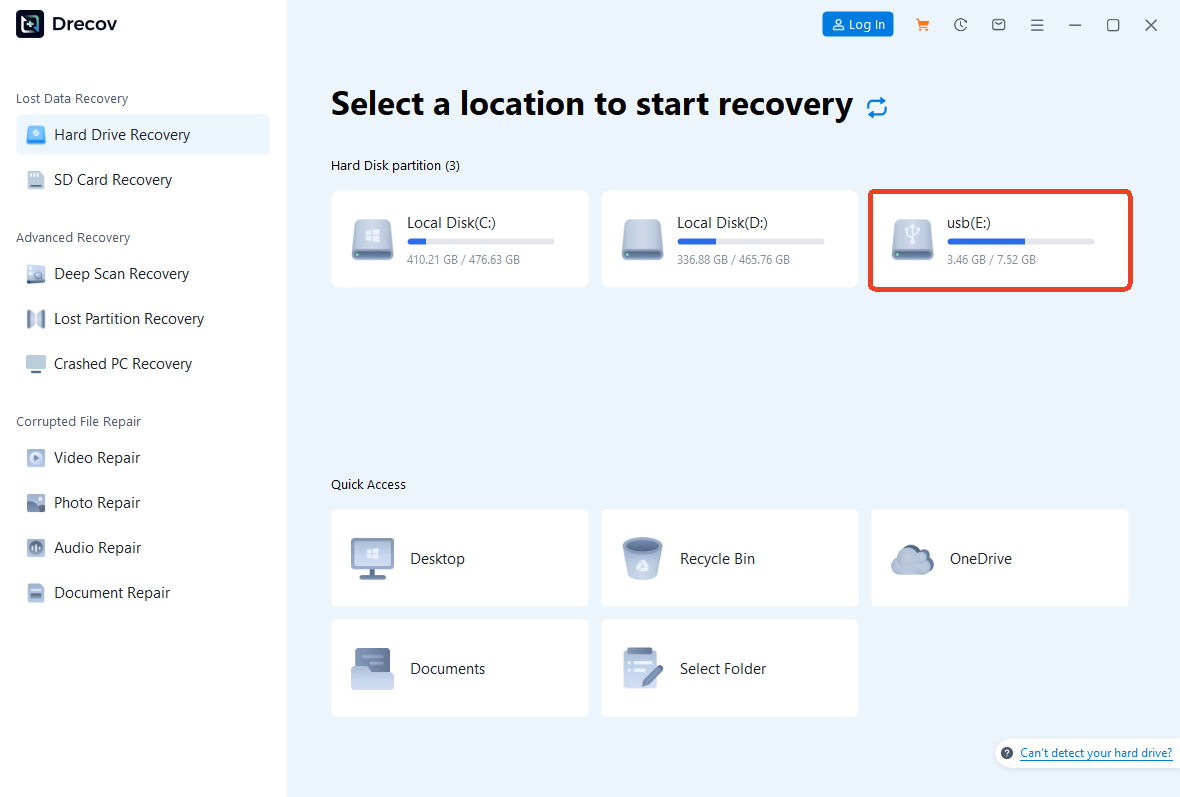
- Step 1: Connect and Select the Target Drive. Insert your flash drive into a USB 3.0 or USB-C port for maximum transfer speed. Open the software, navigate to the External Drives section, select your corrupted flash drive, and click Scan.
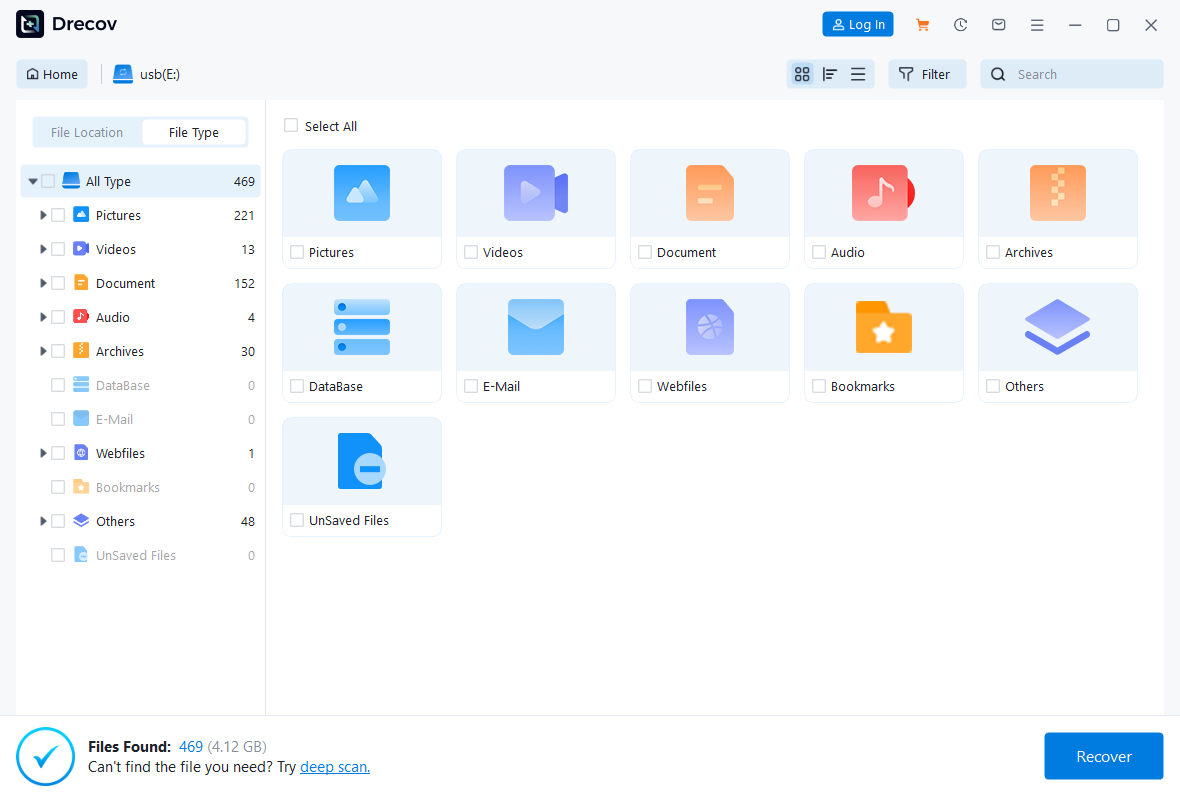
- Step 2: Deep Scan Processing. The software will initiate a quick scan followed automatically by a deep sector-by-sector scan. This process uses advanced file signatures to identify lost documents, images, and archives even if the file allocation table is destroyed.
- Step 3: Preview and Filter. Browse through the real-time results sorted by file type. You can utilize the built-in preview pane to verify the integrity of images or text documents prior to restoration.
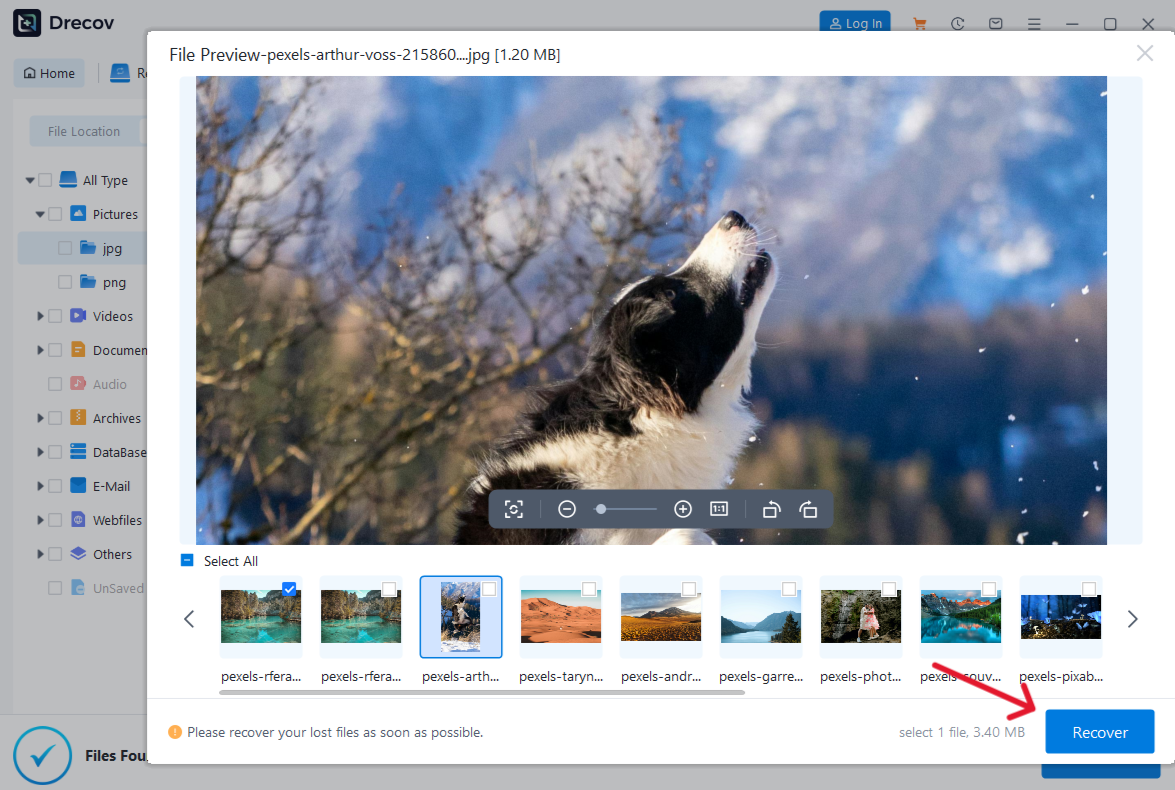
- Step 4: Secure Export. Select the files you want to save and click Recover. Choose a storage destination on your local computer or an external hard drive. Never save the recovered files back to the same corrupted USB drive.
Method 3: Advanced Driver Reinstallation and Registry Adjustments
Sometimes, a flash drive appears corrupt because the operating system’s USB controller configuration has become unstable or corrupted.
- Step 1: Press
Win + Rto trigger the Run dialog box. Typedevmgmt.mscand pressEnterto open the Device Manager. - Step 2: Expand the Universal Serial Bus controllers section. Right-click on your USB Mass Storage Device and select Uninstall device.
- Step 3: Unplug the USB flash drive, restart your computer, and plug the drive back in. Windows will automatically reinstall a fresh copy of the driver.
- Step 4 (Registry Validation): If the device remains unreadable, advanced users can verify the USB storage registry path. Press
Win + R, typeregedit, and navigate to:HKEY_LOCAL_MACHINE\SYSTEM\CurrentControlSet\Services\USBSTOREnsure theStartDWORD value is set to3(Triggered on-demand). If it is set to4, USB storage devices are globally disabled on the machine.
Alternative or Complementary Methods
While dedicated utilities streamline data rescue, alternative approaches exist depending on your specific technical scenario.
| Recovery Method | Success Rate | Pros | Cons |
| PandaOffice Drecov | Very High | Scans raw sectors, preserves original filenames, deep file previewing. | Requires local storage space for file extraction. |
| Windows First-Aid Tools (Attrib) | Low to Moderate | Built-in, free, requires no software installation. | Only fixes hidden file attributes; cannot fix actual data corruption. |
| Manual Hex Editing | Very Low (Expert Only) | Highly precise control over file headers. | Requires deep cryptographic knowledge; high risk of destroying data. |
If you realize that the files were deleted from a different source before being copied over to the corrupted flash drive—such as an SD card or temporary smartphone storage—you can explore alternative recovery workflows like learning how to get recently deleted photos back.
Tips & Best Practices for Successful Recovery
To maximize your chances of executing a flawless usb flash drive corrupted file recovery, you must strictly manage the state of the media from the exact moment you notice the error.
Optimizing Recovery Success Rates
- Stop Writing Data Immediately: As soon as a file error pops up, cease all operations on the thumb drive. Every new byte written to the drive can overwrite the raw data clusters of your corrupted files.
- Avoid Formatting: Windows might forcefully suggest formatting the drive to make it readable again. Do not agree to this prompt; formatting wipes the file indexing system, making recovery significantly more complex.
- Use a Stable Port: Always connect your drive to a motherboard-bound rear USB port on a desktop PC, rather than using external, unpowered USB hubs which can cause voltage fluctuations.
Maintaining Data Integrity
To protect your digital assets over the long term, adhere to the 3-2-1 backup strategy recommended by data security organizations like the Cybersecurity and Infrastructure Security Agency (CISA). Keep three copies of your data, stored across two different types of media, with one copy safely tucked away offsite or in cloud storage.
Frequently Asked Questions
Can I perform a corrupt usb drive recovery if the computer doesn’t recognize the drive?
If the drive is completely dead or shows no lights, it may have a physical hardware failure. However, if the drive shows up in Windows Disk Management with a “RAW” file system status, PandaOffice Drecov data recovery software can successfully scan and extract the files.
Why do files on a USB flash drive suddenly become corrupted?
File corruption usually stems from disconnecting the device while a read/write operation is processing. Furthermore, malware infections, power surges, or bad sectors building up on aging NAND flash chips can cause the file structure to degrade.
How long does the deep scan process take?
The duration of the scan depends entirely on the storage capacity of your flash drive and its connection speed. For instance, a 64GB USB 3.0 drive typically takes less than 20 minutes to thoroughly evaluate under a deep scan cycle.
Conclusion
Experiencing file corruption on a thumb drive does not mean your valuable documents are lost forever. By understanding the underlying mechanics of usb flash drive corrupted file recovery, you can take immediate action to protect your data. Avoid running aggressive modification commands or formatting the drive prematurely. Instead, rely on specialized solutions like PandaOffice Drecov data recovery software to safely scan the deep sectors of your storage media and extract your critical files unharmed. Moving forward, always safely eject your hardware via the system tray and maintain routine backups to minimize the impact of future digital mishaps.





