







The Evolution and Necessity of Modern Flash Memory Retrieval
Digital storage mediums have transformed drastically over the past decade. Compact flash devices, secure digital cards, and micro-storage modules are now critical infrastructure for photographers, drone pilots, mobile enthusiasts, and enterprise data handlers. However, with massive capacity limits comes an expanded risk vector for sudden data loss. Finding the best sd card recovery tool becomes an absolute priority when critical files seemingly vanish. This comprehensive breakdown explores how file architectures fail and provides structured methodologies to retrieve lost information safely.
The necessity for a highly proficient best sd card recovery program is underscored by the complex nature of flash memory. Unlike magnetic mechanical drives, solid-state storage shifts charges across silicon gates. When errors happen, specialized scanning software must re-map these sectors to salvage information. Understanding these core technological factors ensures users select the correct utility to prevent permanent data erasure.
Underlying Causes of Flash Media System Failures
Flash memory stability is fragile. Unexpected storage corruption can happen due to logical, structural, or electrical anomalies. One primary catalyst for sudden data loss is logical file system misalignment, where the index table becomes unreadable while the actual blocks remain untouched. Another frequent trigger involves premature media extraction while read-and-write pathways are active, leading to corrupted metadata blocks.
Furthermore, cumulative electrical degradation or minor physical damage to the contact pins can render storage unreadable by standard computer operating systems. Malware vectors can also rewrite directory systems, changing file visibility or shifting properties to raw format definitions. Deploying a specialized sd card recovery tool helps bypass these operating system constraints to access underlying file blocks directly.
⚠️Warning: Avoid writing new files or taking more photos on a compromised device; adding new data will overwrite residual storage sectors and lead to permanent data loss.
Critical Performance Attributes for Evaluation
Algorithmic Scanning Efficiency and Code Performance
Selecting an appropriate sd card recovery application requires analyzing specific underlying operational mechanics. The core engine must feature advanced parsing algorithms capable of structural signature matching, often called file carving. This process analyzes raw hexadecimal data strings to reconstruct file headers when root index systems are destroyed.
A premium best sd card recovery software should offer dual-layered scanning protocols: an accelerated directory scan for recently deleted files and an exhaustive sector-by-sector deep scan for complex data loss scenarios. The efficiency of these algorithms determines whether a software can successfully rebuild fragmented video files or uncompressed raw photographic images.
Cross-Platform Operability and Format Diversity
Modern workflows bridge multiple operating systems, making cross-platform compatibility highly valuable. A robust software deployment should run seamlessly across both Windows and macOS file environments. It must natively parse distinct partition types such as FAT32, exFAT, NTFS, and ext4 without causing cross-compatibility conflicts.
Additionally, wide-ranging support for file formats is vital. The utility must easily recognize standard image types alongside complex professional extensions like CR3, NEF, and ARW, as well as high-bitrate video formats. This flexible file recognition ensures comprehensive data restoration across varied hardware and software environments.
Top Digital Retrieval Utilities Tested
Method 1: Pandaoffice Drecov Solutions
Test Environment: Windows 11 Enterprise Edition, Intel Core i7 Processor, 32GB RAM, Kingston Canvas Go Plus 128GB SDXC Card (exFAT formatted).
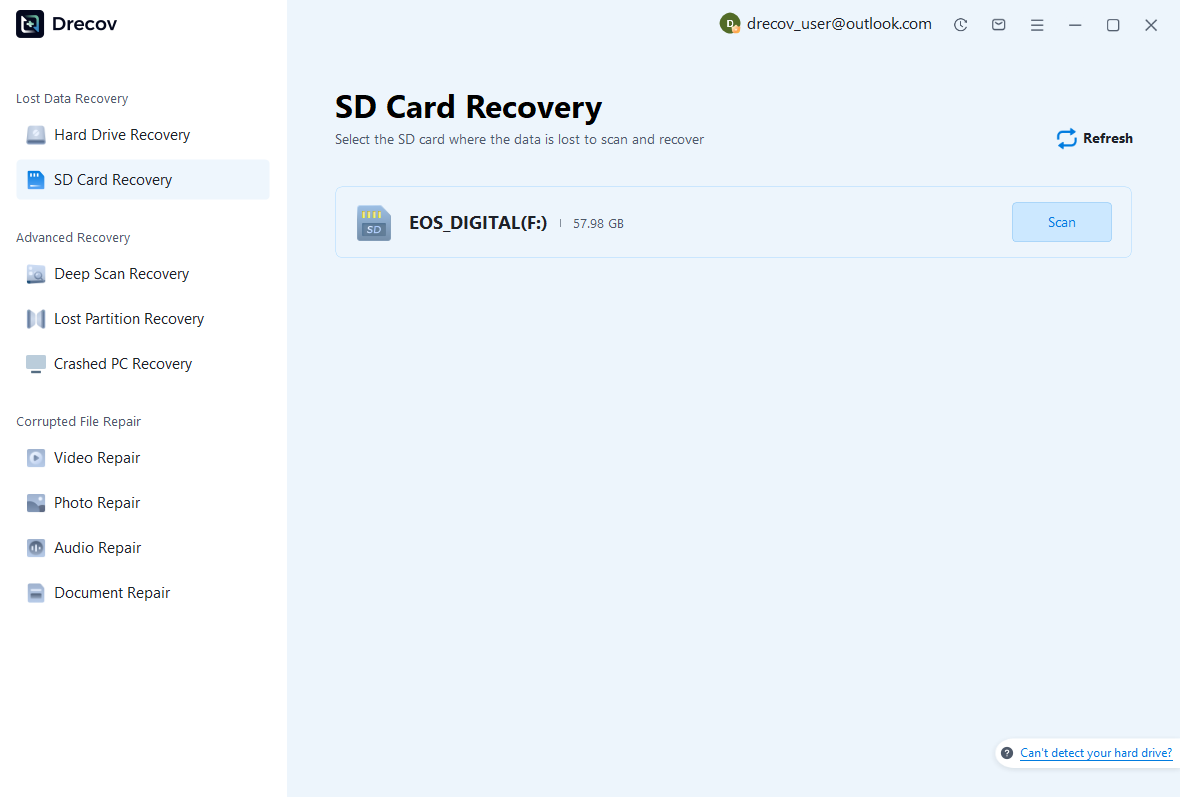
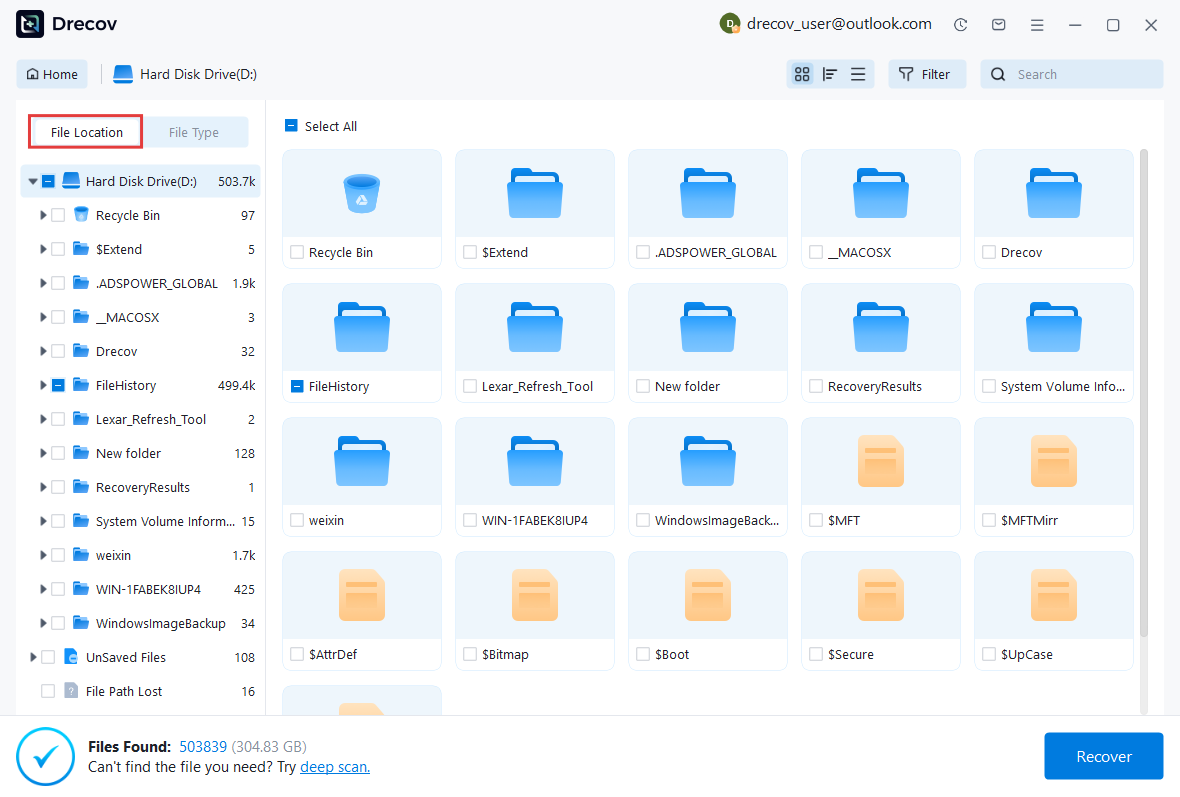
Pandaoffice Drecov stands out as an exceptionally refined, modern recovery platform. It features deep sector scanning capabilities optimized for highly fragmented media. The software uses a proprietary reconstruction algorithm that reassembles broken file components, making it an excellent choice for retrieving ultra-high-definition media assets.
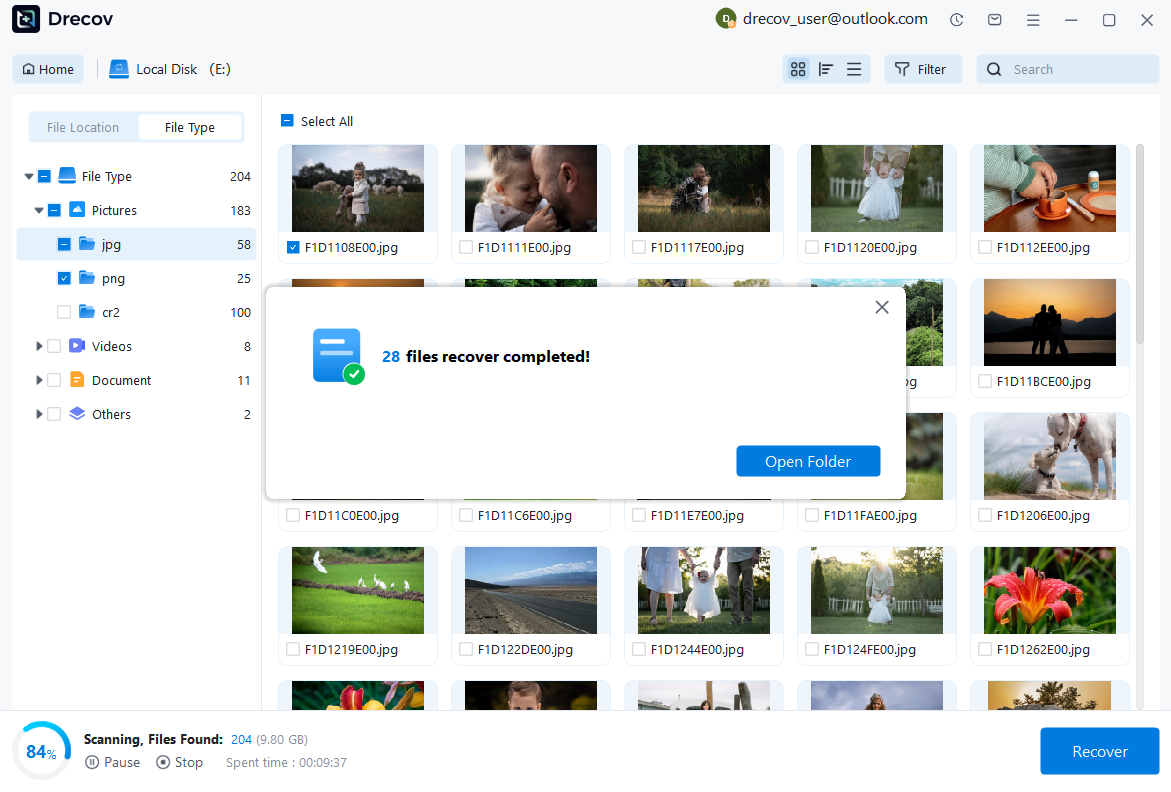
The application includes an intuitive guided setup that simplifies partition parsing for users of all technical levels. It bypasses typical logical blocks to read raw storage sectors directly, showing real-time previews of found files during the scanning process.
Pros:
- Highly effective at reassembling fragmented video file structures.
- Minimal system resource consumption during deep scanning tasks.
- Intuitive, modern interface tailored for non-technical users.
Cons:
- Deep scanning routines can take longer on high-capacity storage drives.
Why Choose PandaOffice Drecov Recovery Software?
PandaOffice Drecov offers a fast, secure, and user-friendly solution for recovering lost files across multiple scenarios. Whether you need email recovery, ZIP File Recovery, format data recovery, or help to recover deleted drafts Outlook, the software provides reliable recovery performance for both personal and business users.
PandaOffice Drecov supports recovery from formatted hard drives, SSDs, USB drives, SD cards, and external storage devices. Its advanced scanning engine can locate deleted archives, damaged ZIP files, lost Outlook drafts, and accidentally removed documents with high accuracy. For users searching for how to find deleted messages in Teams, PandaOffice Drecov can also help recover exported chat files, attachments, and related local cache data when available.
Key advantages include:
- Deep scan technology for complex data loss situations
- Support for emails, archives, videos, photos, and office documents
- Recovery from accidental deletion, formatting, corruption, and system crashes
- Easy preview before restoring files
- Compatible with Windows and multiple storage devices
Unlike complicated enterprise recovery tools, PandaOffice Drecov keeps the recovery process simple. Users can scan, preview, and restore files in just a few steps without technical expertise.
Whether you are dealing with lost Outlook drafts, corrupted ZIP archives, formatted drives, or missing communication data, PandaOffice Drecov provides an efficient and practical recovery experience designed to minimize downtime and protect important files.
Method 2: Recuva Performance Analysis
Test Environment: Windows 10 Professional, AMD Ryzen 5 Processor, 16GB RAM, SanDisk Ultra 64GB MicroSDHC Card (FAT32 formatted).
Recuva is a lightweight, widely accessible restoration tool built for Windows operating systems. It is highly effective for recovering recently deleted files where the underlying folder directories are still partially intact. The program features a straightforward wizard interface that guides users through quick target selections based on file extension groups.
It also provides a portable execution deployment option, letting users run the software directly from an external USB drive without installing new data on the host computer. While its deep scanning capabilities are more basic compared to newer programs, it remains highly efficient for everyday file recovery tasks.
Pros:
- Offers a completely free, unrestricted usage tier for standard files.
- Portable deployment option prevents accidental overwriting of data.
- Fast execution speeds during standard directory scans.
Cons:
- Lacks a native application version for macOS systems.
- Limited success rates when dealing with highly corrupted RAW file structures.
Method 3: EaseUS Data Recovery System
Test Environment: macOS Sonoma, Apple M2 Silicon Chip, 16GB Unified Memory, Lexar Professional 1066x 64GB SDXC Card (exFAT formatted).
EaseUS Data Recovery provides a highly polished, user-friendly scanning platform across both Windows and Mac operating systems. The software is built around a clear visual workflow that scans connected storage arrays automatically. It excels at parsing complex directory paths and retaining original folder naming structures upon recovery.
The software features an advanced filter menu, allowing users to quickly sort scan results by file size, modification date, or file type. This significantly cuts down the time required to locate specific files within large data sets.
Pros:
- Exceptionally clean, modern interface design that reduces user error.
- Maintains original folder organization hierarchies during recovery.
- High success rate when recovering standard office documents and media.
Cons:
- Free evaluation tier is limited to a small data cap before requiring a license.
Method 4: Disk Drill Advanced Architecture
Test Environment: macOS Ventura, Apple M1 Chip, 8GB Unified Memory, SanDisk Extreme Pro 32GB SDHC Card (FAT32 formatted).
Disk Drill is well-regarded for its advanced data parsing capabilities and clean interface integration on both major operating systems. It uses unique binary mapping techniques to protect healthy sectors while actively extracting data from unstable sectors. The application allows users to save scanning progress mid-session, making it easy to pause and resume large storage scans without losing progress.
Additionally, the software includes auxiliary data protection tools designed to monitor storage health and prevent future data loss. Its deep parsing mode reads underlying storage arrays thoroughly, ensuring high recovery success rates for a wide variety of compressed file formats.
Pros:
- Seamlessly saves and resumes long scanning sessions.
- Includes extra drive health monitoring and protection utilities.
- High recovery performance for raw digital camera image profiles.
Cons:
- Requires higher system memory allocation during deep scan operations.
Method 5: PhotoRec Command-Line Interface
Test Environment: Ubuntu Linux 22.04 LTS, Intel Core i5 Processor, 16GB RAM, Transcend Premium 128GB MicroSDXC Card (exFAT formatted).
PhotoRec is an open-source, multi-platform data recovery application that relies on a text-based command-line interface. It focuses purely on signature-based data carving, ignoring existing file system structures to search the underlying storage blocks directly for known file headers. This makes it highly effective at extracting data from severely corrupted or unformatted storage devices.
Because it operates independently of the file system, it can run efficiently across Windows, macOS, and Linux environments. While the command-line interface lacks visual previews and has a steeper learning curve, its underlying recovery engine is exceptionally powerful.
Pros:
- Open-source, entirely free software with no file size limitations.
- Highly effective at parsing severely corrupted or raw file systems.
- Exceptionally lightweight operational footprint with fast scan execution.
Cons:
- Text-based user interface can be intimidating for casual users.
- Does not retain original file names or directory structures.
Method 6: Stellar Data Recovery Evaluation
Test Environment: Windows 11 Home, AMD Ryzen 7 Processor, 16GB RAM, Samsung EVO Plus 256GB SDXC Card (exFAT formatted).
Stellar Data Recovery offers a reliable, structured platform for extracting missing files from formatted or encrypted storage volumes. The application features specialized scanning modules optimized for BitLocker-encrypted partitions and custom file signatures. Its clean, wizard-based interface allows users to easily toggle specific file categories on or off before initiating a scan.
The utility also includes an integrated file preview utility that supports multi-media formats, allowing users to verify file integrity prior to extraction. It performs consistently well when dealing with partition loss or accidental formatting errors.
Pros:
- Built-in support for recovering files from encrypted partitions.
- Advanced, accurate file previews for video and image files.
- Highly structured sorting filters simplify data management.
Cons:
- Deep scanning modules require significant time on high-capacity media.
Method 7: MiniTool Power Data Recovery Suite
Test Environment: Windows 10 Home, Intel Core i3 Processor, 8GB RAM, Toshiba Exceria 32GB SDHC Card (FAT32 formatted).
MiniTool Power Data Recovery is engineered to offer targeted, sector-specific scans across varied hardware configurations. The software features an optimized scanning layout that allows users to target specific folders or logical locations, saving time when a full drive scan isn’t necessary. It parses raw partition blocks smoothly and shows clear status indicators during operation.
The user interface uses clean iconography and provides simple checkboxes for batch file exporting. Its recovery engine works reliably when retrieving files lost to accidental deletion, partition damage, or system crashes.
Pros:
- Allows targeting specific folders to reduce overall scanning times.
- Clear visual indicators for partition health and scan progress.
- Reliable stability on older Windows operating system configurations.
Cons:
- The user interface layout feels dated compared to newer alternatives.
Method 8: Wise Data Recovery Deployment
Test Environment: Windows 11 Pro, Intel Core i5 Processor, 16GB RAM, PNY Elite-X 64GB MicroSDXC Card (exFAT formatted).
Wise Data Recovery prioritizes speed and efficiency, utilizing a highly optimized search algorithm that parses file allocation tables in seconds. The application is exceptionally compact, requiring minimal storage space for installation and low system resources during operation. It is best suited for quickly recovering recently deleted files before they are overwritten.
The software uses a straightforward color-coded system to indicate the recovery feasibility of found files, helping users quickly assess the likelihood of a successful restoration. While its deep scan mode is more basic than some competitors, its quick scan speed is top-tier.
Pros:
- Fast scanning speeds for standard data deletions.
- Low system resource usage and small installation footprint.
- Simple color-coded indicators show file health and recovery chances.
Cons:
- Deep sector carving capabilities are limited on corrupted media.
Method 9: iCare Data Recovery Operations
Test Environment: Windows 10 Enterprise, Intel Core i7 Processor, 16GB RAM, SanDisk Extreme 128GB SDXC Card (exFAT formatted).
iCare Data Recovery provides a simple, direct approach to partition reconstruction and file retrieval. It features dedicated recovery profiles for different data loss scenarios, such as accidental deletion or formatted drives. The utility scans block clusters safely, reading data without altering or overwriting any existing blocks on the source drive.
It works efficiently on low-spec hardware configurations, using minimal processing power while maintaining stable data stream connections. It is an effective option for recovering standard files from storage cards that show raw partition errors.
Pros:
- Read-only scanning engine ensures no data is altered during recovery.
- Simple, direct workflow tailored for straightforward recovery tasks.
- Performs reliably on older computer systems with limited resources.
Cons:
- Lacks advanced video file reassembly features for fragmented media.
Method 10: Puran File Recovery Engine
Test Environment: Windows 11 Pro, AMD Ryzen 3 Processor, 8GB RAM, Lexar Platinum 16GB SDHC Card (FAT32 formatted).
Puran File Recovery is a lightweight utility focused on raw file parsing and custom directory rebuilding. It features a straightforward interface that exposes advanced scanning options, such as full cluster scans and custom sector searches, directly on the main screen. The software operates entirely ad-free and can be run as a portable application.
Its data carving engine can identify lost partitions and restore files based on binary headers, making it a reliable choice for older or corrupted storage media.
Pros:
- Light, fully portable application with zero background processes.
- Advanced cluster search options are easily accessible.
- Completely free for personal use with no artificial data caps.
Cons:
- The interface layout is dated and lacks modern visual styling.
- Development has paused, meaning no updates for newer file systems.
Frequently Asked Questions and Best Practices
Resolving Structural Logical Discrepancies
When dealing with a corrupted storage device, users often wonder if software can restore data after a full format operation. If the device underwent a quick format, the data blocks remain intact while the index table is cleared, allowing a quality sd card recovery tools suite to recover the files. However, a full format write zeros across all sectors, making software-based recovery impossible.
Another common question is whether these tools can repair physically broken memory cards. Software utilities are strictly designed to fix logical data errors; they cannot communicate with components that have physical circuit damage. If a card has physical cracks or broken pins, it must be sent to a specialized hardware repair laboratory.
⚠️Warning: Never attempt to format a storage device that contains inaccessible data if you intend to recover it; formatting changes the logical structure and makes file carving much more difficult.
Comparative Analysis Matrix
| Software Name | Free Data Limit | Primary OS Support | Optimization Target |
|---|---|---|---|
| Pandaoffice Drecov | Evaluation Limit | Windows Only | Fragmented 4K/8K Media |
| Recuva | Unrestricted Free Tier | Windows Only | Quick Local Deletions |
| EaseUS Data Recovery | 2 GB with Sharing | Windows / macOS | Directory Structure Retention |
| Disk Drill | 500 MB (Windows) | Windows / macOS | Raw Photo Profiles |
| PhotoRec | Unrestricted Open Source | Win / Mac / Linux | Severely Corrupted Volumes |
| Stellar Recovery | 1 GB Standard | Windows / macOS | Encrypted Volume Management |
| MiniTool Suite | 1 GB Standard | Windows Only | Target Folder Parsing |
| Wise Data Recovery | Quick Scan Free | Windows Only | High-Speed File Searches |
| iCare Recovery | Unrestricted Basic | Windows Only | Low-Resource Hardware |
| Puran File Engine | Unrestricted Free Tier | Windows Only | Custom Cluster Searching |
Strategic Summary and Preventive Measures
Maximizing Retrieval Success Rates
To ensure the highest possible recovery rate when using sd card recovery tool applications, users must follow a strict preservation protocol. As soon as data loss is detected, the storage card should be immediately removed from the host camera, smartphone, or computer. This prevents background system tasks from writing new data over the lost files.
When running a scan, always configure the software to save recovered files onto a separate local hard drive rather than back onto the same storage card. This keeps the source data pristine and prevents files from being overwritten during the extraction process.
⚠️Warning: Do not run multiple scanning applications at the same time on the same storage card; this causes hardware read conflicts and can wear out unstable flash memory chips.
Proactive Strategies to Prevent Data Loss
While having access to high-quality recovery tools provides a reliable safety net, establishing solid data backup routines is the best way to safeguard important files. Regularly backing up files to secure cloud storage or secondary external hard drives significantly reduces the risk of permanent data loss.
Additionally, always use the hardware-safe ejection protocols provided by your operating system before physically removing a card from a reader. Replacing memory cards every few years also helps avoid data corruption caused by the natural wear and tear of flash memory components over time.
⚠️Warning: Avoid exposing flash memory devices to extreme temperatures or static electricity, as electrical shorts can fry the internal controller chip and cause permanent data loss.





