







In the modern digital landscape, our smartphones are more than just communication tools; they are repositories for our most precious memories, critical documents, and essential work files. If you are an Android user, you have likely noticed that your storage fills up surprisingly fast. High-resolution photos, 4K videos, and cached app data can quickly push your device to its limits. When this happens, most users instinctively start deleting files. However, deleting a file doesn’t always mean it is gone forever.
Understanding how to clear recycle bin in Android is a fundamental skill for maintaining device performance and ensuring your privacy. Unlike a Windows PC, Android does not have one centralized “Recycle Bin” on the home screen. Instead, the “trash” functionality is fragmented across various apps. This guide will walk you through every nuance of managing your deleted files, from basic clearing to advanced data recovery using professional tools like PandaOffice Drecov.
Understanding the Android Trash Concept
Before we dive into the “how-to,” we must address a common misconception. Many users search for a single icon labeled “Recycle Bin” on their Android app drawer. Historically, Android did not have a system-wide trash folder. However, with the release of Android 11 and subsequent versions like Android 12, 13, and 14, Google introduced a more unified “Trash” API.
Even with these updates, individual apps like Google Photos, Samsung Gallery, and Files by Google maintain their own independent trash cans. If you want to know how to clear recycle bin effectively, you must know where each app hides its temporary storage.
How to Clear Recycle Bin in Google Photos
Google Photos is the default gallery app for millions of Android users. When you delete a photo or video, it isn’t immediately erased from your storage. Instead, it moved to the “Bin” (or “Trash”), where it stays for 60 days (if backed up) or 30 days (if not backed up) before being permanently deleted.
Step-by-Step Guide to Clearing the Google Photos Bin
- Step 1: Open the Google Photos app on your Android device. Ensure you are signed into your primary Google account.
- Step 2: Tap on the Library tab located at the bottom right corner of the screen.
- Step 3: At the top of the Library screen, you will see several folders. Tap on the one labeled Bin (or Trash).
- Step 4: You will now see all the items you have deleted in the last 30 to 60 days. To clear everything, tap the three-dot menu (More) in the upper right corner and select Empty Bin.
- Step 5: A confirmation pop-up will appear warning you that this action is permanent. Tap Delete to finalize the process.
Pro Tip: If you only want to remove specific items, long-press a photo to select it, then tap the Delete icon at the bottom.
Managing Storage in Files by Google
For many users, Files by Google is the primary way to manage downloads, documents, and large media files. This app also features a dedicated trash folder that can consume significant gigabytes if left unchecked.
How to Clear Recycle Bin in the Files App
- Step 1: Launch the Files by Google app.
- Step 2: Tap the Hamburger menu (three horizontal lines) in the top-left corner.
- Step 3: Select Trash from the side menu.
- Step 4: View the files currently taking up space. You can select All items at the top or pick individual files.
- Step 5: Tap the Delete button at the bottom. Confirm the action by clicking Delete again in the pop-up window.
Regularly performing these steps ensures that your “hidden” storage doesn’t get cluttered with junk you no longer need. For more information on official Google storage policies, you can visit the Google Account Help Center.
The Manufacturer Factor: Samsung, Pixel, and OnePlus
Different manufacturers (OEMs) often include their own file management systems. If you own a Samsung Galaxy device, for instance, the process of how to clear recycle bin looks slightly different because of the One UI interface.
Clearing the Trash on Samsung Galaxy Devices
- Step 1: Open the Samsung Gallery app.
- Step 2: Tap the Menu icon (three horizontal lines) in the bottom right corner.
- Step 3: Tap on Trash.
- Step 4: Tap Empty in the top right corner to wipe all deleted media.
If you are looking for general file trash (PDFs, APKs, etc.) on a Samsung:
- Step 1: Open the My Files app.
- Step 2: Scroll down to the Trash section.
- Step 3: Tap the three dots and choose Empty.
What Happens if You Delete the Wrong File?
Knowing how to clear recycle bin in Android is excellent for storage management, but it carries a risk: permanent data loss. Once you empty the bin in Google Photos or Files by Google, the OS marks that storage space as “available.”
However, the data isn’t technically “wiped” until new data is written over it. This is where professional data recovery tools come into play. If you have accidentally cleared your recycle bin and realized you lost a critical wedding photo or a work document, don’t panic.
Professional Recovery: Using PandaOffice Drecov via PC
When you have accidentally cleared your Android recycle bin and realized you lost a critical document or a cherished memory, you need a high-level technical solution. PandaOffice Drecov is a premier data recovery product designed for desktop use. By connecting your Android device to a computer running Drecov, you can scan the internal storage sectors that are normally inaccessible to the Android OS itself.
⚠ Warning: Install it on a drive different from the one where your data was lost to prevent overwriting.
How to Recover Android Data Using PandaOffice Drecov
Since PandaOffice Drecov is a desktop application, it utilizes the processing power and deep-scanning algorithms of your PC to analyze your phone’s memory.
- Step 1: Enable USB Debugging. On your Android device, go to Settings > About Phone and tap Build Number seven times to unlock Developer Options. Then, in Developer Options, toggle on USB Debugging. This allows the desktop software to communicate with the phone’s file system.
- Step 2: Launch Drecov and Select Device. Open the Drecov software on your computer. Select the connected Android device from the drive list. Choose the Deep Scan mode for the best results after an “Empty Trash” action.

- Step 3: Scan and Analyze. Click Start. The software will begin scanning the unallocated space on your phone.
- Warning: Avoid using your phone or transferring any new files during this scan, as this could overwrite the data you are trying to recover.
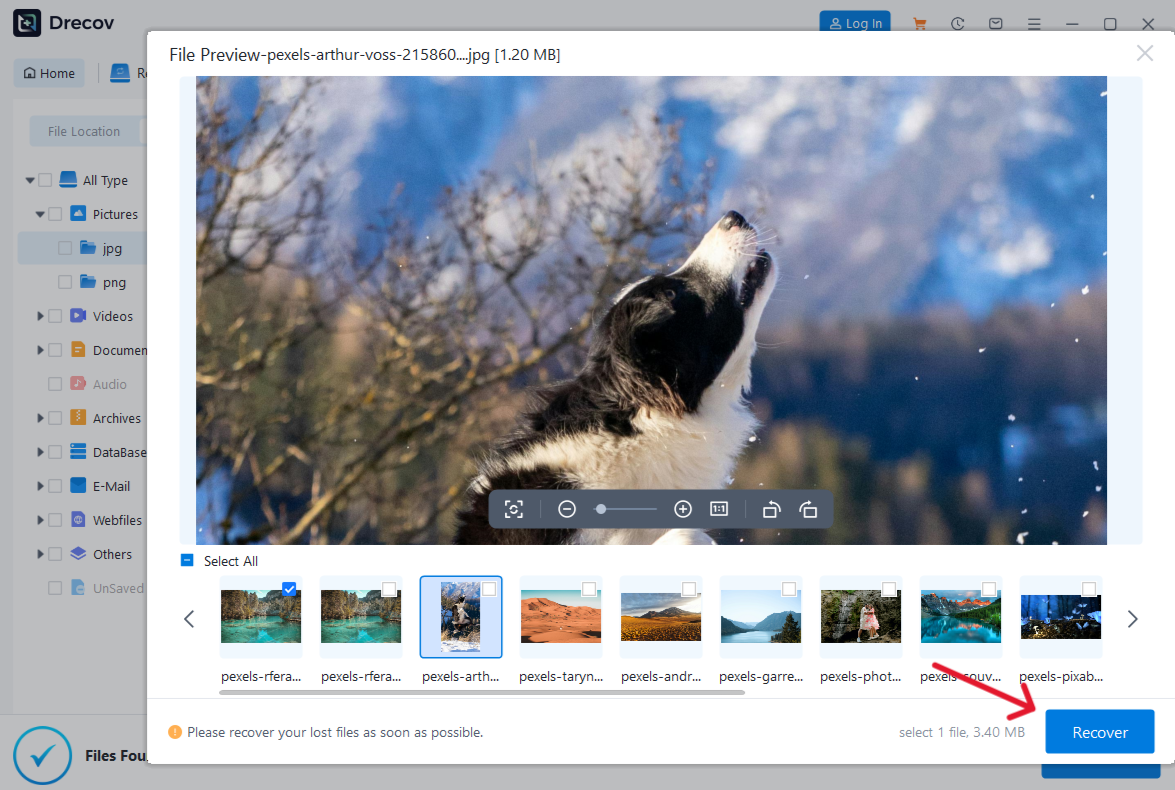
- Step 4: Preview Recoverable Files. Once the scan is complete, Drecov will display a list of found items. You can use the Preview window to verify the integrity of photos or documents before proceeding.
- Step 5: Restore to Computer. Select the files you wish to save and click Recover.
- Key Point: Always save the recovered files to your computer’s hard drive first rather than back onto the phone to prevent data corruption.
Comparison of Clearing Methods vs. Recovery Needs
| Method | Best For | Difficulty | Recovery Possible? |
| Google Photos Bin | Media Files | Easy | Yes (within 60 days) |
| Files by Google Trash | Documents/Downloads | Easy | Yes (within 30 days) |
| System Cache Partition | Performance Boost | Medium | No |
| PandaOffice Drecov | Accidental Permanent Deletion | Professional | Highly Likely |
Clearing Cache: An Alternative to Clearing the Bin
Sometimes, you don’t need to delete files to save space; you just need to clear the cache. While knowing how to clear recycle bin removes specific files, clearing the cache removes temporary files that apps use to load faster.
- Go to Settings.
- Tap on Apps (or App Management).
- Select a heavy app like Chrome or Instagram.
- Tap Storage & Cache.
- Tap Clear Cache.
This is a “safer” way to manage space because it does not delete your personal photos or messages. However, for a true deep clean, emptying the recycle bin remains the most effective method.
How to Clear Recycle Bin in Android FAQs
Is there a Recycle Bin for Text Messages?
Most modern Android SMS apps (like Google Messages or Samsung Messages) have a “Trash” folder. In Google Messages, you can find this under the Archived section or, in some versions, a Trash folder in the side menu. If you empty this, you will need PandaOffice Drecov to get those messages back.
Does clearing the trash make my phone faster?
Yes. When your internal storage is nearly full (above 90%), the Android OS struggles to manage “swap files” and background processes. By learning how to clear recycle bin in Android, you free up the “breathing room” the CPU needs to operate efficiently.
Where do files go after I clear the bin?
They enter an unallocated space on your NAND flash memory. The OS views that space as “0,” meaning it can write new data there. Until it does, the data exists in a fragmented state.
Helpful Resources and Related Reading
Managing your digital life can be complicated. If you are also a Windows user, you might find that the principles of file management are similar but the locations differ. For more insights on how to manage your trash across different platforms, check out these helpful guides:
- If you’re wondering about desktop file management, learn where is recycle bin in windows 10 3 quick ways to find it.
- Need a cleaner desktop? Find out windows 10 11 how to remove the recycle bin from desktop.
- Still lost on your PC? Here is where do i find recycle bin in windows 10.
Conclusion
Mastering how to clear recycle bin in Android is an essential part of being a savvy smartphone user. Whether you are using Google Photos, the native Samsung gallery, or a third-party file manager, keeping your trash folders empty will keep your device snappy and your storage optimized.
However, we all make mistakes. If you find that you’ve been a bit too aggressive with your “Empty Trash” clicks, remember that desktop-based tools like PandaOffice Drecov provide a powerful second chance. By connecting your device to a PC and following the professional recovery process, you can often retrieve what was thought to be lost forever.






