







Upgrading a PlayStation hard drive is one of the most effective ways to increase storage capacity, improve performance, and extend the lifespan of a gaming console. Whether you’re replacing an aging HDD with a faster SSD or upgrading to a larger drive for more games, learning how to clone a hard drive can save significant time and effort.
Instead of reinstalling games, reconfiguring settings, and rebuilding your library from scratch, disk cloning creates an exact copy of your existing drive. This process transfers operating system data, user settings, saved games, installed applications, and other important information to a new storage device.
Many users ask questions such as can I clone a hard drive to a larger drive, clone a hard drive to a larger drive, or clone a PS4 hard drive when planning an upgrade. The good news is that with the proper preparation and tools, the process can be straightforward and reliable.
This guide explains everything you need to know before cloning a PlayStation hard drive, including preparation steps, cloning methods, potential issues, and best practices for a successful migration.
Why Clone a PS4 Hard Drive Instead of Starting Fresh?
Benefits of Cloning an Existing Drive
Cloning creates an exact sector-by-sector copy of the source drive.
Benefits include:
- Preserving game installations
- Keeping saved progress
- Maintaining user profiles
- Retaining console settings
- Reducing setup time
Instead of rebuilding everything manually, users can continue gaming almost immediately after the upgrade.
When a Hard Drive Upgrade Makes Sense
Storage upgrades are commonly performed when:
- Available space becomes limited.
- A drive begins showing signs of failure.
- Faster SSD performance is desired.
- Larger game libraries require more capacity.
Modern game installations can consume hundreds of gigabytes, making storage upgrades increasingly popular.
Can I Clone a Hard Drive to a Larger Drive?
Yes.
One of the most common upgrade scenarios involves moving data from a smaller drive to a larger one.
For example:
| Original Drive | New Drive |
|---|---|
| 500GB HDD | 1TB SSD |
| 1TB HDD | 2TB SSD |
| 500GB HDD | 2TB HDD |
As long as the destination drive has enough capacity to hold the source data, the cloning process is generally possible.
Understanding How Hard Drive Cloning Works
What Is Disk Cloning?
Disk cloning is a process that creates a duplicate copy of an entire storage device.
Unlike standard file copying, cloning transfers:
- Partitions
- File systems
- Boot information
- Hidden system files
- User data
The result is a drive that closely mirrors the original.
How Cloning Differs from Backup
Many users confuse backups with cloning.
A backup usually stores selected files, while a clone replicates the entire drive structure.
Key differences include:
| Backup | Clone |
|---|---|
| File-level copy | Full disk copy |
| Requires restoration | Ready to use |
| Smaller storage footprint | Full drive duplication |
| Selective data | Complete disk image |
Both methods are valuable, but cloning is often preferred when replacing a drive.
Requirements Before Cloning
Before beginning the process, ensure you have:
- Original PS4 hard drive
- New storage device
- USB-to-SATA adapter
- Sufficient power source
- Reliable cloning software
- Backup of important data
Proper preparation helps reduce the risk of migration failures.
⚠️ Warning: Always create a backup before performing any storage migration procedure.
Preparing Your Console for a Hard Drive Upgrade
Check Drive Compatibility
Not all drives are suitable for PlayStation upgrades.
Verify:
- Drive thickness
- Interface compatibility
- Capacity support
- SSD or HDD format
Most modern 2.5-inch SATA drives work well with PlayStation systems.
Clean Up Unnecessary Files
Removing unnecessary content before cloning can improve efficiency.
Consider deleting:
- Unused game installations
- Temporary downloads
- Duplicate media
- Outdated save files
A cleaner source drive typically results in a smoother migration process.
Verify Drive Health
Cloning a failing drive can introduce complications.
Check:
- SMART status
- Bad sectors
- Read errors
- Drive temperatures
Addressing hardware issues beforehand improves cloning success rates.
Create an Emergency Backup
Even if you plan to perform a full clone, backups remain important.
Recommended backup targets include:
- External hard drives
- NAS systems
- Cloud storage
- USB devices
Methods to Clone a PS4 Hard Drive Successfully
Use a Professional Hard Drive Clone Tool
Test Environment
- Console: PlayStation 4 Slim
- Original Drive: 500GB HDD
- New Drive: 1TB SSD
- Connection Type: USB-to-SATA Adapter
- Migration Goal: Capacity upgrade
One of the most reliable methods involves using a dedicated hard drive clone tool.
These tools are designed to copy partitions, file systems, and user data while preserving drive structure.
General Cloning Process
- Connect both drives to a computer.
- Launch the cloning software.
- Select the source drive.
- Choose the destination drive.
- Verify drive assignments.
- Start the cloning operation.
- Wait for completion.
- Install the new drive in the console.
Advantages
- Full drive migration
- Preserves structure and data
- Suitable for upgrades
Limitations
- Requires external hardware connections.
- Cloning speed depends on drive performance.
Many users searching for how to clone a hard drive choose this approach because it minimizes manual configuration.
Recover Important Data Before Cloning with PandaOffice Drecov
Test Environment
- Operating System: Windows 11 Pro
- Source Drive: PS4 HDD
- Condition: Readable with minor corruption
- Migration Goal: Protect valuable game saves
Sometimes users discover missing files or corruption before performing a migration.
Before beginning the cloning process, recovering important data may be beneficial.
PandaOffice Drecov can scan accessible drives for recoverable files, allowing users to export important content before upgrading storage devices.
Recovery Steps Before Cloning
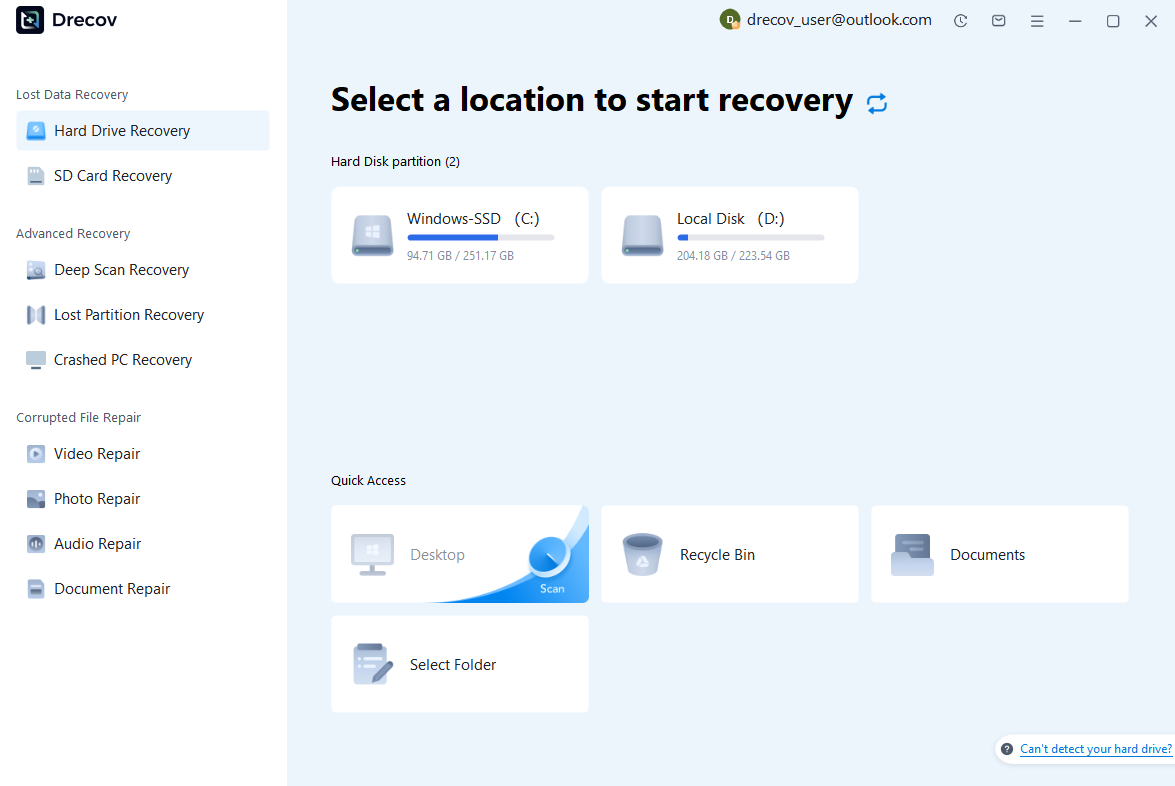
Step 1: Connect the Drive / USB)
Connect your device (SD card, HDD/SSD, or USB drive) to your computer and launch PandaOffice Drecov. Select the target device and start the scan. The software will perform a quick scan and deep scan to detect lost or deleted data.
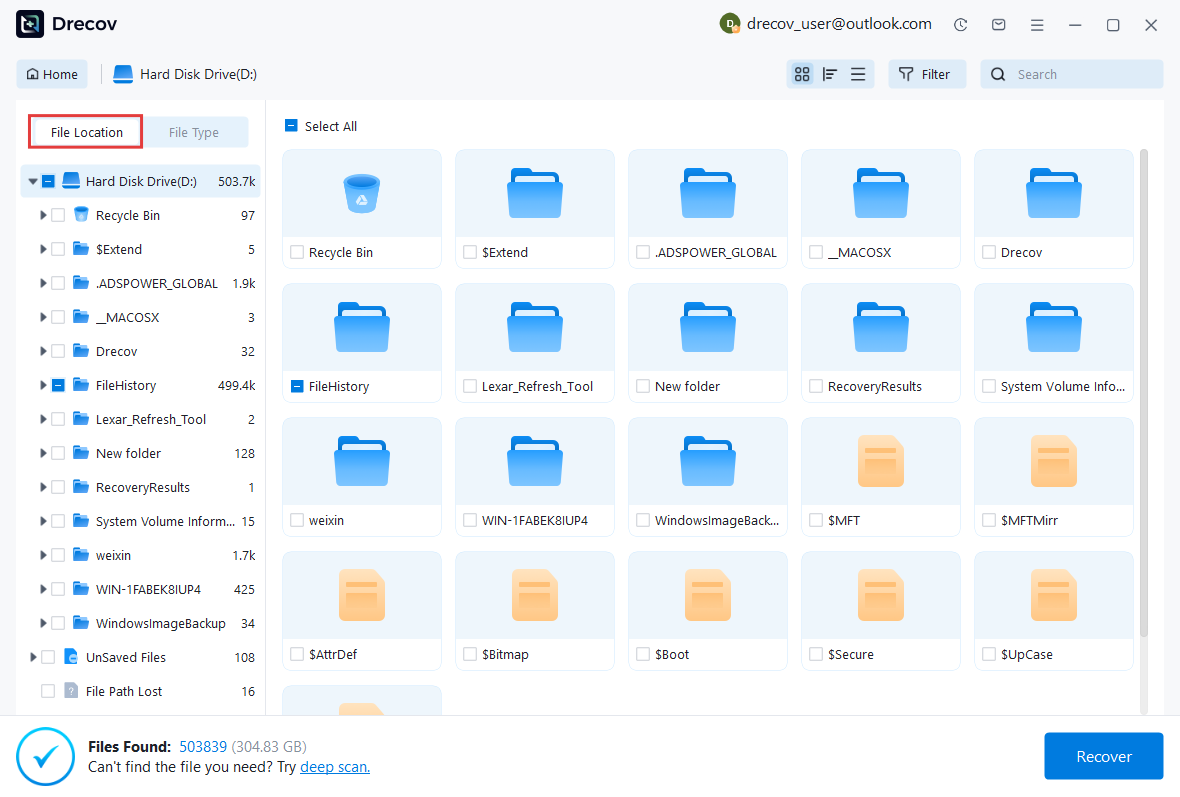
Step 2: Locate and Preview Lost Files
After scanning, browse the detected files and use the preview feature to check recoverable data. You can preview documents (Word, Excel, PDF), photos, and videos to ensure file integrity before recovery.
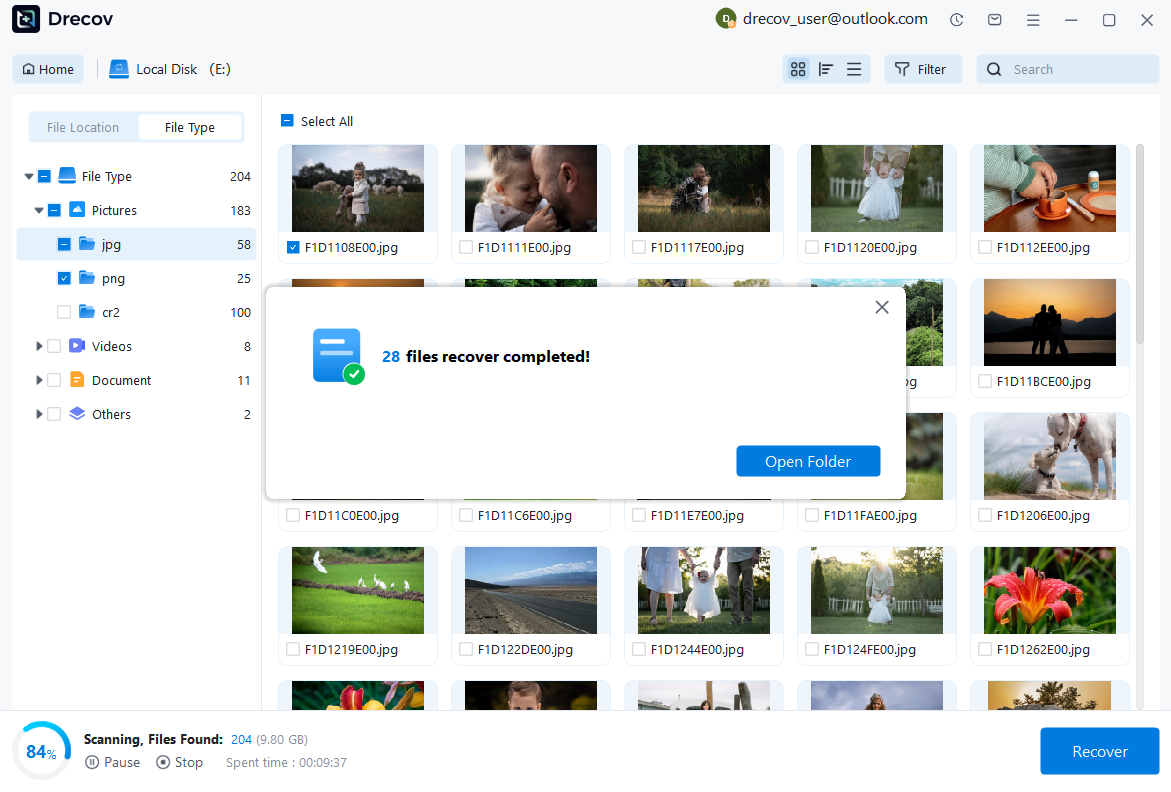
Step 3: Recover and Save to a New Location
Select the files you want to restore and click recover. Save all recovered data to a different drive or location (not the original device) to avoid overwriting lost data.
Why Choose PandaOffice Drecov Recovery Software?
PandaOffice Drecov offers a fast, secure, and user-friendly solution for recovering lost files across multiple scenarios. Whether you need email recovery, ZIP File Recovery, format data recovery, or help to recover deleted drafts Outlook, the software provides reliable recovery performance for both personal and business users.
PandaOffice Drecov supports recovery from formatted hard drives, SSDs, USB drives, SD cards, and external storage devices. Its advanced scanning engine can locate deleted archives, damaged ZIP files, lost Outlook drafts, and accidentally removed documents with high accuracy. For users searching for how to find deleted messages in Teams, PandaOffice Drecov can also help recover exported chat files, attachments, and related local cache data when available.
After recovery, test the file again. If the audio stream was damaged because of storage issues, a recovered version may play normally.
This method is particularly useful when only a few files exhibit audio problems while VLC works correctly with all other media.
This method can help users recover files from floppy disk storage after accidental deletion, formatting, or logical corruption.
Advantages
- Protects valuable files.
- Supports multiple file formats.
- Useful before major storage changes.
Limitations
- Must be completed before hardware failure worsens.
- Does not replace full backups.
⚠️ Warning: Always store recovered files on a different drive from the source disk.
Clone a Hard Drive to a Larger Drive During an Upgrade
Test Environment
- Console: PS4 Pro
- Original Drive: 1TB HDD
- New Drive: 2TB SSD
- Migration Scenario: Storage expansion
- Connection Method: Dual USB Adapter
A common upgrade question is: can I clone a hard drive to a larger drive?
The answer is yes.
Most modern cloning solutions automatically adjust partition structures to utilize additional storage capacity.
Steps to Clone a Hard Drive to a Larger Drive
- Connect both drives.
- Select the original drive as the source.
- Select the larger drive as the destination.
- Enable automatic partition resizing if available.
- Confirm the cloning operation.
- Wait for completion.
- Install the upgraded drive.
- Verify available storage space.
Advantages
- Expands storage capacity.
- Preserves existing data.
- Reduces reinstallation time.
Limitations
- Requires a compatible destination drive.
- Large migrations may take several hours.
For users planning to clone a hard drive to a larger drive, this method offers one of the simplest upgrade paths available.
Clone a PS3 Hard Drive Before Replacing Aging Storage
Test Environment
- Console: PlayStation 3 Slim
- Original Drive: 320GB HDD
- New Drive: 1TB HDD
- Connection Type: SATA-to-USB Adapter
- Upgrade Purpose: Capacity expansion
Although PS4 upgrades are more common today, many gamers still maintain PlayStation 3 systems. As older drives age, cloning can help preserve game saves, downloaded content, and system settings before a replacement becomes necessary.
Before replacing the original drive, verify that the destination drive meets the console’s compatibility requirements.
Recommended Migration Process
- Remove the original drive from the PS3.
- Connect both drives to a computer.
- Launch the cloning software.
- Select the source drive.
- Select the destination drive.
- Start the clone process.
- Verify completion.
- Install the new drive into the console.
Advantages
- Retains existing game data.
- Helps avoid manual migration.
- Extends the lifespan of older consoles.
Limitations
- Some console firmware configurations may require additional setup.
- Cloning speed depends on drive size.
For users researching how to clone a hard drive, PS3 storage upgrades follow many of the same principles as PS4 upgrades.
Move from HDD to SSD for Better Performance
Test Environment
- Console: PS4 Slim
- Original Drive: 1TB HDD
- New Drive: 1TB SATA SSD
- Connection Method: USB 3.0 Adapter
- Goal: Faster game loading
Many users upgrade from traditional hard drives to SSDs to improve performance.
Benefits may include:
- Faster loading times
- Reduced game installation delays
- Improved menu responsiveness
- Better overall storage reliability
Although SSD improvements vary depending on console hardware limitations, most users notice measurable performance gains.
Migration Steps
- Verify SSD compatibility.
- Connect both drives.
- Launch the cloning software.
- Select the HDD as the source.
- Select the SSD as the destination.
- Enable SSD optimization if available.
- Complete the clone process.
- Install the SSD in the console.
Advantages
- Improved performance.
- Reduced mechanical failure risks.
- Quieter operation.
Limitations
- Higher cost per gigabyte.
- Performance gains depend on console model.
⚠️ Warning: Ensure the SSD capacity is sufficient to hold all data from the original drive before beginning the migration.
Expand Partitions After Cloning to a Larger Drive
Test Environment
- Console: PS4 Pro
- Original Drive: 500GB HDD
- New Drive: 2TB SSD
- Cloning Method: Sector-level clone
- Upgrade Goal: Maximum storage utilization
After users clone a hard drive to a larger drive, they sometimes discover that the additional capacity is not immediately available.
This occurs because the original partition layout may be copied exactly, leaving unused space unallocated.
How to Expand Available Capacity
- Install the cloned drive.
- Verify system recognition.
- Open disk management utilities if applicable.
- Check partition sizes.
- Extend the primary partition.
- Apply changes.
- Restart if required.
Advantages
- Utilizes the full drive capacity.
- Maximizes storage investment.
- Improves upgrade efficiency.
Limitations
- Some cloning tools require manual partition adjustments.
- Incorrect changes may affect accessibility.
This step is particularly important for users asking can I clone a hard drive to a larger drive because additional storage space often requires expansion after migration.
Troubleshoot Common Cloning Problems
Test Environment
- Console: PS4 Slim
- Source Drive: 1TB HDD
- Destination Drive: 2TB SSD
- Migration Issue: Clone verification failure
Although cloning is generally reliable, occasional problems can occur.
Common issues include:
- Destination drive not detected
- Clone process freezes
- Verification errors
- Boot failures
- Capacity mismatches
Troubleshooting Steps
- Verify cable integrity.
- Check drive health.
- Ensure sufficient destination capacity.
- Update cloning software.
- Reconnect storage devices.
- Retry the cloning process.
- Run disk diagnostics.
Advantages
- Resolves many migration issues.
- Helps identify hardware faults.
- Improves cloning success rates.
Limitations
- Some failures indicate hardware damage.
- Troubleshooting may require multiple attempts.
⚠️ Warning: If the source drive shows signs of failure, create a backup image immediately before attempting another clone.
Best Practices for Successful Hard Drive Cloning
Choose a Reliable Hard Drive Clone Tool
Not all cloning utilities offer the same features.
When selecting a hard drive clone tool, consider:
- Disk compatibility
- SSD support
- Partition resizing
- Verification features
- User-friendly interface
Choosing the right tool can significantly improve migration success.
Maintain Stable Power During Cloning
Power interruptions can corrupt source and destination drives.
To reduce risks:
- Use a reliable power source.
- Avoid battery depletion.
- Prevent accidental disconnections.
- Disable sleep mode during cloning.
Stable power is especially important during large migrations.
Verify the Clone Before Replacing the Original Drive
After cloning completes:
- Confirm file accessibility.
- Verify partition structure.
- Check storage capacity.
- Test system startup if applicable.
Verification ensures the migration was successful before removing the original drive from service.
Keep the Original Drive Temporarily
Many experienced users retain the original drive for several days after upgrading.
Benefits include:
- Emergency rollback option
- Recovery source if issues arise
- Additional verification period
⚠️ Warning: Do not immediately erase the original drive until the new storage device has been thoroughly tested.
Frequently Asked Questions About Hard Drive Cloning
How to Clone a Hard Drive Safely?
The safest approach involves creating backups, verifying drive health, using reliable cloning software, and carefully selecting the correct source and destination disks before beginning the process.
Can I Clone a Hard Drive to a Larger Drive?
Yes.
Most modern cloning solutions support migration from smaller drives to larger drives, provided the destination has enough capacity to store the source data.
Will Cloning Delete Existing Data on the Destination Drive?
In most cases, yes.
The cloning process typically overwrites the destination drive completely. Any existing files should be backed up beforehand.
Can I Clone a PS4 Hard Drive Directly?
Yes.
With the appropriate adapters and software, users can often clone a PS4 hard drive and migrate data to a larger HDD or SSD.
How Long Does Cloning Take?
The duration depends on:
- Drive size
- Data volume
- Connection speed
- Drive performance
Small migrations may finish within an hour, while larger upgrades can require several hours.
What Is the Difference Between Imaging and Cloning?
Disk imaging creates a compressed backup file, while cloning creates a directly usable duplicate drive.
Both approaches are useful, but cloning is often preferred for hardware replacement.
Can a Failing Drive Be Cloned?
Sometimes.
If the drive remains readable, cloning may still succeed. However, failing drives should be handled carefully because continued operation can worsen damage.
Why Is My New Drive Showing the Same Capacity as the Old Drive?
This usually happens when partitions are copied without resizing.
Expanding the partition structure after cloning generally resolves the issue.
Should I Upgrade to an SSD Instead of Another HDD?
For most users, SSDs offer:
- Faster performance
- Better reliability
- Lower power consumption
- Quieter operation
The decision ultimately depends on budget and storage requirements.
Final Thoughts on Cloning PlayStation Hard Drives
Understanding how to clone a hard drive can make console storage upgrades significantly easier. Whether you’re replacing an aging HDD, migrating to a faster SSD, or planning to clone a hard drive to a larger drive, cloning helps preserve valuable data while minimizing downtime.
Using a reliable hard drive clone tool, verifying drive compatibility, and maintaining proper backups are key steps for successful migrations. Users looking to clone a PS4 hard drive can often transfer their games, settings, and saved progress without rebuilding their entire system from scratch.
For larger storage upgrades, the answer to can I clone a hard drive to a larger drive is generally yes, provided the destination device offers enough capacity and the migration is performed correctly. With careful preparation and proper verification, cloning remains one of the most efficient methods for upgrading PlayStation storage.





