







Introduction to .DMG Files
What is a .dmg file
A .dmg file is a disk image commonly used on macOS systems. It acts as a virtual container that stores compressed files, applications, or system data. The .dmg file format allows users to distribute software efficiently while preserving file structure. Unlike simple archives, dmg files can also include read-only or encrypted partitions, which make them versatile for software developers and users alike.
Why .DMG Files Are Important
Understanding what is dmg file is crucial for macOS users. These files:
- Provide a secure method to distribute applications
- Maintain the integrity of app files during downloads
- Enable easy installation by dragging applications to the Applications folder
⚠️ Warning: Mismanaging .dmg files can lead to incomplete installations or file corruption.
Common Scenarios for .DMG Files
Software Distribution
Most macOS applications are packaged as .dmg files. This ensures that end users receive the complete software package without missing dependencies. Examples include:
- Productivity apps like Pages or Keynote
- Creative tools like Photoshop
- System utilities
Backup and Archiving
DMG files are also used for backups and archiving. Their read-only nature ensures that stored data remains unaltered, making .dmg files suitable for long-term storage.
Opening .DMG Files on macOS
Mounting DMG Files
To open .dmg files on Mac:
- Double-click the .dmg file
- It will mount as a virtual drive on the desktop
- Access the contents as you would with any folder
Installation of Applications
Once the .dmg file is mounted, installing applications is straightforward:
- Drag the app from the mounted disk image to the Applications folder
- Eject the disk image after installation
- Delete the original .dmg file if desired
⚠️ Warning: Avoid copying apps directly without mounting, as this may lead to incomplete installations.
Opening .DMG Files on Windows
Why You Might Need Windows Access
Sometimes users encounter .dmg files on Windows systems. Since .dmg file windows compatibility isn’t native, specialized tools are required.
Methods to Open .DMG Files on Windows
- Third-party software: Programs like 7-Zip or DMG Extractor can unpack .dmg files
- Conversion tools: Convert .dmg files to ISO format for easier access
These methods allow users to extract files or install cross-platform compatible applications.
Advanced Tools for .DMG Files
Using Extraction Tools
For how to open dmg file on windows, extraction tools simplify the process:
- Download DMG Extractor or compatible software
- Open the .dmg file within the program
- Select files or folders to extract
This method works for .dmg files containing documents, media, or apps, offering access without a Mac.
Converting DMG to ISO or IMG
Another approach is conversion:
- Convert .dmg files to ISO using software like PowerISO
- Mount the ISO on Windows as a virtual drive
- Extract or run applications as needed
⚠️ Warning: Conversion may not work perfectly with encrypted or compressed .dmg files.
Encrypted or Password-Protected .DMG Files
Security Features
Some .dmg files are encrypted to protect sensitive data. Features include:
- AES-128 or AES-256 encryption
- Password protection prompts during mounting
- Prevents unauthorized access to software or personal data
Accessing Encrypted DMG Files
To open encrypted .dmg files:
- Provide the correct password
- Mount the file as a virtual disk
- Access the contents safely
⚠️ Warning: Entering the wrong password multiple times may lock the .dmg file or trigger security protocols.
Creating Your Own .DMG Files
For Mac Users
Creating .dmg files can simplify software distribution:
- Open Disk Utility
- Select “New Image” and choose folder or drive
- Set desired encryption, format, and compression
- Save as .dmg file
Applications
Custom .dmg files are useful for:
- Packaging applications
- Backing up files
- Sending large files securely
Recovering Lost .DMG Files
Accidental Deletion or Corruption
If a .dmg file is deleted or corrupted, recovery may be necessary. On Mac, native Trash or Time Machine backups can help. On Windows, data recovery tools are needed.
Introducing PandaOffice Drecov
In scenarios where .dmg files are lost:
- PandaOffice Drecov can scan storage devices
- Recover deleted .dmg files
- Preview recovered files before saving
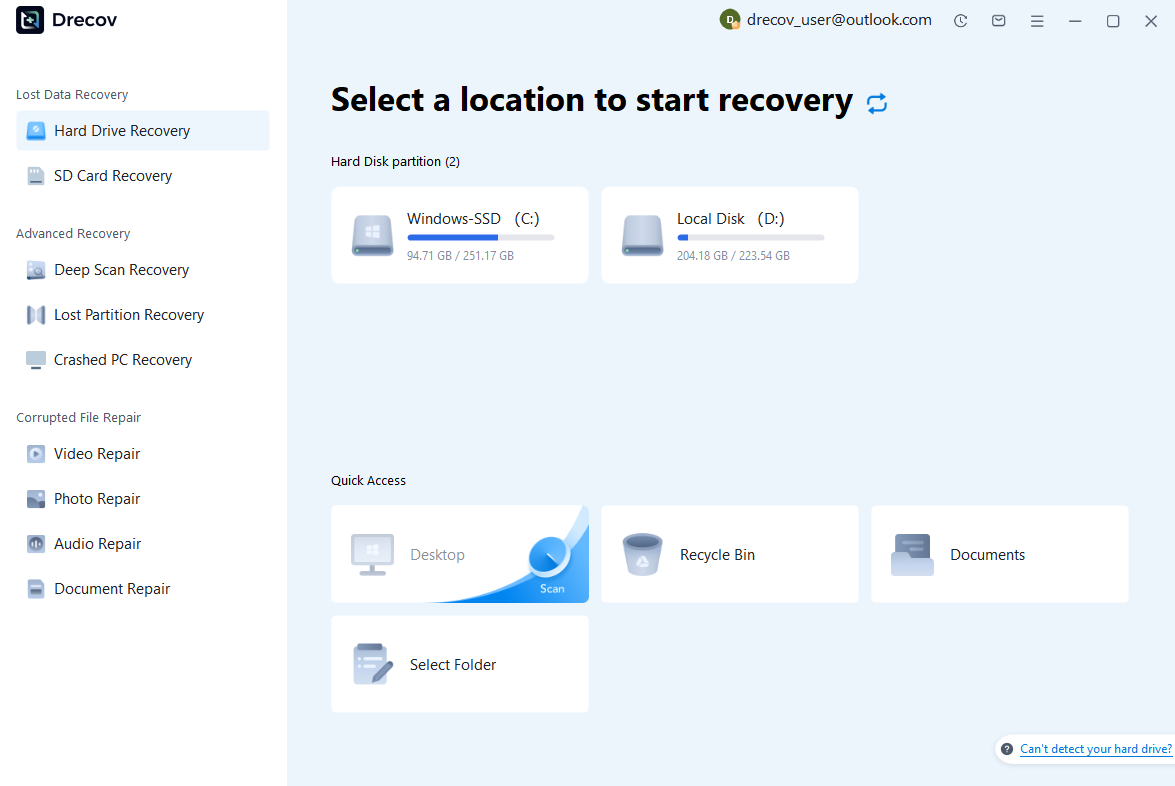
Step 1: Scan the Storage Device (SD Card / Hard Drive / USB)
Connect your device (SD card, HDD/SSD, or USB drive) to your computer and launch PandaOffice Drecov. Select the target device and start the scan. The software will perform a quick scan and deep scan to detect lost or deleted data.
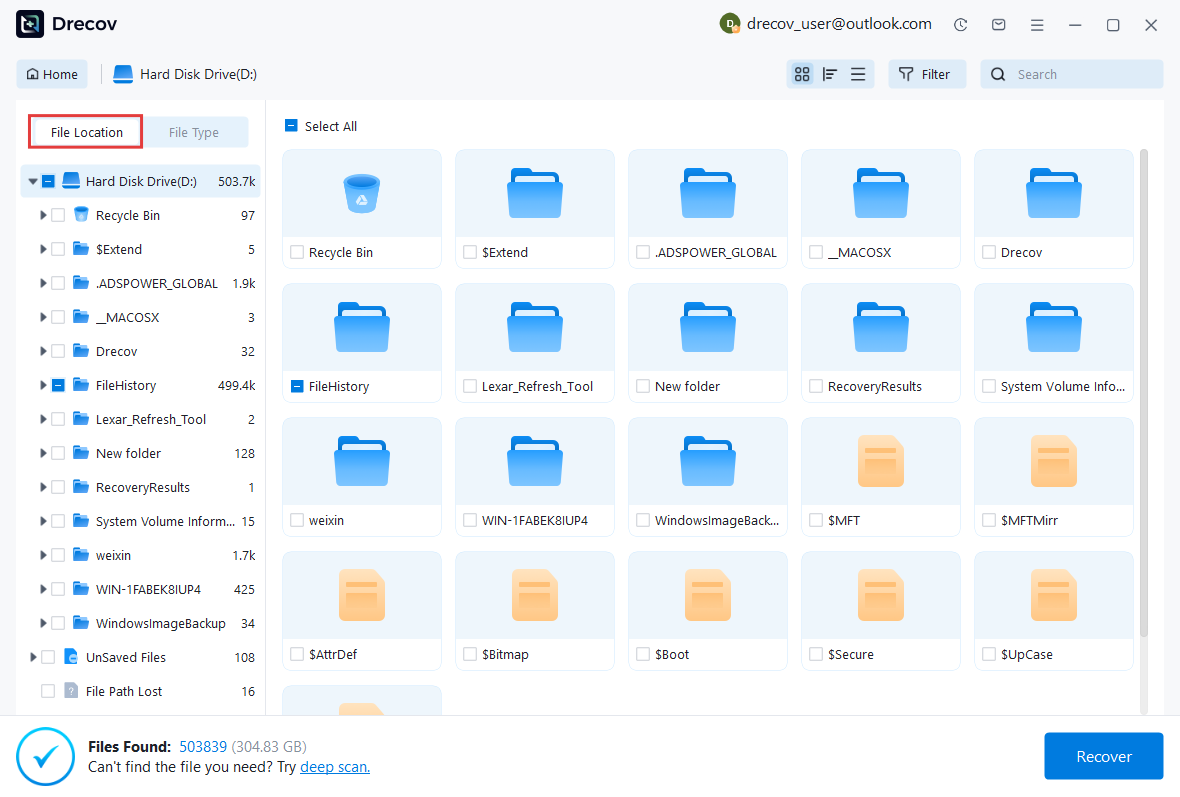
Step 2: Locate and Preview Lost Files
After scanning, browse the detected files and use the preview feature to check recoverable data. You can preview documents (Word, Excel, PDF), photos, and videos to ensure file integrity before recovery.
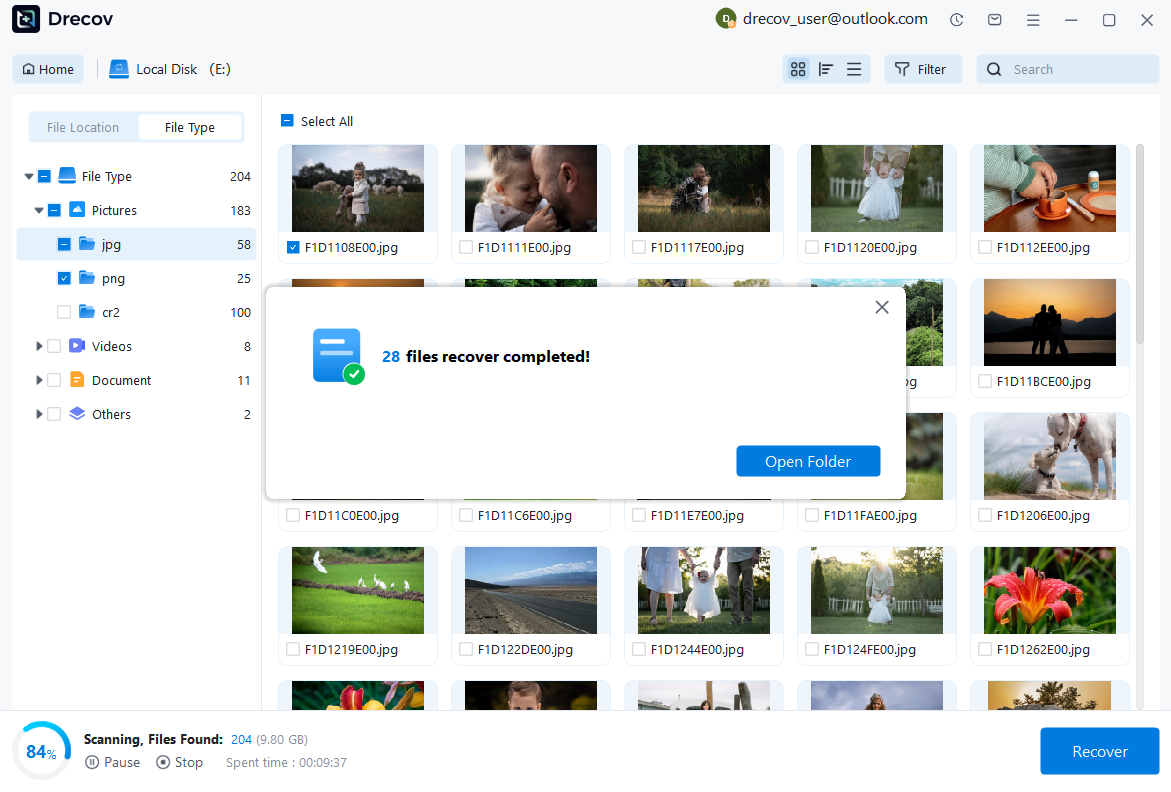
Step 3: Recover and Save to a New Location
Select the files you want to restore and click recover. Save all recovered data to a different drive or location (not the original device) to avoid overwriting lost data.
Why Choose PandaOffice Drecov Recovery Software?
PandaOffice Drecov offers a fast, secure, and user-friendly solution for recovering lost files across multiple scenarios. Whether you need email recovery, ZIP File Recovery, format data recovery, or help to recover deleted drafts Outlook, the software provides reliable recovery performance for both personal and business users.
PandaOffice Drecov supports recovery from formatted hard drives, SSDs, USB drives, SD cards, and external storage devices. Its advanced scanning engine can locate deleted archives, damaged ZIP files, lost Outlook drafts, and accidentally removed documents with high accuracy. For users searching for how to find deleted messages in Teams, PandaOffice Drecov can also help recover exported chat files, attachments, and related local cache data when available.
Key advantages include:
- Deep scan technology for complex data loss situations
- Support for emails, archives, videos, photos, and office documents
- Recovery from accidental deletion, formatting, corruption, and system crashes
- Easy preview before restoring files
- Compatible with Windows and multiple storage devices
Unlike complicated enterprise recovery tools, PandaOffice Drecov keeps the recovery process simple. Users can scan, preview, and restore files in just a few steps without technical expertise.
Whether you are dealing with lost Outlook drafts, corrupted ZIP archives, formatted drives, or missing communication data, PandaOffice Drecov provides an efficient and practical recovery experience designed to minimize downtime and protect important files.
This ensures that valuable .dmg files or software packages aren’t permanently lost.
⚠️ Warning: Stop using the drive immediately to prevent overwriting lost .dmg files.
Common Issues and Troubleshooting
Corrupt DMG Files
A corrupt .dmg file may fail to mount. Possible reasons:
- Interrupted downloads
- Incomplete transfers
- Storage media errors
Solutions include re-downloading or using repair tools.
Compatibility Problems
Not all .dmg files are compatible with older macOS versions or Windows tools. Users may need:
- Updated OS or software
- Conversion to compatible formats
Performance Considerations
Large .dmg files may take longer to mount. Recommendations:
- Use high-speed drives for storage
- Avoid running multiple mounts simultaneously
Opening DMG Files with Advanced Tools
Third-Party Utilities for Windows
While .dmg files are native to macOS, Windows users can handle them using specialized software. Popular utilities include:
- 7-Zip: Open-source extraction tool supporting many formats, including .dmg files.
- DMG Extractor: Dedicated software to open and extract .dmg files on Windows.
- PowerISO: Offers conversion from .dmg to ISO, which can then be mounted like a native drive.
Test environment: Windows 10 Pro, 64-bit, 8GB RAM, using a 1GB .dmg file containing installation packages and media.
Steps for opening .dmg files with 7-Zip:
- Install 7-Zip and launch the program.
- Navigate to the .dmg file location.
- Right-click > 7-Zip > Open archive.
- Extract the contents to a desired folder.
Mounting DMG Files as Virtual Drives
Converting .dmg files to ISO and mounting them allows Windows users to:
- Run installation packages
- Browse the contents as a virtual drive
- Avoid partial extractions
Test environment: Windows 11, virtual mounting using PowerISO, with a 2GB DMG containing macOS software installers.
Steps:
- Convert .dmg to ISO using PowerISO.
- Right-click the ISO > Mount > Choose a drive letter.
- Access all files via File Explorer.
This method preserves file structure and permissions more reliably than extraction alone.
Batch Operations on DMG Files
Handling Multiple DMG Files
For developers or system administrators, batch operations can save time:
- Extract multiple .dmg files simultaneously
- Convert several DMG files to ISO in a single script
- Organize files by project, date, or software type
Test environment: Windows 10, batch extraction using PowerShell scripts, testing with 10 .dmg files, 500MB each.
Example script snippet for extracting multiple DMG files:
$DMGFiles = Get-ChildItem "C:\DMG_Files\*.dmg"
foreach ($file in $DMGFiles) {
    & "C:\Program Files\7-Zip\7z.exe" x $file.FullName -o"C:\Extracted\$($file.BaseName)"
}
This automates extraction and reduces manual effort.
Automating Conversion
Automation can help convert .dmg files to ISO:
- Install PowerISO CLI
- Create a batch script to process all .dmg files in a folder
- Output ISO files to a designated directory
Test environment: Windows Server 2019, 64-bit, testing 20 .dmg files totaling 10GB.
Batch script example:
for %%f in ("C:\DMG_Files\*.dmg") do (
   "C:\Program Files\PowerISO\piso.exe" convert "%%f" -o "C:\ISO_Files\%%~nf.iso"
)
⚠️ Warning: Conversion of encrypted .dmg files requires passwords; unattended scripts may fail.
Recovering Corrupted or Incomplete DMG Files on Windows
Understanding Corruption
Common issues with .dmg files include:
- Partial downloads from the internet
- File system errors
- Interrupted transfers between devices
Signs of corruption:
- Unable to mount
- Extraction errors
- Missing files or folders
Repair Techniques
- Re-download the original file if possible
- Use 7-Zip to attempt extraction; sometimes partial data can still be retrieved
- Hex editor inspection for advanced users to recover uncompressed portions
Test environment: Windows 10, 16GB RAM, using a 1.5GB partially corrupted .dmg file.
Working with Encrypted or Password-Protected DMG Files
Decrypting DMG Files
Some .dmg files are encrypted using AES encryption:
- AES-128 or AES-256
- Requires password input during mounting
- Protects sensitive software or data
On Windows, users can attempt to mount via:
- DMG Extractor with password prompt
- Conversion to ISO before accessing files
⚠️ Warning: Repeated failed attempts may corrupt temporary extraction files.
Scripting Password Input for Multiple Files
For a large collection of encrypted DMG files:
- Create a PowerShell or batch script that mounts each DMG using a secure password variable
- Automates access for users with administrative privileges
Example pseudo-code (PowerShell):
$password = "YourSecurePassword"
$DMGFiles = Get-ChildItem "C:\EncryptedDMG\*.dmg"
foreach ($file in $DMGFiles) {
    Mount-DiskImage -ImagePath $file.FullName -PassThru -Password $password
}
Test environment: Windows 11 Pro, tested on 5 encrypted .dmg files totaling 3GB.
Advanced File Management After Extraction
Organizing Extracted Files
After extraction or mounting:
- Group by software type
- Sort by release date or version
- Archive older DMG files in compressed folders for backup
Batch Renaming Tools
Tools like Bulk Rename Utility can rename multiple extracted directories or files consistently:
- Maintain versioning info
- Avoid name conflicts
- Prepare for deployment or backup
Test environment: Windows 10, 64-bit, processing 50 directories from DMG extractions.
Integrating DMG Handling into Automation Pipelines
Use Cases in Enterprise or Development
- Software testing environments
- Automated backups of macOS installers
- Cross-platform software distribution
Automation scripts can integrate DMG mounting, extraction, and conversion into CI/CD pipelines.
Test environment: Windows Server 2022, using PowerShell scripts integrated into Jenkins pipeline to prepare installation media.
Sample Automation Workflow
- Detect newly downloaded .dmg files in a folder
- Automatically convert to ISO if necessary
- Extract contents for testing
- Archive original DMG files in secure storage
Benefits:
- Reduces manual handling errors
- Ensures consistent file structure
- Speeds up software deployment testing
⚠️ Warning: Scripts must handle encrypted DMG files carefully to avoid interruptions.
Optimizing DMG File Performance on Windows
Best Practices
- Use SSDs for extraction to speed up I/O
- Avoid extracting large DMG files over network drives
- Maintain backups of original DMG files
Long-Term Storage Recommendations
- Keep DMG files in read-only format
- Compress or archive older versions
- Verify file integrity periodically using checksums
Test environment: Windows 10, 1TB SSD, 200GB DMG archive, monitored over 6 months.





