







Recovery Toolbox for Excel is designed for damaged workbook repair. Not every situation described as “Excel recovery.” First determine whether the XLS or XLSX file exists. Has a plausible size, and fails consistently in more than one environment. A deleted workbook requires file recovery; an unsaved workbook requires AutoRecover or version history.
recovery toolbox for excel: safe diagnosis
A workbook can be missing, unsaved, inaccessible, or structurally damaged. Check the path, size, extension, permissions, cloud status, and exact Excel message. Repair software needs an existing file with recoverable structure; it cannot process a path that no longer contains a file.
Test a duplicate using Excel’s Open and Repair command and another trusted spreadsheet reader. If only one application fails, compatibility, add-ins, Protected View, or external links may be responsible. Preserve formulas, macros, charts, and external connections as separate validation concerns.
What Can Be Assessed from the Product’s Documentation
The vendor describes a workflow that reads a damaged Excel file and saves recovered data into a new workbook. This is a documentation-based editorial assessment, not an independent benchmark. No recovery rate, speed, ranking, or price claim is inferred here.
Check the vendor’s current system requirements, supported workbook formats, demonstration limits, privacy terms, and output behavior before purchase or upload. Work only on a copy. A preview can show salvaged cells while still omitting formulas, formatting, charts, macros, or linked objects.
Compare Built-In Repair, Specialist Repair, and Drecov
Excel’s built-in repair is the first low-cost test for an existing damaged workbook. Version History, OneDrive, SharePoint, File History, and backups are preferable when they contain a known-good version. Recovery Toolbox is relevant when structure must be salvaged from the damaged file.
PandaOffice Drecov addresses a different layer: it scans stable Windows storage for a deleted or inaccessible workbook and recovers candidates elsewhere. It does not repair spreadsheet formulas or guarantee that an overwritten XLSX can be restored. Use the tool that matches the file’s actual state.
⚠ Warning: Install it on a drive different from the one where your data was lost to prevent overwriting.
Recovery toolbox for excel — Useful related reading includes recover an Excel document, repair corrupted files carefully, and restore previous file versions.
Recover Missing Local Data Before Repair Changes the Source
PandaOffice Drecov becomes relevant only if deleted XLS, XLSX, XLSM, CSV, temporary, and earlier workbook copies are actually missing or inaccessible on stable storage. The Windows application supports PCs, HDDs, SSDs, external drives, USB media, SD cards, and memory cards. Its read-only mode, Quick Scan, Deep Scan, filters, preview, healthy-destination output, Lost Partition Recovery, and Crashed PC Recovery recover files rather than fix the underlying application, device electronics, encryption, or overwritten content.
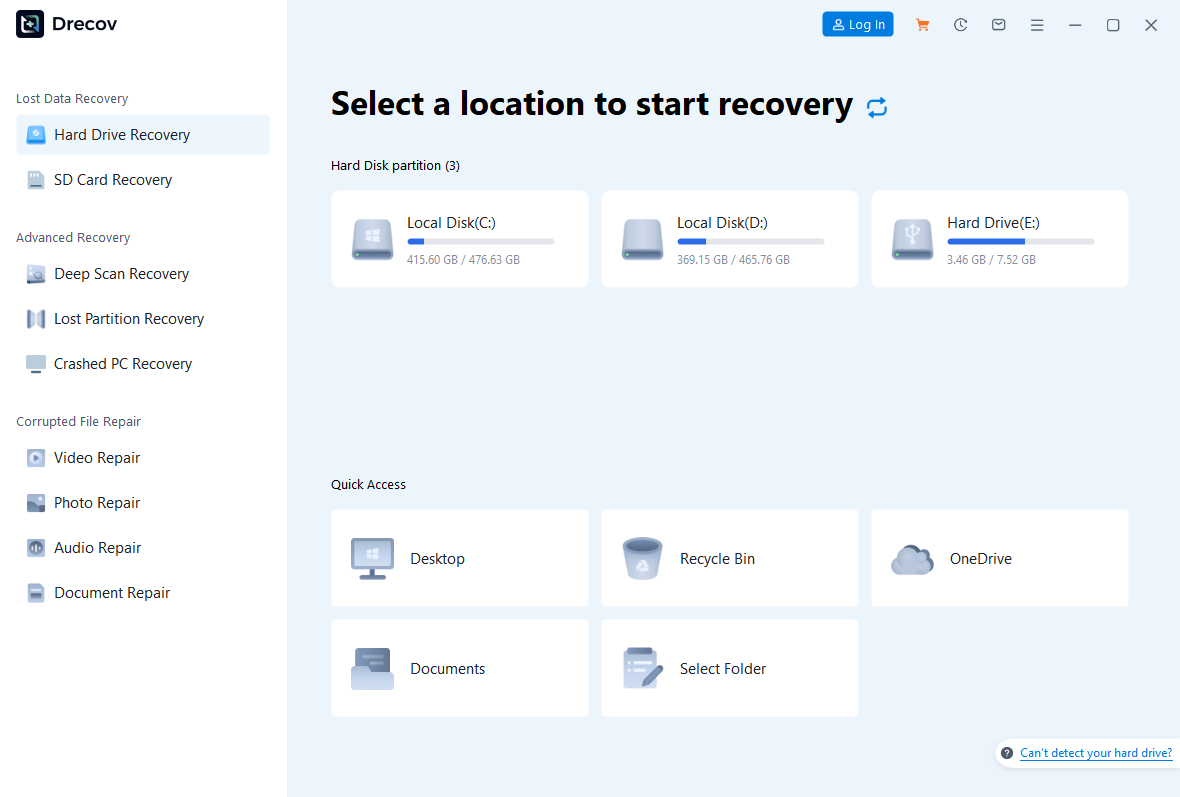
Step 1: Open Drecov After Preparing an Independent Destination
First stop source activity and judge physical stability. Repeated dropouts, unusual sounds, heat, wrong capacity, or serious read failures call for imaging or professional help. Attach a healthy destination, avoid installing on the loss volume, open Drecov. And select the stable Windows drive that originally stored the missing Excel workbook.
Step 2: Search the Recent File-System View with Quick Scan
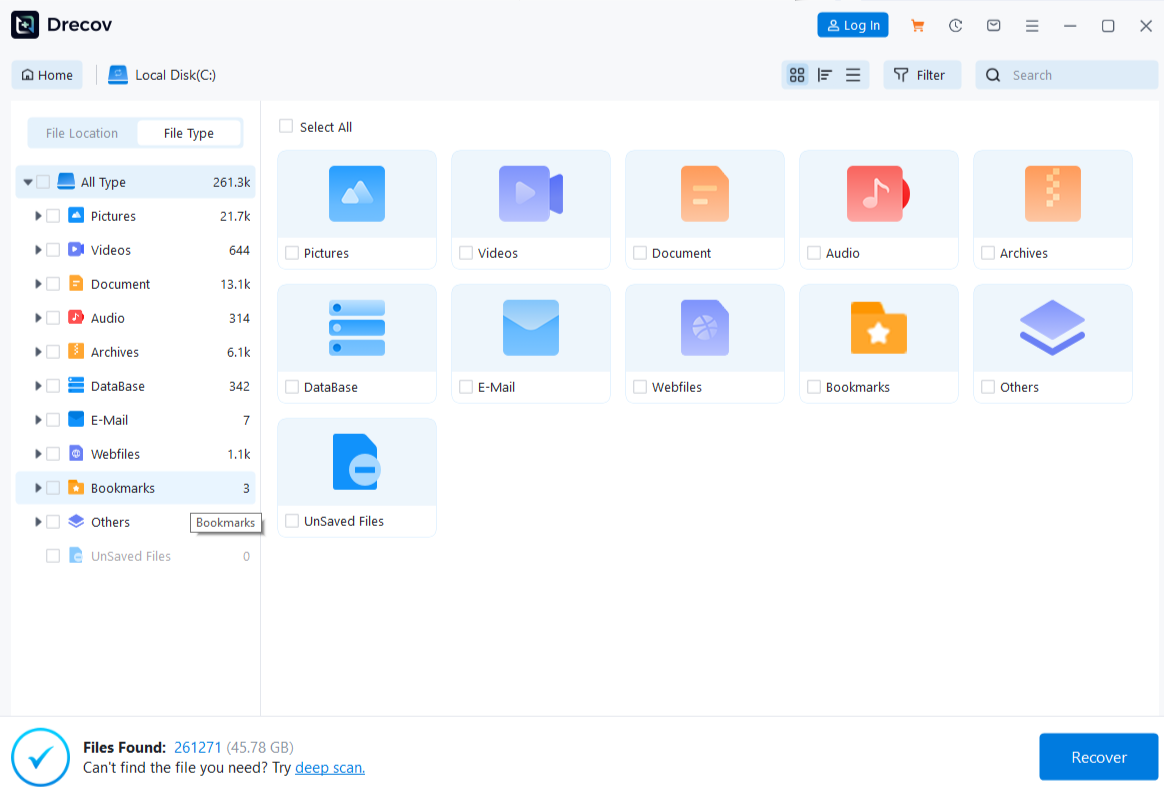
Run Quick Scan and inspect the source-specific paths for deleted XLS, XLSX, XLSM, CSV, temporary, and earlier workbook copies. Use the known location and timing to reject unrelated results early.
Step 3: Continue with Deep Scan When the Medium Remains Sound
Deep Scan is the next option only when Quick Scan misses the target and storage stays stable. It can locate file signatures after directory metadata is lost. But later writes and SSD TRIM may sharply reduce what remains.
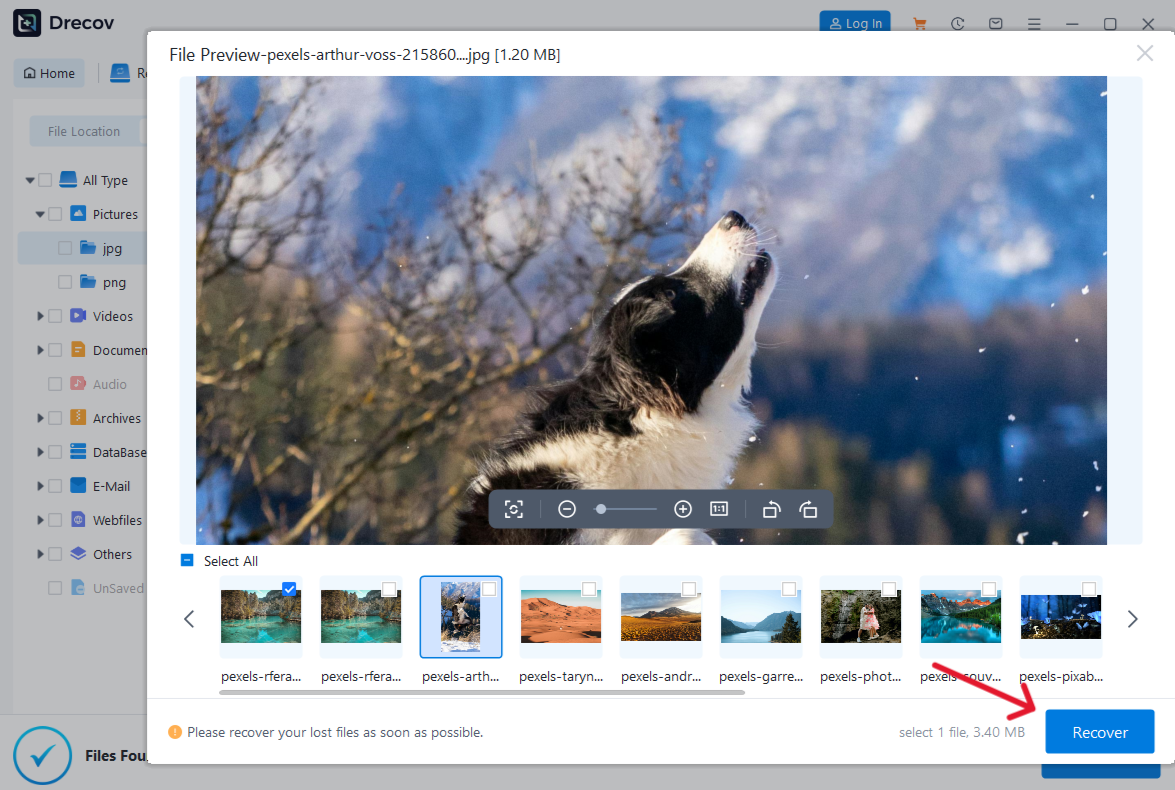
Step 4: Filter the Result Set and Preview Representative Content
Use spreadsheet type, original folder, filename, size, and modification time. Preview several supported candidates at useful points. Keep in mind that preview confirms decodable portions rather than guaranteeing every component.
Step 5: Recover Away from the Source and Validate the Outcome
Save selected output to the separate healthy device. Look in Drecov Folder or Recovery Folder when needed. Next, open representative sheets, recalculate formulas, and compare totals after recovery to another healthy drive. Preserve the source until validation is complete, then decide whether repair, reset, formatting, or replacement is appropriate.
⚠ Warning: Install it on a drive different from the one where your data was lost to prevent overwriting.
Validate the Workbook at the Feature Level
Open every critical sheet, recalculate formulas, inspect named ranges, charts, macros, filters, comments, and external links. Compare totals with a trusted report or PDF. Save the validated output under a new name and keep the damaged original.
Recovery toolbox for excel — For the relevant documented behavior, consult the official technical guidance. Use that source for current interface or command details, and keep the protected original available while testing.
Evaluate the workbook, the repair output, and the source separately
Before using Recovery Toolbox for Excel or another workbook repair utility. Duplicate the damaged file and collect related versions from AutoRecover, email, cloud history, and backups. Confirm the extension and file size. A zero-byte workbook has no payload for a repair tool to reconstruct.
Try Excel’s own Open and Repair on a copy, then compare any third-party result without replacing the source. Complex workbooks require checks beyond visible cell values: formulas, named ranges, charts. Pivot caches, macros, external links, comments, and hidden sheets may not survive equally.
Create a verification list from known totals, key formulas, sheet names, and reporting periods. Recalculate the repaired workbook in an isolated copy and compare results with an earlier trusted version. Save accepted output under a new filename. If the correct workbook was deleted, recover that file before experimenting with corrupted copies.
Sensitive workbooks deserve a privacy check before any upload-based repair. Review where the service processes and retains files, or use an offline option approved by the organization. Password protection and encryption create another boundary: a repair utility is not a substitute for the correct password or recovery key. For financial or operational workbooks, ask the file owner to confirm totals and business rules. Technical readability alone cannot prove that calculations and decisions remain trustworthy.
Keep an audit copy.
Questions Readers Commonly Ask
Does Recovery Toolbox for Excel recover deleted files?
Its documented role is repairing existing damaged workbooks. Deleted-file recovery requires backups, version history, or a storage recovery tool.
Is this a hands-on benchmark?
No. The assessment is based on documented workflow and clearly stated limits, without invented scores or recovery rates.
What should be checked after workbook repair?
Verify values, formulas, macros, charts, formatting, named ranges, and external links—not merely whether the file opens.
Keep the diagnosis tied to observable evidence
A workbook can be missing, unsaved, inaccessible, or structurally damaged. Check the path, size, extension, permissions, cloud status, and exact Excel message. Repair software needs an existing file with recoverable structure; it cannot process a path that no longer contains a file.
Why one successful test is not enough
Test a duplicate using Excel’s Open and Repair command and another trusted spreadsheet reader. If only one application fails, compatibility, add-ins, Protected View, or external links may be responsible. Preserve formulas, macros, charts, and external connections as separate validation concerns.
Preserve the cleanest available version
The vendor describes a workflow that reads a damaged Excel file and saves recovered data into a new workbook. This is a documentation-based editorial assessment, not an independent benchmark. No recovery rate, speed, ranking, or price claim is inferred here.
Use the result to choose the next action
Check the vendor’s current system requirements, supported workbook formats, demonstration limits, privacy terms, and output behavior before purchase or upload. Work only on a copy. A preview can show salvaged cells while still omitting formulas, formatting, charts, macros, or linked objects.
Know when the source needs specialist handling
Excel’s built-in repair is the first low-cost test for an existing damaged workbook. Version History, OneDrive, SharePoint, File History, and backups are preferable when they contain a known-good version. Recovery Toolbox is relevant when structure must be salvaged from the damaged file.
Compare the protected copy with the working result
PandaOffice Drecov addresses a different layer: it scans stable Windows storage for a deleted or inaccessible workbook and recovers candidates elsewhere. It does not repair spreadsheet formulas or guarantee that an overwritten XLSX can be restored. Use the tool that matches the file’s actual state.
Document the point at which the symptom changed
Open every critical sheet, recalculate formulas, inspect named ranges, charts, macros, filters, comments, and external links. Compare totals with a trusted report or PDF. Save the validated output under a new name and keep the damaged original.
Retest the original task after a restart
A workbook can be missing, unsaved, inaccessible, or structurally damaged. Check the path, size, extension, permissions, cloud status, and exact Excel message. Repair software needs an existing file with recoverable structure; it cannot process a path that no longer contains a file.
Conclusion
Recovery Toolbox for Excel may help with a damaged workbook. But its output must be compared with Excel’s own repair and trusted earlier versions. Drecov serves a different role: finding deleted or lost workbook candidates on stable storage and recovering them elsewhere before repair attempts.
⚠ Warning: Install it on a drive different from the one where your data was lost to prevent overwriting.





