







The useful answer to H.264 video vs MP4 container is that they are not competing formats. H.264, also called AVC, is a video compression standard. MP4 is a container that can hold video, audio, subtitles, and metadata. A common MP4 file contains H.264 video and AAC audio. Choose the codec for compression and compatibility; choose the container for packaging and application support.
Picture a Shipment, Not a Format Contest
A container resembles a labeled shipping box. It identifies the streams inside, stores timing information, and helps a player keep video, audio, and subtitles synchronized. A codec is the method used to compress and decode one of those streams. Opening the box does not guarantee that the receiving device can decode everything packed inside.
That distinction explains a familiar problem: two files both end in .mp4, yet only one plays on a television or older computer. Their containers may match while their internal codecs, profiles, bit depths, audio formats, or resolutions differ. The extension is only the first compatibility clue.
| Question | H.264 answers it | MP4 answers it |
|---|---|---|
| How is the video compressed? | Yes | No |
| How are video and audio packaged? | No | Yes |
| Can it carry subtitles or metadata? | Not by itself | The container can store supported tracks and data |
| Does the name guarantee playback? | No; profile and level also matter | No; the internal codecs still matter |
What H.264 Controls Inside a Video
H.264 compresses a sequence of pictures so a video requires less storage and bandwidth than uncompressed frames. An encoder removes spatial and temporal redundancy; a decoder reconstructs frames for playback. Bitrate, resolution, frame rate, profile, level, color settings, and encoder choices all influence the result.
Quality depends on encoding choices
Calling a file “H.264” does not specify one visual quality. A high-bitrate encode can preserve more detail than an aggressively compressed encode. Re-encoding an already compressed source may discard additional detail. Therefore, converting H.264 to H.264 is not automatically lossless, even when the extension remains MP4.
Profile and level affect device support
Older devices may accept H.264 Baseline or Main Profile but reject a demanding High Profile, unusual reference-frame count, high resolution, or level beyond their decoder limits. Hardware acceleration also varies. When playback fails on one device but succeeds elsewhere, inspect the stream details before declaring the file corrupt.
Windows documentation lists H.264 decoding and encoding across several containers, including MPEG-4 and fragmented MP4. That matrix reinforces the key point: codec support and container support are related but separate. Microsoft also explains specifically how an MP4 container stores H.264 data.
What the MP4 Container Adds
MP4 organizes one or more tracks and the metadata needed to play them together. A typical file may contain H.264 video, AAC audio, a timed-text track, thumbnails, and information about duration or orientation. MP4 can also carry other compatible codecs. The filename does not reveal the full contents.
Important indexing information can be written near the beginning or end of a file, depending on the application. An interrupted recording or incomplete transfer may leave media data without the metadata a player needs. In that case, installing another codec does not rebuild the missing container structure.
MP4 and MPEG-4 are not perfect synonyms
MPEG-4 names a family of standards. MP4 commonly refers to the Part 14 container. H.264 is also standardized as MPEG-4 Part 10, but it remains a video codec rather than the MP4 container. Using the precise terms prevents conversion settings from becoming needlessly confusing.
Choose Settings by Destination, Not by Extension Alone
For broad playback support, H.264 video with AAC audio inside MP4 is a practical combination. It is common in browsers, phones, cameras, editing applications, and televisions. Compatibility is still not absolute. Confirm the target device’s maximum resolution, frame rate, profile, level, color depth, and audio support.
For web delivery
Start with the publishing platform’s documented export preset. A platform may transcode uploads regardless of your source settings. Supplying a clean MP4 with a supported H.264 profile usually reduces avoidable rejection, but the platform decides its final streaming versions.
For editing
H.264 is efficient for delivery but can be demanding for frame-accurate editing because frames may depend on neighboring frames. Editors often use optimized or intermediate codecs while working, then export H.264 in MP4 for distribution. Do not delete the higher-quality master merely because the delivery copy is smaller.
For archival storage
An MP4/H.264 copy is convenient, yet an archive should also retain the best available source and project information. Keep checksums and multiple backups. Repeatedly transcoding the only copy makes later quality assessment difficult.
Diagnose Playback Before Converting Anything
First test the file in a second reputable player. If it works, inspect the codec, profile, audio stream, and resolution. A compatibility mismatch may be solved by remuxing or transcoding a duplicate. Remuxing changes the container without re-encoding compatible streams; transcoding decodes and encodes the media again, which can change quality.
If every player stops at the same timestamp, the file size is unexpectedly small, or metadata tools cannot read the tracks, corruption or incomplete copying is more likely. Work on a duplicate. The corrupted-video diagnostic process helps separate broken structure from missing payload.
A wrong extension is another possibility. Renaming a file to .mp4 does not convert it. Identify the actual container and streams first. Likewise, do not use a converter on a failing memory card or external disk. Copy or recover the source video to healthy storage before processing it.
Use a four-result test instead of random conversions
Test the same file in two players and test another known-good MP4 on the problem device. Four outcomes narrow the cause. If only one player fails, its decoder or settings deserve attention. When every player rejects one file, inspect that file’s streams and integrity. A device that rejects several known-good files may be limited by its supported profiles or firmware. When the suspect file plays everywhere except one older device, create a compatible delivery copy while preserving the original.
Compare duration and file size with the expected recording. A ten-minute clip reported as two seconds long often has damaged timing or index metadata. Normal duration with black video can indicate an unsupported video stream, while audible sound confirms that the container and audio track were at least partly read. No player can open a zero-byte file because it contains no media payload.
Keep the source and converted result clearly named. Record the codec, container, resolution, frame rate, bitrate, and audio format used for the successful copy. This turns a one-time fix into a repeatable export preset. If you cannot locate the expected original among many folders, use these methods for finding video files in Windows before assuming deletion.
Recover the Video When It Is Missing, Not Merely Incompatible
A codec problem affects decoding; a deletion or lost partition affects access to the file. Drecov addresses the second situation. It is Windows data recovery software for PCs, HDDs, SSDs, external drives, USB drives, SD cards, and memory cards. The read-only workflow supports video as well as photos, documents, emails, audio, and archives. Quick Scan, Deep Scan, filtering, preview, and recovery to another healthy location help retrieve missing data. Lost Partition Recovery can search a stable lost partition, but it does not convert codecs or repair physical media.
⚠ Warning: Install it on a drive different from the one where your data was lost to prevent overwriting.
Step 1: Open Drecov and choose the original video location
Run PandaOffice Drecov from a healthy Windows disk. Do not install it on the partition or card that held the missing video. Select that original location and confirm its capacity. If the device clicks, disconnects, changes capacity, or reports severe read errors, stop and seek imaging or professional recovery.

Step 2: Run Quick Scan and inspect video categories
Start Quick Scan. Review the former folder, video results, dates, sizes, and names where available. A recovered extension may not describe the internal codec correctly, so keep plausible candidates rather than filtering only by one label.
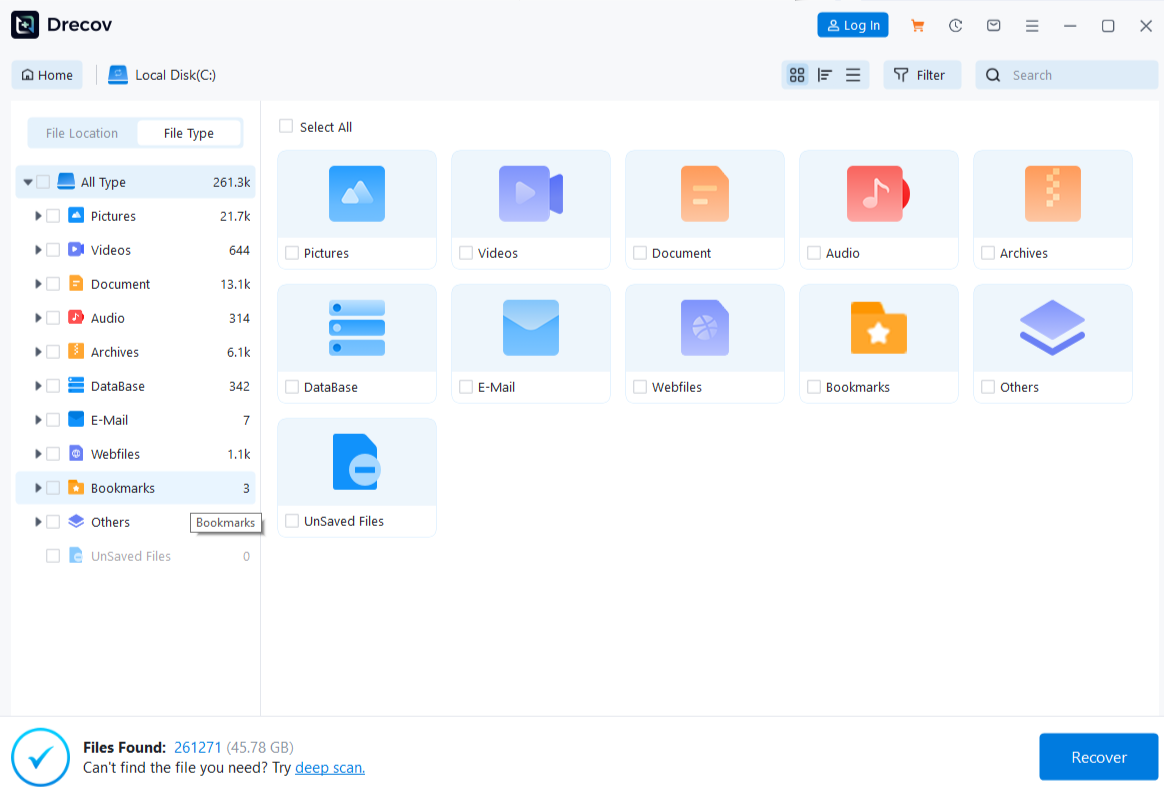
Step 3: Use Deep Scan if the stable source needs a broader search
Continue with Deep Scan only when Quick Scan misses the video and the source remains stable. Stop scanning if new hardware symptoms appear. Software cannot recover fully overwritten sectors or correct physical failure.
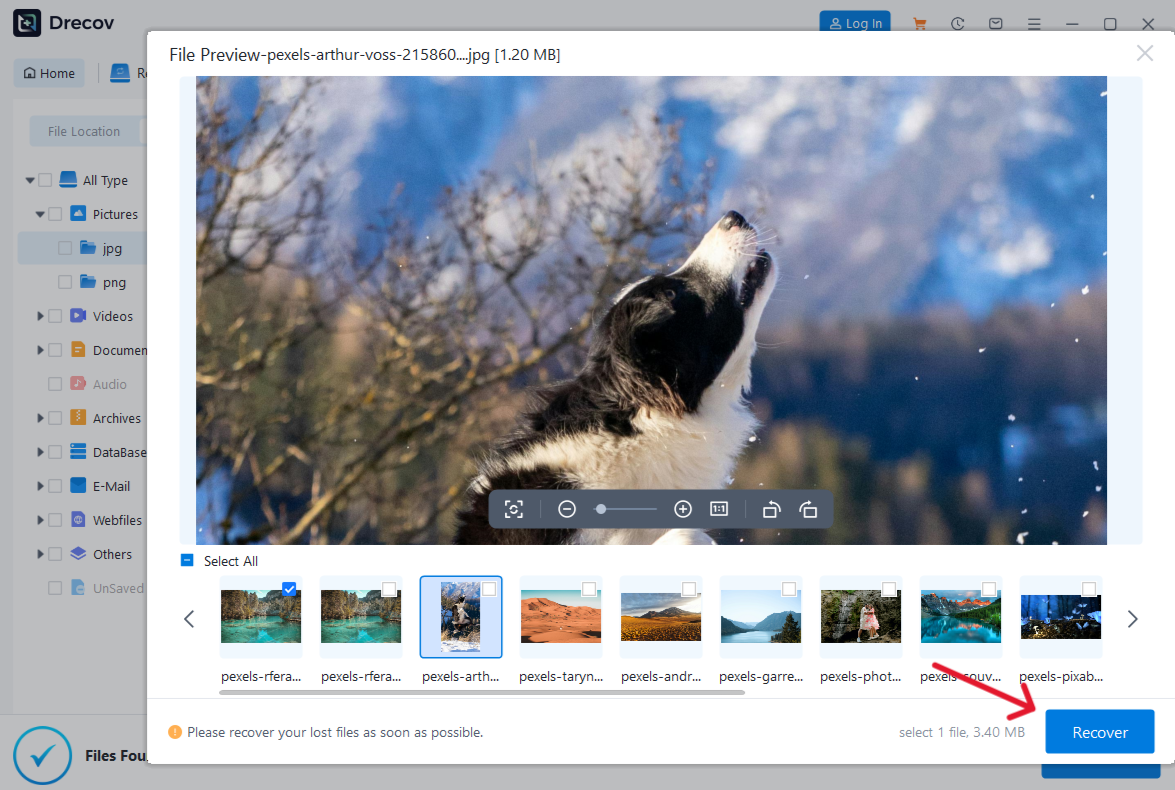
Step 4: Filter, preview, and compare representative candidates
Narrow results by type, former path, filename, size, or date. Preview several candidates. A successful preview confirms only the displayed sample, not every frame or audio segment. When preview is unavailable, recover likely files for testing rather than modifying them in place.
Step 5: Recover elsewhere and verify before conversion
Save selected files to a different healthy disk. Check the Drecov Folder or Recovery Folder if the output is not where expected. Test the beginning, middle, and end of each video, then inspect stream metadata. Use a SHA-256 verification record before repair or conversion when evidence preservation matters.
Conclusion
H.264 video vs MP4 container is a distinction between compression and packaging, not a contest with one universal winner. H.264 compresses the video stream; MP4 packages that stream with audio and metadata. Inspect both layers when playback fails, and convert only a healthy duplicate. If the video itself was deleted or lost, Drecov can scan a stable source, preview candidate footage, and recover it to another disk before compatibility testing or repair.
⚠ Warning: Install it on a drive different from the one where your data was lost to prevent overwriting.





