







A Windows 10 upgrade can remain on one percentage for a long time without being frozen. Note the exact screen, elapsed time, disk activity, and whether the animation still moves. Keep the PC connected to power and wait while storage activity continues. If there has been no visible or disk activity for several hours, the next step depends on whether Setup is still inside Windows, restarting, or rolling back. Protect important files before repeated forced shutdowns or a clean installation.
Read the Current Upgrade Stage Before Touching Power
“Downloading,” “Installing,” a full-screen percentage, and “Undoing changes” represent different work. A download problem can often be retried from the desktop. A full-screen installation may be migrating drivers and user data, where interruption carries more risk. A rollback should be allowed to finish because it is already restoring the earlier system state.
Write down the percentage and time, then wait at least another reasonable interval. Look for a moving spinner, changing messages, fan changes, and storage activity. Large feature upgrades can pause visibly while processing many small files. Do not compare a slow hard drive with the time taken by another PC using an SSD.
If the display is black, test whether Caps Lock responds and whether the monitor has changed input. Do not repeatedly press the power button. A graphics transition can temporarily remove video while Setup continues.
Decide Whether the Upgrade Is Slow or Truly Unresponsive
- Percentage unchanged but disk remains active: continue waiting on reliable power.
- Download paused with a network error: return to Windows Update and address connectivity or free space.
- Spinner moves and messages change: Setup is still responding.
- No animation, input response, or disk activity for hours: a controlled restart may become necessary.
- Drive clicks, disconnects, or disappears: stop repeated attempts and protect data through imaging or professional help.
There is no universal minute at which every upgrade becomes frozen. Hardware speed, update size, free space, encryption, and driver migration matter. Evidence from the same machine is more useful than an arbitrary timeout copied from another case.
If Windows Still Reaches the Desktop, Prepare Before Retrying
Copy important files to another physical device and open representative copies. Confirm cloud files through the web rather than trusting a local sync icon. Save the BitLocker recovery key separately if device encryption is enabled.
Disconnect nonessential USB storage, printers, docks, and specialist hardware. Keep the keyboard, mouse, display, network, and power connection needed for installation. Third-party storage filters, security software, and outdated drivers can complicate an upgrade, but remove only products that match the evidence.
Check free space on the Windows volume. Move personal data to a verified backup instead of deleting blindly. Run Windows Update’s normal troubleshooter and review Update History for a code. Microsoft’s official guide to troubleshooting Windows update problems provides current built-in steps.
Open an elevated Terminal and run DISM /Online /Cleanup-Image /RestoreHealth, followed by sfc /scannow, when system-file corruption is suspected. Restart, confirm Windows is stable, and retry the upgrade once. These commands service Windows; they do not recover deleted personal files.
Review the failure code and Setup logs
Windows Update History may show a hexadecimal code after the system returns to the desktop. Record it exactly, including every zero. For a feature upgrade, Windows Setup logs can show whether failure occurred during compatibility checks, driver migration, boot, or rollback. Do not delete temporary setup folders before reviewing the evidence. Search the code in Microsoft documentation and match the recommended action to that stage rather than applying a generic registry edit.
Check reserved and external storage conditions
An upgrade needs working room on the Windows volume and may use temporary storage during installation. Confirm that the system partition has free space and that the recovery or system-reserved layout has not been altered unexpectedly. Disconnect external disks that are not required. Leaving several bootable drives attached can complicate drive selection and troubleshooting, while removing the only verified backup would be equally unwise. Keep the backup disconnected only during the actual repair after its contents have been checked.
Respond Safely When Setup No Longer Reacts
If the machine has shown no meaningful activity for several hours and does not respond, a forced shutdown may be the only remaining action. Hold the power button once until the PC turns off. Wait briefly, disconnect nonessential devices, and start it normally. Do not repeat the power cycle if Windows begins recovery, rollback, or disk work.
Windows may resume installation, undo changes, or open the recovery environment. Allow either automated process to finish. Record any error code. If the previous desktop returns, verify files before cleaning update caches or retrying.
When Windows Recovery Environment appears, try Startup Repair only for a startup failure. If the upgrade itself caused the problem, uninstalling the latest feature or quality update may be more relevant. System Restore can return system settings to a restore point, but it is not a personal-file backup; see how Windows recovery options affect files.
Avoid Destructive “Fixes” While Files Are Unprotected
Do not choose Reset this PC, format the system partition, use DiskPart clean, or start a clean installation merely because automatic recovery failed once. These choices can remove applications, settings, partitions, or personal data. Confirm a verified backup first.
CHKDSK changes file-system structures. It may be useful for a stable volume with known file-system errors, but it is not a data-recovery tool. When important files are inaccessible, recover or image them before allowing file-system repair.
A disk that is absent from firmware, reports the wrong capacity, clicks, or repeatedly disconnects requires a storage diagnosis. Windows Setup cannot repair physical media. Continued boots may reduce the chance of retrieving data from an unstable device.
Recover Important Files Before Reset or Reinstallation
If Windows no longer boots but the storage device remains stable and detectable, PandaOffice Drecov can recover local data before a destructive repair. This Windows recovery software handles PCs, hard drives, SSDs, external drives, USB devices, SD cards, and memory cards. Its read-only mode provides Quick Scan, Deep Scan, filtering, preview, and recovery to a healthy destination. Lost Partition Recovery and Crashed PC Recovery support related logical-loss cases. Drecov does not complete the upgrade, repair hardware, remove malware, or guarantee overwritten data.
⚠ Warning: Install it on a drive different from the one where your data was lost to prevent overwriting.
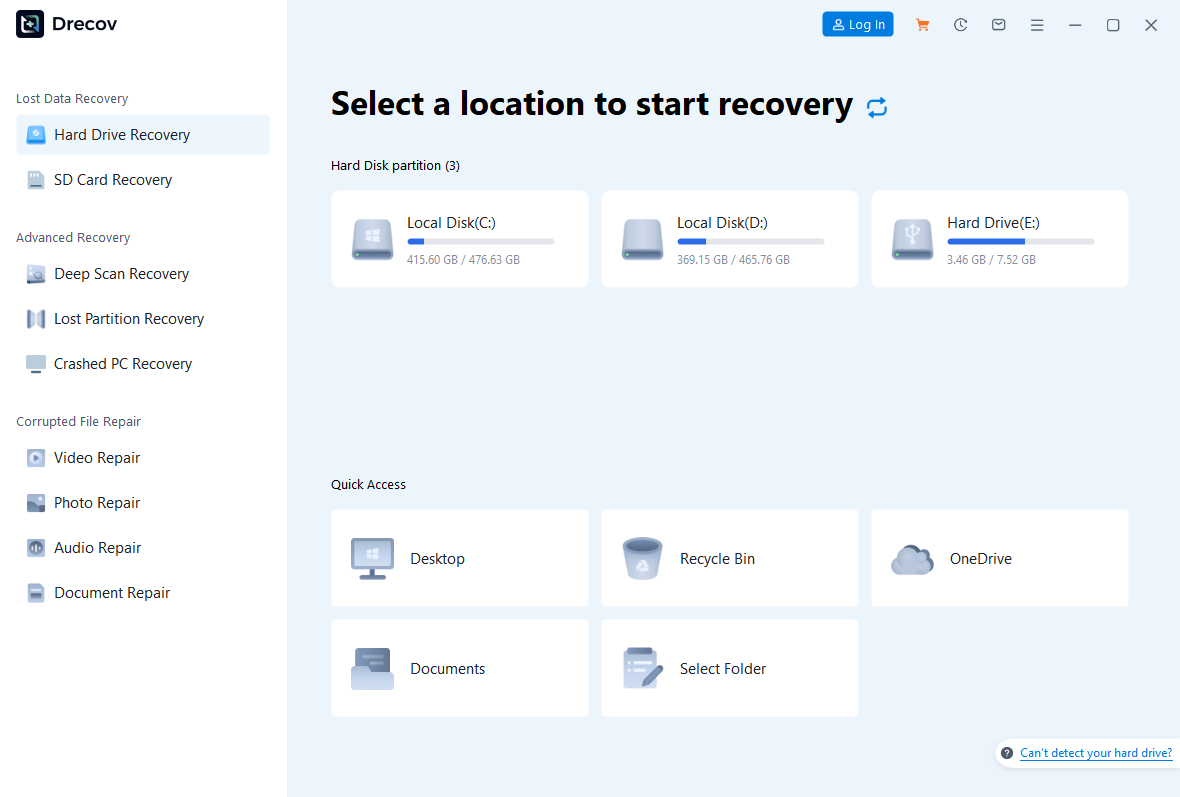
Step 1: Open Drecov and select the original Windows volume
Stop new writes and prepare another healthy drive. Do not install Drecov on the system partition containing the files. Open Drecov and select the original location or the relevant crashed-PC mode. If the disk is unstable, stop direct scanning and seek imaging or professional recovery.
Step 2: Run Quick Scan and inspect user folders
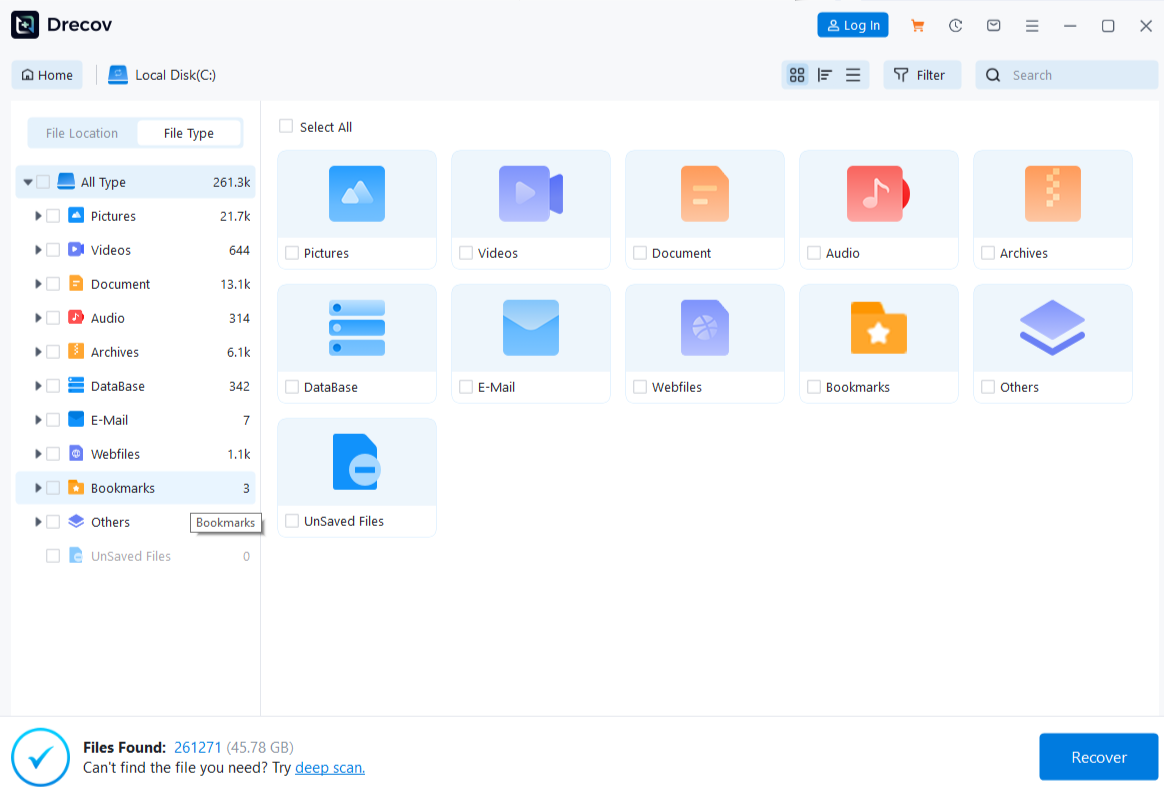
Start Quick Scan. Browse the original user profile and check Desktop, Documents, Pictures, Downloads, and project directories. Compare paths, filenames, sizes, and dates instead of selecting the first familiar result.
Step 3: Use Deep Scan only on stable storage
Use Deep Scan when Quick Scan misses important files and the source remains stable. A broader search may return older candidates with less original folder structure. Stop if new read errors or disconnections appear.

Step 4: Filter and preview representative files
Filter by former location, filename, date, size, and file type. Sample supported documents, images, videos, and archives in the preview pane. Because one preview proves only that item, inspect each important category.
Step 5: Recover elsewhere and verify before repair
Recover to the prepared healthy destination, never to the source. When the target looks empty, inspect Drecov Folder and Recovery Folder before repeating work. Open files from the destination and verify key folders. Only then reset, format, repartition, or reinstall Windows. The focused guide to recover files from an unbootable PC covers a machine that cannot reach the desktop.
⚠ Warning: Install it on a drive different from the one where your data was lost to prevent overwriting.
Verify a Completed Upgrade or a Successful Rollback
If the upgrade completes, open Settings > System > About and confirm the Windows version. Run Windows Update again, inspect Device Manager, and reconnect nonessential hardware one item at a time. Open representative personal files and applications.
If Windows rolls back, confirm that the previous version starts twice and that user data remains accessible. Review Update History and Setup logs before another attempt. Do not immediately delete the previous installation files; they may support rollback until the system and backup are verified.
Continued freezes, restarts, or blue screens indicate a broader stability problem. Review the failure pattern with the computer-crashing diagnostic guide before scheduling another long upgrade.
After a successful installation, create a fresh restore point when protection is enabled and run a new backup. Verify network access, audio, graphics acceleration, printing, and any specialist application required for work. Keep notes about removed drivers or software. If one device fails only after the upgrade, address that component rather than rolling back a stable system without investigation.
Conclusion
A Windows 10 upgrade stuck on one screen should be judged by stage, elapsed time, disk activity, and system response. Wait while meaningful activity continues, protect data before disruptive recovery, and allow rollback to finish. If Windows becomes unbootable while its storage remains stable, Drecov can recover verified files to another drive before reset or reinstallation. A controlled decision is safer than repeated forced restarts.
⚠ Warning: Install it on a drive different from the one where your data was lost to prevent overwriting.





