







For this folder is empty, protect the original data first. Keep the original ZIP, RAR, or 7z file unchanged. An empty destination can mean the extractor used another path, created a nested folder, blocked files, or never completed. The safest path is to preserve during this extraction check, evidence, choose a test that answers one question. For this archive check, change storage only after required data is secure.
this folder is empty: safe diagnosis
Opening an archive viewer shows the catalog without proving every item can be extracted. This detail changes the next action during this extraction check. For this archive check, the same visible symptom can come from access, software, file-system, or hardware layers. Record the exact message, path, capacity, during this extraction check, time, and recent change before experimenting.
Some extractors create a second folder named after the archive inside the chosen destination. Work from the least modifying observation during this extraction check, toward a targeted test. Keep the original file or device during this extraction check, untouched whenever a duplicate. For this archive check, backup, alternate player, second port, Safe Mode, or account check can answer the question.
- If the archive lists files and passes a test, extract once into a new empty folder on a healthy drive.
- If the original archive or completed output was deleted, stop using its former volume before recovery.
- A changed result in the archive check calls for reassessment instead of another unrelated fix.
Preserve the Only Archive Before Retrying
Security software may quarantine one executable while leaving the destination apparently incomplete. This detail changes the next action during this extraction check. For this archive check, the same visible symptom can come from access, software, file-system, or hardware layers. Record the exact message, path, capacity, during this extraction check, time, and recent change before experimenting.
A split or incomplete download can expose filenames but fail when compressed data is read. Work from the least modifying observation during this extraction check, toward a targeted test. Keep the original file or device during this extraction check, untouched whenever a duplicate. For this archive check, backup, alternate player, second port, Safe Mode, or account check can answer the question.
Trace the Exact Output and Nested Folder Structure
Extracting repeatedly into the same directory mixes old and new output and obscures evidence. Preserve the result of this check. It helps distinguish a genuine repair during this extraction check, from a temporary change that only hides the symptom.
Password failure and unsupported compression are access errors, not proof that files were deleted. Preserve the result of this check. It helps distinguish a genuine repair during this extraction check, from a temporary change that only hides the symptom.
For related context, see extract ZIP files in Windows, recover a deleted folder, and restore permanently deleted files.
Recover a Deleted Archive or Output Folder
In this empty-folder investigation, PandaOffice Drecov is Windows data recovery software for PCs, HDDs, SSDs, external drives, USB devices, SD cards, and memory cards. For this problem, it can search the drive that held the original archive or the successfully extracted folder for ZIP. RAR, 7z archives and the documents, photos, media, or project files they contained. For this archive check, its read-only recovery mode, Quick Scan, Deep Scan, filters, preview, healthy-destination output, Lost Partition Recovery. Crashed PC Recovery support logical-loss cases. For this archive check, it cannot repair physical hardware, Windows components, malware, or overwritten bytes.
⚠ Warning: Install it on a drive different from the one where your data was lost to prevent overwriting.
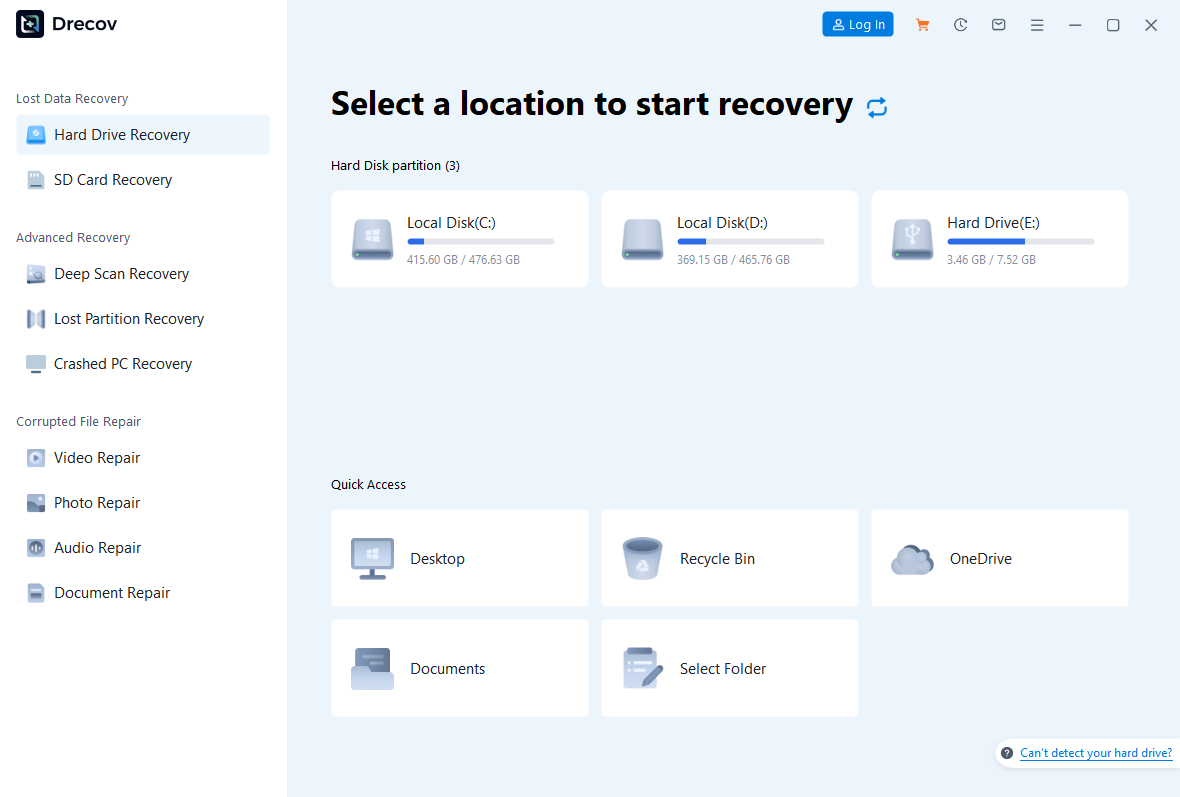
Step 1: Open Drecov and Select The Volume Containing The Concealed Folder
Stop writing to the drive that held the original archive or the successfully extracted folder. Confirm that the storage remains stable. Stop direct scans when the source disk clicks, disconnects, changes size, or stalls on repeated read errors. For this archive check, prepare a different healthy drive and do not install Drecov on the source. Open Drecov, select the original location. Choose Hard Drive Recovery for deleted archive output or Lost Partition Recovery if the containing partition disappeared.
Step 2: Run Quick Scan and Read the First Results
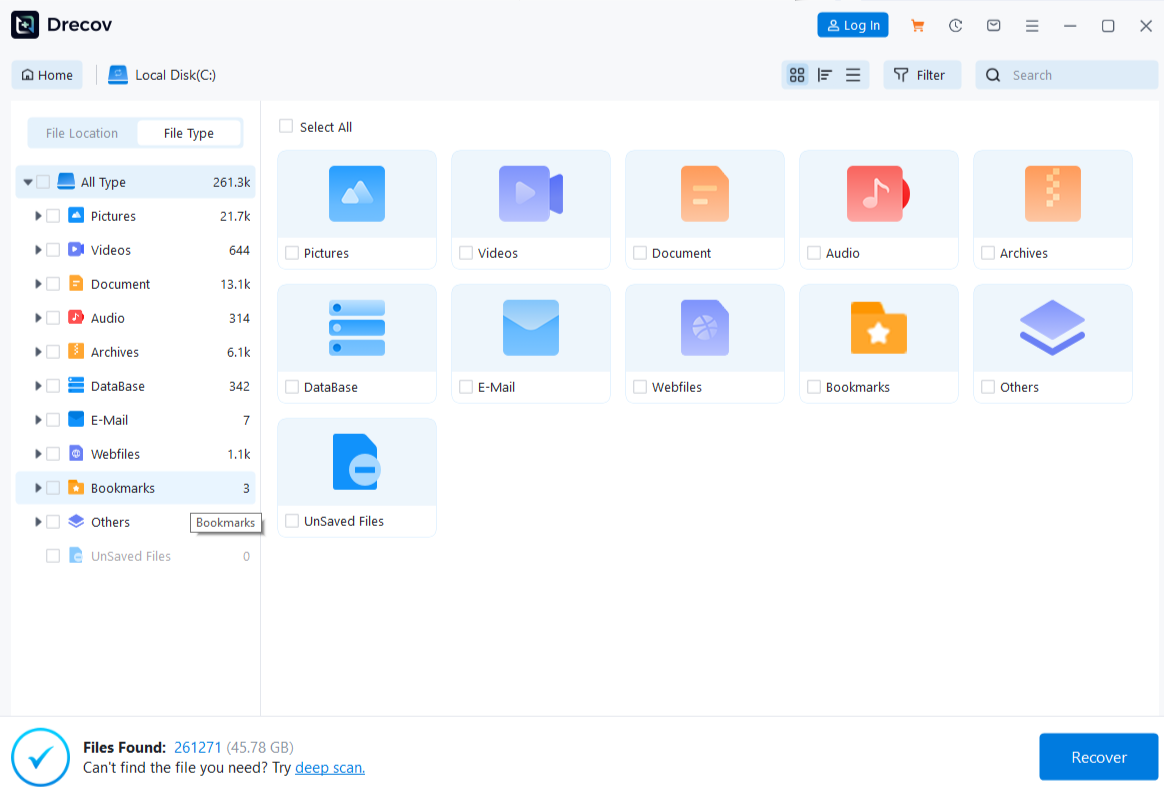
Begin with Quick Scan and inspect the first result tree for ZIP, RAR, 7z archives and the documents, photos, media, or project files they contained. For this archive check, look for the expected location and surviving names before selecting anything. For this archive check, this faster pass is the sensible first check for recent deletion or a directory entry that has become inaccessible.
Step 3: Deep Scan the Stable extraction Source Only When Needed
In the empty-folder investigation, use Deep Scan only when Quick Scan misses the required files and the medium remains stable. For this archive check, a deeper signature search may expose older candidates, but it cannot recreate overwritten content. If the source disk clicks, disconnects, changes size, or stalls on repeated read errors, stop and arrange imaging or professional recovery.
Step 4: Filter, Locate, and Preview Representative Files
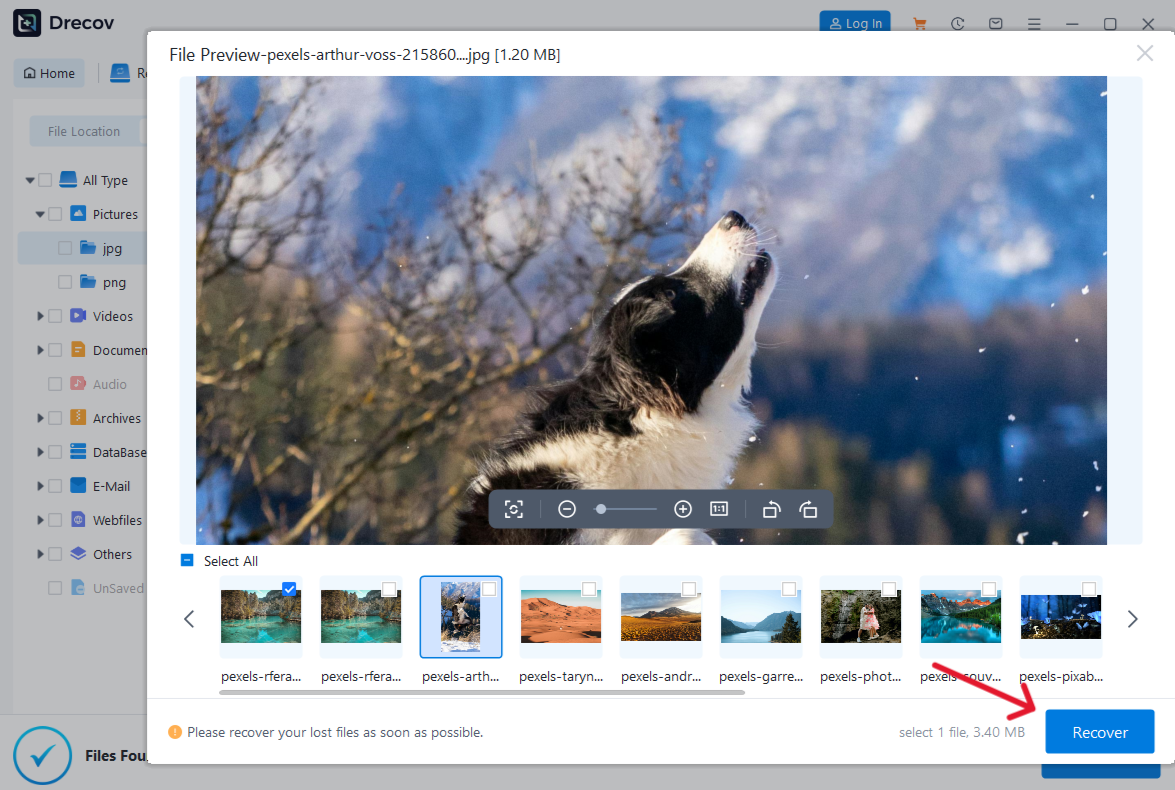
This check is especially useful for this folder is empty. Filter results by archive type, expected extracted file types, old destination path, names, dates, and sizes. For this archive check, preview several supported candidates from different folders or dates. The preview confirms only that individual archive candidate. However, inspect the complete archive result because one preview cannot certify every component.
Step 5: Recover Elsewhere and Verify Before Repair
Recover selected files to the prepared healthy drive, never back to the drive that held the original archive or the successfully extracted folder. For this archive check, check Drecov Folder or Recovery Folder if the output is not where expected. Then compare the archive catalog with the recovered folder, open representative files, and check counts and hashes when references exist. For this archive check, repair, reset, reinstall, format, or run CHKDSK only after this verification.
⚠ Warning: Install it on a drive different from the one where your data was lost to prevent overwriting.
Check Hidden Items, Quarantine, and Extraction Errors
If the archive lists files and passes a test, extract once into a new empty folder on a healthy drive. Apply one change at a time during this extraction check, and keep notes. Avoid broad cleanup, conversion, or reinstall during this extraction check, actions until the protected copy has been opened and checked. The official source for this archive decision explains the relevant built-in behavior: review the official instructions.
If the original archive or completed output was deleted, stop using its former volume before recovery. This stop rule matters more than during this extraction check, finishing a checklist. Recovery software is appropriate for stable during this extraction check, logical loss, while unstable hardware deserves imaging or professional handling.
Confirm which object is actually empty
Open the archive in a trusted extractor and note its item count and uncompressed size. Then inspect the exact destination shown in the extraction dialog. An archive that lists files but produces an empty destination has a different problem from a zero-byte or empty archive. Preserve the archive under a new read-only working copy before any repair attempt.
Many tools create a directory named after the archive inside the selected destination. Sort by Date modified and inspect that nested path. In File Explorer, temporarily show hidden items and verify the address bar. Do not search only by the parent folder’s display name, especially when libraries, OneDrive redirection, or removable drives are involved.
Read the extraction log and security history
Password errors, unsupported methods, missing split volumes, and incomplete downloads can expose filenames while preventing extraction. Windows Security or another security product may quarantine a particular executable. Review its history without restoring an unknown threat. A security block should be resolved by verifying the archive’s source, not by disabling protection globally.
Extract once into a clean destination
After the archive passes its built-in test, choose a new empty folder on a healthy drive. Avoid merging with earlier partial output. Watch for a final success or error message, then compare the extracted count with the catalog. If the archive itself is damaged, locate another download or backup before attempting file-by-file salvage.
Compare Counts and Integrity Before Cleanup
Compare the archive’s item count and total uncompressed size with the new folder, open samples. Hash critical files when a reference exists. Also restart or reconnect once, repeat during this extraction check, the exact action that failed. For this archive check, inspect a representative set rather than one convenient file. Keep the recovered copy until normal during this extraction check, operation and a fresh backup are both confirmed.
Final extraction Evidence Card
| Question | Evidence to keep | Decision |
|---|---|---|
| Where was the source? | The drive that held the original archive or the successfully extracted folder | During the empty-folder investigation, do not write new data there while the missing files still matter. |
| What should be found? | Zip, rar, 7z archives and the documents, photos, media, or project files they contained | Use archive type, expected extracted file types, old destination path, names, dates, and sizes to separate plausible candidates. |
| Is scanning still safe? | For this archive check, watch for disconnection, unusual sound, heat, capacity changes, and read errors. | Stop direct work if the source disk clicks, disconnects, changes size, or stalls on repeated read errors. |
| What proves completion? | For this archive check, files open from the healthy destination and the original task succeeds again. | Compare the archive catalog with the recovered folder, open representative files, and check counts and hashes when references exist. |
Keep this evidence card with the extraction check notes. For this archive check, retain both the recovered output and untouched source until the exact task succeeds after a restart. For this archive check, once the result remains stable and representative files open correctly, place the verified copy into the normal backup routine.
Conclusion
This folder is empty becomes manageable once the symptom is separated from the state of the data. Preserve the source, use the topic-specific during this extraction check, checks above, and verify the result. When stable local files are missing, during this extraction check, Drecov can scan the original location, preview candidates. For this archive check, recover selected items to another healthy drive before destructive repair.
⚠ Warning: Install it on a drive different from the one where your data was lost to prevent overwriting.





