







Can I Recovery External Hard Drive Data on Mac? This is a common and urgent question for Mac users who suddenly lose important files from an external drive. Whether you want to recover external hard drive data after accidental deletion, formatting, or corruption, macOS provides several built-in options—and there are reliable third-party solutions when those options fall short. In the first moments after data loss, your actions matter most. Stop using the drive immediately to avoid overwriting recoverable data. This guide explains why data loss happens, how recovering external hard drive data works on Mac, and which methods are safest and most effective for external hard drive data recovery—from free system tools to professional-grade software.
I have a Toshiba external hard drive that has gotten corrupted, im trying to recover some of the most recent files on it however after using Wondershare Recoverit, disk drill and Stellar only disk drill is able to find those photos.. the other two can only find stuff from 2018 and previous (Recoverit just brought up jpgs with all numerical names). Obviously disk drill is quite expensive for just a few photos/videos so does anyone have any recommendations for which software to use, im not super tech savvy so anything with an easy user interface is preferable and obviously something that will launch on OS. I have another blank hard drive I can use to back up if needed. Thank you in advance for any help you can give!—from Reddit
Common Problems That Cause External Hard Drive Data Loss on Mac
Understanding why data disappears helps you choose the right data recovery external hard drive approach and avoid repeating mistakes.
Accidental Deletion or Formatting
Many users accidentally delete folders or format an external drive when connecting it to a new Mac. Formatting erases file references, not the data itself—making external hard drive data recovery possible if you act fast.
⚠️ Warning: Don’t copy new files to the formatted drive.
File System Errors and Corruption
Improper ejection, power interruptions, or unstable adapters can corrupt the file system. macOS may show errors like “The disk you inserted was not readable,” leaving files inaccessible.
macOS Incompatibility
External drives formatted for Windows (NTFS) or Linux may behave unpredictably on Mac. Read-only access or mounting failures can look like data loss but often mask recoverable data.
Physical or Logical Damage
Drops or water exposure cause physical damage, while malware or bad sectors cause logical issues. Software can help with logical failures; physical damage often requires professionals.
How External Hard Drive Data Recovery Works on Mac
Before trying tools, it helps to know how recovery works. When files are deleted or a drive is formatted, macOS removes the file index—not the underlying data. Recovering external hard drive data means scanning the disk for these remnants and rebuilding files.
⚠️ Warning: Continued use increases overwrite risk and reduces recovery success.
Key principles:
- Deleted ≠ destroyed
- Time and activity reduce recovery chances
- Always recover files to a different drive
Free Methods to Recover External Hard Drive Data on Mac
Start with free methods. They’re safe for beginners and often sufficient for recent deletions.
Recover from Trash (Recycle Bin Equivalent)
Steps:
- Connect the external drive.
- Open Trash.
- Locate deleted files.
- Right-click → Put Back.
Usage tips:
- Sort by date to find recent deletions.
- Works best for accidental deletes.
Precautions:
⚠️ Files deleted using “Empty Trash” are not recoverable here.
Recover from Photos App
If photos or videos were imported into Photos, macOS may keep a copy.
Steps:
- Open Photos.
- Go to “Recently Deleted.”
- Select files → Recover.
Usage tips:
- Ideal for media files.
- Check iCloud sync status.
Precautions:
⚠️ Storage limits may remove older items permanently.
Use Built-in macOS System Recovery Tools
macOS includes Disk Utility and Time Machine.
Disk Utility – First Aid
Steps:
- Open Disk Utility.
- Select the external drive.
- Click First Aid → Run.
Usage tips:
- Fixes minor corruption.
- Doesn’t restore deleted files.
Precautions:
⚠️ Severe corruption may worsen if repaired repeatedly.
Time Machine Backup
Steps:
- Connect your Time Machine backup disk.
- Open the folder where files were stored.
- Enter Time Machine → Restore files.
Usage tips:
- Most reliable free method if enabled.
- Restores original structure.
Precautions:
⚠️ Requires prior backups.
Using Data Recovery Software on Mac (Most Effective Method)
When free methods fail, data recovery external hard drive software offers the highest success rate for deleted, formatted, or corrupted drives.
Why Software Works Better
- Deep scans detect lost partitions and file signatures
- Preview files before recovery
- Supports photos, videos, documents, archives
Recommended Solution: PandaOffice Drecov (Only Windows)
Drecov supports SD cards, USB drives, external hard drives, and even Recycle Bin recovery. It’s designed for beginners while offering powerful scanning.
Download Drecov3 Steps to Recover External Hard Drive Data with Drecov
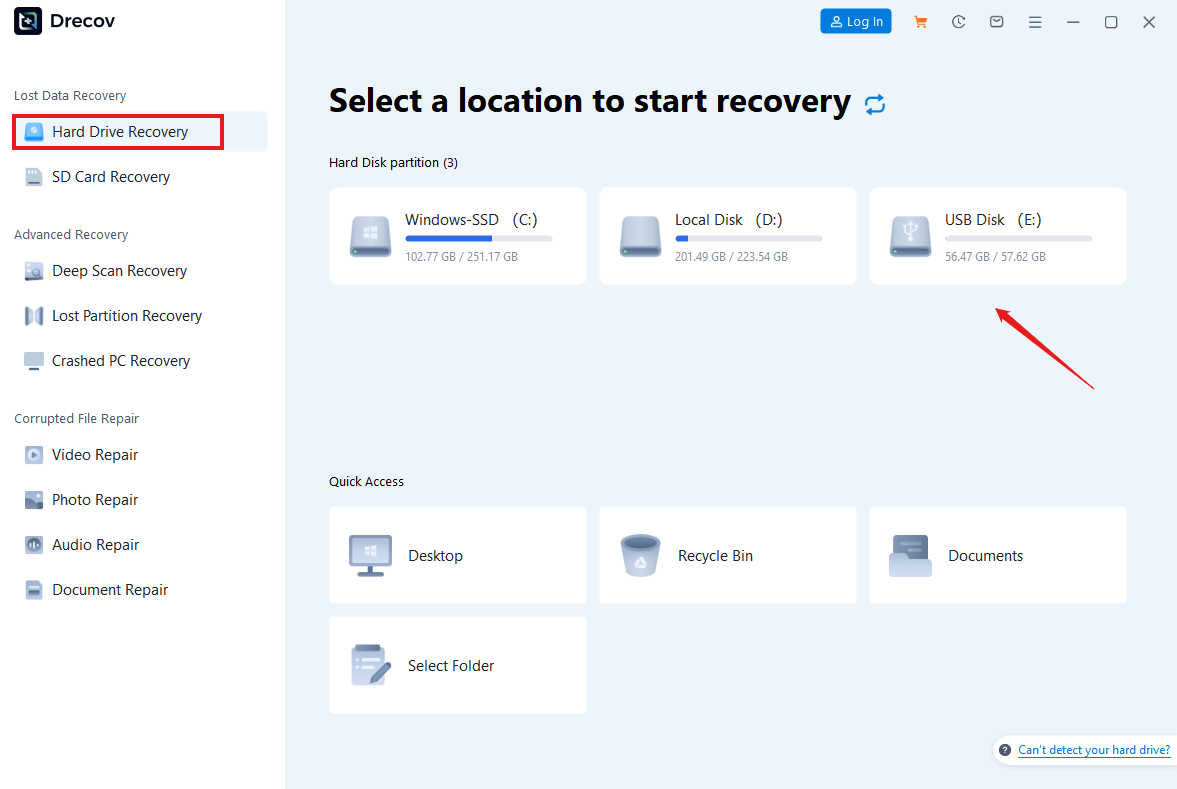
- Scan
Connect the external drive. Launch Drecov and select the drive to scan.
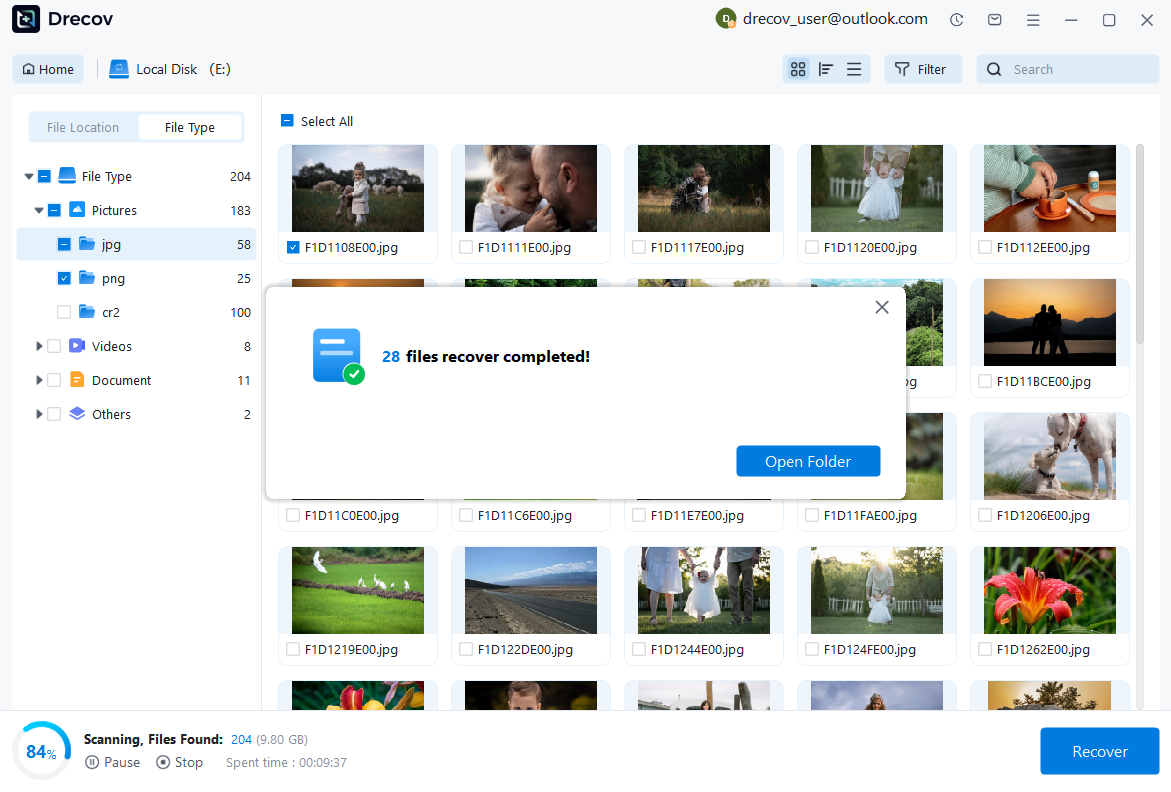
2. Preview
Review found files by type or path. Preview to confirm integrity.

3. Recover
Select files and recover them to a different disk.
Usage tips:
- Run a full scan for formatted drives.
- Filter by file type to save time.
Precautions:
⚠️ Never install recovery software on the affected drive.
Pros:
- High recovery success
- Simple interface
- Broad device support
Cons:
- Free scan; full recovery may require upgrade
Professional Data Recovery Services (Last Resort)
If the drive has physical damage or severe firmware issues, professionals may help.
Steps:
- Stop using the drive.
- Contact a certified recovery lab.
- Ship the drive securely.
- Review recovery quote and results.
Usage tips:
- Choose labs with cleanroom facilities.
- Ask about “no data, no fee” policies.
Precautions:
⚠️ Expensive and time-consuming.
Comparison of Recovery Methods on Mac
| Method | Cost | Skill Level | Success Rate | Best For |
|---|---|---|---|---|
| Trash / Photos | Free | Beginner | High | Recent deletion |
| Disk Utility | Free | Beginner | Low | Minor errors |
| Time Machine | Free | Beginner | Very High | Backed-up files |
| Data Recovery Software | Low–Medium | Beginner–Intermediate | High | Formatted / corrupted drives |
| Professional Services | High | Expert | Very High | Physical damage |
Common Mistakes to Avoid
- Writing new data to the same drive
- Reformatting repeatedly
- Interrupting scans
- Using unverified tools
⚠️ Warning: These mistakes can permanently destroy recoverable data.
Prevention Tips for Mac Users
- Always eject external drives safely
- Enable Time Machine backups
- Use stable cables and powered hubs
- Periodically check disk health
Prevention is easier than external hard drive data recovery.
FAQs
Q1: Can I perform external hard drive data recovery Mac after formatting?
Yes. Formatting removes file indexes, not data. Using recovery software like Drecov significantly improves success.
Q2: Is it safe to recover external hard drive data on Mac by myself?
Yes, if the issue is logical. Stop using the drive and follow step-by-step instructions carefully.
Q3: How long does recovering external hard drive data take?
Scan time depends on drive size and damage. Large drives may take hours, but previews appear early.
Q4: What files can data recovery external hard drive software restore?
Photos, videos, documents, emails, archives, and more—depending on scan depth and overwrite status.
Conclusion
Can I Recovery External Hard Drive Data on Mac? Yes—most of the time. By understanding why data loss happens and acting quickly, you can successfully recover external hard drive files using free macOS tools or advanced software. For formatted or corrupted drives, external hard drive data recovery software provides the highest success rate. With its simple three-step process and broad device support, PandaOffice Drecov offers a practical, beginner-friendly solution for recovering external hard drive data on Mac—helping you restore what matters most without unnecessary risk.





