







Losing important files from your external hard drive can be stressful and disruptive. Whether it’s due to accidental deletion, formatting, system errors, or hardware failure, knowing how to recover external hard drive data is essential. This guide will walk you through the steps to recover external hard drive content safely, explore multiple recovery methods, and provide actionable tips for maximizing success. By following these strategies, you can regain access to your lost files while avoiding permanent data loss.
My drive isnt showing up in windows explorer and it is making beeping noises once every 2 second its a seagate 2tb hardn drive its blue and white i dont know the model is there any way to recover my data or at least get working again i cant afford a new drive and all my important data was on here and i cant afford backups please help—Help plz from Microsoft store
Understanding Common External Hard Drive Problems
External hard drives are convenient for storing large volumes of data, but they are not immune to failure. Understanding the root causes of data loss helps prevent mistakes and guides effective recovery.
Causes of Data Loss
- Accidental Deletion: Files deleted unintentionally from your external hard drive may not be immediately unrecoverable if you act quickly.
- Formatting Errors: A mistakenly formatted drive erases file structures, making data invisible to the system.
- Physical Damage: Drops, water exposure, or mechanical failures can render the drive unusable.
- Virus or Malware Attacks: Malicious software can corrupt files or folders.
- System Errors or Power Failures: Sudden shutdowns or faulty connections can result in incomplete writes, corrupting files.
Signs Your Drive Needs Recovery
- The system does not recognize the drive.
- Files or folders disappear unexpectedly.
- Strange noises coming from the drive.
- Error messages like “Drive not formatted” or “Access denied.”
Recognizing these signs early ensures faster and more successful recovery.
Free Methods for External Hard Drive Recovery
Before seeking professional help, several free methods can help recover lost data.
1. Recover from Trash/Recycle Bin
Most accidental deletions can be reversed via system trash folders.
Step-by-step instructions:
- Connect your external hard drive to your computer.
- Open the Recycle Bin (Windows) or Trash (Mac).
- Look for the deleted files and select Restore.
Usage tips:
- Act quickly; emptied trash reduces recovery chances.
- Avoid saving new files to the drive until recovery is complete.
Precautions:
⚠️Warning: Do not format the drive before checking trash, as it will overwrite deleted files.
2. Recover from Photos or Files App
For media files, Mac and Windows provide built-in tools.
Step-by-step instructions:
- Open the Photos or Files app.
- Check the Recently Deleted folder.
- Select files to Recover.
Usage tips:
- Only applicable if the files were previously synced or backed up.
Precautions:
⚠️Warning: Recovery is time-limited, often 30–60 days.
3. Use Data Recovery Software
Professional-grade tools can scan drives for lost files.
Step-by-step instructions:
- Download and install Drecov.
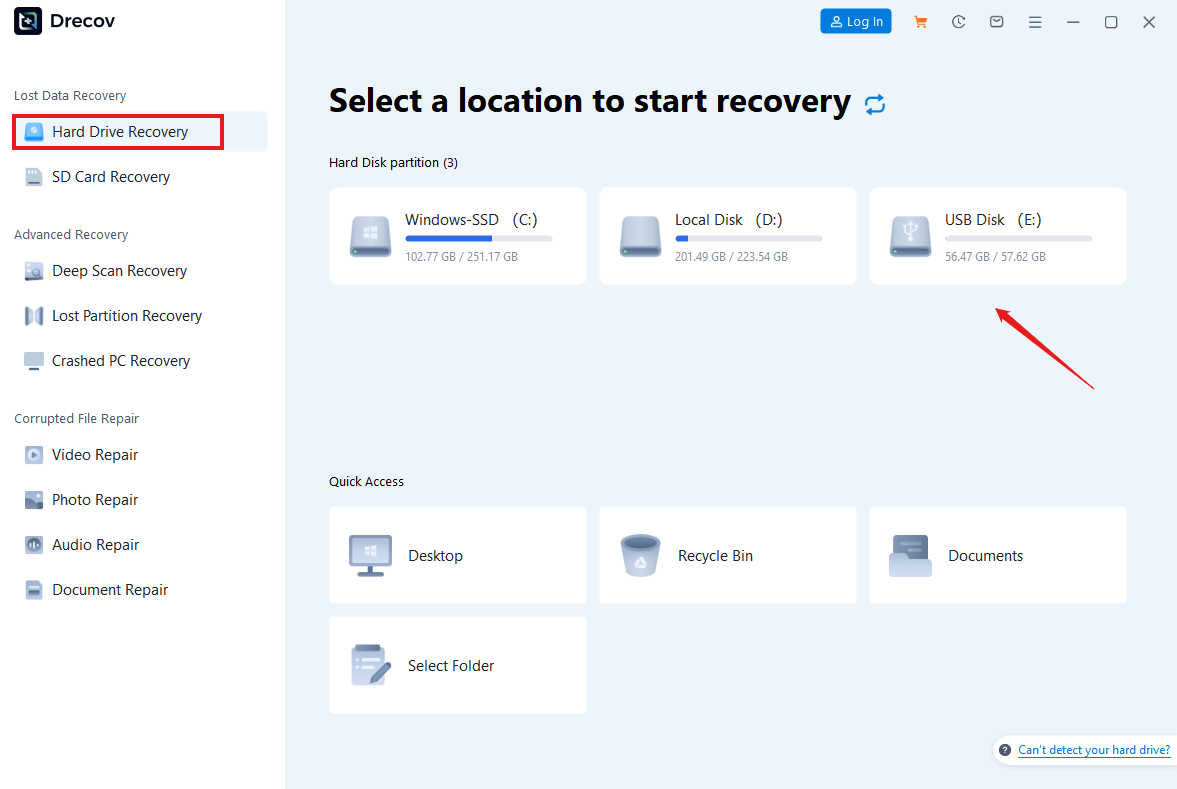
- Select your external hard drive and choose Scan.
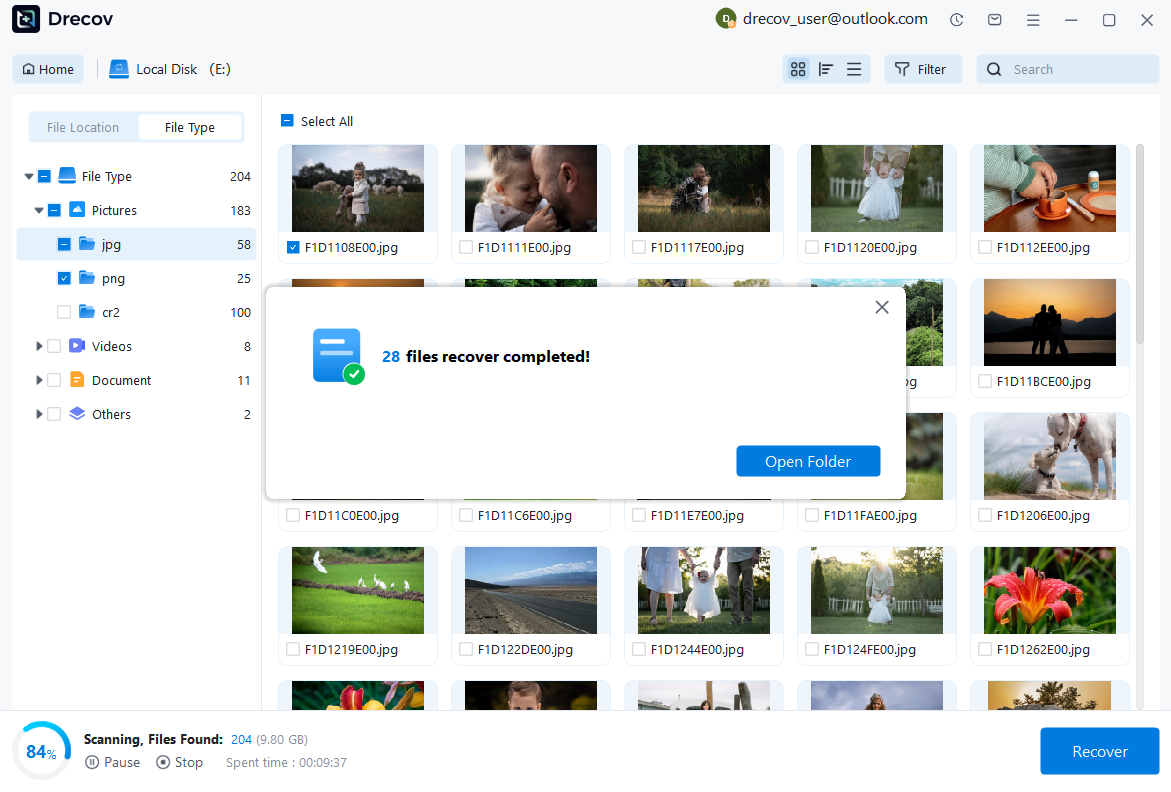
- Preview and select files, then click Recover.
Usage tips:
- Stop using the drive immediately after noticing data loss.
- Preview files before recovery to avoid unnecessary downloads.
Precautions:
⚠️Warning: Installing recovery software on the same drive can overwrite lost files.
4. Use Built-in System Recovery Tools
Operating systems include recovery features.
Windows:
- Right-click the drive → Properties → Previous Versions → Restore.
Mac:
- Use Time Machine to restore deleted files.
Usage tips:
- Regularly back up your drive to enable this option.
Precautions:
⚠️Warning: Recovery may be incomplete if backups are outdated.
5. Professional Data Recovery Services
If the drive is physically damaged or software recovery fails, seek professional help.
Step-by-step instructions:
- Search for external hard drive recovery near me or external hard drive data recovery near me.
- Choose a trusted service provider.
- Send the drive for evaluation and recovery.
Usage tips:
- Confirm pricing and success rates before sending the drive.
- Ask about confidentiality if data is sensitive.
Precautions:
⚠️Warning: DIY repair attempts on a physically damaged drive can worsen data loss.
Step-by-Step Guide Using Drecov for External Hard Drive Recovery
For users seeking a fast and reliable solution, Drecov provides a simple 3-step recovery process:
Download Drecov- Connect & Scan – Plug in the external drive and let Drecov scan for deleted or lost files.
2. Preview & Select – Check recoverable files and select those you want to restore.

3. Recover & Save – Restore files safely to a separate drive or folder.
Tips for Success:
- Avoid saving recovered files to the same drive.
- Use the preview feature to ensure correct recovery.
- For large drives, allow full scanning to maximize results.
Comparing Recovery Methods
| Method | Pros | Cons | Best Use Case |
|---|---|---|---|
| Trash/Recycle Bin | Free, easy | Limited to recent deletions | Quick file recovery |
| Photos/Files App | Free, fast | Only media files | Deleted photos/videos |
| Drecov Software | High success, previews files | Requires installation | Deleted, formatted, or corrupted data |
| System Tools | Free, built-in | Only works with backups | Restoring older files |
| Professional Services | Works with physical damage | Costly, slower | Severely damaged drives |
Recommendation: For most users, software-based recovery with Drecov provides the best balance of cost, speed, and reliability.
Prevention Tips
- Regularly back up your external hard drive.
- Avoid abrupt ejections or unsafe removal.
- Use antivirus software to prevent malware attacks.
- Label and organize files to reduce accidental deletions.
FAQs
Q1: How can I find an external hard drive recovery near me?
Search online for local providers or check tech forums for trusted recommendations.
Q2: What is the best way for external hard drive data recovery near me?
Local professionals can handle physical damage or severe corruption when software recovery fails.
Q3: Can I recover external hard drive data myself?
Yes, using software like Drecov, built-in system tools, or checking trash/recently deleted folders.
Q4: How long does recovering external hard drive take?
It depends on drive size, damage, and method. Software scans may take minutes to hours; professional services longer.
Q5: Are free methods reliable for recover external hard drive files?
They work for simple deletions or recent files but may fail for formatted or corrupted drives.
Conclusion
Recovering lost files from an external hard drive is possible with careful planning and the right tools. Whether using free methods, built-in system tools, or professional services, following proper steps ensures the best chance of success. For a fast, safe, and reliable solution, using Drecov is highly recommended—simply scan, preview, and recover your lost data. By acting quickly and avoiding overwriting files, you can effectively recover external hard drive data and prevent permanent loss.





