







When Windows says you don’t have permission to access this folder, the files may still be intact. Confirm the folder’s real location, the account that owns it, and whether encryption is involved before changing ownership. Broad permission resets can expose private data, break inherited rules, or hide the original cause.
You don’t have permission to access this folder: safe diagnosis
A folder on the current PC, a folder copied from another Windows installation. A network share, and an encrypted external drive use different access controls. Open Properties, note the full path, and check whether the Security tab is present. The error may reflect NTFS permissions, share permissions, User Account Control, application sandboxing, or encryption.
Sign in with the account that normally used the folder. If the data came from an older PC. Its security identifier will not match the new account even when the visible username is identical. An administrator can take ownership of ordinary NTFS content. But ownership does not decrypt EFS files and does not replace a BitLocker recovery key.
Preserve Permissions and Encryption Evidence
Before applying takeown or icacls recursively, capture the current owner and access-control entries. Work on a copied folder when possible. Recursive commands can replace carefully inherited permissions across thousands of files, affect application data, and make later auditing difficult.
A green filename or an Advanced Attributes entry indicating encryption points toward EFS. BitLocker protects an entire volume and may request its recovery key. Neither protection should be bypassed by formatting, initializing, or deleting the volume. Locate the proper key or certificate instead.
Restore Access with the Narrowest Change
For an ordinary personal folder whose original owner is unavailable, change ownership only on that folder. Enable inheritance when appropriate, and grant the current account the minimum required rights. Avoid applying Full Control to Everyone. On a managed or workplace device, involve the administrator because policy may intentionally restrict access.
If the folder opens in another account or from a backup. Copy needed files to a healthy destination before changing the live permission tree. If Windows reports I/O errors, the drive disconnects, or other folders also disappear, stop permission work. The access message may be secondary to storage damage.
You don’t have permission to access this folder — Useful related reading includes recover a deleted folder, restore previous file versions, and recover permanently deleted files.
Recover Missing Local Data Before Repair Changes the Source
When the checks above establish genuine local loss, PandaOffice Drecov provides a read-only Windows recovery path. It supports PCs and common internal or removable storage, plus photos, video, documents, email data, audio, and archives. Quick Scan, Deep Scan, preview, and recovery to a selected healthy destination help retrieve files that remain inaccessible after account, key, and permission checks. Lost Partition Recovery and Crashed PC Recovery cover their named logical-loss situations; neither is a physical repair service.
⚠ Warning: Install it on a drive different from the one where your data was lost to prevent overwriting.
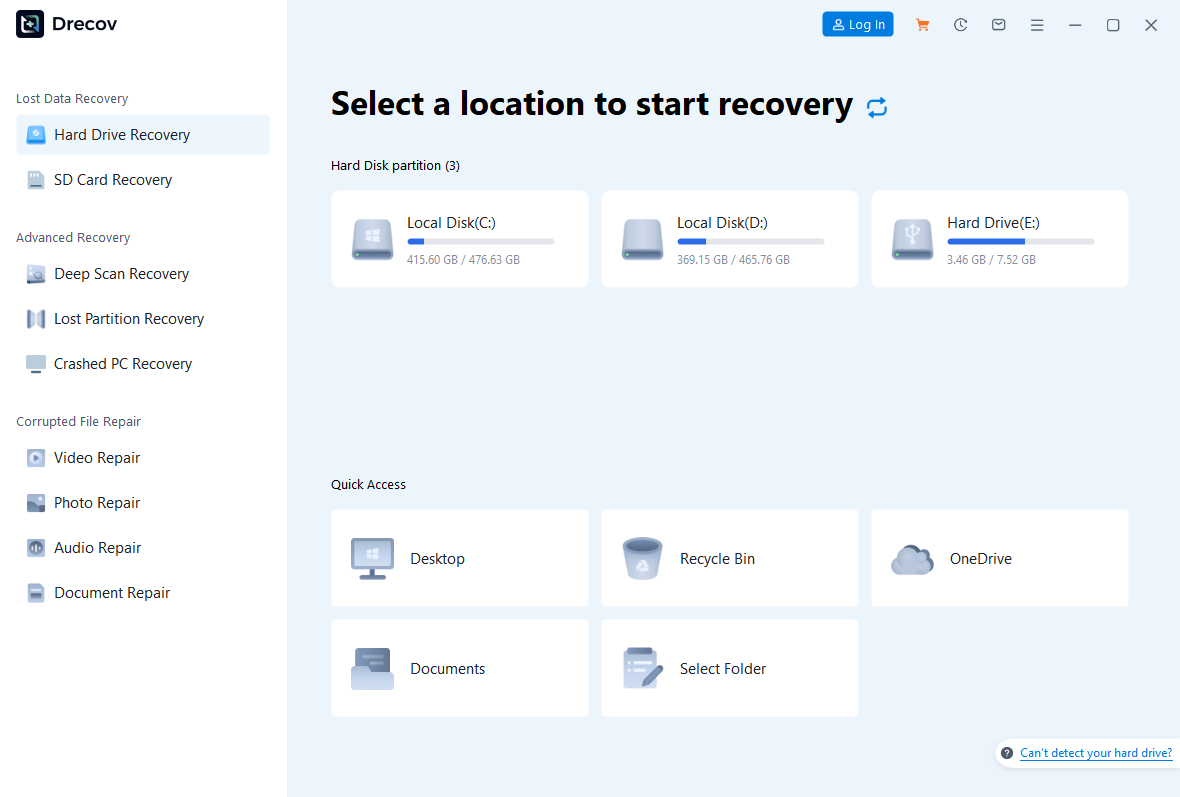
Step 1: Open Drecov and Point It to the Last Known Location
Leave the source unchanged. Confirm that it stays readable; stop on clicks, repeated disconnects, capacity changes, or severe read errors. Connect a separate healthy output drive, keep the software off the source. Open Drecov, and choose the stable volume that contains the inaccessible folder.
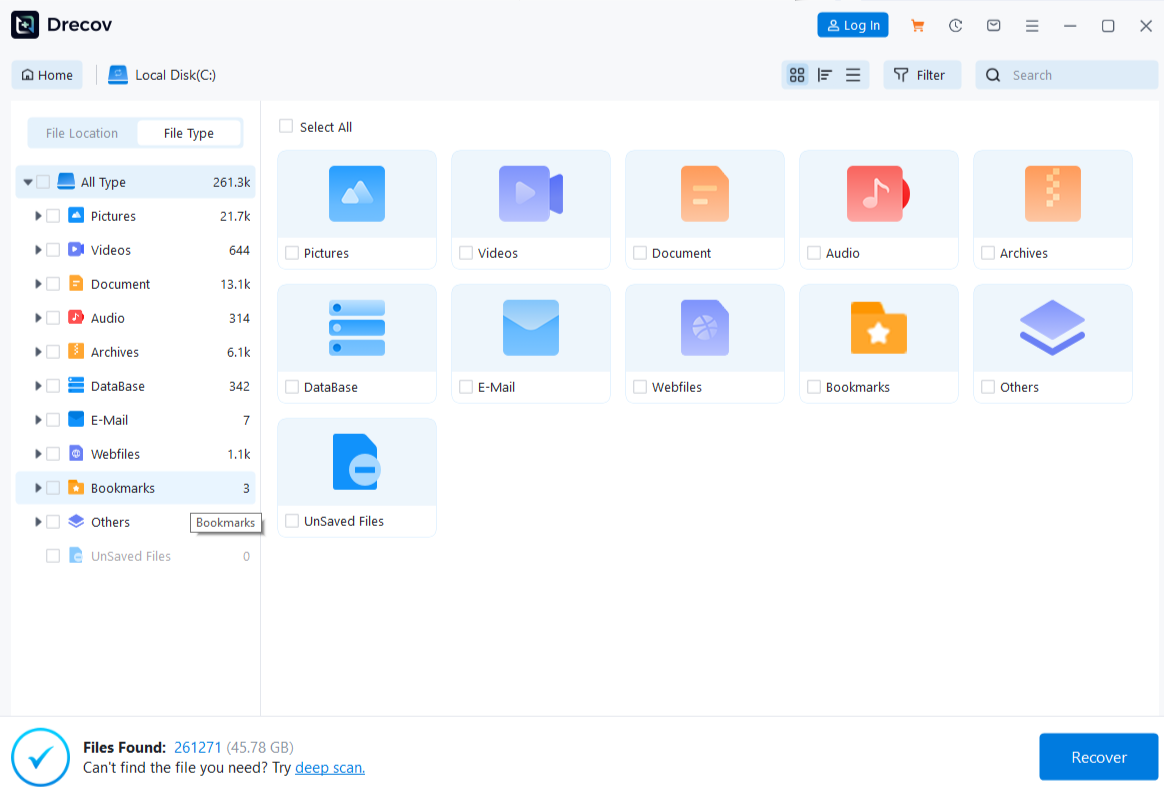
Step 2: Let Quick Scan Reconstruct the Recent View
Begin with Quick Scan. Browse the former directory and compare names, sizes. And dates while looking for files that remain inaccessible after account, key, and permission checks. This focused pass is preferable to an immediate exhaustive scan after a recent loss.
Step 3: Escalate to Deep Scan Only on Reliable Media
Use Deep Scan when the first result set is incomplete and the device remains stable. Older candidates may be organized by type rather than their former folders. End the session if the source becomes unstable and move to an image or specialist workflow.
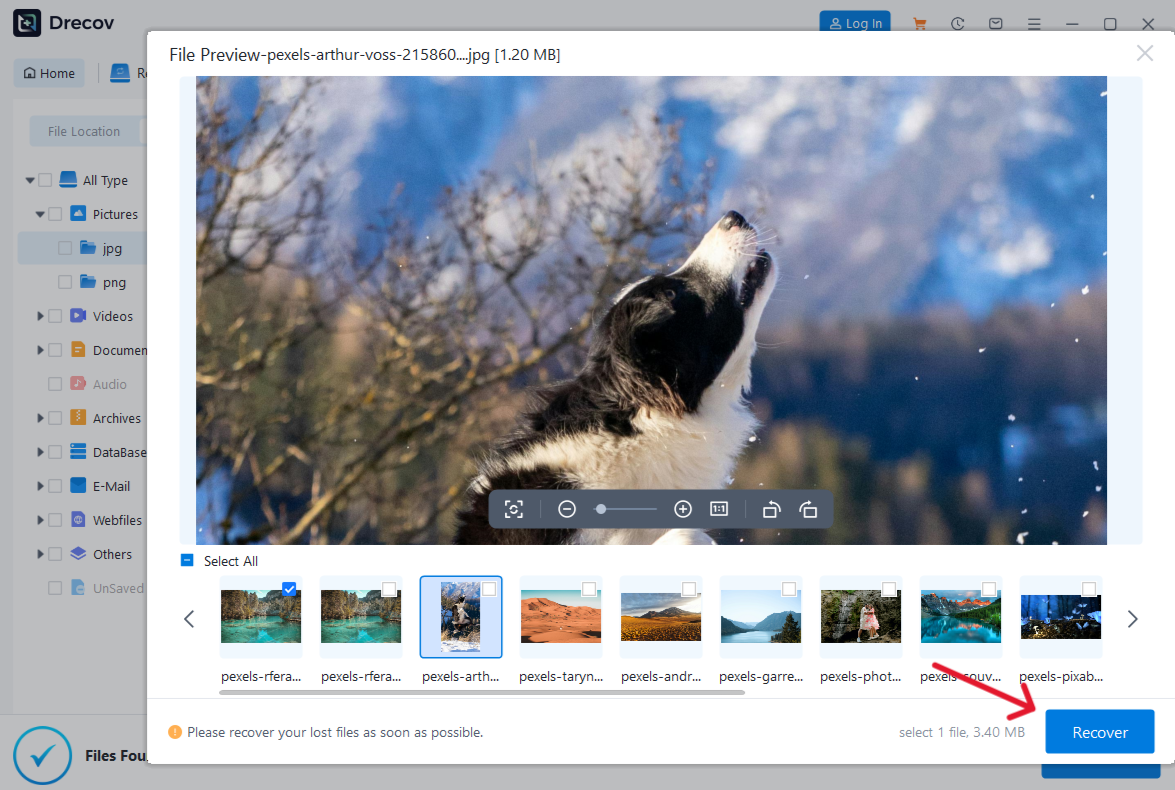
Step 4: Locate Evidence and Preview More Than One File
Apply original folder path, filename, extension, size, and date. Preview a small but representative set and keep differently dated candidates separate. A thumbnail or opening page alone cannot prove an entire file is intact.
Step 5: Send the Recovery Elsewhere, Then Test It
Choose the healthy destination rather than the stable volume that contains the inaccessible folder. If files seem absent afterward, inspect Drecov Folder and Recovery Folder. Finally, open representative files under the correct account and keep the restored copies on a separate healthy drive. Only verified copies justify proceeding with repairs that write to the original storage.
⚠ Warning: Install it on a drive different from the one where your data was lost to prevent overwriting.
Confirm Access Without Weakening the Whole Drive
Test several nested folders and file types using the intended account, then sign out and test again. Check that other users did not gain access unexpectedly. Preserve the permission export until the folder and its applications behave normally.
You don’t have permission to access this folder — For the relevant documented behavior, consult the official technical guidance. Use that source for current interface or command details, and keep the protected original available while testing.
Match the remedy to the type of access control
The same message can describe four different barriers: NTFS permissions, network-share permissions, BitLocker volume locking, or EFS file encryption. Check the folder’s full path and origin before changing ownership. A folder copied from an old PC often retains an unfamiliar security identifier. A workplace share may be governed by a server administrator instead.
For an ordinary personal NTFS folder, test access with the intended Windows account and inspect Properties > Security. Apply ownership changes only to the affected folder, not an entire system drive. If filenames are green or the file properties show EFS encryption, ownership alone will not decrypt them. You need the original encryption certificate.
Confirm success by opening several files and creating a harmless test file only after access is restored. For a read-only archive, copying data out may be safer than rewriting permissions. If files have vanished rather than merely refusing access. Stop writing to that volume and treat the incident as data loss instead of a permissions problem.
Network folders need a separate check. Confirm the server name, share path, VPN state, and both share and NTFS permissions. Cached credentials can make one account appear to have rights that another lacks. Disconnect only the affected mapping, then reconnect with the intended identity. Do not apply local ownership commands to a server share. The final test should include reading an existing file. Saving a new copy, renaming it, and reopening it after signing in again.
Questions Readers Commonly Ask
Will taking ownership delete the files?
Taking ownership does not normally delete content, but a recursive reset changes security metadata and can disrupt inherited rules. Export or record the original permissions first.
Why does an administrator still receive access denied?
Encryption, a locked file, share permissions, policy, or storage errors can block access independently of local administrator membership.
Can recovery software bypass BitLocker or EFS?
No. Legitimate decryption credentials remain necessary. Drecov is not an encryption-bypass tool.
Keep the diagnosis tied to observable evidence
A folder on the current PC, a folder copied from another Windows installation. A network share, and an encrypted external drive use different access controls. Open Properties, note the full path, and check whether the Security tab is present. The error may reflect NTFS permissions, share permissions, User Account Control, application sandboxing, or encryption.
Why one successful test is not enough
Sign in with the account that normally used the folder. If the data came from an older PC. Its security identifier will not match the new account even when the visible username is identical. An administrator can take ownership of ordinary NTFS content. But ownership does not decrypt EFS files and does not replace a BitLocker recovery key.
Preserve the cleanest available version
Before applying takeown or icacls recursively, capture the current owner and access-control entries. Work on a copied folder when possible. Recursive commands can replace carefully inherited permissions across thousands of files, affect application data, and make later auditing difficult.
Use the result to choose the next action
A green filename or an Advanced Attributes entry indicating encryption points toward EFS. BitLocker protects an entire volume and may request its recovery key. Neither protection should be bypassed by formatting, initializing, or deleting the volume. Locate the proper key or certificate instead.
Know when the source needs specialist handling
For an ordinary personal folder whose original owner is unavailable, change ownership only on that folder. Enable inheritance when appropriate, and grant the current account the minimum required rights. Avoid applying Full Control to Everyone. On a managed or workplace device, involve the administrator because policy may intentionally restrict access.
Compare the protected copy with the working result
If the folder opens in another account or from a backup. Copy needed files to a healthy destination before changing the live permission tree. If Windows reports I/O errors, the drive disconnects, or other folders also disappear, stop permission work. The access message may be secondary to storage damage.
Conclusion
When you don’t have permission to access this folder, identify the protection layer before changing it. Preserve existing permissions, encryption keys, and the best copy. Drecov is relevant only when stable local files are actually missing or inaccessible because of logical loss. It cannot bypass encryption or replace authorization.
⚠ Warning: Install it on a drive different from the one where your data was lost to prevent overwriting.





