







For windows re image not found, protect the original data first. If Windows re-image is not found, do not reset or repartition the PC to make the wizard continue. First verify that the backup is a real Windows system image, its WindowsImageBackup folder has not been renamed or nested. And Windows Recovery Environment can see the storage device that contains it.
windows re image not found: safe diagnosis
A system image contains Windows volumes and image metadata intended for bare-metal restoration. A copied Users folder, File History drive, recovery USB, ISO. Or vendor recovery set is useful for other purposes but will not appear as a compatible system image in the re-image wizard.
Inspect the backup disk from another computer without changing its structure. Record the machine-name folder, backup dates, and available capacity. Do not move individual VHD or VHDX files out of their expected hierarchy merely to make them visible.
Check Disk Detection and Folder Placement
Connect the image disk directly rather than through an unreliable hub. In WinRE Command Prompt, use non-modifying disk and directory checks to confirm the expected disk and WindowsImageBackup folder are visible. Drive letters in recovery may differ from normal Windows.
Keep WindowsImageBackup at the root of the selected volume unless Microsoft documentation for that image says otherwise. Remove accidental extra nesting introduced when the backup folder was copied. Preserve an untouched second copy before reorganizing anything.
Supply Storage or Network Access Carefully
If WinRE cannot see the destination disk at all, the environment may lack a storage-controller or USB driver. Obtain the driver from the PC or controller manufacturer and load only the correct signed package. A network image also requires valid credentials and a reachable share.
Compatibility matters. An image created for another firmware mode, disk layout, or machine may not be a safe restoration target. Restoring an image overwrites destination volumes; it is not a browse-and-copy recovery method.
Windows re image not found — Useful related reading includes Windows recovery choices, recover files from an unbootable PC, and diagnose repeated computer crashes.
Recover Missing Local Data Before Repair Changes the Source
When the checks above establish genuine local loss, PandaOffice Drecov provides a read-only Windows recovery path. It supports PCs and common internal or removable storage, plus photos, video, documents, email data, audio, and archives. Quick Scan, Deep Scan, preview, and recovery to a selected healthy destination help retrieve personal documents and profile data needed before re-image, reset, or reinstall operations. Lost Partition Recovery and Crashed PC Recovery cover their named logical-loss situations; neither is a physical repair service.
⚠ Warning: Install it on a drive different from the one where your data was lost to prevent overwriting.
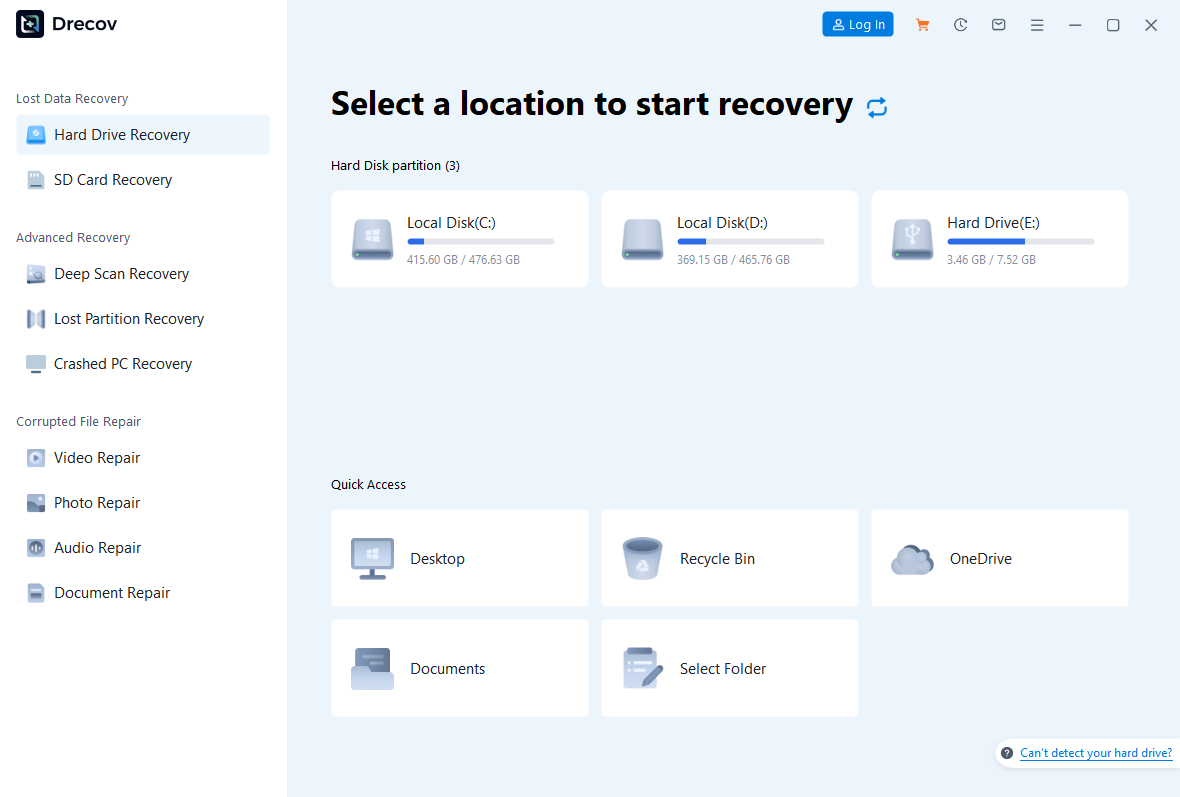
Step 1: Open Drecov and Point It to the Last Known Location
Leave the source unchanged. Confirm that it stays readable; stop on clicks, repeated disconnects, capacity changes, or severe read errors. Connect a separate healthy output drive, keep the software off the source, open Drecov. And choose the current Windows disk when personal files are inaccessible. Or the stable backup disk when individual image contents were deleted.
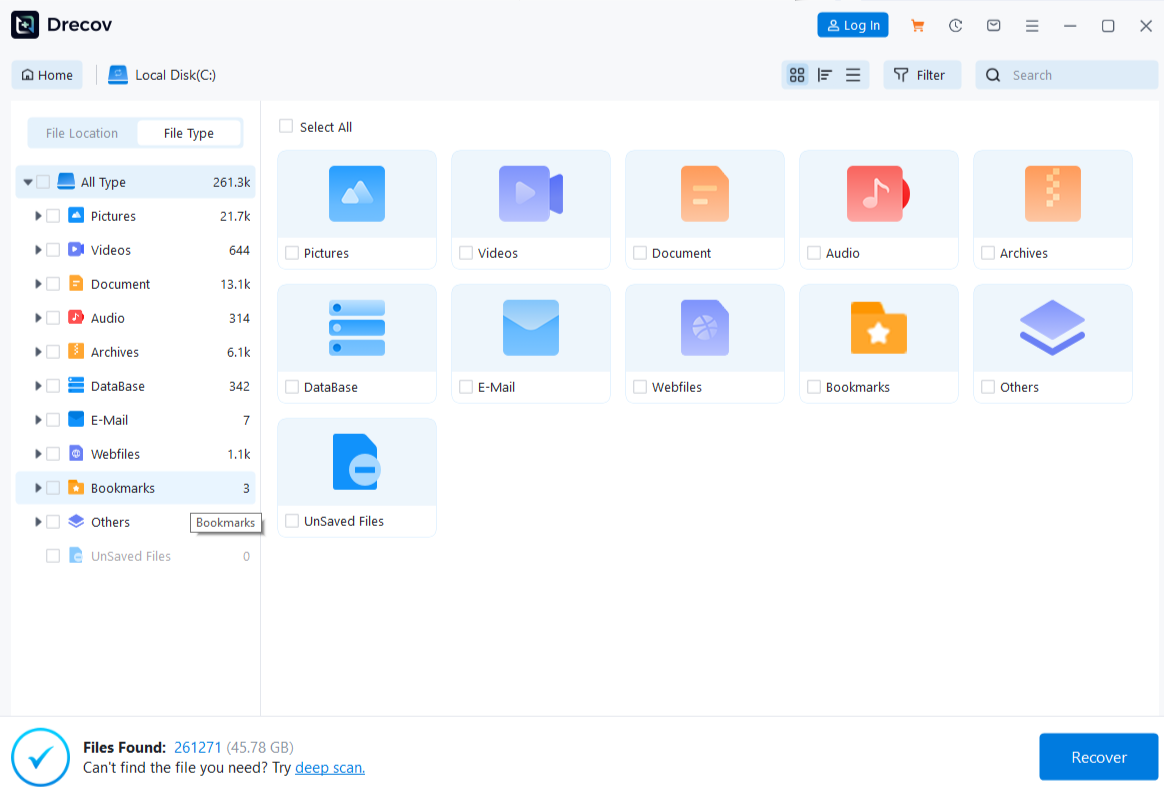
Step 2: Let Quick Scan Reconstruct the Recent View
Begin with Quick Scan. Browse the former directory and compare names, sizes. And dates while looking for personal documents and profile data needed before re-image, reset, or reinstall operations. This focused pass is preferable to an immediate exhaustive scan after a recent loss.
Step 3: Escalate to Deep Scan Only on Reliable Media
Use Deep Scan when the first result set is incomplete and the device remains stable. Older candidates may be organized by type rather than their former folders. End the session if the source becomes unstable and move to an image or specialist workflow.
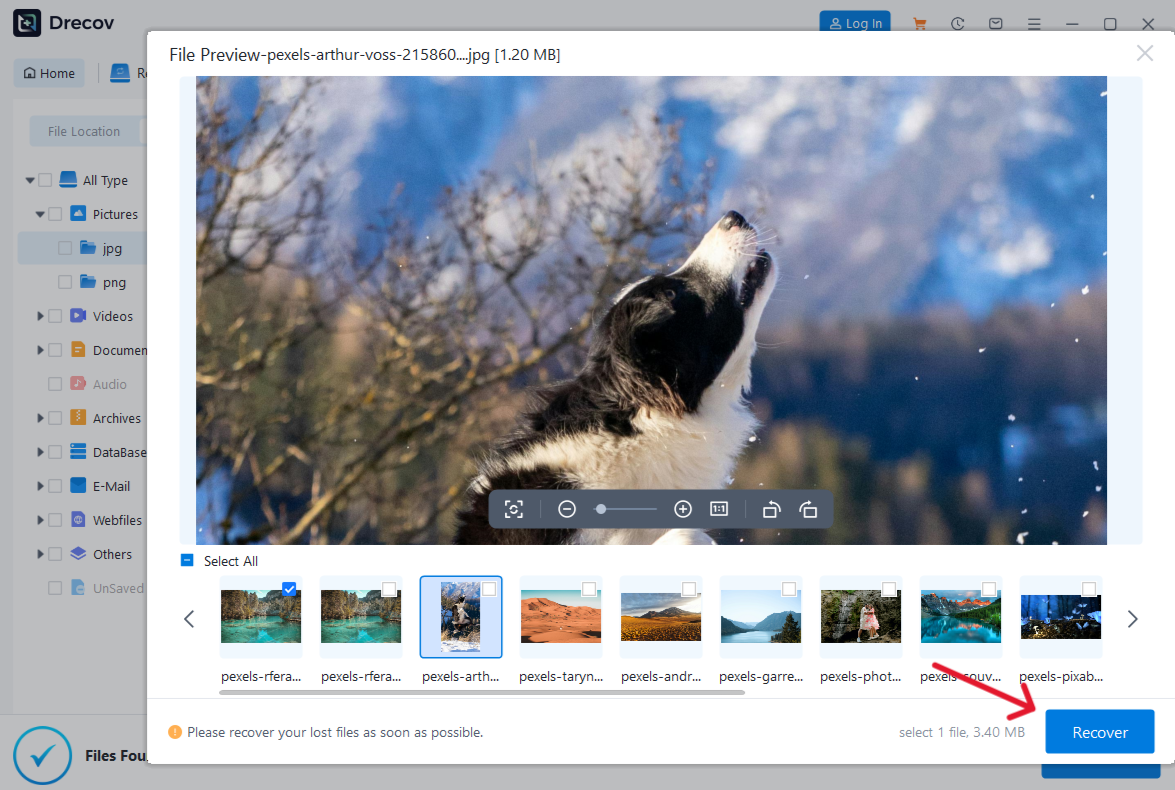
Step 4: Locate Evidence and Preview More Than One File
Apply user profile path, document type, filename, project folder, size, and backup date. Preview a small but representative set and keep differently dated candidates separate. A thumbnail or opening page alone cannot prove an entire file is intact.
Step 5: Send the Recovery Elsewhere, Then Test It
Choose the healthy destination rather than the current Windows disk when personal files are inaccessible. Or the stable backup disk when individual image contents were deleted. If files seem absent afterward, inspect Drecov Folder and Recovery Folder. Finally, open restored files on another healthy device before allowing system image recovery to overwrite the destination disk. Only verified copies justify proceeding with repairs that write to the original storage.
⚠ Warning: Install it on a drive different from the one where your data was lost to prevent overwriting.
Choose File Recovery When Image Restore Is the Wrong Tool
If the image is unavailable but the current disk contains irreplaceable files. Extract or recover them before reset, clean installation, partition changes, or another image attempt. If only a few documents are needed, restore from File History. Cloud versions, or mounted image files rather than overwriting the PC.
Windows re image not found — For the relevant documented behavior, consult the official technical guidance. Use that source for current interface or command details, and keep the protected original available while testing.
Confirm what Windows RE is actually searching for
The Windows RE image not found message usually means recovery configuration does not point to a usable Winre.wim file. Run reagentc /info from an elevated terminal and record the status and location. Do not download an arbitrary Winre.wim or delete recovery partitions while diagnosing a production PC.
Inspect Disk Management and the recorded path together. The recovery partition may exist while its identifier, drive mapping, or reagent configuration is wrong. A customized OEM recovery image is not interchangeable with the standard Windows recovery environment. BitLocker protection and current recovery keys should be documented before partition changes.
After data is protected and the correct image is confirmed, use supported reagent configuration steps and recheck reagentc /info. Then enter Advanced startup once and verify that troubleshooting tools load. Merely receiving a successful command response does not prove the recovery environment can boot.
When the recovery image lives on external storage, connect it directly rather than through an unreliable hub. Confirm that the disk is unlocked and that its file system can be read in the recovery environment. Drive letters commonly change there, so identify volumes by label and size. If a system-image restore is planned, remember that it can replace current partitions and newer files. Copy post-backup work elsewhere and verify the image date before approving the restore destination.
Questions Readers Commonly Ask
Why are drive letters different in WinRE?
Recovery Environment assigns letters independently. Identify disks by label, capacity, and folder contents rather than assuming C: is Windows.
Can a normal folder backup appear in Re-image your computer?
No. The wizard expects compatible system-image metadata and structure.
Does restoring a system image keep newer files?
Normally it replaces the restored volumes with the image state. Copy newer personal data elsewhere first.
Keep the diagnosis tied to observable evidence
A system image contains Windows volumes and image metadata intended for bare-metal restoration. A copied Users folder, File History drive, recovery USB, ISO. Or vendor recovery set is useful for other purposes but will not appear as a compatible system image in the re-image wizard.
Why one successful test is not enough
Inspect the backup disk from another computer without changing its structure. Record the machine-name folder, backup dates, and available capacity. Do not move individual VHD or VHDX files out of their expected hierarchy merely to make them visible.
Preserve the cleanest available version
Connect the image disk directly rather than through an unreliable hub. In WinRE Command Prompt, use non-modifying disk and directory checks to confirm the expected disk and WindowsImageBackup folder are visible. Drive letters in recovery may differ from normal Windows.
Use the result to choose the next action
Keep WindowsImageBackup at the root of the selected volume unless Microsoft documentation for that image says otherwise. Remove accidental extra nesting introduced when the backup folder was copied. Preserve an untouched second copy before reorganizing anything.
Know when the source needs specialist handling
If WinRE cannot see the destination disk at all, the environment may lack a storage-controller or USB driver. Obtain the driver from the PC or controller manufacturer and load only the correct signed package. A network image also requires valid credentials and a reachable share.
Compare the protected copy with the working result
Compatibility matters. An image created for another firmware mode, disk layout, or machine may not be a safe restoration target. Restoring an image overwrites destination volumes; it is not a browse-and-copy recovery method.
Document the point at which the symptom changed
If the image is unavailable but the current disk contains irreplaceable files. Extract or recover them before reset, clean installation, partition changes, or another image attempt. If only a few documents are needed, restore from File History. Cloud versions, or mounted image files rather than overwriting the PC.
Conclusion
When Windows RE image was not found, verify the configured path, image file, and recovery partition before rebuilding anything. Protect personal data first. If a stable readable disk has lost files or a recovery partition was deleted. Drecov can recover selected data or search a lost partition before layout changes.
⚠ Warning: Install it on a drive different from the one where your data was lost to prevent overwriting.





