







Stop error 0x0000007B means Windows lost access to the device that contains the system volume during startup. Do not begin with CHKDSK, formatting, controller-mode changes, or reinstallation. First confirm whether firmware still detects the correct disk at the correct capacity. Then protect important files if Windows remains inaccessible.
stop error 0x0000007b: safe diagnosis
The 0x0000007B stop is commonly associated with an inaccessible boot device, but the message does not identify one universal cause. A storage-controller mode changed in firmware, a missing boot-critical driver, damaged boot metadata. A cloned installation, or a failing drive can all interrupt access at roughly the same point. Recent changes are therefore more useful than a random repair list.
Write down what happened immediately before the first failure. A BIOS or UEFI update, migration from SATA to NVMe, disk cloning. Storage-driver removal, motherboard replacement, or switch between AHCI and RAID narrows the investigation. If nothing changed and the disk now disappears or reports the wrong capacity, treat hardware stability as the leading concern.
Separate a Boot Configuration Fault from an Unstable Disk
Open firmware setup and look only; do not initialize or alter the disk. A consistently detected drive with the expected model and capacity supports a logical boot-path problem. A drive that vanishes, changes size, clicks, or produces repeated read errors is unsafe for repeated startup and scanning attempts.
Disconnect nonessential external storage so firmware cannot select the wrong device. Keep the intended Windows disk connected. If Windows Boot Manager remains listed but startup fails, the controller, driver, BCD, or system volume may need attention. If Windows Boot Manager disappears along with the disk, investigate the connection and device before rebuilding boot files.
Choose the Least Destructive Windows Repair
If the error began immediately after a controller-mode change. Returning to the documented previous mode may restore the same driver path. Do not cycle blindly through AHCI, RAID, and IDE settings. Record the original value and change it only when the history supports that action.
When the disk is stable and data is safe. Windows Recovery Environment can test Startup Repair or provide Command Prompt access for evidence-led BCD work. Bootrec and bcdboot modify boot configuration. They should follow recovery, not substitute for it. A clean installation or partition recreation is the final path because it can overwrite recoverable data.
Stop error 0x0000007b — Useful related reading includes Windows recovery choices, recover files from an unbootable PC, and diagnose repeated computer crashes.
Recover Missing Local Data Before Repair Changes the Source
PandaOffice Drecov is Windows data recovery software for PCs, HDDs, SSDs, external drives, USB drives, SD cards, and memory cards. It works in read-only recovery mode and can locate photos, videos, documents, emails, audio, and archives. In this case, its role is to retrieve documents and profile files from the inaccessible Windows installation; it does not repair hardware, decrypt protected data, remove malware, or reconstruct overwritten bytes.
⚠ Warning: Install it on a drive different from the one where your data was lost to prevent overwriting.
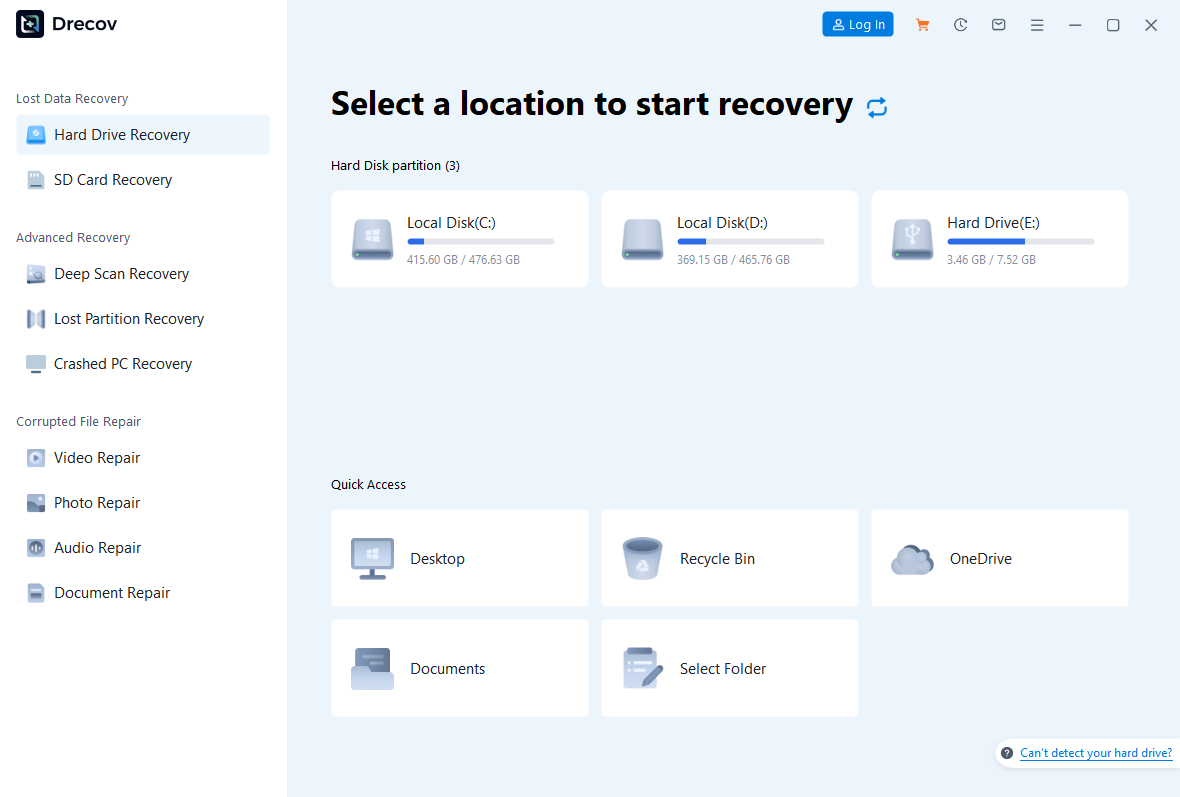
Step 1: Open Drecov and Select the Original Source
Stop new writes and assess stability. If the device clicks, drops offline, changes capacity, or reports severe read errors. Stop direct scanning and seek imaging or professional recovery. Prepare another healthy destination and do not install Drecov on the source. Open Drecov, then select the Windows system disk or Crashed PC Recovery mode.
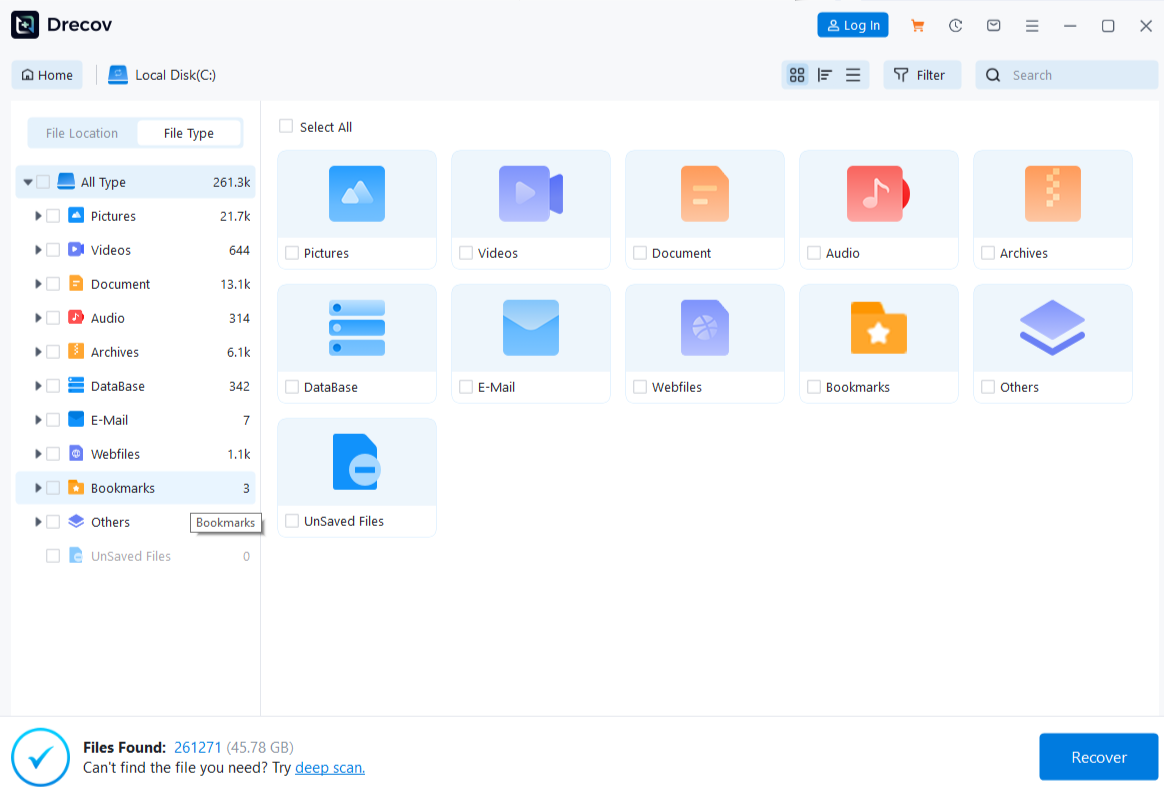
Step 2: Run Quick Scan Before a Broader Search
Start Quick Scan and examine the original path first. Look for documents and profile files from the inaccessible Windows installation. Compare available names, dates, sizes, and folders with the evidence gathered earlier.
Step 3: Use Deep Scan Only While the Source Is Stable
If Quick Scan misses the needed files and the source remains stable, run Deep Scan. It can find older signatures whose original paths may be missing. Stop if new instability appears; no scan can reconstruct overwritten data.
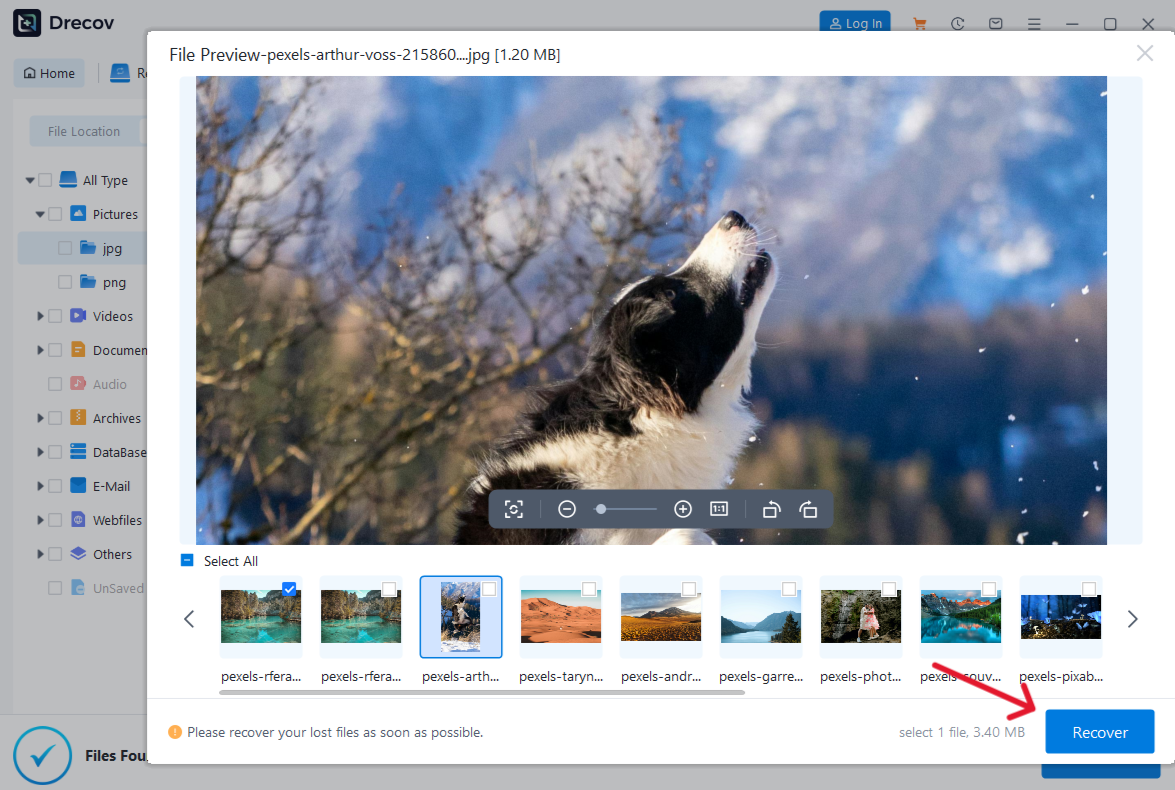
Step 4: Filter and Preview the Most Plausible Candidates
Narrow results using former user path, document type, filename, size, and modification date. Preview several representative supported files. One successful preview supports that sample, not every page, frame, archive member, formula, or linked asset.
Step 5: Recover to Another Device and Verify
Restore selected files to the prepared healthy destination, never to the source. Check Drecov Folder or Recovery Folder if output is not where expected. Then open documents, photos, archives, and project files from the healthy destination before editing boot metadata. Complete that verification before CHKDSK, formatting, reset, partition work, reinstallation, or other source changes.
⚠ Warning: Install it on a drive different from the one where your data was lost to prevent overwriting.
Verify the Storage Path After Windows Starts
A successful boot is not enough. Review Device Manager for the storage controller actually in use. Inspect the system log for disk or controller errors, and restart twice. Open representative documents and copy a test file to another drive. If errors recur, keep the recovered copy and investigate the disk rather than trusting a temporary boot.
Stop error 0x0000007b — For the relevant documented behavior, consult the official technical guidance. Use that source for current interface or command details, and keep the protected original available while testing.
Use the boot timeline to isolate the failing layer
A 0x0000007B stop before the Windows logo usually points toward storage access during early boot. Note whether the failure began after changing SATA mode, cloning a disk. Restoring an image, moving Windows to another controller, or installing a storage driver. That timeline is more useful than trying unrelated blue-screen commands.
If firmware sees the correct system disk at its normal capacity, compare the current AHCI. RAID, or IDE setting with the setting used when Windows last booted. Do not initialize, clean, or repartition the disk merely because recovery media labels it differently. When BitLocker is enabled, have the recovery key available before changing boot settings.
A useful verification is repeatable: record the firmware storage mode and boot entry. Make one reversible correction, then attempt one boot. If the disk disappears, reports the wrong capacity, clicks, or repeatedly disconnects, stop. That pattern suggests a device or connection problem that software repair should not intensify.
For restored or cloned systems, compare the source and destination partition style, boot mode, and storage driver. UEFI normally expects a compatible EFI boot path, while legacy configurations depend on different boot metadata. Use bcdedit and Disk Management only after files are safe. Photograph the original layout before changing it. A lasting fix should survive a cold start as well as a restart. With the correct disk remaining first in firmware and no new storage warnings appearing in Event Viewer.
Questions Readers Commonly Ask
Does 0x0000007B always mean the disk is dead?
No. It can follow a controller-mode or boot-driver mismatch. Firmware detection, capacity, read stability, and recent changes distinguish configuration trouble from physical failure.
Should I run CHKDSK from recovery media?
Not before important data is protected. CHKDSK changes file-system structures and may complicate recovery when storage is unstable or corruption is extensive.
Can Drecov repair the 0x0000007B boot error?
Drecov recovers accessible data from stable logical-loss situations; it does not repair a controller, boot driver, or physically failing disk.
Keep the diagnosis tied to observable evidence
The 0x0000007B stop is commonly associated with an inaccessible boot device, but the message does not identify one universal cause. A storage-controller mode changed in firmware, a missing boot-critical driver, damaged boot metadata. A cloned installation, or a failing drive can all interrupt access at roughly the same point. Recent changes are therefore more useful than a random repair list.
Why one successful test is not enough
Write down what happened immediately before the first failure. A BIOS or UEFI update, migration from SATA to NVMe, disk cloning. Storage-driver removal, motherboard replacement, or switch between AHCI and RAID narrows the investigation. If nothing changed and the disk now disappears or reports the wrong capacity, treat hardware stability as the leading concern.
Preserve the cleanest available version
Open firmware setup and look only; do not initialize or alter the disk. A consistently detected drive with the expected model and capacity supports a logical boot-path problem. A drive that vanishes, changes size, clicks, or produces repeated read errors is unsafe for repeated startup and scanning attempts.
Use the result to choose the next action
Disconnect nonessential external storage so firmware cannot select the wrong device. Keep the intended Windows disk connected. If Windows Boot Manager remains listed but startup fails, the controller, driver, BCD, or system volume may need attention. If Windows Boot Manager disappears along with the disk, investigate the connection and device before rebuilding boot files.
Know when the source needs specialist handling
If the error began immediately after a controller-mode change. Returning to the documented previous mode may restore the same driver path. Do not cycle blindly through AHCI, RAID, and IDE settings. Record the original value and change it only when the history supports that action.
Compare the protected copy with the working result
When the disk is stable and data is safe. Windows Recovery Environment can test Startup Repair or provide Command Prompt access for evidence-led BCD work. Bootrec and bcdboot modify boot configuration. They should follow recovery, not substitute for it. A clean installation or partition recreation is the final path because it can overwrite recoverable data.
Conclusion
Stop error 0x0000007B is best solved by identifying why Windows lost access to its boot volume. Protect important files first, then correct the confirmed controller, driver, BCD, or disk-layout cause. If a stable readable disk contains missing data. Drecov can recover selected files to another healthy drive before boot repair continues.
⚠ Warning: Install it on a drive different from the one where your data was lost to prevent overwriting.





