







When a Windows profile is corrupted, protect the old user folder and anything created during a temporary session before editing accounts or the registry. Restart once, then check which profile Windows loaded. If the original folder still exists under C:\Users, copy personal files to another healthy location before rebuilding the account. Do not delete the old profile until documents, Desktop items, browser data, email stores, and application-specific files have been verified.
Identify the Account State Before Calling It Corruption
A blank desktop does not always mean files were erased. Windows may have signed you into a temporary profile, loaded a different account, failed to start Explorer, or reset a synchronization view. Open Settings > Accounts and note the signed-in identity. In Command Prompt, whoami identifies the current account, while echo %USERPROFILE% shows the active profile path.
| What you observe | Likely state | Immediate priority |
|---|---|---|
| Notification says temporary profile | Windows did not load the normal profile | Save work created in this session before signing out |
| Old folder exists, but settings are new | Wrong or newly generated profile path | Back up the old folder and compare account identity |
| Another administrator works normally | Damage may be limited to one profile | Create a clean profile and migrate carefully |
| Every account fails or the disk has errors | System-wide or storage problem | Protect data before system repair |
| Files are missing from both old and new folders | Deletion, sync, relocation, or filesystem loss | Check backups, then recover from the original location |
Record the old and current profile paths, the time of the first failure, recent updates, free disk space, and any sign-in error. These details separate a local account problem from Microsoft-account authentication, domain policy, or storage trouble.
Preserve Work From the Temporary Session
Microsoft warns that files created or changed in a temporary profile can be lost when you sign out. Save current work to an external drive, approved cloud location, or another healthy partition immediately. Confirm that copied files open from the destination. Screenshots of settings are useful, but they do not replace actual documents.
Do not continue customizing the temporary desktop. Avoid installing programs, moving the old user folder, running cleanup utilities, or accepting a Windows reset. These actions generate writes and make later comparison harder.
Check the old profile without merging it
From another administrator account, browse to C:\Users. Locate the old folder by name, contents, and timestamps. Copy Documents, Desktop, Pictures, Videos, Downloads, and other known data to a separate backup. Do not drag the whole profile directly onto a new account because hidden settings, stale databases, and permissions can carry the problem forward.
For a small number of accidentally removed files, check Recycle Bin and the recently deleted file options before scanning storage.
Rule Out a Disk or System-Wide Failure
Inspect the Windows volume’s free space and health indicators. A nearly full system drive can prevent profile services from creating or updating files. Repeated I/O errors, long stalls, SMART warnings, or unexpected disconnects raise a storage concern. Back up or recover data before CHKDSK or intensive servicing.
Compare another account
Sign in to an existing administrator account, or create a temporary test administrator if authorized. If Settings, Explorer, Start, and applications behave normally there, the issue likely follows the original profile. If every account is broken, examine Windows components, security software, disk health, and recent system changes instead of migrating users repeatedly.
Use Safe Mode as a controlled comparison
Safe Mode can reveal whether third-party startup software interferes with profile loading. Save all temporary-profile work first. If the original account loads in Safe Mode, perform a clean-boot investigation rather than deleting the account. Change one startup component at a time and keep a reversal path.
Do not start with ProfileList registry edits
Online fixes often propose renaming profile registry keys or removing a .bak suffix. That advice assumes a very specific state and can attach an account to the wrong folder when applied blindly. Exporting a registry key is not a complete backup of the user’s files. Prefer Microsoft’s clean-account migration path unless a qualified administrator has matched the Security Identifier, folder path, profile state, and event logs.
Likewise, avoid broad permission resets on C:\Users. They can expose private files or disrupt application data. If access is denied, verify the account, encryption state, and ownership of the particular folder. Apply the smallest supported permission correction after a backup.
Create a Clean Profile and Migrate Personal Data
Microsoft’s official corrupted user profile instructions recommend adding a new user account, configuring it as an administrator, signing in to initialize it, and then copying files from the old user folder. This is safer than treating registry edits as a universal fix.
Initialize the new account first
Create the account through Settings > Accounts using the organization’s required account type. Sign in once, allow Windows to build its folders, sign out, and return through a separate administrator account for migration. Keep the old account intact during testing.
Copy data by category
Move ordinary user data in groups and verify each group. Documents and media are straightforward. Browser profiles, Outlook data, game saves, encryption certificates, development keys, and application databases need application-specific export or import procedures. Copying registry hives such as NTUSER.DAT can recreate the corruption and should not be part of a normal migration.
Use Copy, not Move. Maintain an untouched backup until the new account survives several restarts. Check file ownership and access through supported Windows tools rather than taking broad ownership of the entire system drive.
Reconnect accounts and applications deliberately
Sign in to Microsoft Store, OneDrive, browsers, mail, and business applications only after local files are safe. Confirm the correct cloud account before enabling synchronization; an empty or wrong account view can look like more data loss. Some applications require reconfiguration or reinstallation.
Recover Missing Profile Files With Drecov
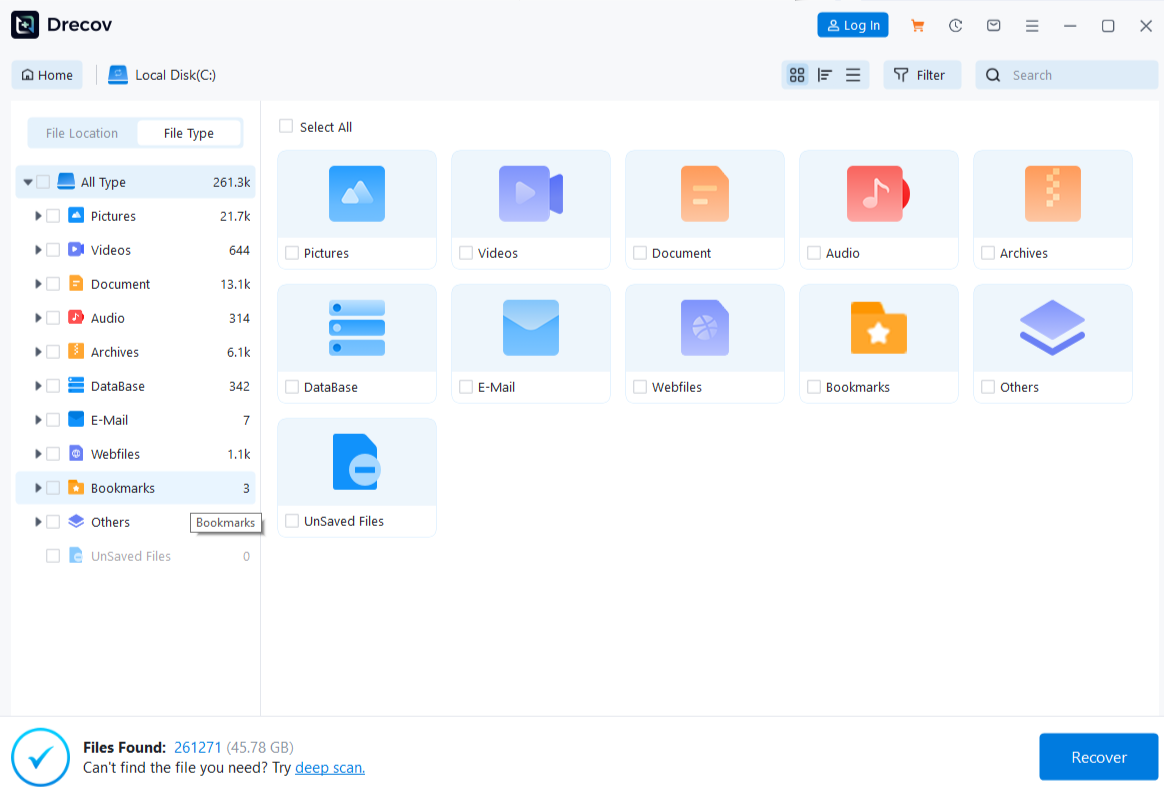
Drecov is a Windows recovery application for files formerly stored on a PC, HDD, SSD, portable disk, USB device, SD card, or memory card. It searches document content, photographs, video, email stores, recordings, and archives. Recovery begins with a quick read-only scan; a deeper pass is available for stable sources. Filters and previews help assess candidates before they are written to other healthy storage. Lost Partition Recovery supports a dependable disk whose previous partition is no longer accessible.
⚠ Warning: Install it on a drive different from the one where your data was lost to prevent overwriting.
Use Drecov when files were deleted, the old profile folder is incomplete, or local data became inaccessible on stable storage. It does not repair Windows account authentication, profile-service configuration, permissions, malware, or physical disk failure. An unstable system disk should not endure repeated scans; arrange a controlled image or specialist recovery assessment.
Step 1: Open Drecov and select the original profile location
Launch PandaOffice Drecov from healthy storage, or attach the stable source to another supported Windows PC. Do not install the software on the partition that held the lost profile files. Prepare a separate healthy destination and select the original Windows volume.

Step 2: Run Quick Scan and inspect former user folders
Begin with Quick Scan. Look under the former Users\account paths and relevant file categories. Compare filenames, dates, sizes, and nearby folder context. Keep plausible alternatives because deleted directory records may no longer preserve every original name.
Step 3: Use Deep Scan only on stable storage
If Quick Scan misses the target and the source remains responsive at the correct capacity, continue with Deep Scan. Stop if the disk disconnects, slows severely, becomes hot, changes capacity, or returns escalating read errors.
Step 4: Filter and preview representative candidates
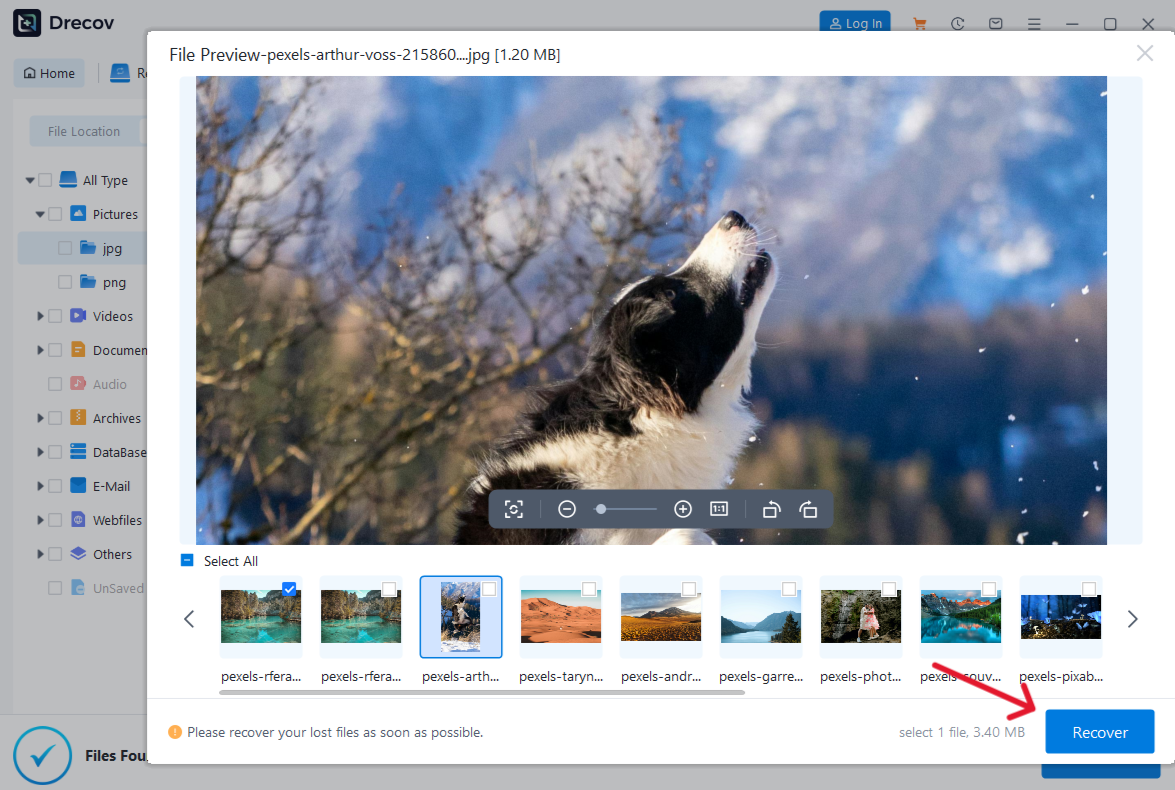
Filter by file type, former path, name, size, or date. Preview several supported candidates. A successful preview supports the displayed sample’s readability; it cannot certify every workbook sheet, document object, media frame, archive member, or application database.
Step 5: Recover elsewhere and validate before cleanup
Recover selected files to the prepared healthy disk, never back to the source. When the selected path seems empty, browse both Recovery Folder and Drecov Folder on that target. Open a varied sample, compare recent contents, and import specialized data through its application. Only after verification should you delete an old profile, reset Windows, run CHKDSK, format, or reinstall. The recovered-file verification method can help when an original checksum exists.
Verify the New Profile Before Retiring the Old One
Restart at least twice and sign in to the new account. Check Desktop, Documents, Pictures, Downloads, email, browser data, application settings, printers, network shares, and cloud sync. Open representative files rather than relying on folder counts.
Keep the old account and backup until normal work has continued without missing data. When retirement is approved, remove the account through Windows settings only after confirming what “Account and data” will delete. A system restore point is not a substitute for a user-file backup; understand what System Restore changes before using it.
Conclusion
A corrupted Windows profile is best handled as an identity-and-data migration problem. First preserve temporary-session work and the old user folder. Confirm whether the fault affects one account or the whole system, then create a clean profile and copy verified personal data by category. If local files are genuinely missing from stable storage, Drecov can scan, preview, and recover available items to another healthy location before the damaged account is removed.
⚠ Warning: Install it on a drive different from the one where your data was lost to prevent overwriting.





