







A useful JPEG repair toolkit starts with diagnosis, not a repair button. A deleted photograph, a zero-byte file, a valid image with wrong colors, and a half-gray JPEG require different treatment. Preserve the original and its storage source, then choose a tool that addresses the failure you can actually observe.
jpeg repair toolkit: safe diagnosis
Check size, dimensions, thumbnail behavior, and whether more than one viewer fails. A normal thumbnail with an opening error may point to damaged full-resolution data. Zero-byte files contain no image payload. A picture that stops at the same horizontal line in every viewer is often truncated rather than merely unsupported.
Confirm the extension with a signature-aware identifier. Renaming a non-JPEG file to .jpg does not convert it. Compare another photo from the same camera or application; matching metadata. Dimensions, and encoding provide a useful reference for specialized repair.
Match the Tool Category to the Job
Use a second trusted viewer or decoder for compatibility checks. Use the creating application or camera software when proprietary metadata matters. A format-aware JPEG repair utility may rebuild headers or extract decodable image data from a damaged copy. But it cannot invent blocks that were never written.
Drecov belongs to the recovery category rather than the pixel-repair category. It is relevant when the healthy original was deleted. A card was formatted, or the current JPEG is an incomplete copy. Recovering an earlier intact file is often preferable to repairing the only damaged derivative.
⚠ Warning: Install it on a drive different from the one where your data was lost to prevent overwriting.
Evaluate Repair Utilities Without Invented Scores
Favor tools that preserve the input, state whether they need a reference photo. Show a preview, and save to a different destination. Avoid claims of guaranteed repair. Privacy matters when an online service requires uploading family, medical, legal, or client images.
For batches from a camera card, do not repair files directly on the card. Copy or image stable media, keep the directory structure, and test two representative photos first. If the card disconnects or reports severe read errors, stop DIY access and seek professional imaging.
Jpeg repair toolkit — Useful related reading includes repair corrupted image files, recover deleted photos, and choose an image file format.
Recover Missing Local Data Before Repair Changes the Source
PandaOffice Drecov is Windows data recovery software for PCs, HDDs, SSDs, external drives, USB drives, SD cards, and memory cards. It works in read-only recovery mode and can locate photos, videos, documents, emails, audio, and archives. In this case, its role is to retrieve deleted or earlier intact photos rather than the repeatedly repaired derivative; it does not repair hardware, decrypt protected data, remove malware, or reconstruct overwritten bytes.
⚠ Warning: Install it on a drive different from the one where your data was lost to prevent overwriting.
Step 1: Open Drecov and Select the Original Source
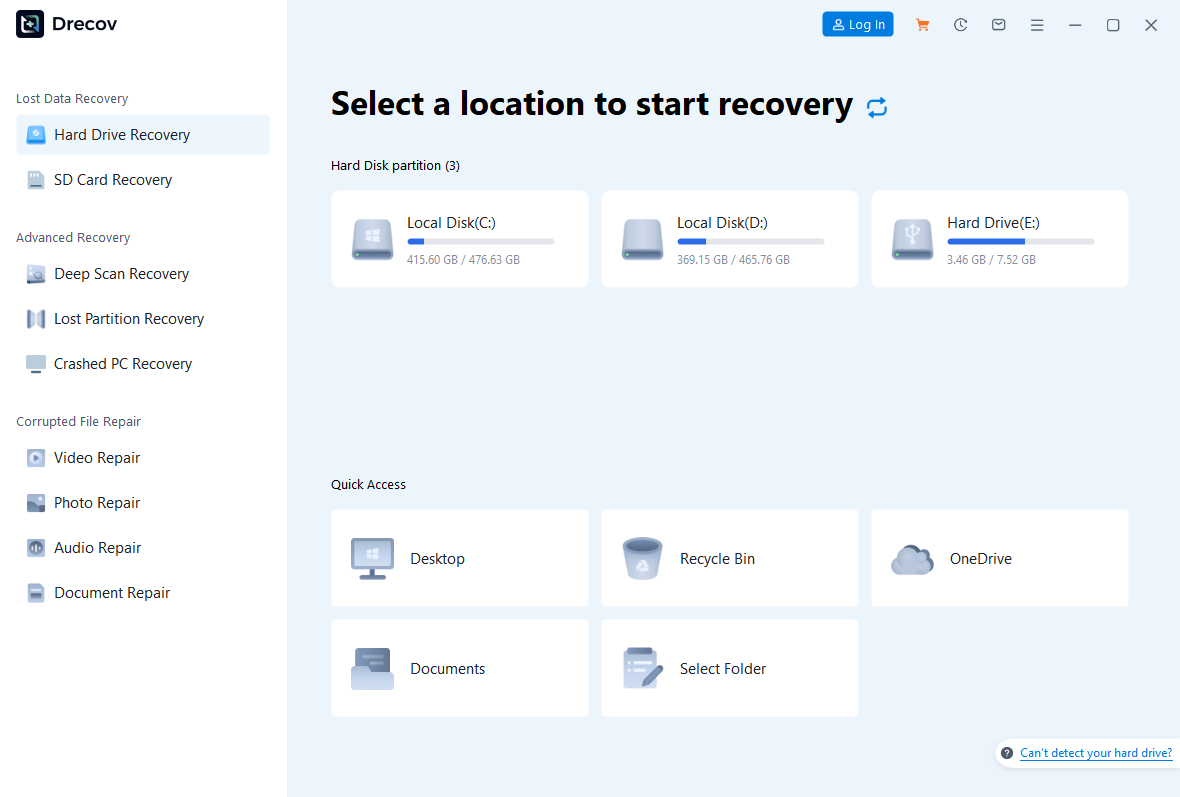
Stop new writes and assess stability. If the device clicks, drops offline, changes capacity, or reports severe read errors. Stop direct scanning and seek imaging or professional recovery. Prepare another healthy destination and do not install Drecov on the source. Open Drecov, then select the stable camera card, phone storage export, or drive that held the original JPEGs.
Step 2: Run Quick Scan Before a Broader Search
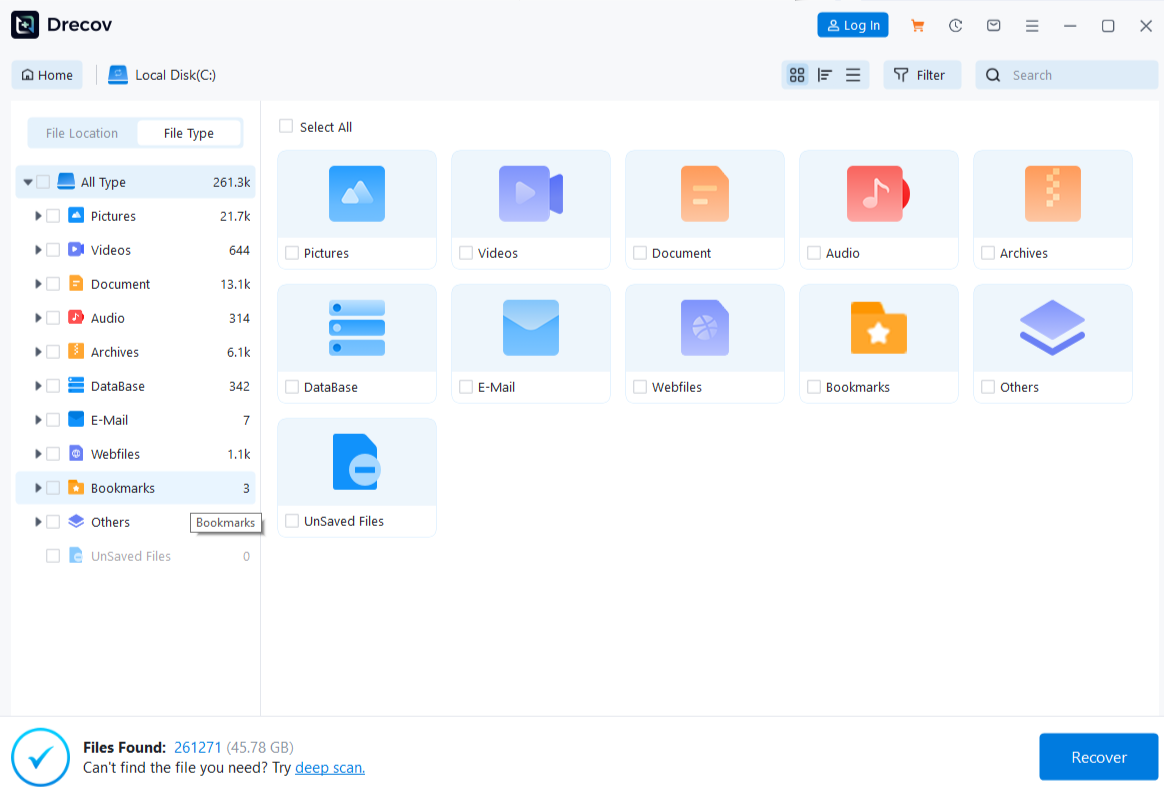
Start Quick Scan and examine the original path first. Look for deleted or earlier intact photos rather than the repeatedly repaired derivative. Compare available names, dates, sizes, and folders with the evidence gathered earlier.
Step 3: Use Deep Scan Only While the Source Is Stable
If Quick Scan misses the needed files and the source remains stable, run Deep Scan. It can find older signatures whose original paths may be missing. Stop if new instability appears; no scan can reconstruct overwritten data.
Step 4: Filter and Preview the Most Plausible Candidates
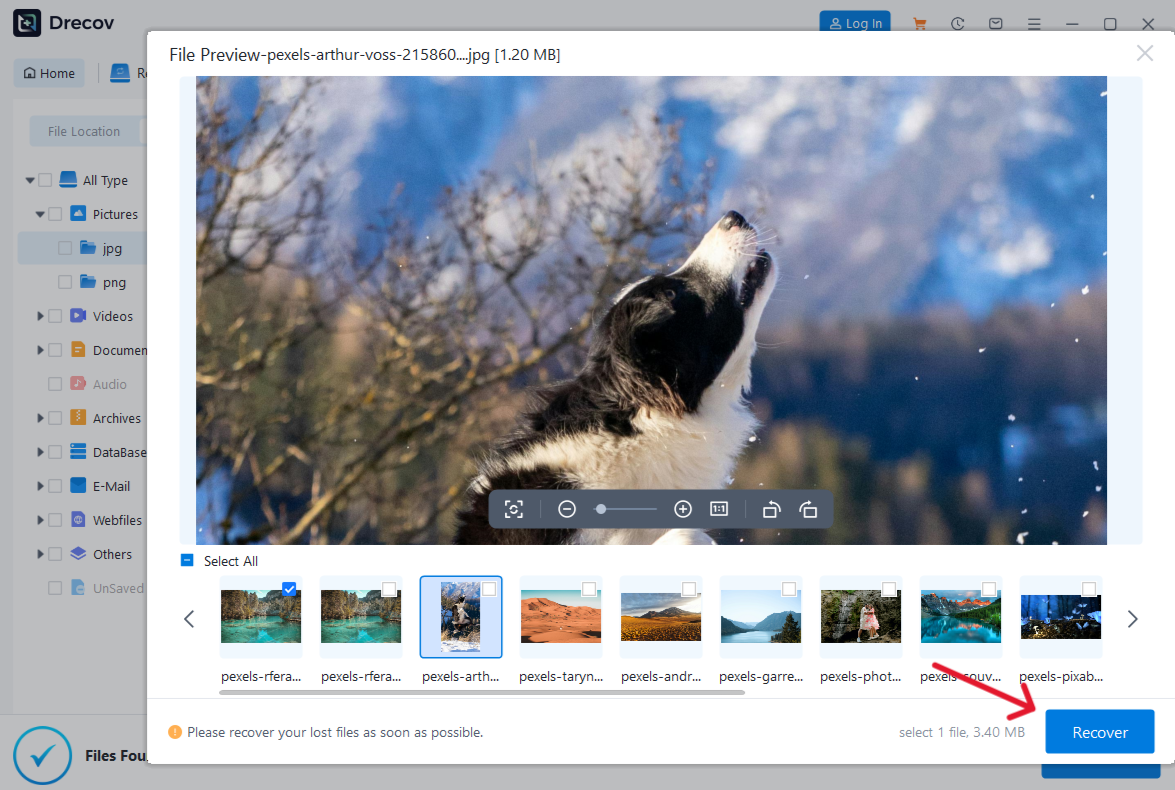
Narrow results using JPEG or photo type, capture date, camera folder, dimensions, filename, and size. Preview several representative supported files. One successful preview supports that sample, not every page, frame, archive member, formula, or linked asset.
Step 5: Recover to Another Device and Verify
Restore selected files to the prepared healthy destination, never to the source. Check Drecov Folder or Recovery Folder if output is not where expected. Then preview candidates, then inspect the full image at 100 percent after recovery to another healthy device. Complete that verification before CHKDSK, formatting, reset, partition work, reinstallation, or other source changes.
⚠ Warning: Install it on a drive different from the one where your data was lost to prevent overwriting.
Judge the Result at Full Resolution
A thumbnail is insufficient. Inspect edges, text, faces, gradients, and the lower portion of the frame at 100 percent. Verify dimensions, metadata that matters, and export behavior. Keep the original, repaired output, and recovered candidate as separate files.
Jpeg repair toolkit — For the relevant documented behavior, consult the official technical guidance. Use that source for current interface or command details, and keep the protected original available while testing.
Before choosing a JPEG repair toolkit, preserve the original photos and note their source. A camera card with read errors needs different handling from files damaged during editing or transfer. Work on copies. If the storage device disconnects, slows dramatically, or reports I/O errors. Stop repeated scanning and consider an image or professional recovery.
A useful toolkit should retain the source, write a separate output. Explain whether it uses a reference image, and allow visual inspection before saving. Reference photos should come from the same camera and settings where requested. Avoid claims of universal repair: missing compressed image data cannot always be recreated faithfully.
Inspect the full-resolution result at several zoom levels. Look for color blocks, shifted rows, truncated lower regions, incorrect orientation. EXIF loss, and thumbnails that look healthy while the main image remains damaged. Compare multiple repaired outputs with the untouched original and keep the least altered usable version.
The source of damage should guide the choice between recovery and repair. A deleted photograph may be recovered intact; a present JPEG with a broken header may need structural repair. A truncated image may contain only part of the scene. Test the embedded thumbnail separately because it can provide a smaller emergency copy. For valuable originals, record the file hash before every attempt. This makes it clear which output came from which source and prevents a visually attractive repair from silently replacing stronger evidence.
Jpeg repair toolkit FAQs
Can a repair tool fix a zero-byte JPEG?
No. A zero-byte file has no image payload. Look for backups, cloud copies, thumbnails, or an earlier file on the original storage.
Does a visible thumbnail mean the JPEG is healthy?
Not necessarily. Embedded preview data may survive while the main image stream is damaged.
Should I upload private photos to an online repair service?
Only after reviewing privacy and retention terms. An offline copy-based workflow is safer for sensitive images.
Keep the diagnosis tied to observable evidence
Check size, dimensions, thumbnail behavior, and whether more than one viewer fails. A normal thumbnail with an opening error may point to damaged full-resolution data. Zero-byte files contain no image payload. A picture that stops at the same horizontal line in every viewer is often truncated rather than merely unsupported.
Why one successful test is not enough
Confirm the extension with a signature-aware identifier. Renaming a non-JPEG file to .jpg does not convert it. Compare another photo from the same camera or application; matching metadata. Dimensions, and encoding provide a useful reference for specialized repair.
Preserve the cleanest available version
Use a second trusted viewer or decoder for compatibility checks. Use the creating application or camera software when proprietary metadata matters. A format-aware JPEG repair utility may rebuild headers or extract decodable image data from a damaged copy. But it cannot invent blocks that were never written.
Use the result to choose the next action
Drecov belongs to the recovery category rather than the pixel-repair category. It is relevant when the healthy original was deleted. A card was formatted, or the current JPEG is an incomplete copy. Recovering an earlier intact file is often preferable to repairing the only damaged derivative.
Know when the source needs specialist handling
Favor tools that preserve the input, state whether they need a reference photo. Show a preview, and save to a different destination. Avoid claims of guaranteed repair. Privacy matters when an online service requires uploading family, medical, legal, or client images.
Compare the protected copy with the working result
For batches from a camera card, do not repair files directly on the card. Copy or image stable media, keep the directory structure, and test two representative photos first. If the card disconnects or reports severe read errors, stop DIY access and seek professional imaging.
Document the point at which the symptom changed
A thumbnail is insufficient. Inspect edges, text, faces, gradients, and the lower portion of the frame at 100 percent. Verify dimensions, metadata that matters, and export behavior. Keep the original, repaired output, and recovered candidate as separate files.
Conclusion
A JPEG repair toolkit should be chosen for the actual damage and judged by the recovered pixels, metadata, and completeness. Preserve originals and reject unsupported guarantees. If photos were deleted or the readable source contains older intact copies. Drecov can scan and preview candidates before saving them to another drive.
⚠ Warning: Install it on a drive different from the one where your data was lost to prevent overwriting.





