







To learn how to check if a file is corrupted, preserve the original and test a duplicate. Confirm its size, extension, source, and expected application. Then compare another trusted reader, a known-good copy, and a format-aware integrity check. One program’s error is evidence, but it is not proof of corruption.
how to check if a file is corrupted: safe diagnosis
A corrupt file contains missing, altered, or internally inconsistent data. An unsupported codec, wrong extension, unavailable font, broken network path, permission problem. Or outdated application can produce a similar message without changing the file itself. Record the exact error and the action that triggers it.
Check the file size before anything else. A zero-byte file has no payload to repair. An unexpectedly small video or archive may be incomplete, while a normal size only proves that bytes exist. Copy the file to healthy local storage; if the copy itself fails with read errors, investigate the source device.
Use Two Independent Readers and a Known-Good Sample
Open the duplicate with the creating application and one trusted alternative that understands the same format. If only one reader fails, compatibility or application configuration is more likely. If both fail at the same location, structural damage becomes more plausible.
Create or obtain a known-good file of the same type and version. Confirm that the same applications can read it. This control prevents a missing codec, disabled plug-in. Or damaged program installation from being mistaken for damage to the target file.
Run a Format-Aware Integrity Test
Use the application’s built-in Open and Repair feature, archive test command, media probe, or document validator on a copy. A hash such as SHA-256 cannot declare a file healthy by itself; it only proves whether two copies are identical. Compare a current hash with a trusted earlier checksum when one exists.
Avoid online repair uploads for confidential material unless policy and privacy terms allow them. Never overwrite the only copy with a repaired export. Keep the source, working duplicate, tool output, and notes separately so a later attempt starts from clean evidence.
How to check if a file is corrupted — Useful related reading includes recover a deleted folder, restore previous file versions, and recover permanently deleted files.
Recover Missing Local Data Before Repair Changes the Source
When the checks above establish genuine local loss, PandaOffice Drecov provides a read-only Windows recovery path. It supports PCs and common internal or removable storage, plus photos, video, documents, email data, audio, and archives. Quick Scan, Deep Scan, preview, and recovery to a selected healthy destination help retrieve earlier or intact copies rather than repeatedly altered repair outputs. Lost Partition Recovery and Crashed PC Recovery cover their named logical-loss situations; neither is a physical repair service.
⚠ Warning: Install it on a drive different from the one where your data was lost to prevent overwriting.
Step 1: Open Drecov and Point It to the Last Known Location
Leave the source unchanged. Confirm that it stays readable; stop on clicks, repeated disconnects, capacity changes, or severe read errors. Connect a separate healthy output drive, keep the software off the source, open Drecov. And choose the stable device that originally held the healthy or deleted file.

Step 2: Let Quick Scan Reconstruct the Recent View
Begin with Quick Scan. Browse the former directory and compare names, sizes. And dates while looking for earlier or intact copies rather than repeatedly altered repair outputs. This focused pass is preferable to an immediate exhaustive scan after a recent loss.

Step 3: Escalate to Deep Scan Only on Reliable Media
Use Deep Scan when the first result set is incomplete and the device remains stable. Older candidates may be organized by type rather than their former folders. End the session if the source becomes unstable and move to an image or specialist workflow.
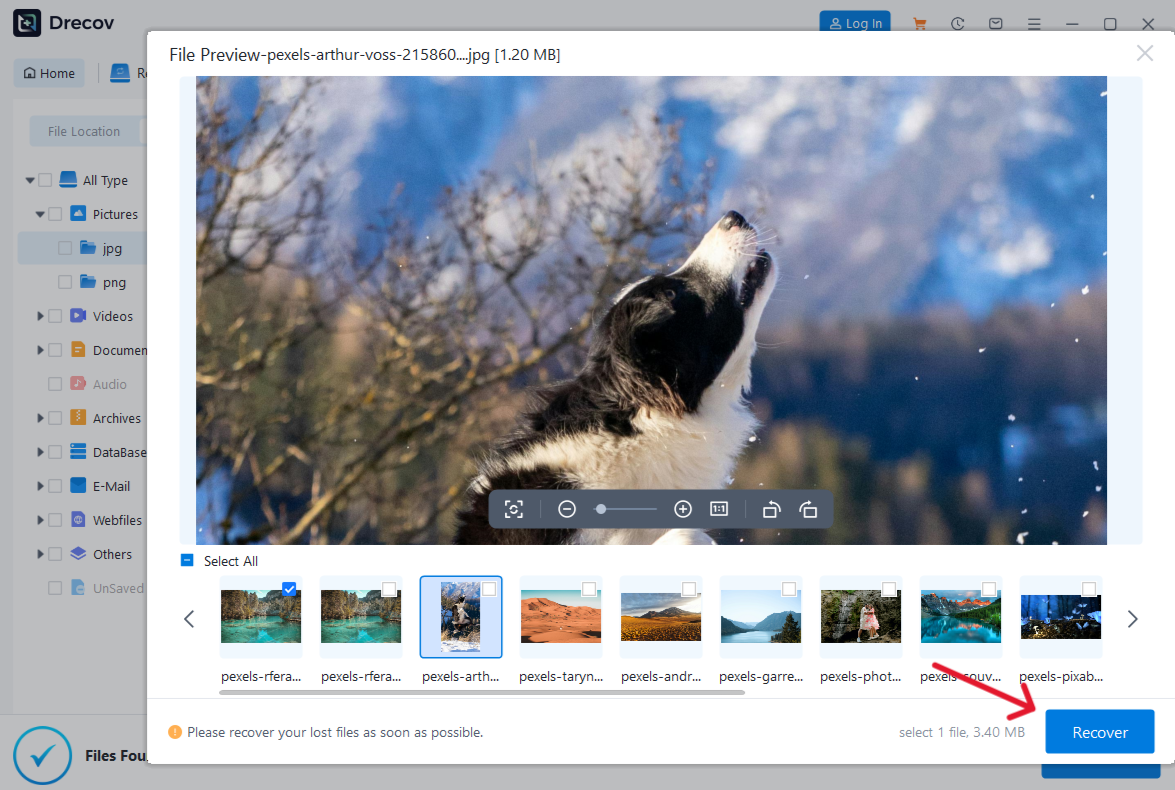
Step 4: Locate Evidence and Preview More Than One File
Apply file type, original folder, filename, size, and dates surrounding the damage event. Preview a small but representative set and keep differently dated candidates separate. A thumbnail or opening page alone cannot prove an entire file is intact.
Step 5: Send the Recovery Elsewhere, Then Test It
Choose the healthy destination rather than the stable device that originally held the healthy or deleted file. If files seem absent afterward, inspect Drecov Folder and Recovery Folder. Finally, open several recovered candidates and test their complete structure before replacing the damaged working copy. Only verified copies justify proceeding with repairs that write to the original storage.
⚠ Warning: Install it on a drive different from the one where your data was lost to prevent overwriting.
Decide Between Repair, Replacement, and Recovery
Restore a known-good backup or version when available. Repair is appropriate when the damaged file is the only copy and a format-aware tool can salvage content. Recovery is different: it searches storage for an earlier or deleted original. Choose recovery when the current file is truncated, overwritten, or not the version you need.
How to check if a file is corrupted — For the relevant documented behavior, consult the official technical guidance. Use that source for current interface or command details, and keep the protected original available while testing.
Build a repeatable file-integrity test
Use a known-good application and a copied file first. If the copy fails on two devices or in two independent viewers at the same point, corruption is more likely. If only one program fails, reset or repair that application before altering the file. Record the exact message rather than reducing every open failure to corruption.
Checksums provide strong evidence when a trusted earlier hash exists. Without a reference hash, calculating SHA-256 only identifies the current bytes; it cannot declare them correct. For archives, use the program’s test function. Media files require inspection across the whole timeline. For documents, check every page, embedded image, formula, and linked object.
Keep three versions when repair is attempted: the untouched source, the working copy, and the repaired output. Compare sizes and hashes, then verify content that matters to the user. A tool reporting success is not sufficient if pages are blank. Frames freeze, formulas change, or the final records are absent.
Storage health belongs in the diagnosis when unrelated files begin failing together. Check SMART information and Windows storage events without running a repair scan first. A growing set of read errors, repeated disconnects. Or unusual sounds shifts the problem from one corrupted file to an unstable device. Shut it down and obtain an image or professional assessment. Repairing individual documents on a failing source wastes read attempts and may reduce the chance of recovering intact versions elsewhere on the disk.
Questions Readers Commonly Ask
Can a checksum prove a file is not corrupted?
Only when compared with a trusted checksum for the expected original. A hash by itself identifies bytes but does not judge whether their structure is valid.
Why does the file open on another computer?
That points toward a codec, font, plug-in, application, or permissions difference rather than definite file damage.
Should I repair the original file?
No. Duplicate it first and direct every repair attempt to a new output name.
Keep the diagnosis tied to observable evidence
A corrupt file contains missing, altered, or internally inconsistent data. An unsupported codec, wrong extension, unavailable font, broken network path, permission problem. Or outdated application can produce a similar message without changing the file itself. Record the exact error and the action that triggers it.
Why one successful test is not enough
Check the file size before anything else. A zero-byte file has no payload to repair. An unexpectedly small video or archive may be incomplete, while a normal size only proves that bytes exist. Copy the file to healthy local storage; if the copy itself fails with read errors, investigate the source device.
Preserve the cleanest available version
Open the duplicate with the creating application and one trusted alternative that understands the same format. If only one reader fails, compatibility or application configuration is more likely. If both fail at the same location, structural damage becomes more plausible.
Use the result to choose the next action
Create or obtain a known-good file of the same type and version. Confirm that the same applications can read it. This control prevents a missing codec, disabled plug-in. Or damaged program installation from being mistaken for damage to the target file.
Know when the source needs specialist handling
Use the application’s built-in Open and Repair feature, archive test command, media probe, or document validator on a copy. A hash such as SHA-256 cannot declare a file healthy by itself; it only proves whether two copies are identical. Compare a current hash with a trusted earlier checksum when one exists.
Compare the protected copy with the working result
Avoid online repair uploads for confidential material unless policy and privacy terms allow them. Never overwrite the only copy with a repaired export. Keep the source, working duplicate, tool output, and notes separately so a later attempt starts from clean evidence.
Conclusion
To check if a file is corrupted, separate application trouble from damaged bytes and test a protected copy with an appropriate validator. Preserve the original throughout. Drecov helps when the correct file was deleted, replaced, or lost from stable storage. It is not a universal repair engine for every damaged format.
⚠ Warning: Install it on a drive different from the one where your data was lost to prevent overwriting.





