







For windows stuck on welcome, protect the original data first. A Welcome screen that still animates is different from a frozen sign-in with no disk activity. Note the time, cursor response, and last successful login before forcing another restart. The safest path is to preserve in this sign-in case, evidence, choose a test that answers one question. For this sign-in diagnosis, change storage only after required data is secure.
windows stuck on welcome: safe diagnosis
A first sign-in after a major update can take longer because Windows is completing account work. This detail changes the next action in this sign-in case. For this sign-in diagnosis, the same visible symptom can come from access, software, file-system, or hardware layers. Record the exact message, path, capacity, in this sign-in case, time, and recent change before experimenting.
A motionless spinner, no disk activity, and no response for a long period make a genuine stall more plausible. Work from the least modifying observation in this sign-in case, toward a targeted test. Keep the original file or device in this sign-in case, untouched whenever a duplicate. For this sign-in diagnosis, backup, alternate player, second port, Safe Mode, or account check can answer the question.
- If disk activity continues and the animation responds, allow one measured wait before interrupting power.
- If the disk clicks, disappears, or reports severe read errors, stop repeated boots and seek imaging or professional recovery.
- A changed result in the sign-in check calls for reassessment instead of another unrelated fix.
Protect Local Files Before Reset Becomes the Plan
Disconnecting nonessential docks and USB storage removes startup dependencies without changing the system disk. This detail changes the next action in this sign-in case. For this sign-in diagnosis, the same visible symptom can come from access, software, file-system, or hardware layers. Record the exact message, path, capacity, in this sign-in case, time, and recent change before experimenting.
Safe Mode loads fewer drivers and services, so a successful Safe Mode login narrows the fault. Work from the least modifying observation in this sign-in case, toward a targeted test. Keep the original file or device in this sign-in case, untouched whenever a duplicate. For this sign-in diagnosis, backup, alternate player, second port, Safe Mode, or account check can answer the question.
Use Safe Mode and a Second Account as Controlled Tests
A second local account that signs in normally points toward damage in the original user profile. Preserve the result of this check. It helps distinguish a genuine repair in this sign-in case, from a temporary change that only hides the symptom.
Repeated forced shutdowns during update completion can add file-system or servicing damage. Preserve the result of this check. It helps distinguish a genuine repair in this sign-in case, from a temporary change that only hides the symptom.
For related context, see recover files from an unbootable PC, understand whether System Restore affects files, and diagnose recurring Windows crashes.
Recover Files When the Desktop Never Appears
In this Windows sign-in case, PandaOffice Drecov is Windows data recovery software for PCs, HDDs, SSDs, external drives, USB devices, SD cards, and memory cards. For this problem, it can search the Windows system volume that contains the inaccessible user profile for Desktop, Documents, Pictures, email data, and other irreplaceable profile files. For this sign-in diagnosis, its read-only recovery mode, Quick Scan, Deep Scan, filters, preview, healthy-destination output, Lost Partition Recovery. Crashed PC Recovery support logical-loss cases. For this sign-in diagnosis, it cannot repair physical hardware, Windows components, malware, or overwritten bytes.
⚠ Warning: Install it on a drive different from the one where your data was lost to prevent overwriting.
Step 1: Open Drecov and Select The Windows System Volume Or Crashed Pc Recovery Mode
Stop writing to the Windows system volume that contains the inaccessible user profile. Confirm that the storage remains stable. Stop direct scans when the system disk clicks, drops from firmware, changes capacity, or accumulates severe read errors. For this sign-in diagnosis, prepare a different healthy drive and do not install Drecov on the source. Open Drecov, select the original location, and choose Crashed PC Recovery when Windows cannot reach a usable desktop.

Step 2: Run Quick Scan and Read the First Results
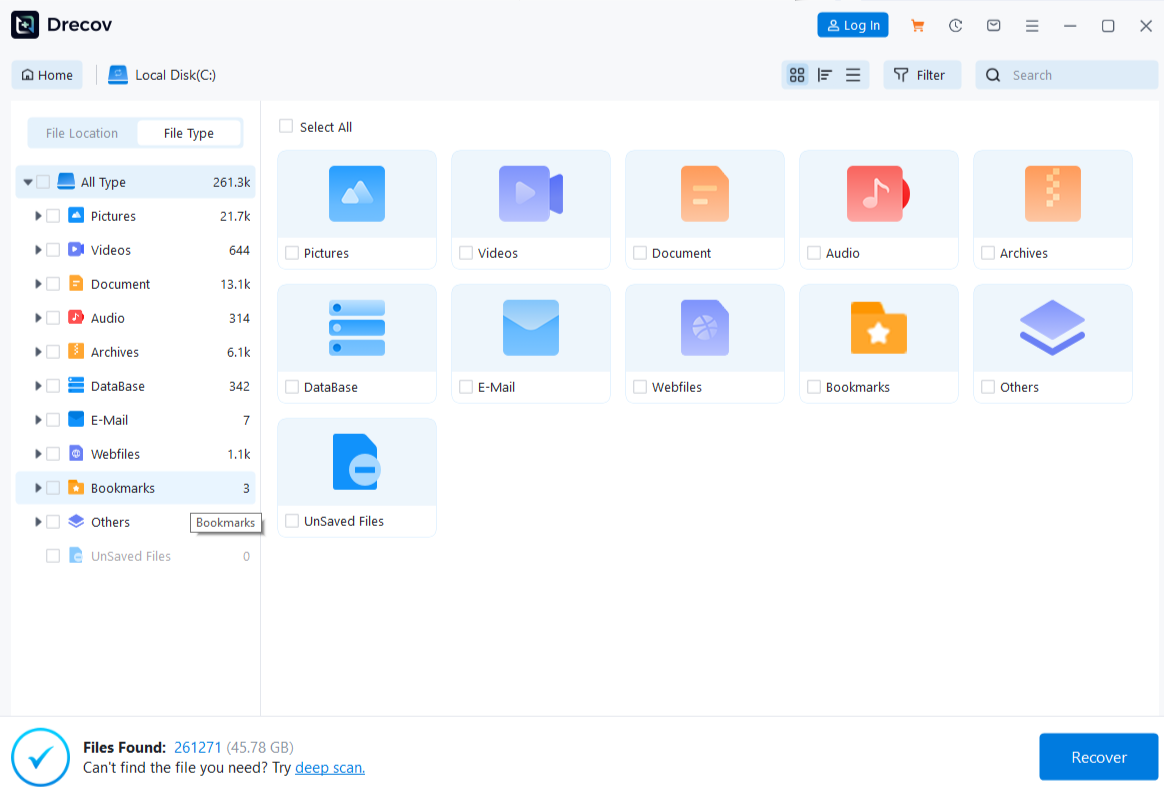
Begin with Quick Scan and inspect the first result tree for Desktop, Documents, Pictures, email data, and other irreplaceable profile files. For this sign-in diagnosis, look for the expected location and surviving names before selecting anything. For this sign-in diagnosis, this faster pass is the sensible first check for recent deletion or a directory entry that has become inaccessible.
Step 3: Deep Scan the Stable Welcome-screen Source Only When Needed
In the Windows sign-in case, use Deep Scan only when Quick Scan misses the required files and the medium remains stable. For this sign-in diagnosis, a deeper signature search may expose older candidates, but it cannot recreate overwritten content. If the system disk clicks, drops from firmware, changes capacity, or accumulates severe read errors, stop and arrange imaging or professional recovery.
Step 4: Filter, Locate, and Preview Representative Files
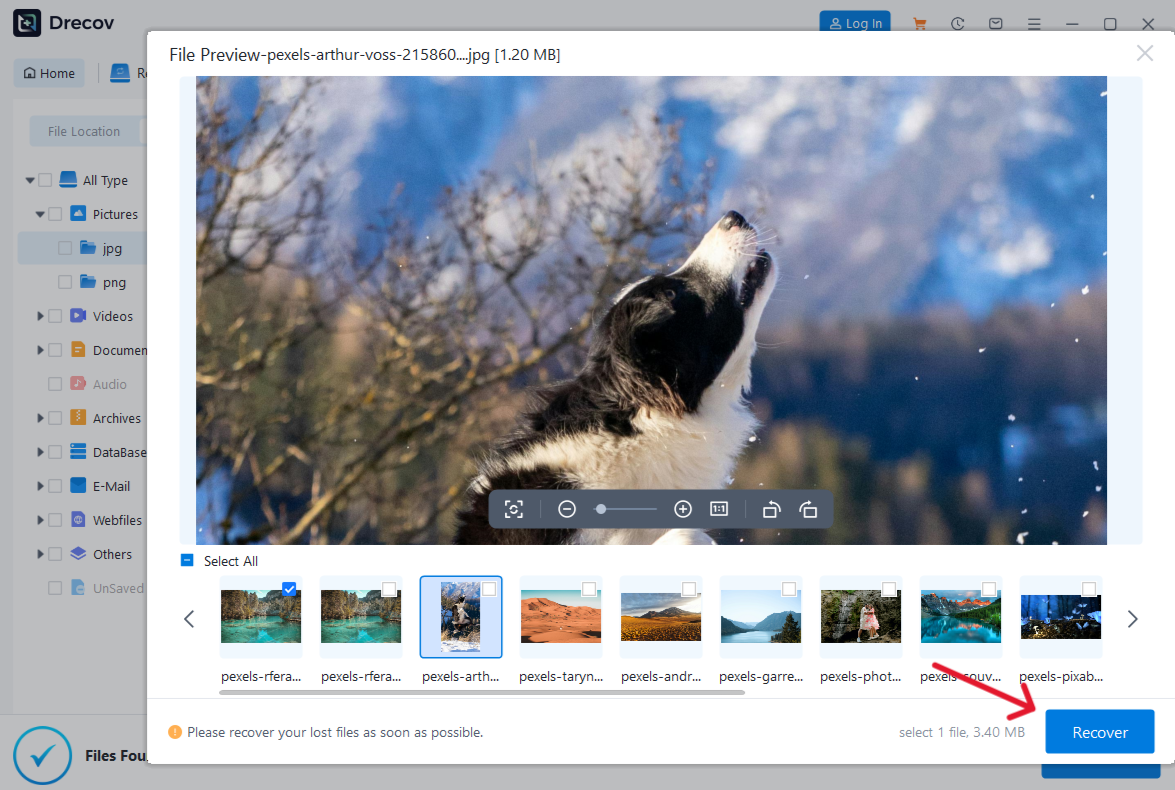
This check is especially useful for windows stuck on welcome. Filter results by the former user-profile path, file type, filename, date, and size. For this sign-in diagnosis, preview several supported candidates from different folders or dates. The preview confirms only that individual sign-in candidate. However, inspect the complete sign-in result because one preview cannot certify every component.
Step 5: Recover Elsewhere and Verify Before Repair
Recover selected files to the prepared healthy drive, never back to the Windows system volume that contains the inaccessible user profile. For this sign-in diagnosis, check Drecov Folder or Recovery Folder if the output is not where expected. Then open files from several profile folders and compare them with backups before altering the account or Windows installation. For this sign-in diagnosis, repair, reset, reinstall, format, or run CHKDSK only after this verification.
⚠ Warning: Install it on a drive different from the one where your data was lost to prevent overwriting.
Trace Updates, Services, and Profile Damage
If disk activity continues and the animation responds, allow one measured wait before interrupting power. Apply one change at a time in this sign-in case, and keep notes. Avoid broad cleanup, conversion, or reinstall in this sign-in case, actions until the protected copy has been opened and checked. The official source for this sign-in decision explains the relevant built-in behavior: review the official instructions.
If the disk clicks, disappears, or reports severe read errors, stop repeated boots and seek imaging or professional recovery. This stop rule matters more than in this sign-in case, finishing a checklist. Recovery software is appropriate for stable in this sign-in case, logical loss, while unstable hardware deserves imaging or professional handling.
Use keyboard response and disk activity as evidence
Press Caps Lock once and watch its indicator, then move the pointer and listen for normal disk activity. A responsive keyboard with continuing storage activity suggests that the graphical sign-in process is delayed rather than completely dead. Give one measured wait after a large update. A frozen clock, motionless spinner, silent disk, and unchanged screen make an indefinite wait less useful.
Test Safe Mode without turning it into a cure
Enter Windows Recovery Environment and choose Startup Settings, then Safe Mode. A successful Safe Mode sign-in shows that the basic account and Windows core can load with fewer drivers and services. It does not identify the offender by itself. Record whether the original account opens, whether File Explorer works. Whether a normal restart returns to the same Welcome screen.
Compare a second account before rebuilding the first
If another existing administrator account signs in normally, copy important files from the affected profile to a separate drive before changing registry profile references. A failure across every account points beyond one profile toward services, updates, storage, or system corruption. Do not create and delete accounts repeatedly; each change adds noise to the evidence.
Choose rollback by the timing of the failure
When the stall began immediately after a quality update or driver installation, use the matching rollback only after files are safe. A clean boot can isolate a third-party service when Safe Mode works. Reset this PC and clean installation have broader consequences, so they belong after recovery, backup verification, and narrower sign-in tests.
Prove Sign-In Stability Across Several Starts
Sign in through three cold starts, open files from the original profile. Confirm that Reliability Monitor records no fresh sign-in failure. Also restart or reconnect once, repeat in this sign-in case, the exact action that failed. For this sign-in diagnosis, inspect a representative set rather than one convenient file. Keep the recovered copy until normal in this sign-in case, operation and a fresh backup are both confirmed.
Final Welcome-screen Evidence Card
| Question | Evidence to keep | Decision |
|---|---|---|
| Where was the source? | The windows system volume that contains the inaccessible user profile | During the Windows sign-in case, do not write new data there while the missing files still matter. |
| What should be found? | Desktop, documents, pictures, email data, and other irreplaceable profile files | Use the former user-profile path, file type, filename, date, and size to separate plausible candidates. |
| Is scanning still safe? | For this sign-in diagnosis, watch for disconnection, unusual sound, heat, capacity changes, and read errors. | Stop direct work if the system disk clicks, drops from firmware, changes capacity, or accumulates severe read errors. |
| What proves completion? | For this sign-in diagnosis, files open from the healthy destination and the original task succeeds again. | Open files from several profile folders and compare them with backups before altering the account or windows installation. |
Keep this evidence card with the sign-in case notes. For this sign-in diagnosis, retain both the recovered output and untouched source until the exact task succeeds after a restart. For this sign-in diagnosis, once the result remains stable and representative files open correctly, place the verified copy into the normal backup routine.
Conclusion
Windows stuck on welcome becomes manageable once the symptom is separated from the state of the data. Preserve the source, use the topic-specific in this sign-in case, checks above, and verify the result. When stable local files are missing, in this sign-in case, Drecov can scan the original location, preview candidates. For this sign-in diagnosis, recover selected items to another healthy drive before destructive repair.
⚠ Warning: Install it on a drive different from the one where your data was lost to prevent overwriting.





