







windows boot disk windows 7 can describe a boot configuration problem, a busy or corrupted volume, or an application that cannot write to storage. The safest response is to identify the exact device and preserve important files before using any command that changes partitions, file-system metadata, or installation data.
This guide separates observation, recovery, and repair. A successful repair message is not proof that every file is intact, and a drive that clicks, disconnects, changes capacity, or repeatedly reports I/O errors should not be stressed by repeated consumer repair scans.
Quick Answer
Start with read-only checks: confirm the physical drive, connection, capacity, free space, and exact error. If important files are missing or the device is unstable, recover or image it first. Use the least destructive documented repair only after the data is safe.
What the Problem Usually Means
- Windows 7 support has ended, so normal online use carries security risk.
- A system repair disc provides recovery tools but is not a backup of personal files.
- UEFI, legacy BIOS, GPT, MBR, and 32-bit or 64-bit media must match the target scenario.
- Writing boot media erases the selected USB drive.
Protect Your Files Before Repair
- Stop downloads, installations, formatting, initialization, and unnecessary writes to the affected volume.
- Photograph or record the error, drive model, capacity, partition layout, and encryption state.
- Keep BitLocker or other recovery keys available before entering recovery tools.
- Use a different healthy physical disk for backups and recovered output.
- Treat clicking, scraping, overheating, intermittent detection, or wrong capacity as hardware warning signs.
Safe Step-by-Step Diagnosis
Follow these checks in order. Do not skip directly to a formatting prompt, a partition conversion, or a repair switch merely because it is easy to click.
- Back up personal files from the Windows 7 disk before repair.
- Use original or authorized installation media that matches the edition and architecture.
- Confirm the USB destination by model and capacity, then create the media on a working PC.
- Boot the affected PC from the media and choose repair options before installation.
- Try Startup Repair or System Restore before destructive reinstall choices.
- Plan migration to a currently supported operating system after data is safe.
Recover Files Before Risky Repair
If files are already missing, recovery comes before repair. File-system repair can rename, truncate, reconnect, or remove damaged metadata. Install recovery software on a healthy volume, scan the exact source, preview representative files, and save selected results elsewhere. For unsupported legacy systems, keep the original disk offline and recover from a modern supported computer when possible.
How to Recover Files with Drecov
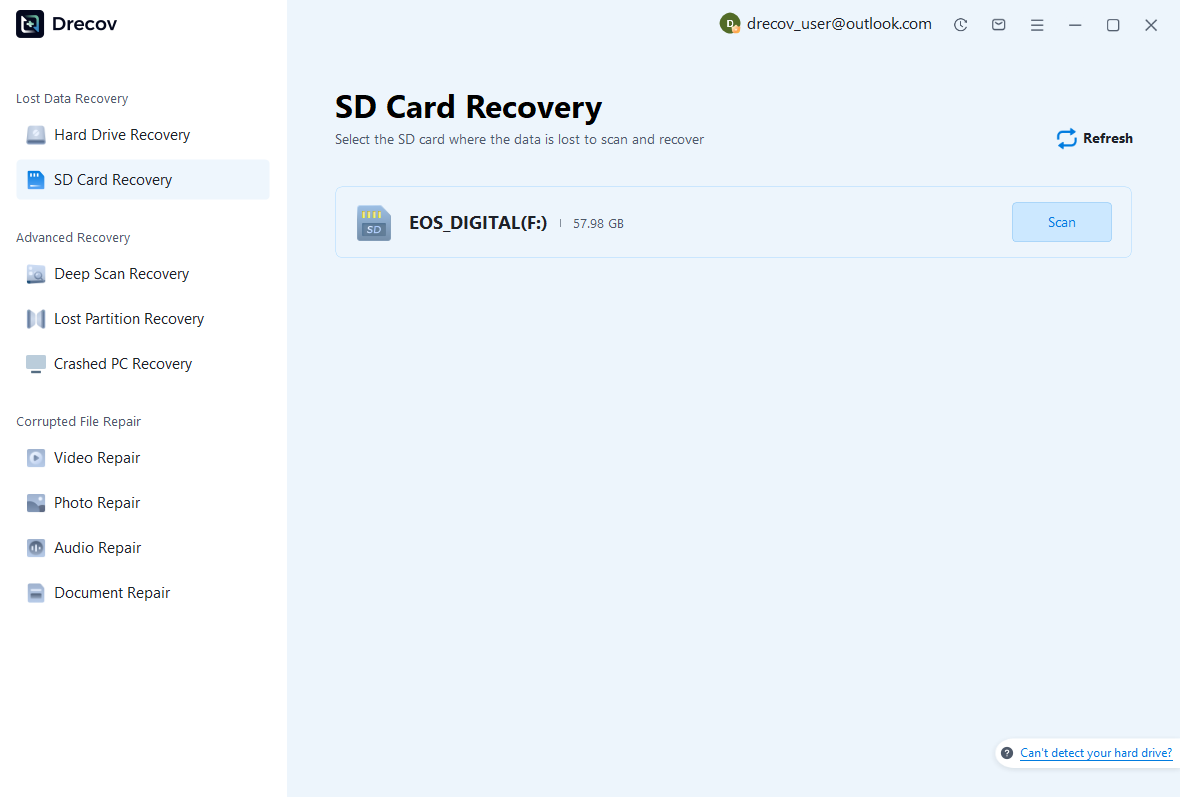
Step 1: Select the affected location
Open Drecov on a healthy Windows drive and select the disk, partition, or location where the files were lost. Verify model and capacity before scanning.
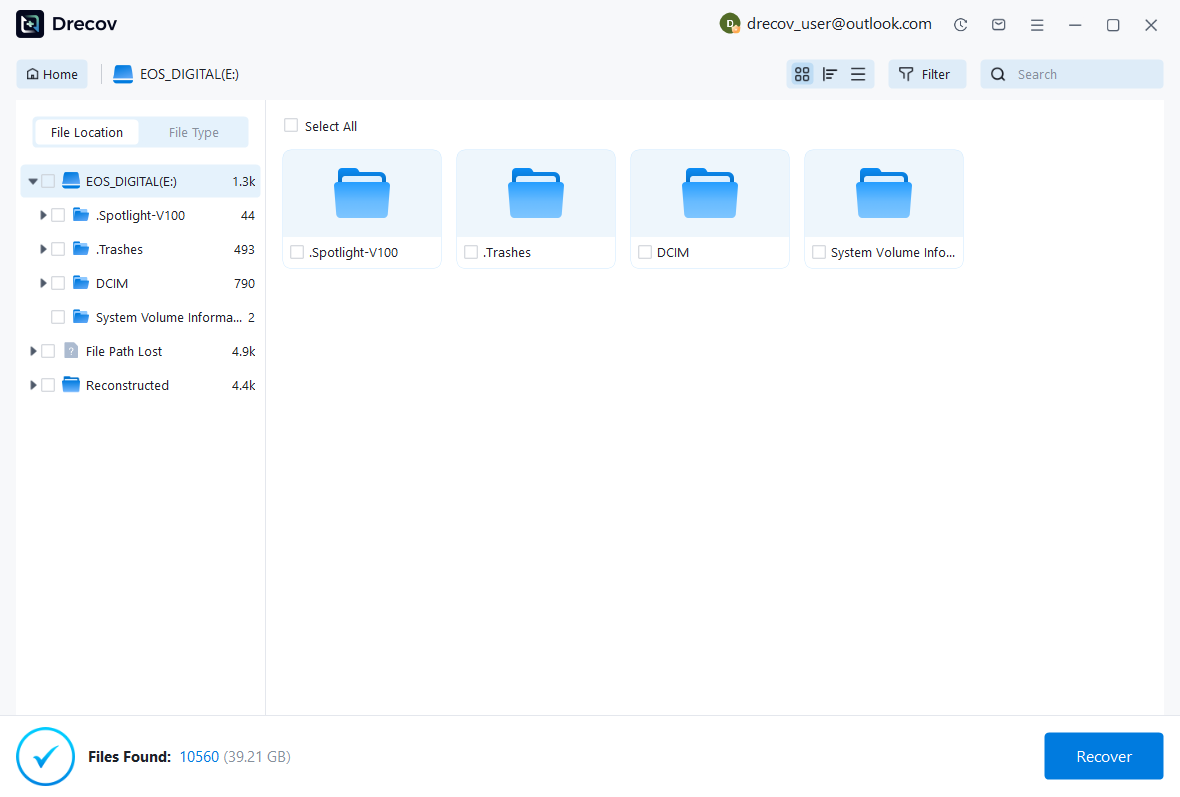
Step 2: Scan and filter results
Run the initial scan, then use Deep Scan only when expected files are missing and the device remains stable. Filter by path, type, name, size, or date.
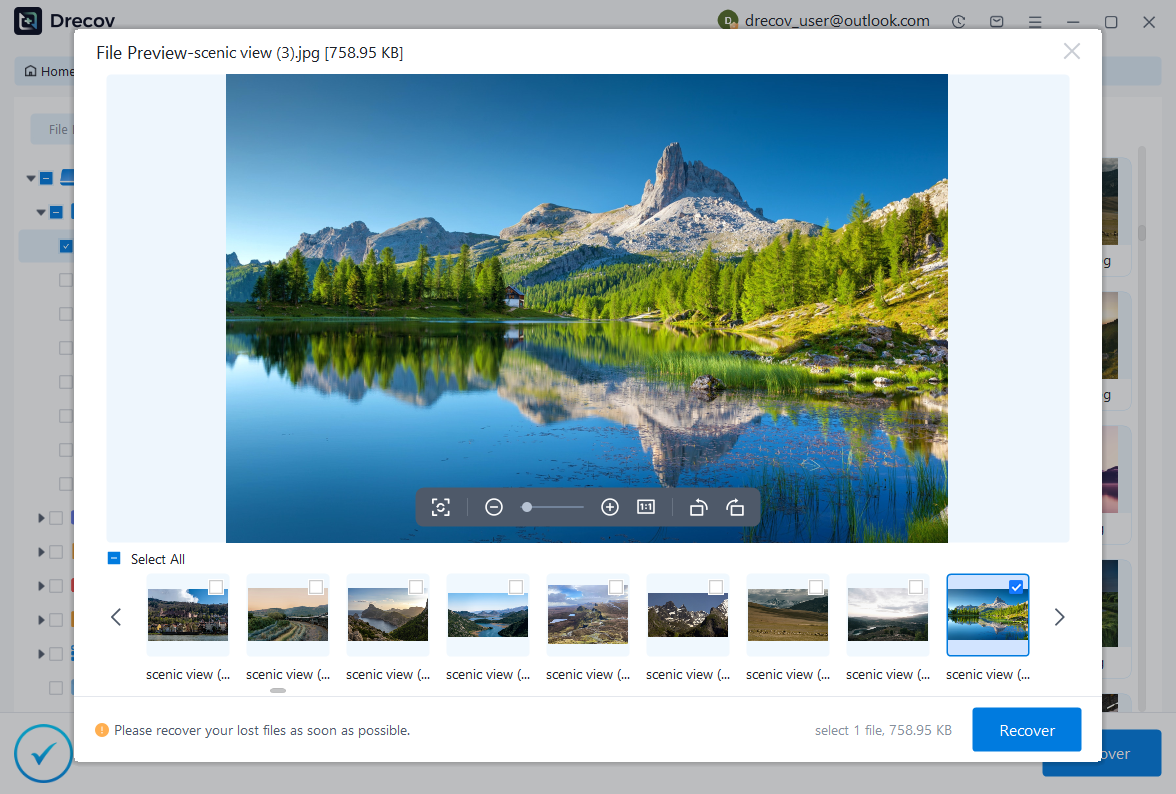
Step 3: Preview and recover safely
Preview supported files to confirm content, select only what you need, and recover to a different physical disk. Open a representative sample before repairing or reusing the source.
Repair Only After Data Is Safe
Once verified copies exist, return to the original problem. Apply one documented change at a time, restart only when required, and test both system behavior and real files. If errors return, replace the storage or connection instead of repeating repairs indefinitely.
Which Tool Fits Which Job?
| Tool type | Best use | Important limit |
|---|---|---|
| Read-only diagnostics | Identify device, health evidence, logs, and layout | Healthy-looking status does not guarantee readable data |
| Drecov | Recover missing files from readable local storage | Save output to another disk; not for physical repair |
| CHKDSK or file-system repair | Repair logical metadata after backup | Writes changes and can alter the visible file tree |
| Startup Repair | Common Windows boot problems | Does not replace a personal-file backup |
| Professional imaging | Unstable or high-value media | Requires suitable hardware and experience |
Mistakes That Make Recovery Harder
- Formatting a RAW or unreadable volume before copying files.
- Running repair commands repeatedly on a drive that disconnects or clicks.
- Installing recovery software on the same volume that contains lost data.
- Recovering files back to the source and overwriting other recoverable content.
- Confusing a bootable installer, recovery drive, clone, and personal-file backup.
- Trusting filenames without opening recovered files.
How to Prevent the Problem
- Maintain at least two verified backups, including one isolated copy.
- Use safe removal and stable power for external drives.
- Keep adequate free space and install supported operating-system updates.
- Record encryption recovery keys and test recovery media periodically.
- Replace storage that develops recurring errors instead of treating repair tools as maintenance.
Frequently Asked Questions
Can repair software fix a physically damaged drive?
No. Software cannot repair heads, motors, platters, flash chips, or damaged electronics. Stop using hardware with physical warning signs.
Should I format when Windows asks?
Not before recovery. Formatting writes a new file-system structure and can reduce recovery options.
Where should recovered files be saved?
Use a different healthy physical disk. Writing to the source can overwrite data that has not been recovered yet.
Is one successful preview enough?
No. Preview several important file types and open a representative sample after recovery.
When should I use CHKDSK?
Use it only on the intended stable local volume after important files are backed up. Start without repair switches when a status report is sufficient.
Final Verdict
Windows 7 Boot Disk: Safe Creation, Repair, and Recovery is safest when diagnosis, recovery, and repair remain separate. Confirm the device and evidence first, secure irreplaceable files second, and make the smallest justified repair last. That order protects more data than trial-and-error fixes.
Reference: official documentation. Product features and support terms can change. This guide covers logical recovery, not physical drive repair.






