







“MOOV atom not found” usually means an MP4-style container lacks readable metadata needed to locate and time its media streams. Preserve the file and its original device before repair. Renaming the extension or running random conversion commands cannot recreate metadata or media bytes that were never finalized.
moov atom not found: safe diagnosis
Compare the suspect file’s size with the recording duration and neighboring clips. Test a duplicate in a second trusted player and inspect it with a container-aware probe. If every tool reports missing MOOV metadata, the problem is structural rather than one player’s codec configuration.
Copy errors, cloud placeholders, and incomplete downloads can produce a truncated local file even when a healthy remote original exists. Verify that synchronization completed and compare byte sizes or hashes. Do not repair the shorter derivative while a full source remains available.
Understand Why Finalization Matters
The MOOV box describes tracks, timing, sample tables, and locations used for playback. Cameras and recorders often finalize this information when recording stops normally. Power loss, a crash, depleted storage, or unsafe card removal can interrupt that final write.
Moving MOOV metadata to the front can improve streaming for a healthy MP4. But it does not solve absent or corrupt sample tables. Likewise, remuxing requires enough valid structure to identify the streams. Keep the original untouched so specialized tools retain every surviving byte.
Use a Matching Reference and Repair a Copy
Some repair tools can use a healthy clip recorded by the same device. Resolution, frame rate, codec, and settings as a reference. Create that reference on another card, not the affected source. Differences in mode can lead to incorrect timing or unusable output.
Save every repaired version separately. Validate duration, frame order, audio synchronization, seeking, and final frames. A tool may produce a playable partial clip without recovering the missing end. So compare results with the expected event length.
Moov atom not found — Useful related reading includes recover deleted videos, repair corrupted video files, and understand MP4 files.
Recover Missing Local Data Before Repair Changes the Source
PandaOffice Drecov is Windows data recovery software for PCs, HDDs, SSDs, external drives, USB drives, SD cards, and memory cards. It works in read-only recovery mode and can locate photos, videos, documents, emails, audio, and archives. In this case, its role is to retrieve deleted originals, earlier copies, companion files, and intact exports; it does not repair hardware, decrypt protected data, remove malware, or reconstruct overwritten bytes.
⚠ Warning: Install it on a drive different from the one where your data was lost to prevent overwriting.
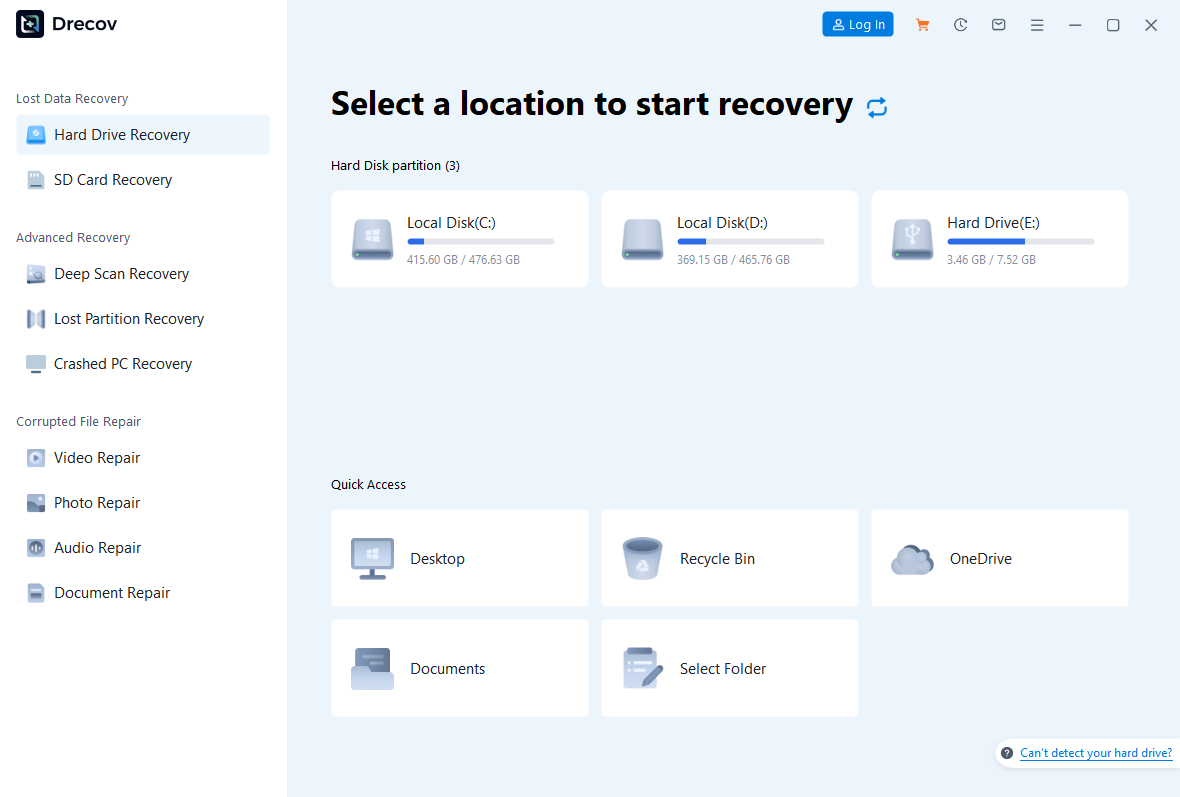
Step 1: Open Drecov and Select the Original Source
Stop new writes and assess stability. If the device clicks, drops offline, changes capacity, or reports severe read errors. Stop direct scanning and seek imaging or professional recovery. Prepare another healthy destination and do not install Drecov on the source. Open Drecov, then select the stable camera card or drive that held the original complete recording.
Step 2: Run Quick Scan Before a Broader Search
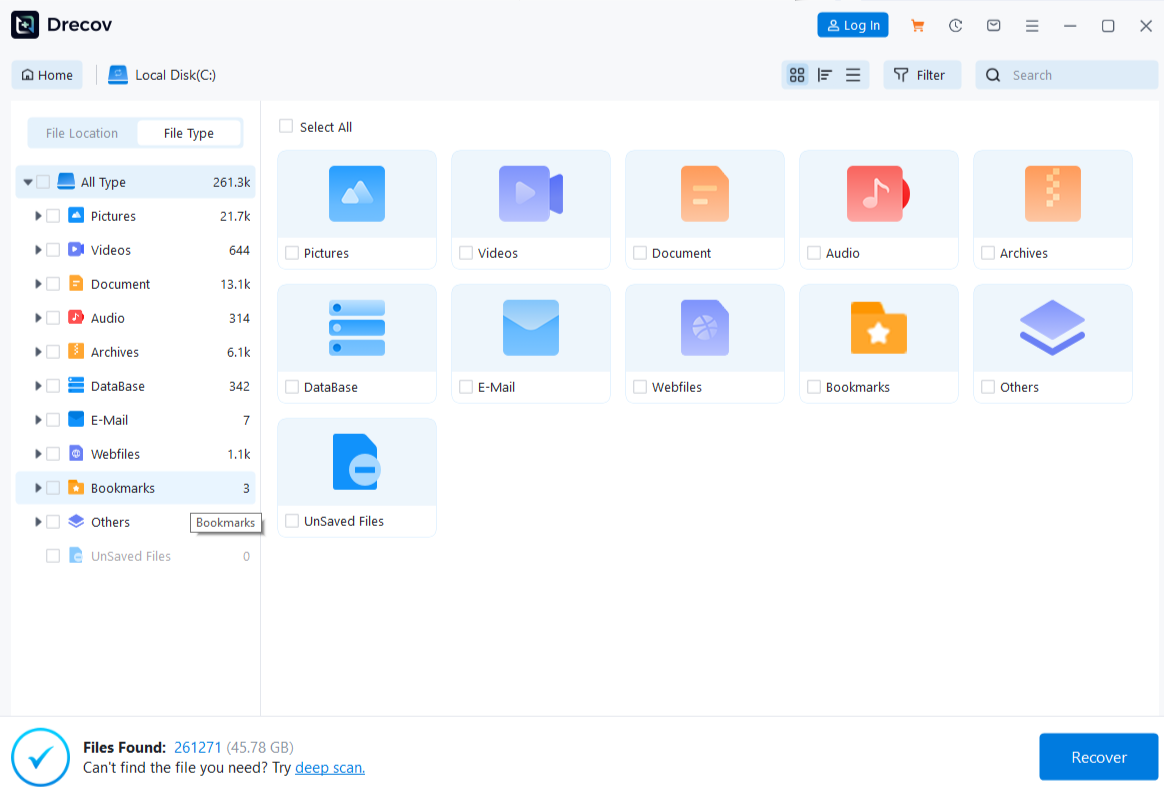
Start Quick Scan and examine the original path first. Look for deleted originals, earlier copies, companion files, and intact exports. Compare available names, dates, sizes, and folders with the evidence gathered earlier.
Step 3: Use Deep Scan Only While the Source Is Stable
If Quick Scan misses the needed files and the source remains stable, run Deep Scan. It can find older signatures whose original paths may be missing. Stop if new instability appears; no scan can reconstruct overwritten data.
Step 4: Filter and Preview the Most Plausible Candidates
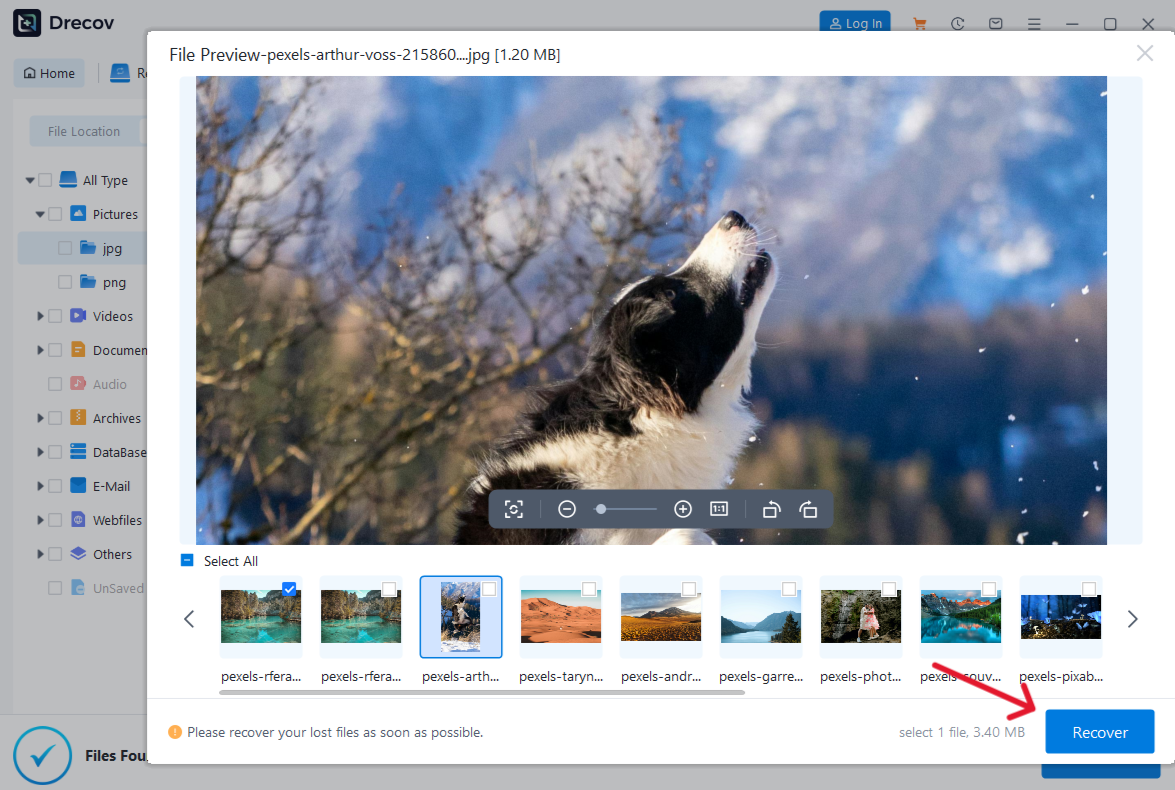
Narrow results using video type, capture folder, filename, recording date, size, resolution clues, and duration. Preview several representative supported files. One successful preview supports that sample, not every page, frame, archive member, formula, or linked asset.
Step 5: Recover to Another Device and Verify
Restore selected files to the prepared healthy destination, never to the source. Check Drecov Folder or Recovery Folder if output is not where expected. Then play the recovered video through the final seconds, seek across the timeline, and check audio synchronization after saving elsewhere. Complete that verification before CHKDSK, formatting, reset, partition work, reinstallation, or other source changes.
⚠ Warning: Install it on a drive different from the one where your data was lost to prevent overwriting.
Look for an Earlier or Complete Video Source
Check the camera, phone, editing cache, cloud upload, export folder, messaging attachment, and backup for another copy. If the original video was deleted from stable local storage. Recovery may return a more complete container than reconstruction of the damaged file.
Moov atom not found — For the relevant documented behavior, consult the official technical guidance. Use that source for current interface or command details, and keep the protected original available while testing.
Prove whether the MP4 is incomplete or merely unindexed
The moov atom stores timing and index information used to navigate an MP4 or MOV file. Its absence may mean recording stopped before finalization, a transfer ended early, or the file was truncated. Compare the suspect file’s size with the expected recording duration and retain the camera card plus any sidecar files.
Run a container-inspection tool on a copy and record which atoms are present. A large mdat section suggests media payload may remain, but it does not prove every frame exists. Repair tools may need a healthy reference clip from the same device, resolution, codec, frame rate, and recording mode.
Verify any rebuilt video from beginning to end. Seek to several points, inspect audio synchronization, and review the last minute around the failure. Save repaired output separately. If the original clip was deleted, recover it before writing new footage or formatting the card. A partial replacement file may be worse than an older intact candidate.
Do not confuse a missing moov atom with an unsupported codec. If inspection shows a valid index but playback reports an unavailable decoder. Install or use a player that supports the encoded stream. If the index is absent, merely changing the extension cannot create it. Keep notes on every repair command, reference clip, and output. This is especially important when several utilities generate playable files of different lengths. Because the longest result is not automatically the most accurate or complete.
Questions Readers Commonly Ask
Can FFmpeg always rebuild a missing MOOV atom?
No. Remuxing needs readable stream and sample information. A severely incomplete file may require a reference-based repair or another source copy.
Will changing .MOV to .MP4 fix the error?
No. Renaming does not rebuild container metadata.
Why should the reference clip use the same settings?
Repair tools may infer track structure from it. Different codecs, frame rates, or resolutions can produce an invalid reconstruction.
Keep the diagnosis tied to observable evidence
Compare the suspect file’s size with the recording duration and neighboring clips. Test a duplicate in a second trusted player and inspect it with a container-aware probe. If every tool reports missing MOOV metadata, the problem is structural rather than one player’s codec configuration.
Why one successful test is not enough
Copy errors, cloud placeholders, and incomplete downloads can produce a truncated local file even when a healthy remote original exists. Verify that synchronization completed and compare byte sizes or hashes. Do not repair the shorter derivative while a full source remains available.
Preserve the cleanest available version
The MOOV box describes tracks, timing, sample tables, and locations used for playback. Cameras and recorders often finalize this information when recording stops normally. Power loss, a crash, depleted storage, or unsafe card removal can interrupt that final write.
Use the result to choose the next action
Moving MOOV metadata to the front can improve streaming for a healthy MP4. But it does not solve absent or corrupt sample tables. Likewise, remuxing requires enough valid structure to identify the streams. Keep the original untouched so specialized tools retain every surviving byte.
Know when the source needs specialist handling
Some repair tools can use a healthy clip recorded by the same device. Resolution, frame rate, codec, and settings as a reference. Create that reference on another card, not the affected source. Differences in mode can lead to incorrect timing or unusable output.
Compare the protected copy with the working result
Save every repaired version separately. Validate duration, frame order, audio synchronization, seeking, and final frames. A tool may produce a playable partial clip without recovering the missing end. So compare results with the expected event length.
Document the point at which the symptom changed
Check the camera, phone, editing cache, cloud upload, export folder, messaging attachment, and backup for another copy. If the original video was deleted from stable local storage. Recovery may return a more complete container than reconstruction of the damaged file.
Retest the original task after a restart
Compare the suspect file’s size with the recording duration and neighboring clips. Test a duplicate in a second trusted player and inspect it with a container-aware probe. If every tool reports missing MOOV metadata, the problem is structural rather than one player’s codec configuration.
Conclusion
A moov atom not found error calls for preserving the source. Inspecting the container, and validating any rebuilt index across the complete video. Drecov can help retrieve deleted or lost source clips from stable storage. It cannot invent media bytes that were never recorded or have already been overwritten.
⚠ Warning: Install it on a drive different from the one where your data was lost to prevent overwriting.





