







If Excel closes when opening file from network drive, do not keep double-clicking the shared original. Copy it to a local test folder under a new name, then open that copy. This single comparison separates many network, permission, and locking faults from workbook corruption. Preserve the server copy and any version history before using repair tools. If the local copy also closes Excel, test Safe Mode and Open and Repair on a duplicate.
Start With a Two-Copy Test, Not a Repair
A workbook on a mapped drive depends on more than Excel. The path must resolve, the connection must remain responsive, permissions must permit the requested action, and file locks must be coherent. Antivirus inspection, sync software, offline-file caching, and an add-in can also become involved before the workbook is fully loaded.
First ask a colleague to stop editing the file. Make a read-only backup of the current server version if policy permits. Next, copy the workbook to a healthy local folder such as Documents and add -test to its name. Do not move or overwrite the original. Record whether copying succeeds, how long it takes, and whether Windows reports a network error.
| Test result | What it suggests | Next useful action |
|---|---|---|
| Local copy opens normally | Network path, permissions, locking, latency, or security policy | Test the UNC path and ask IT to inspect the share |
| Both copies close Excel | Workbook content, add-in, Office installation, or local profile | Try Excel Safe Mode, then Open and Repair on a duplicate |
| Other workbooks open from that share | The problem follows one workbook | Compare versions, size, and workbook features |
| No workbook opens from the share | Drive mapping, authentication, endpoint security, or server issue | Reconnect through the approved UNC path |
| Copying stalls or changes the size | Unstable access or an incomplete source | Stop retries and preserve a server-side version |
This decision test is safer than disabling protections or repairing the only copy. It also gives an administrator a reproducible result instead of the vague report that “Excel crashed.”
Determine Whether the Failure Follows the Path or the Workbook
Compare the mapped letter with the UNC path
A mapped letter such as Z: can point to a stale session even when the server is available. If your organization allows it, browse to the same approved share through its UNC path, such as \\server\\team. Do not invent credentials or bypass access controls. If the UNC copy opens but the mapped path fails, reconnect the mapping through normal IT procedures.
Check whether the failure occurs on Ethernet, Wi-Fi, VPN, or only after the PC wakes from sleep. A workbook that opens on a stable office connection but not through a congested VPN is not automatically corrupt. Large pivot caches, links, queries, and embedded objects can amplify delay during startup.
Use another harmless workbook as a control
Open a small, known-good workbook from the same folder. Then place a new blank workbook there, close it, and reopen it if you have permission. This shows whether reading and writing both work. Do not use sensitive content for the test. A failure limited to one file points toward its contents, lock state, or access-control entry.
Inspect the file without changing it
Compare the server and local-copy sizes. A zero-byte or unusually small workbook does not contain the expected worksheets. Look for a temporary owner file beginning with ~$, but do not delete it while another user may be editing. Confirm the extension is appropriate: .xlsx, .xlsm, and .xlsb carry different content and macro expectations.
If Excel reports that the file is in use rather than closing, use the more specific Excel locked-for-editing checks. A legitimate lock should be resolved through the owner or server administrator, not forced away.
Test Excel Without Add-ins or Automatic Recalculation
Press Win+R, enter excel /safe, and open the local test copy from inside Excel. Safe Mode bypasses many add-ins and startup customizations. If the copy works there, disable COM and Excel add-ins one at a time during a normal session. Re-enable each item after testing so the responsible component is identified rather than guessed.
Workbooks with volatile formulas, external links, data connections, or large models can fail during recalculation. Open a blank workbook first, set calculation to Manual under Excel Options, and then open the duplicate. This is a diagnostic step. Review formulas before saving because manual calculation can leave displayed values out of date.
Watch for external links and startup files
If Excel asks to update links, decline for the first controlled test. A dead network dependency may be causing the exit. Also inspect approved Excel startup folders and enterprise add-ins with your administrator. Moving or deleting company templates can disrupt other workflows, so preserve them and change one factor at a time.
If Excel freezes or closes with unrelated local workbooks too, the application branch is stronger. Follow the dedicated Excel not responding diagnosis before blaming the shared file.
Repair Only a Local Duplicate
Microsoft advises moving or copying a workbook to a local disk when a disk or network error prevents it from opening. Its official corrupted workbook repair instructions then use File > Open, select the file, open the arrow beside Open, and choose Open and Repair. Select Repair first; use Extract Data only if repair cannot recover the workbook.
Apply that process to the local duplicate, never the only server copy. Save successful output under a new filename. Compare sheet names, formulas, named ranges, tables, charts, links, macros, and recent edits. “The file opens” is not sufficient verification for a business workbook.
Why a trusted network location is not the first fix
Adding a broad share to Trusted Locations can weaken Office protections for every file placed there. It also does not repair broken workbook data, unstable networking, or a conflicting add-in. Let IT evaluate the exact path and policy. Do not enable macros or active content merely to see whether the crash disappears.
Use version history before extraction
Check server snapshots, SharePoint or OneDrive version history, backup systems, and copies held by the workbook owner. Restore to a new filename when possible, then compare timestamps and changes. A recent intact version is often more complete than values extracted from a damaged workbook.
Recover a Missing Local or Cached Workbook With Drecov
Drecov runs on Windows and retrieves accessible remnants of spreadsheets and other files. Supported sources include internal disks, SSDs, portable drives, USB storage, SD cards, and memory cards; recoverable categories cover documents, pictures, video, mail data, sound, and compressed packages. The program reads during scanning, offers a fast initial search and a deeper pass, then lets users narrow and preview results before saving them elsewhere. Lost Partition Recovery is available when a stable device has lost partition access.
⚠ Warning: Install it on a drive different from the one where your data was lost to prevent overwriting.
Here, Drecov is relevant only when a local workbook, downloaded copy, offline-cache export, or former local version was deleted or became inaccessible. It cannot repair a network server, remove a legitimate file lock, fix permissions, or make an unstable connection reliable. Ask the server administrator for snapshots when the only missing file lived on server storage.
Stop writing to the local source that held the lost copy. Do not install recovery software there. If that disk disconnects, clicks, reports the wrong capacity, or produces severe read errors, avoid repeated scans and seek imaging or professional recovery.
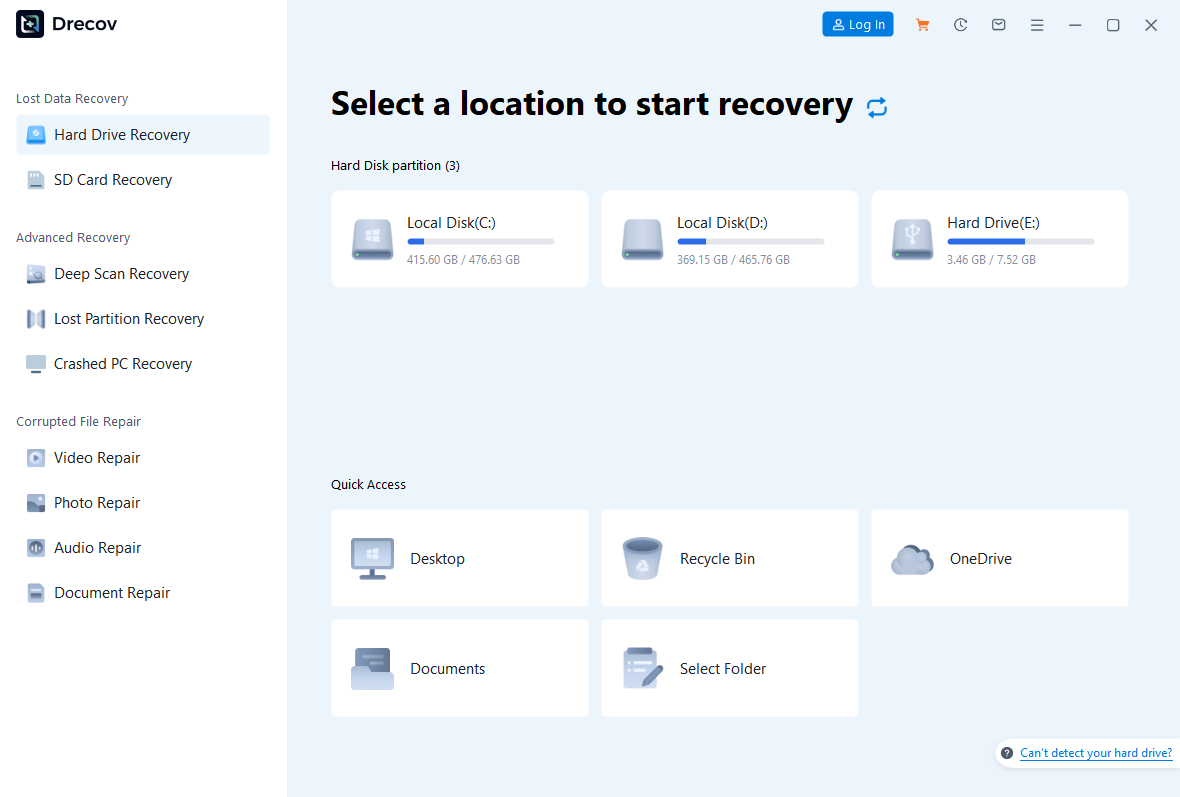
Step 1: Open Drecov and select the original local location
Launch PandaOffice Drecov from healthy Windows storage. Select the local partition, external drive, or USB device where the workbook existed. Verify the device and capacity before starting; a similarly named mapped network drive is not a substitute for recoverable local media.
Step 2: Run Quick Scan and inspect the former folder
Begin with Quick Scan. Check the former local folder, Downloads, Desktop, Documents, or approved offline-copy location. Search for workbook extensions and compare dates and sizes. Names may be changed, so retain plausible candidates instead of selecting only an exact filename.
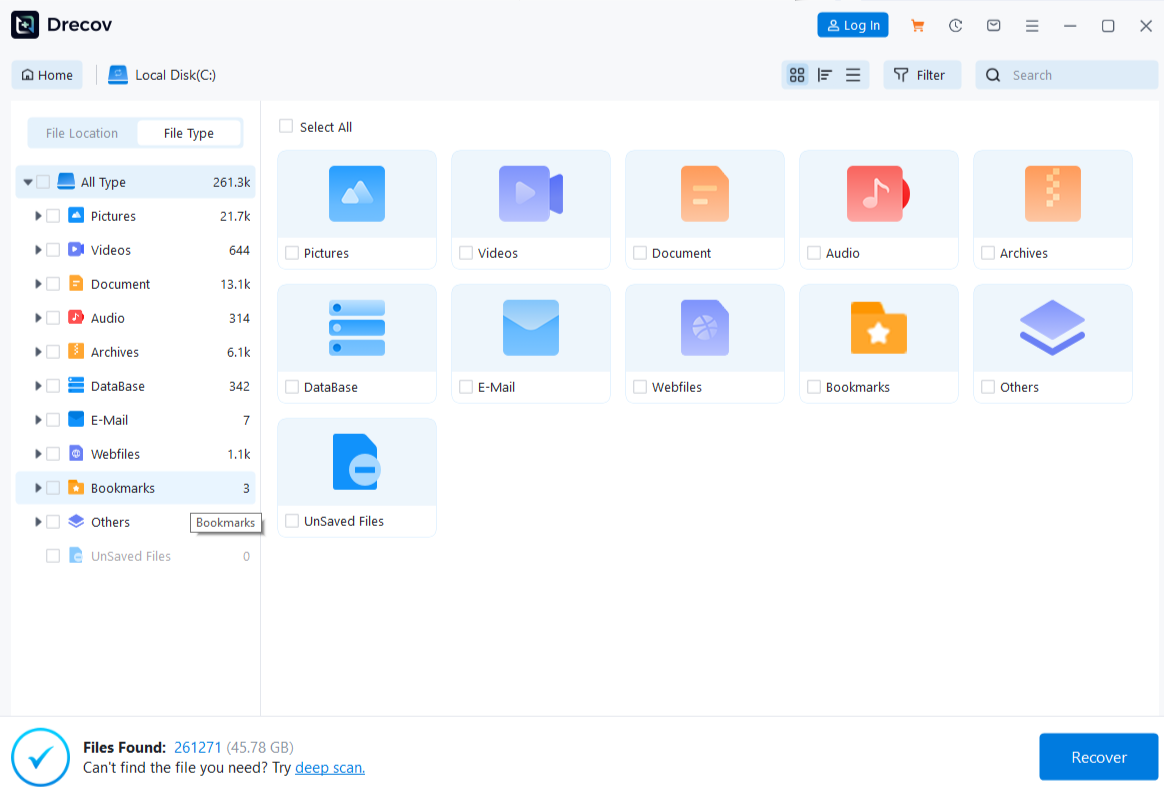
Step 3: Continue to Deep Scan only on stable storage
If Quick Scan misses the workbook and the source remains correctly recognized, use Deep Scan. Stop if the device begins dropping offline, slowing abnormally, changing capacity, or returning severe errors. Repeated reads are inappropriate for unstable media.
Step 4: Filter, preview, and recover to another drive
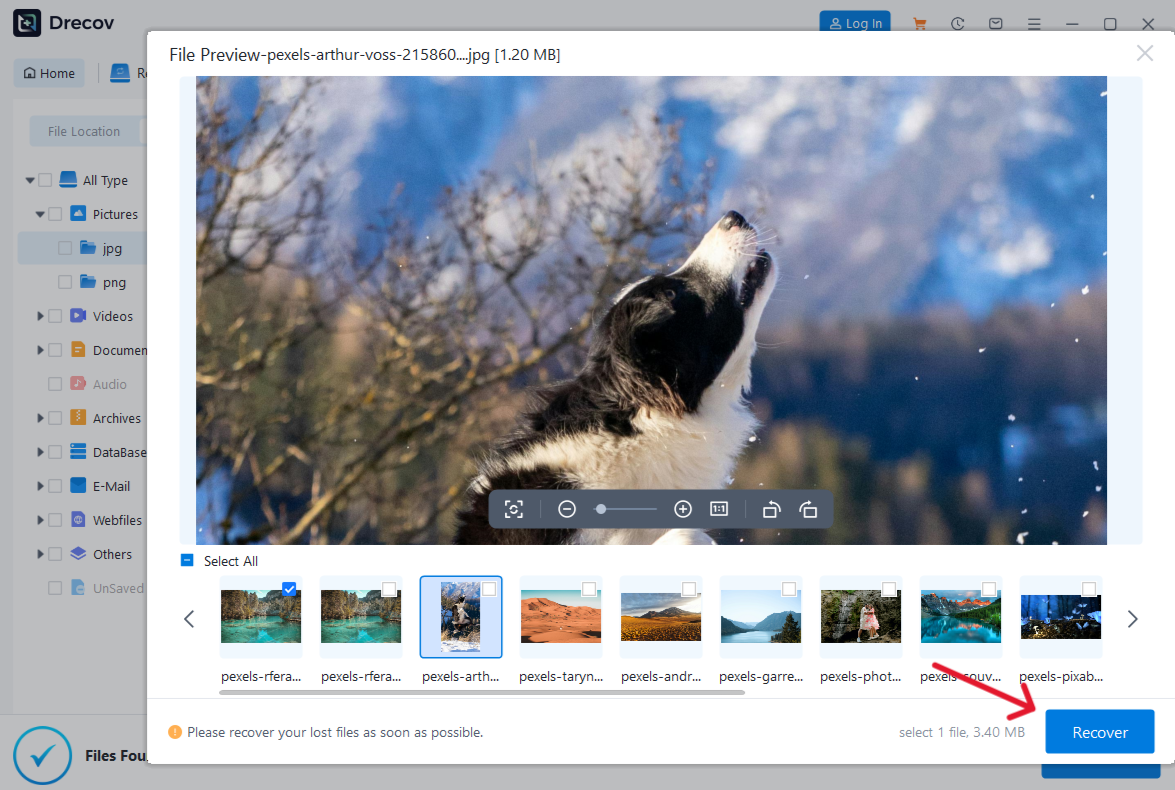
Filter by document type, original path, filename, size, or date. Preview several supported workbook candidates. Preview confirms that the displayed sample is readable; it cannot certify every formula, macro, chart, connection, or worksheet. Recover selected files to a separate healthy disk, never back to the source.
Step 5: Find the output and validate it before repair
If the chosen destination does not show the files where expected, inspect Drecov Folder or Recovery Folder. Open recovered copies from the healthy destination. Check multiple sheets, recent cells, formulas, and embedded content. Only after verification should you run Open and Repair, reconnect links, reset Office, or make storage changes. The rationale for using another target is explained in why recovered files need a different drive.
Resolve the Network Branch Without Lowering Security
When the local copy works, give IT the original path, time of failure, file size, connection type, affected users, and Event Viewer or Excel error details. Ask them to inspect share permissions, SMB sessions, server health, latency, endpoint protection, and stale locks. Avoid changing registry values or allowing insecure guest access.
After a fix, reopen a fresh server-side copy, not the previously damaged test output. Save a harmless change only with authorization, close Excel, and reopen the file. Then have another permitted user repeat the test. This verifies reading, writing, lock release, and multi-user behavior.
Prevent a repeat
Use supported collaboration storage, reliable backups, and version history. Keep Excel and approved add-ins updated. Avoid editing large workbooks through an unstable VPN. Where possible, separate raw data from presentation-heavy workbooks and document external dependencies. These measures reduce ambiguity when a future failure occurs.
Conclusion
When Excel closes while opening a network-drive workbook, the safest answer comes from a controlled local-copy comparison. It reveals whether the failure belongs to the path, lock, permissions, application, or file. Preserve server versions before repair and never weaken trust settings casually. If a local workbook copy was genuinely deleted, Drecov can scan stable Windows storage, preview candidates, and recover them to another healthy drive; it does not replace server backups or network administration.
⚠ Warning: Install it on a drive different from the one where your data was lost to prevent overwriting.





