







A BCDBoot failure when attempting to copy boot files usually means the command cannot use its Windows source, system-partition destination, or requested firmware layout. In Windows Recovery Environment, the installed Windows volume may not be C:. Identify it before retrying. Protect irreplaceable files first, especially if the disk is unstable. Do not format the EFI System Partition, mark random volumes active, or recreate partitions simply because BCDBoot returned one line of text.
Understand What BCDBoot Is Trying to Copy
BCDBoot does not repair every startup component. It takes boot-environment files from a specified Windows directory and configures a system partition. On UEFI systems that destination is normally the EFI System Partition, or ESP. BIOS/MBR systems instead use an active system partition. A correct command therefore depends on three facts: the real offline Windows path, the intended system volume, and the firmware style.
Microsoft documents the basic syntax as bcdboot <source>, with optional switches such as /s for a destination volume and /f for firmware type. Its official BCDBoot command-line reference notes that /f requires /s. It also explains that using /s on UEFI changes how firmware discovery is handled. Extra switches should not be added by habit.
| Evidence | Likely fault | Next verification |
|---|---|---|
| The supposed source lacks a Windows folder | Wrong WinRE drive letter | Find a volume containing Windows, Users, and Program Files |
| ESP is absent or not FAT32 | Wrong destination or damaged layout | Confirm GPT/UEFI structure before any partition work |
| Correct volumes, but access is denied | BitLocker, permissions, or write protection | Unlock through authorized recovery information |
| Copy fails after disk errors or dropouts | Unstable storage or unreadable source files | Stop repair attempts and protect data |
| Files copy, yet PC still will not boot | Firmware order, disk mode, OS damage, or another boot layer | Verify Windows Boot Manager and startup diagnostics |
Protect Data Before Editing Boot Partitions
BCDBoot writes boot files and can create or replace BCD information. DiskPart commands used around it may change letters, attributes, active flags, or partitions. These actions are not substitutes for data protection. If Windows cannot start but the disk is stable and accessible, copy essential user folders to another device or recover them before altering the layout.
Pause immediately if the drive clicks, disappears, reports a changing capacity, becomes abnormally slow, or produces escalating I/O errors. Repeated boot attempts and full scans add reads. Imaging or professional recovery is safer for physically unstable media.
Check encryption and backups
Record BitLocker status and obtain the correct recovery key through the authorized account or administrator. Do not delete or format a locked partition. Also inspect cloud storage, File History, system images, and external backups. A recent verified copy can reduce the risk of every later repair decision.
If the Windows volume itself is inaccessible, follow an inaccessible boot-device recovery workflow before rebuilding startup structures.
Build an Offline Volume Map in WinRE
Open Command Prompt from Windows installation media or Advanced startup. Drive letters in this environment are temporary. Run diskpart, then list disk and list volume. Record disk numbers, volume numbers, letters, filesystems, labels, sizes, and information columns. Use exit before testing paths.
Find the actual Windows directory
Test likely letters with commands such as dir D:\Windows and dir D:\Users. The correct installation normally contains Windows, Users, and Program Files. Confirm that Windows\System32\Config\BCD-Template exists because BCDBoot uses Windows image resources to build the store. Do not assume the largest NTFS volume is the intended installation on a multi-boot PC.
Identify the system partition by structure
On a GPT/UEFI disk, the ESP is usually a small FAT32 partition and often has no normal drive letter. On a BIOS/MBR disk, the boot files reside on the active system partition, typically NTFS. The Microsoft Reserved Partition is not the ESP and should not be assigned as BCDBoot’s destination.
Confirm firmware mode and partition style rather than forcing /f ALL. A mismatch can create files that the current firmware does not use. The broader GPT and MBR distinction explains why UEFI and legacy BIOS layouts require different reasoning.
Test the Source and Destination Before Retrying
Check whether the Windows source is complete
List the boot-resource directories and confirm the offline installation is not a partial image, recovery partition, or Windows.old folder selected by mistake. If the disk was cloned, confirm that the selected installation matches the system partition on the same intended boot disk.
When offline Windows files appear corrupt, run read-only checks first and preserve data. Servicing commands must target the offline image correctly; a command aimed at WinRE itself does not repair the installed system. Avoid downloading individual boot files from third-party sites.
Temporarily assign the verified ESP a letter
If a confirmed ESP needs an explicit destination, use DiskPart to select the exact disk and exact volume, then assign a temporary unused letter such as S:. Re-run list volume and verify that S: points to the expected small FAT32 volume. This step changes the mount map, so never select by size alone.
Inspect free space and write access without formatting. An overfilled ESP can block file creation. Remove nothing casually: vendor and secondary operating-system boot folders may be required. Back up the EFI folder when it is readable and the environment permits safe copying.
Run the Smallest Correct BCDBoot Command
Suppose the verified offline Windows directory is D:\Windows and the machine normally discovers the correct system partition. Start with bcdboot D:\Windows /v. The verbose switch provides more evidence. If an administrator has confirmed the ESP as S: on a UEFI/GPT installation, a targeted form is bcdboot D:\Windows /s S: /f UEFI /v.
These are examples, not universal commands. Replace the letters only with those proven in the current WinRE session. On a BIOS/MBR system, the firmware type and system partition differ. Do not paste a UEFI command into a legacy installation.
Read the verbose result
A source-path error points back to the offline Windows mapping or damaged source files. A destination error suggests the chosen system partition, filesystem, free space, or write access. A successful copy does not prove that firmware will select the entry, nor that Windows itself is healthy.
Avoid destructive “cleanup” shortcuts
Do not format the ESP as a routine fix. Do not use clean, convert the disk, delete recovery partitions, or mark a GPT volume active. Recreating a system partition is an advanced last resort after backups and recovery are verified. If the layout is already inconsistent, document every boundary before modifying it.
Recover Important Files With Drecov When Windows Will Not Boot
Drecov provides Windows-based retrieval from PC storage, hard disks, SSDs, portable drives, USB media, SD cards, and memory cards. It searches for available documents as well as images, video, mail content, sound files, and archives. Scanning is read-only: a shorter first pass can be followed by a deeper search, after which filters and previews help select output for a different healthy device. Lost Partition Recovery covers logical cases in which a stable disk no longer exposes its former partition.
⚠ Warning: Install it on a drive different from the one where your data was lost to prevent overwriting.
For this error, Drecov protects user data before boot-partition changes or retrieves files from a stable, readable disk when Windows will not start. It does not rebuild BCD, repair firmware, unlock BitLocker without a valid key, or correct physical disk failure. Use another working Windows PC or a suitable supported environment to attach the stable source without booting from it.
Step 1: Open Drecov and select the original Windows storage
Launch PandaOffice Drecov from healthy storage. Do not install it on the affected Windows partition. Prepare a separate healthy destination, select the original disk or lost-partition entry, and confirm the device capacity before scanning.

Step 2: Begin with Quick Scan
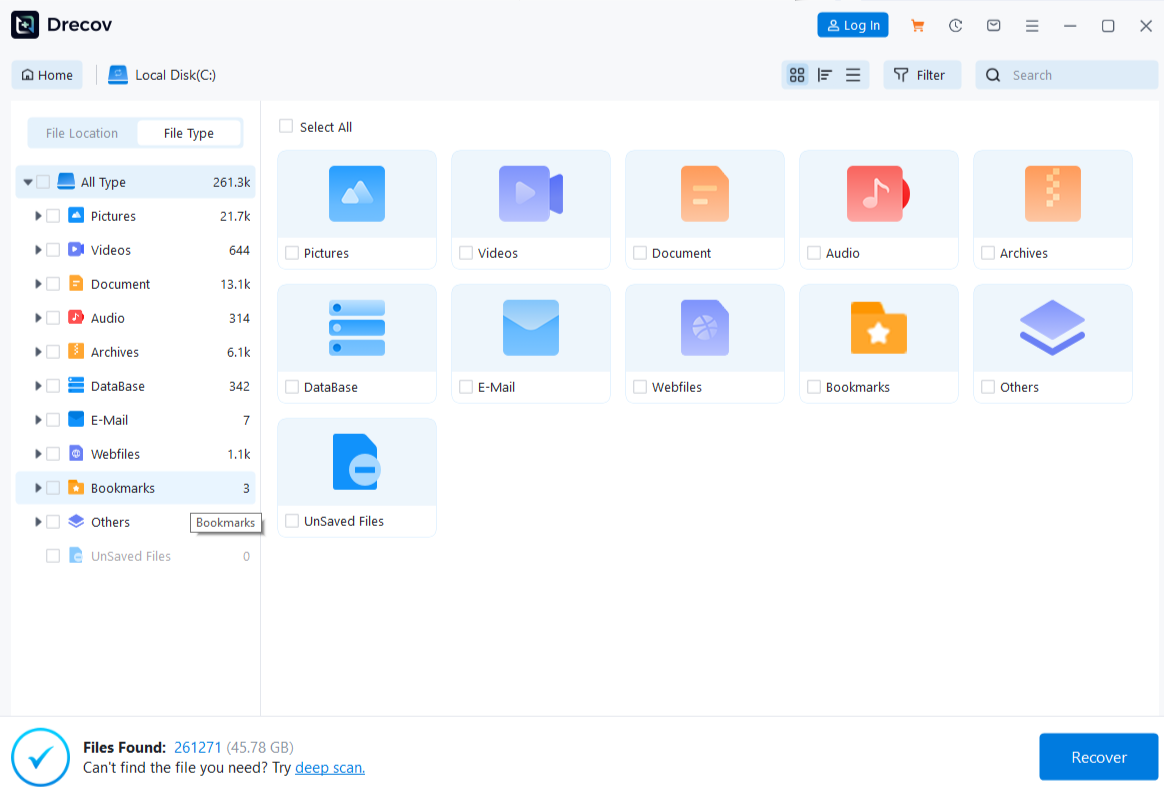
Run Quick Scan first. Inspect former user-profile paths and the file categories that matter most. Keep candidates with plausible sizes and dates even if directory damage has removed their original names.
Step 3: Escalate the search only while readings remain consistent
Continue with Deep Scan when Quick Scan misses needed files and the disk remains consistently recognized. Stop if it disconnects, changes capacity, slows severely, or reports worsening read errors.
Step 4: Filter, preview, and recover elsewhere
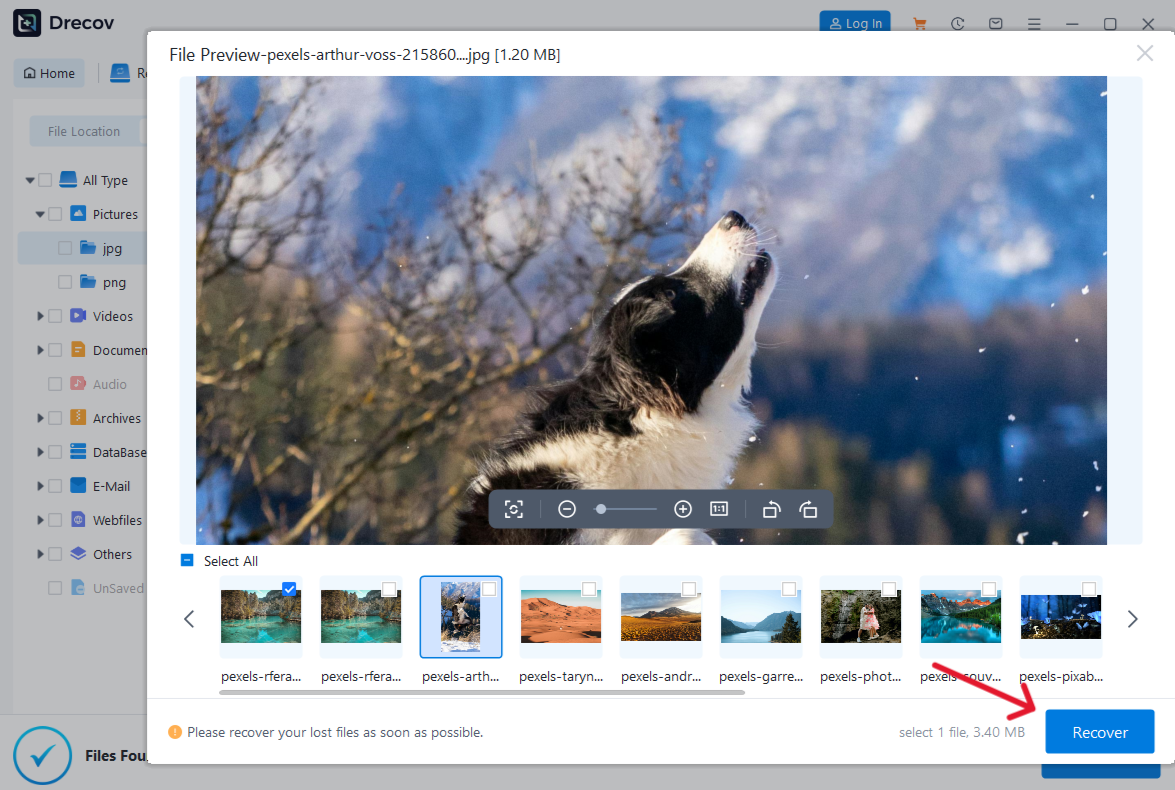
Filter by type, former path, filename, size, or date. Preview representative supported files, remembering that one preview cannot certify every page, archive member, media frame, or linked object. Recover the selection to the prepared healthy device, never back to the source disk.
Step 5: Find and validate the output
Could the chosen target appear empty? Browse its Drecov Folder and Recovery Folder directories. Test several output types and validate the critical files. Only then return to BCDBoot, partition repair, initialization, formatting, reset, or Windows installation. The storage rationale is detailed in why recovery needs another drive.
Verify More Than the Success Message
After BCDBoot reports success, remove temporary media and restart into firmware settings. Confirm Windows Boot Manager appears for the intended disk and that UEFI or legacy mode matches the installation. Do not reorder unrelated boot entries without documenting them.
Boot Windows twice. Check that BitLocker behaves normally, the correct installation loads, user files are present, and Disk Management shows the expected partitions. On a dual-boot machine, verify every required entry. Remove the temporary ESP letter later if policy calls for it.
Conclusion
For the exact error “bcdboot failure when attempting to copy boot files,” confirm the failure layer before changing storage. A BCDBoot copy failure is a mapping problem until evidence proves otherwise. Identify the offline Windows directory, the true system partition, firmware mode, capacity, and write access before issuing another command. Protect files ahead of partition edits. When a stable Windows disk contains inaccessible data, Drecov can scan, preview, and recover available files to separate storage; BCDBoot can then be retried with verified source and destination information.
⚠ Warning: Install it on a drive different from the one where your data was lost to prevent overwriting.






