






Introduction
Data loss on a Hard Disk Drive can happen unexpectedly, whether due to accidental deletion, formatting errors, system crashes, or malware attacks. Losing important documents, photos, videos, or work files can be stressful and disruptive.
Fortunately, PandaOffice Drecov provides a simple and effective solution for recovering lost data. With its powerful scanning technology and intuitive interface, Drecov can quickly locate and restore deleted or missing files from your Hard Disk Drive. Whether you need to recover a single file or an entire folder, the software makes the process straightforward, helping you get your valuable data back safely and efficiently without technical hassle.
This ensures that even in the face of unexpected Hard Disk Drive data loss, you can regain control and restore your important files with ease.
Step 1: Download PandaOffice Drecov and Choose the Hard Disk Drive Location
Begin by downloading and installing PandaOffice Drecov on your computer.
Once installed:
- Launch PandaOffice Drecov.
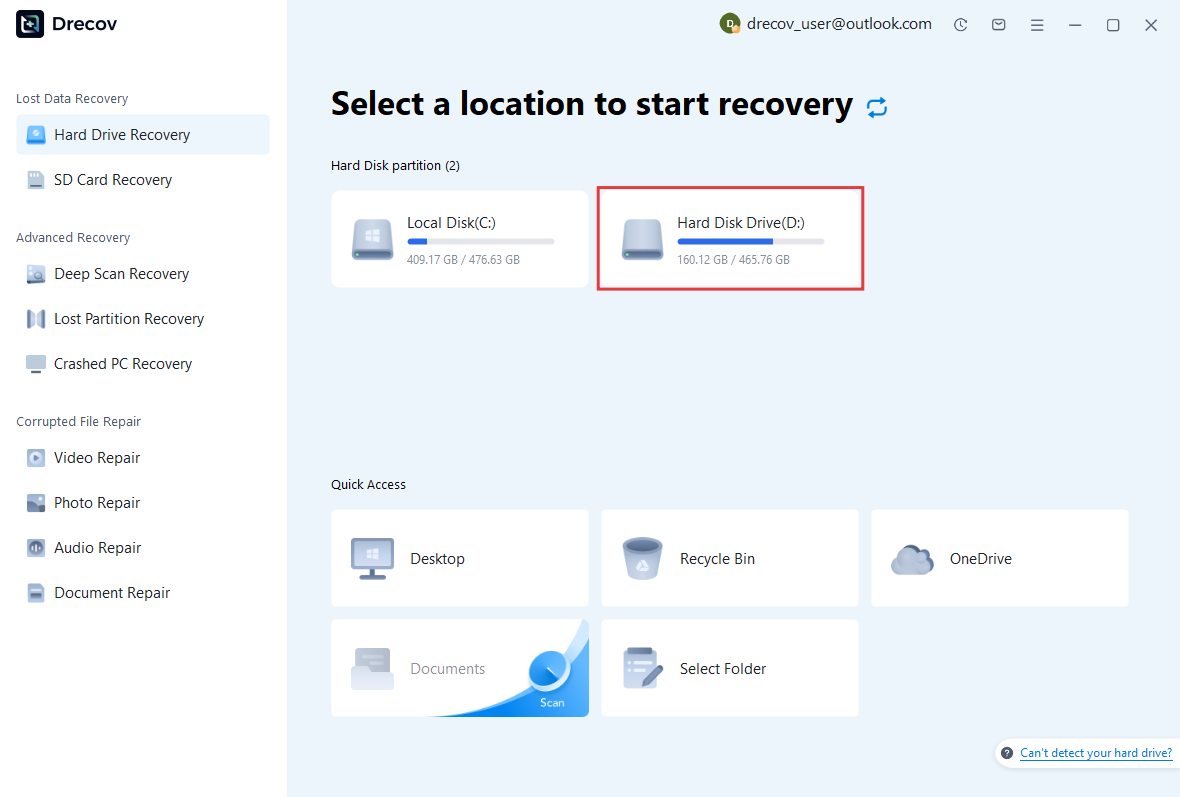
- On the main interface, all available storage locations will be displayed.
- Locate and select your Hard Disk Drive as the target location where your files were lost.
- Click on it to start the scanning process and begin searching for recoverable files.
Step 2: Scan the Hard Disk Drive for Lost Files
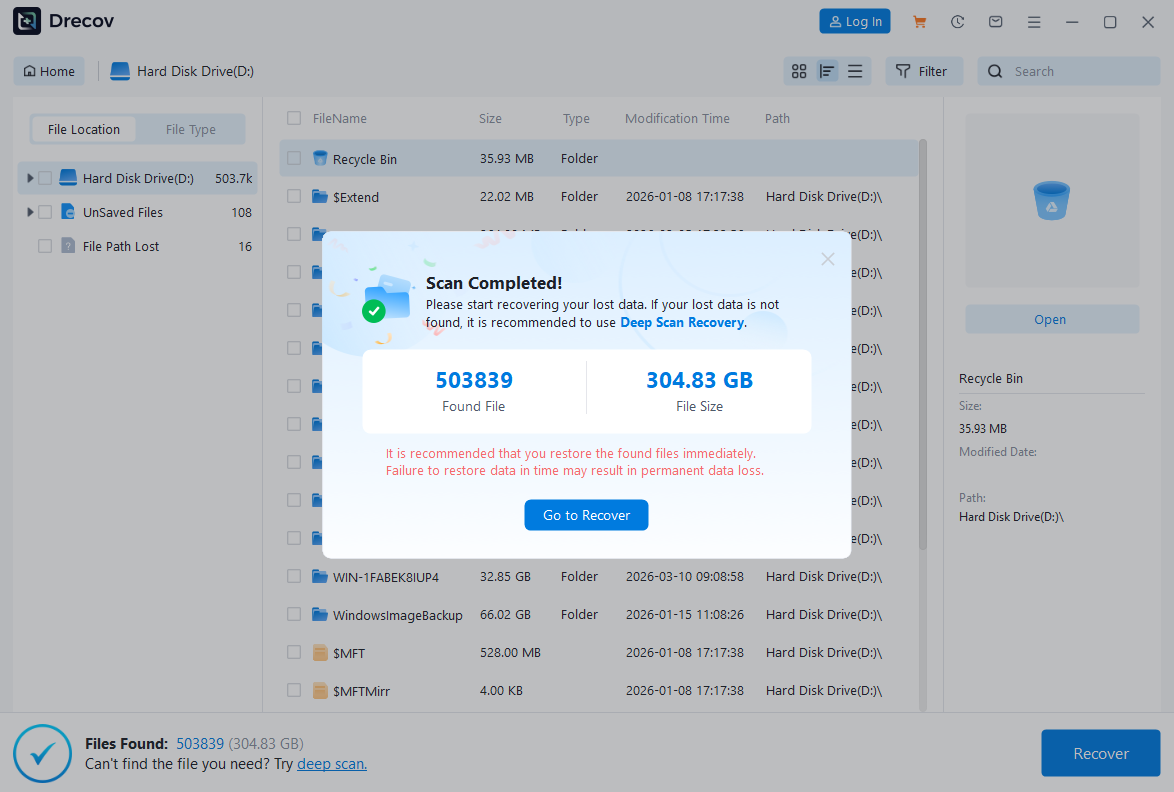
- After selecting the Hard Disk Drive, PandaOffice Drecov will automatically start scanning for lost data.
- When the scan is complete, a notification window will appear showing the total number of files found and their overall size. Click “Go to Recover” to view the results and preview the recoverable files.
- If the files you need are not found, you can switch to Deep Scan Recovery for a more thorough search to locate additional lost data.
Step 3: Explore and Preview Recovered Files on the Hard Disk Drive
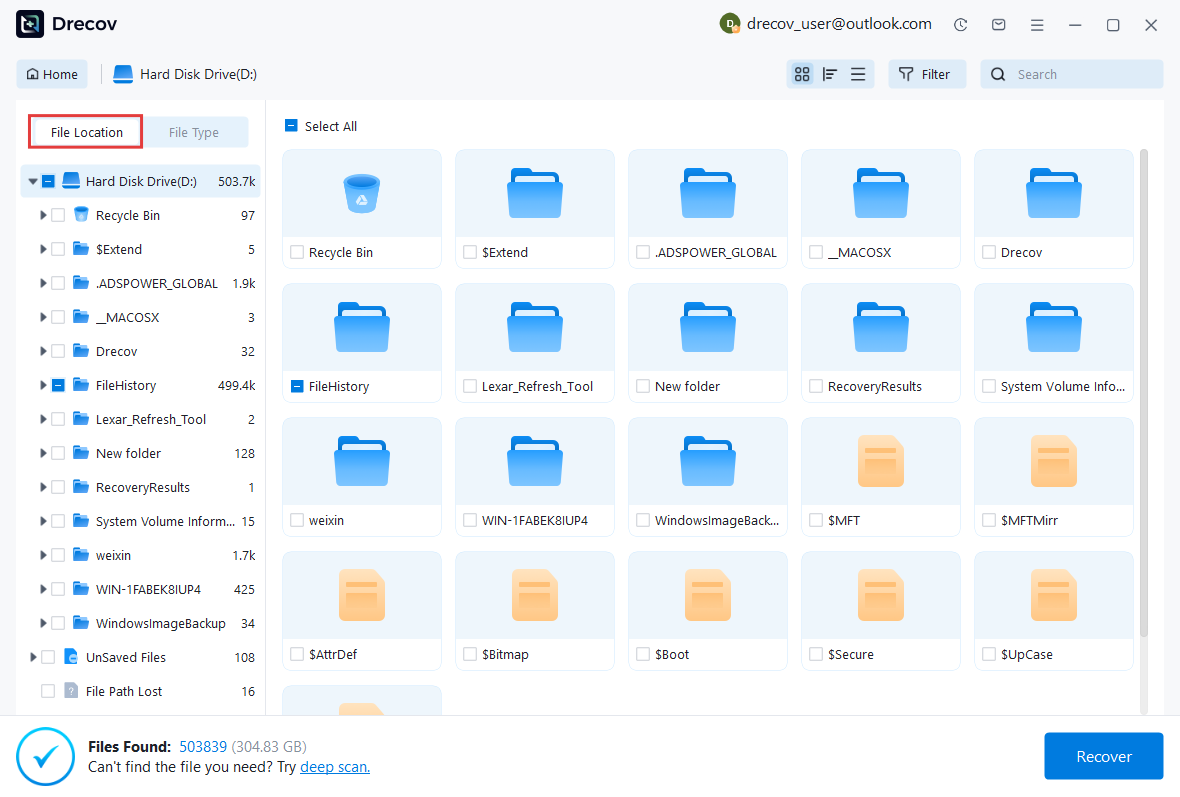
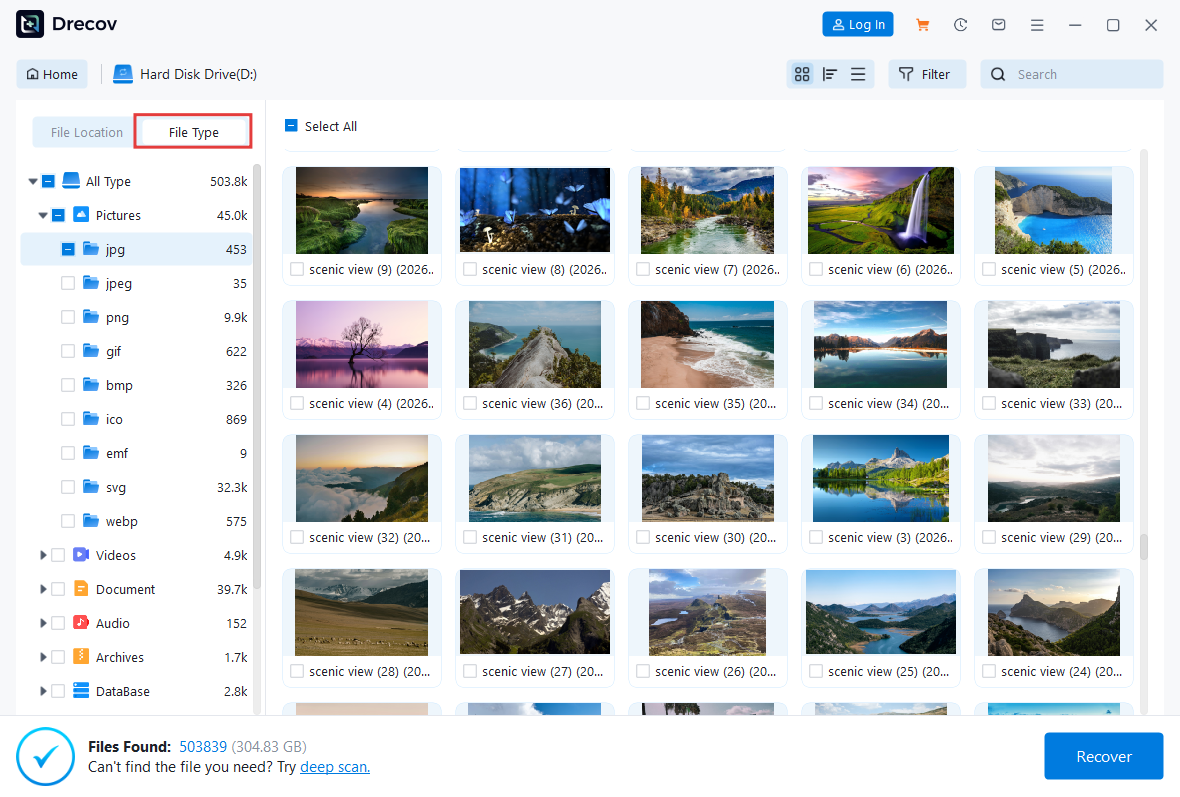
Once the scan finishes, PandaOffice Drecov will list all files that can be recovered from the Hard Disk Drive. You can easily find what you need by checking File Location, which shows where each file was originally stored, or by using File Type to sort files by format, such as documents, spreadsheets, or images.
Files are usually grouped into categories like:
File Type is usually organized by:
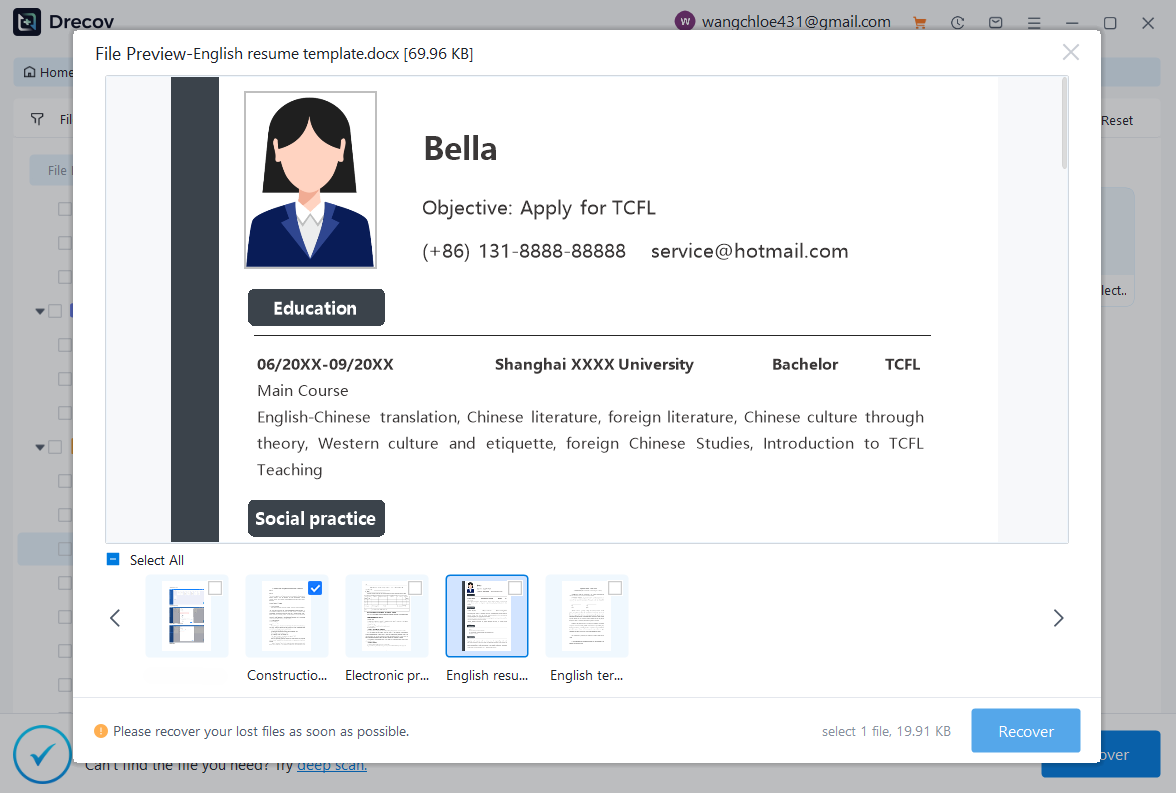
3.1 Browse Lost Word Documents
To find lost Word documents:
- Click on the “Documents” category.
- Filter by .doc or .docx format.
- Preview the document before recovery to confirm integrity.
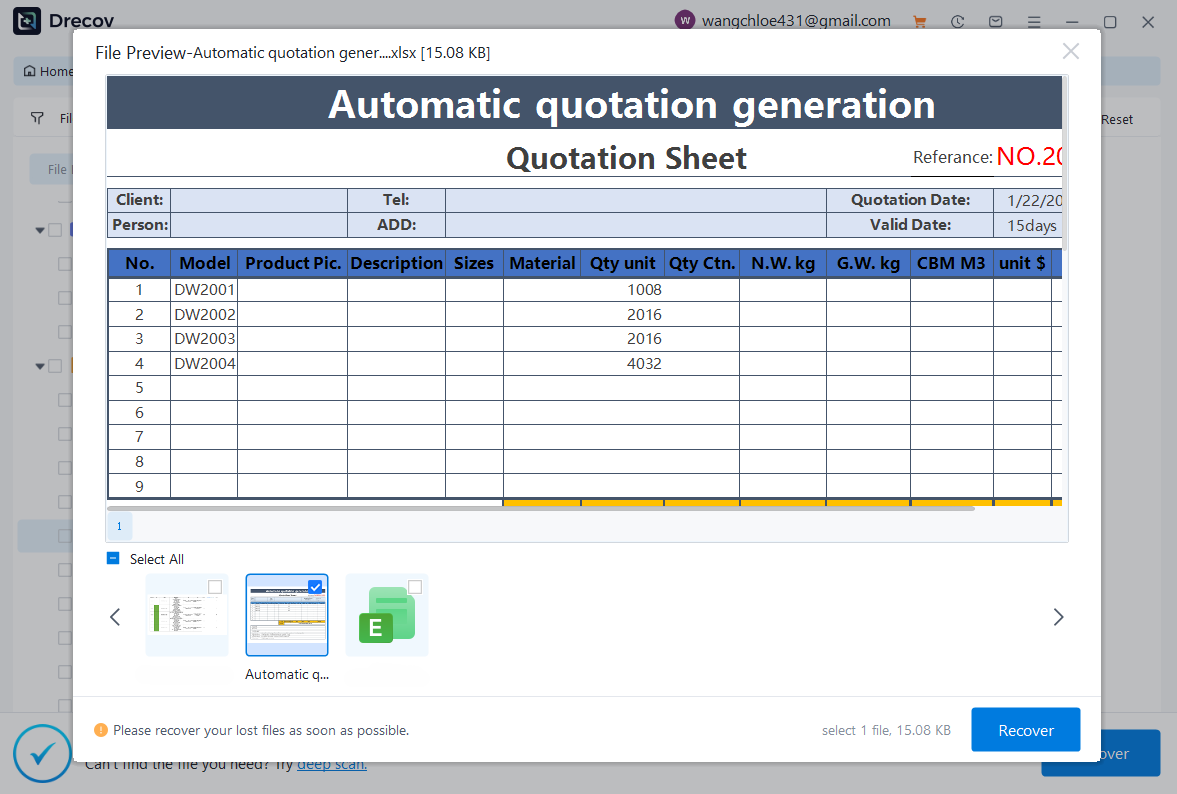
3.2 Browse Lost Excel Files
To recover Excel spreadsheets:
- Navigate to the “Documents” section.
- Filter by .xls or .xlsx files.
- Preview the spreadsheet to verify data accuracy.
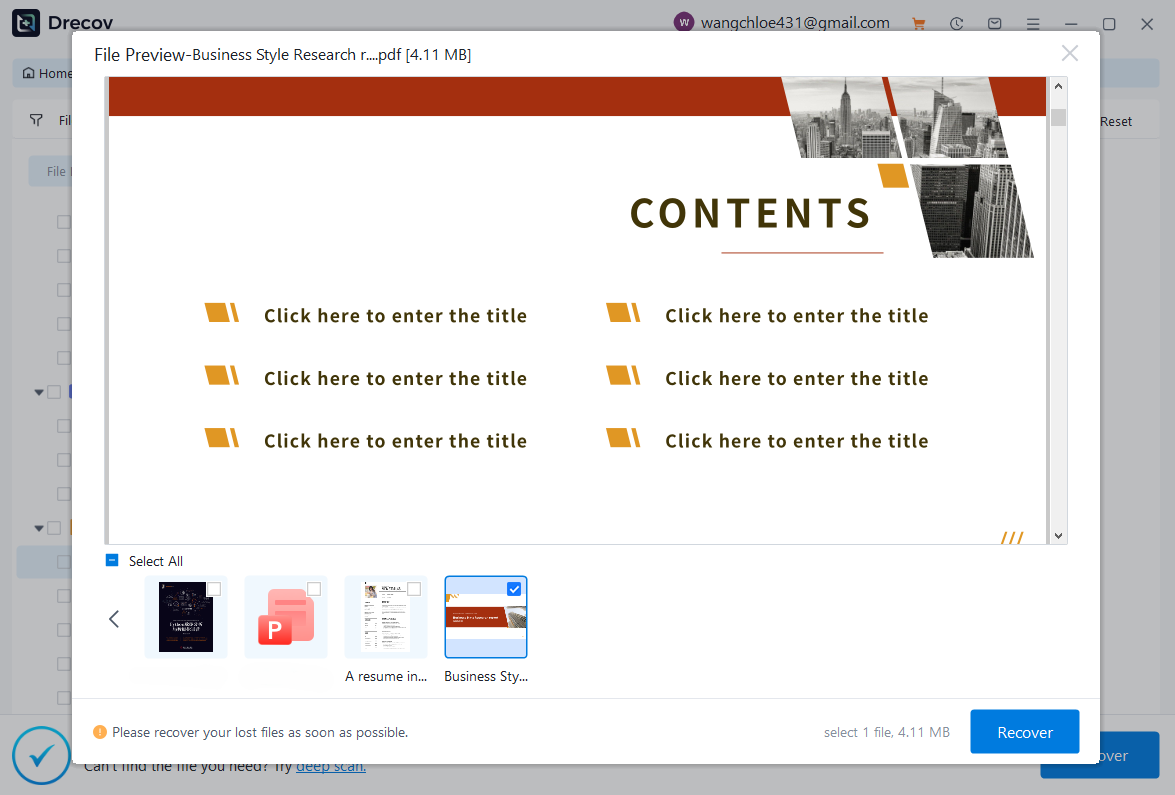
3.3 Browse Lost PDF Files
For PDF recovery:
- Select the “Documents” category.
- Filter by .pdf format.
- Use preview mode to ensure the file opens correctly.
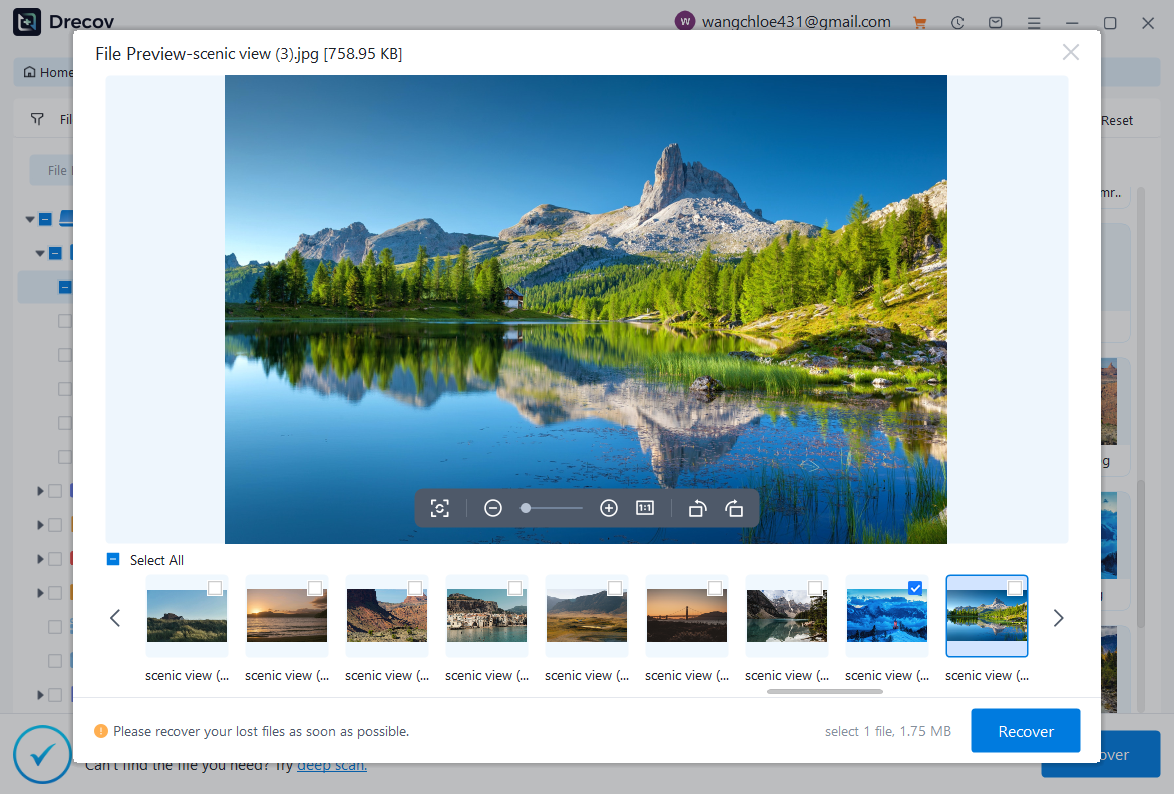
3.4 Browse Lost Pictures
To recover deleted images:
- Go to the “Pictures” or “Graphics” section.
- Filter by formats such as .jpg, .png, or .jpeg.
- Preview thumbnails to quickly identify your photos.
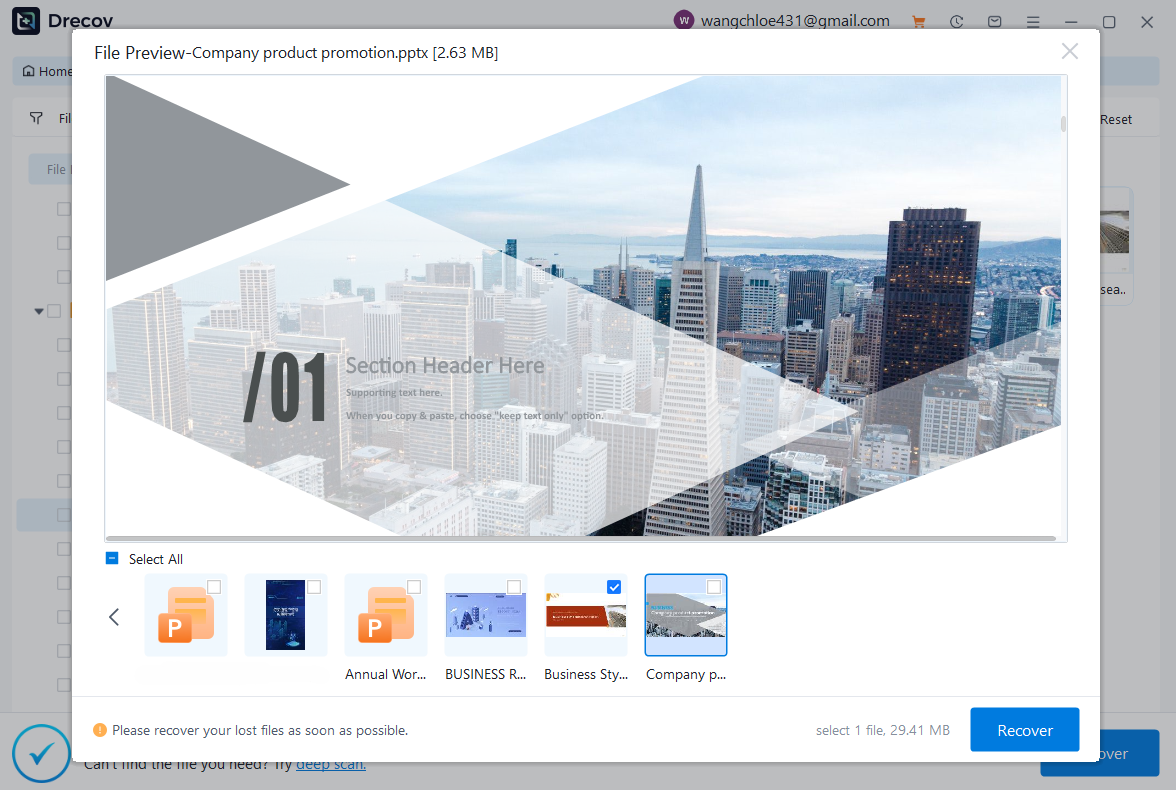
3.5 Browse Lost PowerPoint Files
For recovering presentation files:
- Navigate to the “Documents” category.
- Filter by .ppt or .pptx files.
- Preview slides to confirm they are complete.
3.6 Browse Lost Videos
If you need to recover videos:
- Go to the “Videos” category.
- Filter by formats like .mp4, .mov, or .avi.
- Preview the video if supported.

Step 4: Recover the Selected Files
Once you have identified the files you want to restore:
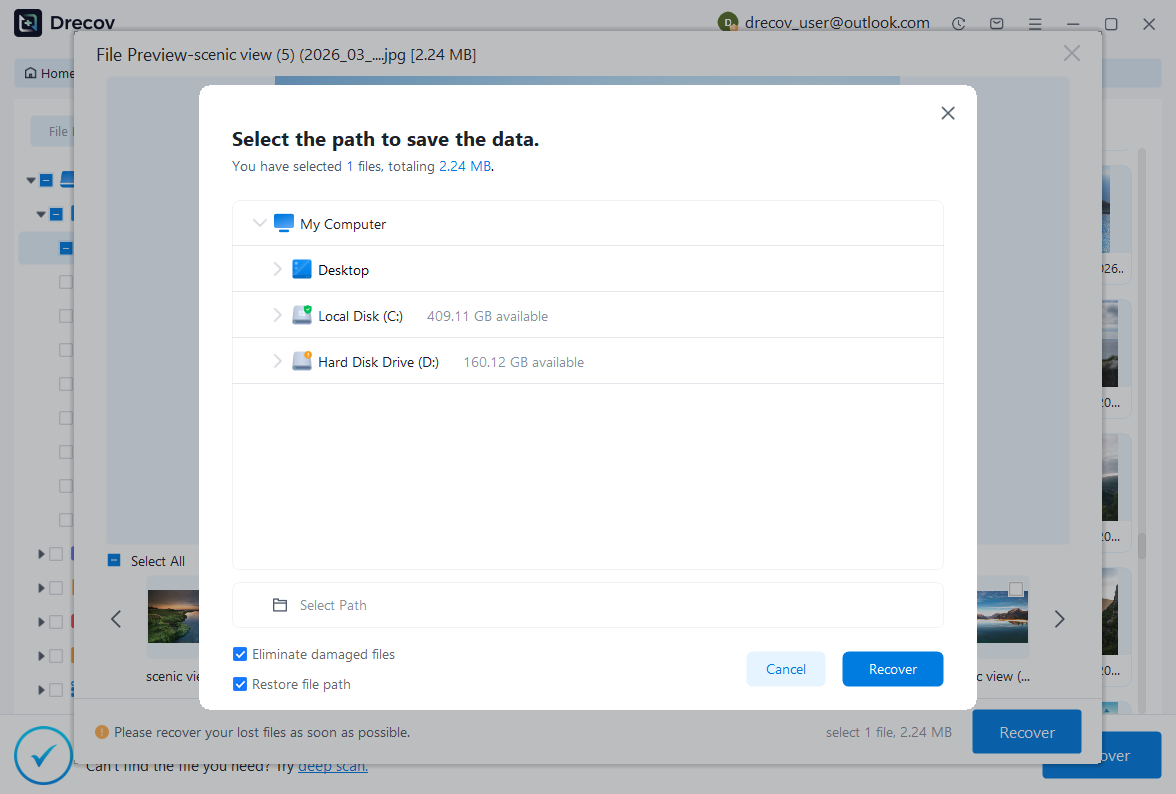
- Select the checkboxes next to the desired files.
- Click the “Recover” button.
- Choose a safe location on your computer’s internal drive. Select the path to save the data.
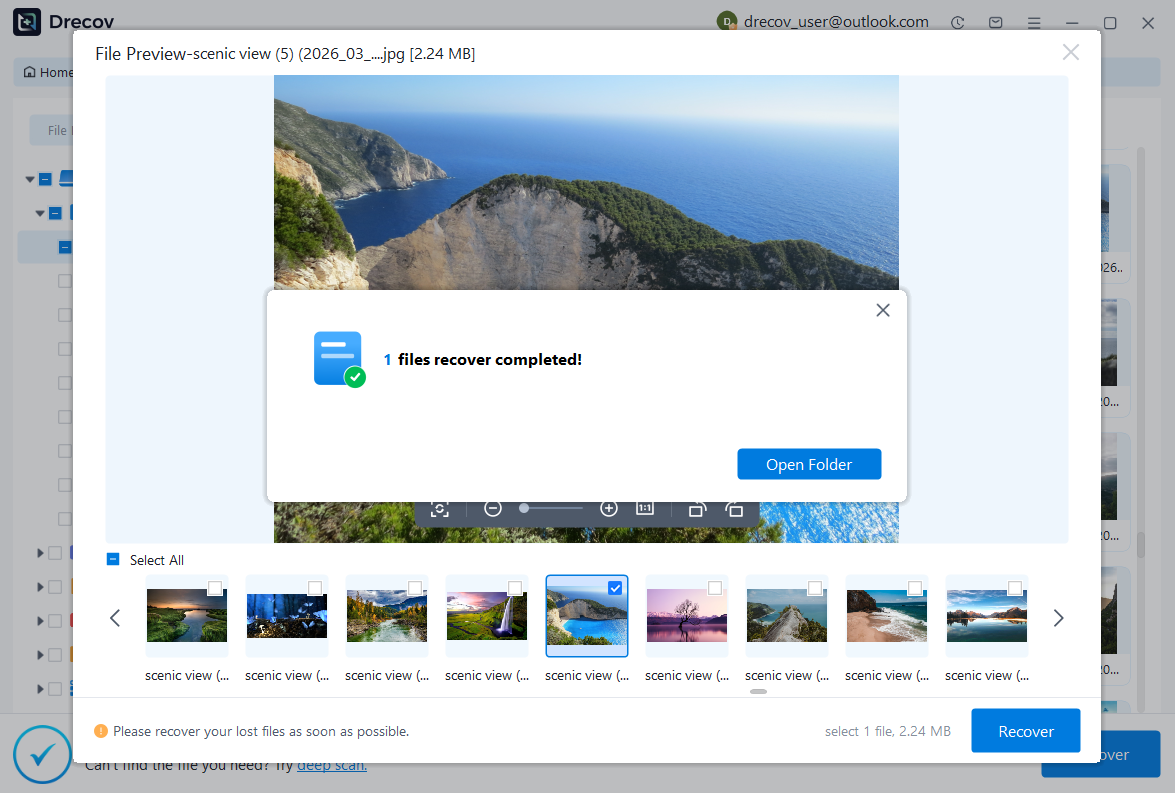
- Files recovery completed!
⚠️ Do not save recovered files back to the same place immediately. This may overwrite other recoverable data.
After recovery is complete, verify the files by opening them from the saved location.
Conclusion
Recovering lost data from a Hard Disk Drive is simple and efficient with PandaOffice Drecov. The software guides you through the process: install it, scan the Hard Disk Drive for missing files, filter results by file type, and restore the files you need. This allows you to quickly retrieve essential documents, photos, videos, and other important data.
To maximize recovery success:
- Stop using the Hard Disk Drive immediately after losing files to prevent overwriting.
- Avoid saving or moving files to the affected drive before recovery.
- Store recovered files on a separate drive or storage device to ensure safety.
By using PandaOffice Drecov and following these best practices, you can handle Hard Disk Drive data loss efficiently, restoring your important files with minimal risk and effort.



